Play, Louis, Play!

The True Story of a Boy and His Horn
by Muriel Harris Weinstein (Illustrated by Frank Morrison)
ages: 8-10
First sentence: “There isn’t a jazzman in New Orleans who hasn’t tapped my brain about Louis Armstrong.”
Support your local independent bookstore: buy it there!
Review copy provided by the publisher.

First off: I’m calling this fiction because it’s written from the perspective of Louis Armstrong’s first trumpet. But the story, based on the diaries that Armstrong kept, is all fact.

You would think that a story written from the point of view of an inanimate object wouldn’t work, but it does. Somehow, the best person to tell Louis’s story is not Louis, or his family, or even the people he encountered, but the thing he loved the best: his horn. Affection for music and for Louis and for New Orleans came through loud and clear, making the book upbeat and cheerful when it could have been depressing.

The story begins with Louis when he’s about six, and just discovering the world of music. He’s poor, yes, but he’s an optimistic soul. It follows his life all while he was growing up, through his first big break, and then tapers off. Weinstein handles excellently the balance of being simple enough for the age group while still being interesting to read.

In short: a lovely introduction to one of the most brilliant jazz musicians. My only complaint was that it didn’t come with a soundtrack.

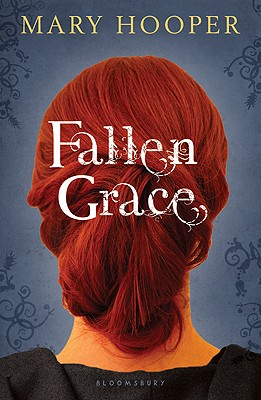
Magic Under Glass

by Jaclyn Dolamore
ages: 12+
First sentence: “The audience didn’t understand a word we sang.”
Support your local independent bookstore: buy it there!
Review copy provided by the publisher.

I have to admit: I’ve had this on my shelf for a long time. But, ever since the whole cover controversy, I really didn’t have much desire to read it. I guess because it was so popular, or maybe it was because it had come on the heels of the Liar cover controversy, but I really had no desire to read this one at all. I didn’t toss it, however, choosing to let it linger on the TBR shelf.

I’d like to say I was pleasantly surprised by the book, and in some ways, I was. I thought it was a clever premise: Nimira was a respected singer and dancer in her country, before she ran away because of troubles at home. She became a “trouser dancer” in a new land, plying her art for pennies. Then she meets Hollin Parry, who hires her as a singer for his automaton pianist. However, it turns out that the automaton is really a captured fairy prince, someone she falls in love with and finds she needs to rescue from the organization of sorcerers determined to declare war on the fairies, wiping them out once and for all.

But, it just kind of hit the middle ground and stayed there. I never really connected with Nimira as a character (maybe I was tired?), or ever really felt the growing attraction between her and the prince. It was unevenly paced, ending with things left unsolved. It felt unelegant, choppy, and committed the sin of telling more than showing me what was going on.

Disappointing.

Alibi Junior High

by Greg Logsted
ages: 11+

First sentence: “

Support your local independent bookstore: buy it there!
Review copy provided by the publisher for the Cybils (2010, I think?)

Every kid, at some point in their lives, has imagined what it would be like to be a spy. Or the kid of a spy. Right?

Well, Cody Saron knows first-hand. The son of a CIA operative, he’s traveled the world, is home-schooled in not just the usual subjects, is fluent in five languages. He’s comfortable and happy traveling with his father. Then one of his father’s jobs goes bad, and he ships Cody to live with his Aunt Jenny, in rural Connecticut. To go to regular school. To assimilate.

Which turns out to be the most difficult assignment of his life.

He has to deal with teachers (predictably obnoxious and clueless, especially the male gym teacher), bullies (again, predictable: perhaps there’s a reason everyone goes in for picking on the new kid?), girls (*sigh*) and (most interestingly) the Army vet next door, Andy, who was involved in military intelligence in Iraq before losing an arm in battle and being sent home. The best parts of the book are when Cody’s in operative mode: there’s someone sneaking through the woods at night, and he teams up with Andy to figure out what’s going on. It makes for a bang-crash ending, that feels quite rushed, but is exciting nonetheless.

That said, the dialogue felt a bit wooden, and the situations Cody found himself in once getting to Connecticut, were not at all innovative. And the ending was just too out of nowhere.

But, the spy stuff? That was cool. Just not enough to make the book memorable.

Waiting for Normal

by Leslie Connor
ages: 11+
First sentence: “Maybe Mommers and I shouldn’t have been surprised; Dwight had told us it was a trailer even before we’d packed our bags.”
Support your local independent bookstore: buy it there!
Review copy provided by publisher for the Cybils (2008, I think).

Some people just shouldn’t be parents.

Seriously. That’s what kept running through my brain throughout this whole book.

Twelve-year-old Addie has spent her whole life waiting for normal. She almost had it, once, when her mom was married to Dwight, and her two half-sisters were just born. But then her mom, who’s an “all or nothing” sort, divorced Dwight, and abandoned Addie and her two sisters. True, it was only for three days, and Addie was managing things okay, but she told Dwight, and the State took her sisters away from her and her mom gave custody to him. Which was okay, except the money he sent to Addie and her mom never seemed to go very far, and they ended up in a trailer on the corner of a couple of streets, underneath a train overpass.

Which was okay; Addie made new friends with the owners of the gas station next door (and at school) and was doing fine. Except it just wasn’t normal. She wanted to be with her sisters, and with Dwight — who was reliable, unlike her scatterbrained (which is really too nice) — but she also felt a responsibility toward her mom. And Addie’s just finding it hard to be torn like that.

Connor captures all this pain and heartache and hope in such simple and eloquent language, you can’t help but hope for Addie at the same time your heart is breaking. Addie’s so resilient, and as the reader, you can see her hope and faith and optimism just shining through. Even when she can’t. My heart broke for her so many times while reading this — how can anyone be so selfish and unthinking? — and yet, this was more than just another Bad Mom Book. (Though it was that.) Connor takes something that is so horrible and so difficult and infuses it with humor and light (and yes, it does have a happy ending) to take the edge off the difficult situations this child has ended up in by no fault of her own.

It’s a hard book to read, but a good one. And one which will make you grateful for all the good you have in your life.

Cicada Summer

by Andrea Beatty
ages: 10+
First sentence: “Some people think the cicadas bring trouble when they come to town.”
Support your local independent bookstore: buy it there!
Review copy provided by the publisher for the Cybils (2008, I think.)

Lily is invisible. Not really, but she’s as good as: she never talks, she never looks people in the eye. She’s been shuffled off to the side in the two years since her brother Pete’s accident, which Lily feels responsible for. She’s been carrying around the guilt and as a result, has all but shut down. On the other hand, she is a grand observer, and when a new girl, Tinny, comes to town, Lily observes some pretty strange things about her. This creates a mystery, and it’s up to Lily, the silent observer, to figure everything out.

I remember throwing this one at C about a year ago, and she loved it. So much that she asked me to read it so she could talk to someone about it. (Bad mom moment. Sorry.) I agree: it’s a good, solid novel for a 10 year old girl. It’s got mystery and a little bit of suspense, and nothing is too heavy-handed (even though there is Death and Grief), which is a relief. (I do get tired of heavy handed Death and Grief books.) The resolution is nice, and Lily’s an interesting character to get to know. On top of that, it’s a summer book: sunshine, heat, water, small town. And Beatty knows how to go for mood; you can feel the summer radiating from this slim book.

A good, quick read.

48 Hour Reading Challenge Starting Line


And I’m off. Wichita’s Riverfest starts today, and I think we may head out to see the Twilight Pops Concert and the fireworks, but other than that, Hubby has taken off work and is managing the kids this weekend so I can do nothing but read, read, read.

Here’s the pile of books that I’m going to be picking from. I don’t hope to get through them all, but my goal is to make a dent.


Hope to see you around!

Mad Love

by Suzanne Selfors
ages: 12+
First sentence: “When you’re sixteen, summer is supposed to spread before you like a magic carpet, waiting to carry you to new, exciting places.”
Support your local independent bookstore: buy it there!
Review copy provided by the publisher

From one vantage point, it looks like Alice Amorous has a charmed life: her mother is the Queen of Romance Fiction, she lives in a quaint apartment in the College Hill area of Seattle. It should be good. Except that her mother has been hospitalized for mental illness, and it’s up to Alice to hold down the increasingly shaky fort.

Then she meets Errol, a strange boy (wearing black hoodies in the middle of the Heat Wave of the Century qualifies, I think) who claims he’s Cupid and wants Alice to write his story. Of course she doesn’t believe him: mental illness runs in the family, she must be going mad, right? Which terrifies her.

Much of the book is given over to convincing Alice that Cupid is really who he says he is. There’s some side stories, a distraction in the form of a Cute Skateboarding Guy, and conflicts with Alice’s neighbors as the lies and stories she’s surrounded herself with slowly fall apart. The characters are quirky and interesting and clever, as is the idea of melding mythology with writing romance fiction.

Sure, it gets a bit melodramatic at the end, but I was kept guessing as to where Selfors was going with the book, and delighted that she didn’t go for the easy road out. It’s always nice when a book ends well. I was thinking though, as I finished it, that the book doesn’t really qualify for a romance (though there is one). It’s more about love in general. And the song that went through my head when I finished was this one:

It’s what makes the world go round, after all. And this book is quite full of love.

May Jacket Flap-a-Thon

Happy summer! Perhaps the best thing about the end of May is a move into summer reading. (Am I the only one who reads books seasonally?) The light stuff, the fluff, the summer-feeling books. What are the books you’ve put aside for your summer reading?

Trash (David Fickling Books): “In an unnamed Third World country, in the not-so-distant future, three “dumpsite boys” make a living picking through the mountains of garbage on the outskirts of a large city. One unlucky-lucky day, Raphael finds something very special and very mysterious. So mysterious that he decides to keep it, even when the city police offer a handsome reward for its return. That decision brings with it terrifying consequences, and soon the dumpsite boys must use all of their cunning and courage to stay ahead of their pursuers. It’s up to Raphael, Gardo, and Rat—boys who have no education, no parents, no homes, and no money—to solve the mystery and right a terrible wrong. Andy Mulligan has written a powerful story about unthinkable poverty—and the kind of hope and determination that can transcend it. With twists and turns, unrelenting action, and deep, raw emotion, Trash is a heart-pounding, breath-holding novel.”

Everything this says is true, and yet it doesn’t capture the half of what this novel is. Brilliant.

Enchanted Ivy (Margaret K. McElderry): “What Lily Carter wants most in the world is to attend Princeton University just like her grandfather. When she finally visits the campus, Grandpa surprises her: She has been selected to take the top-secret Legacy Test. Passing means automatic acceptance to Princeton. Sweet! Lily’s test is to find the Ivy Key. But what is she looking for? Where does she start? As she searches, Lily is joined by Tye, a cute college boy with orange and black hair who says he’s her guard. That’s weird. But things get seriously strange when a gargoyle talks to her. He tells her that there are two Princetons—the ordinary one and a magical one—and the Key opens the gate between them. But there are more secrets that surround Lily. Worse secrets. When Lily enters the magical Princeton, she uncovers old betrayals and new dangers, and a chance at her dream becomes a fight for her life. Soon Lily is caught in a power struggle between two worlds, with her family at its center. In a place where Knights slay monsters, boys are were-tigers, and dragons might be out for blood, Lily will need all of her ingenuity and courage—and a little magic—to unite the worlds and unlock the secrets of her past and her future.”

The problem with this one is that it gives away more than it should; it’s pretty much the whole book, even if it keeps one secret. That said, it does make the book sound quite compelling.

The Devil Went Down to Austin (Bantam): “Rick Riordan, triple-crown winner of the Edgar, Anthony, and Shamus Awards, brings his fast-talking, hard-living, Texas-hip P.I. Tres Navarre to the heart of the Lone Star State—Austin—to unravel a case so dark, twisted, and deadly, it can only involve family…. Tres Navarre, the P.I. with a Ph.D. in literature, heads to Austin for a laid-back summer teaching gig. But he’s in store for a whole lot more. His big brother Garrett–computer whiz, Jimmy Buffett fanatic, and all-around eccentric—is hoping to retire a multimillionaire by the fall. He’s bet his career and the Navarre family ranch to do it. Then Garrett’s oldest friend and business partner is murdered—and Garrett is the only suspect. As Tres delves into Garrett’s bizarre world to find the truth behind the murder, he comes face to face with the damaged relationships, violent lives, and billion-dollar schemes of a high-tech world gone haywire. Connecting them all is beautiful Lake Travis and the shocking secret that lies within its depths. Now, as Tres struggles with his own troubled family past and to clear his brother’s name, he finds himself stalked by a cold-blooded killer—one who could spell the death of both Navarres.”

Yes, the book is as good as the copy makes it sound.

Other books read this month:
I Now Pronounce You Someone Else
Mom: A Celebration of Mothers from StoryCorps
The Fairy Godmother
A Gift From Childhood
The Throne of Fire
Reckless (Audiobook)
Anastasia’s Secret
On Fortune’s Wheel
Our Only May Amelia
Okay for Now

Our Only May Amelia

by Jennifer L. Holm
ages: 10+
First sentence: “My brother Wilbert tells me that I was the first ever girl born in Nasel, that I was A Miracle.”
Support your local independent bookstore: buy it there!

This one has been on my radar for years, but was never quite enough to push me to read it. However, with the buzz about the sequel — The Trouble With May Amelia — I got curious enough to pick up both of them at the library a couple weeks back.

It helps, too, that I’ve been in the mood for middle grade fiction.

May Amelia is the only girl on the Nasel river, in the middle of rural Washington, 1899. She’s twelve, has seven older brothers, and always seems to be Getting Into Trouble. She’s both A Miracle to her family and That Troublesome Girl, something which she finds terribly conflicting. All she wants to do is have adventure: go fishing, maybe hunting, and run around like her brothers, but with her Mama pregnant for the first time in a long while, much of the household work falls to May Amelia. It’s not an easy life but it’s a good one, or at least May Amelia will come to think so.

It’s not a book with a lot of plot — there is some, but to tell you what happens will spoil much of the charm of the book — but it’s one that holds your attention. It’s a grand example of voice: May Amelia’s personality comes through loud and clear, and she’s an interesting, amazing girl to get to know. She feels deeply, and lives fully, wanting to be treated the same as her brothers. Holm’s affection for the stories and the Finnish immigrants is plain in the storytelling; there’s a delightful homeyness to the book that just makes one smile, even through the tough times.

For there are tough times: Holm doesn’t sugarcoat the past at all. It’s gritty, but never so much that it’s not accessible to the middle grade audience it’s intended for. Instead, it gives an honest, yet loving, look at a homesteader’s fate, and life for a girl around the turn of the century. Both of which makes this book priceless.

Okay for Now

by Gary Schmidt
ages: 11+
First sentence: “Joe Pepitone once gave me his New York Yankees baseball cap.”
Support your local independent bookstore: buy it there!

Doug Swieteck had a decent, if a bit rough, life. That is until his dad — because of his friend Ernie Eco — up and moves the family to “stupid” Marysville, New York for a new job. It’s 1968, and Doug’s oldest brother is off in Vietnam, and things are tight at home. It’s not easy settling in to the new town, especially since everyone has Doug and his older brother (not to mention his slacker and somewhat abusive father) pegged for hoodlums.

Things go up and down for Doug — who has one of the more personable voices I’ve read in a long time; he’s speaking directly to the reader, but only once does the whole “dear reader” thing — as he discovers James Audubon’s drawings of birds. I’ve never seen the pictures live, but from the illustrations in the book, I can see why they move Doug so fundamentally. It’s a look at how art and nature can influence our lives for the better, if one takes the time to understand it. In fact, if I had to pick a real theme of the book it would be that: people are more than the sum of their parts, and by taking the time to get to know and understand them, the world can be a better place.

The book could have teetered over into the maudlin, with issues of domestic violence and the war in Vietnam. But it never did. It stayed right on the edge of dark and heartbreaking, infused with hope and light and humor. It’s one of the most hopeful books I’ve read in a long time, and definitely one of the most perfect.