Cybils: What I Think Should Be Nominated and Isn’t

Since I’ve used up my nominations in these categories, could you do it for me?

Middle Grade Fiction
Second Fiddle, by Rosanne Parry
What Momma Left Me, by Renee Watson
Angel in My Pocket, by Irene Cooper

YA Fiction
Mindblind, by Jennifer Roy

YA Science Fiction/Fantasy
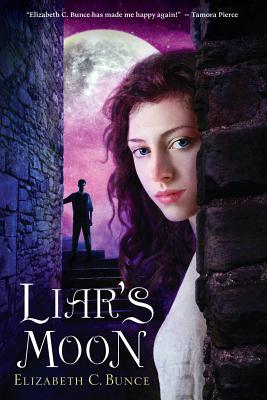
Sweetly, by Jackson Pearce

And if anyone has anything they want nominated in Graphic Novels, Easy Reader/Chapter Books, or Book Apps, let me know: I haven’t nominated anything in those categories yet, and I’ll be happy to do it for you.

Kendra

by Coe Booth
ages: 15+
First sentence: “There’s nothing really different about today.”
Support your local independent bookstore: buy it there!

Fourteen-year-old Kendra wants two things: for her Nana to get off her back about every. little. thing. And for her mother, Renee, to finish school, get a job and let Kendra live with her.

Unfortunately, neither of these things are going to happen. See, Renee was just 14 when she had Kendra, and ever since has been running from any sort of mother-daughter relationship with her. Nana is old, tired, and wants to have a live of her own. Not to mention save her grandbaby from the same fate as her daughter.

I’m sure there’s more to this gritty story, but honestly? I didn’t get to it. I wanted to. I wanted to like this one, I wanted to see what this story of an inner-city black girl would be. But I bailed after the boy Kendra likes pressures her into having anal sex (is there a better term for that?). I can take many things, but the idea of an older boy taking advantage of a younger girl because she wants to be liked and accepted is too much for me. It wasn’t that it was graphic (it wasn’t). It’s just the idea.

I didn’t give Kendra’s story much of a chance, I admit. Because the writing was intense, and I could tell that Booth knew her stuff. It’s just not me. I’m sure there will be less particular people out there, ones who will connect with this book. It’s just not for me.

Lola and the Boy Next Door

by Stephanie Perkins
ages: 14+
First sentence: “I have three simple wishes.”
Support your local independent bookstore: buy it there!
Review copy provided by an ARC sent me from the amazing A Jane of All Reads

I need to say, first off: I completely and totally regret what I wore to my senior prom. It was white, it was totally late-80s, and it was completely forgettable. What I should have done was be daring (like Lola, who wants to attend her mid-winter formal as Marie Antoinette) and completely memorable.

So, one of my favorite things about this book was all the costume changes that Lola went through. I never knew what she was going to wear, and somehow, that made the book that much more enjoyable for me.

The plot is pretty simple: Lola and Cricket used to be neighbors. Then they were more than neighbors. And then he moved away because his family is pretty invested in following his sister Calliope’s dream of being an Olympic figure skater. But before that happened, he hurt Lola, so she’s spent the last two years trying to forget that Cricket ever existed. It’s worked so well, that she’s happily in love with Max, who’s a punk rocker and (gasp) five years older than she is (she’s barely 17). Then, one day, Cricket (and his family) move back in. Lola figured she was over him, but she didn’t count on him not being over her.

Second thing I adored about this book: Cricket. Seriously. He’s nice. No: he’s wonderful. Swoon-worthy, geeky, genius, awkward, and much, much too good for Lola. It was an interesting twist having the guy be the “good” one, the one that Lola has to aspire to “deserving”. (I find it’s often the guys who are the cads, but in many ways Lola is in this book.) At first she pushes Cricket away, but eventually realizes that she still has *feelings* for the boy next door.

I found, in this book, that it was the little things that made it enjoyable. Anna and St. Clair are back, and even though they only play a small role, they light up the pages they’re on. Lola’s two dads are also a delight: it’s nice to have a gay couple shown as stable and loving without making a big deal about it. (Additionally: they’re great characters in their own right.) That said, I still have issues with True Love (always have, always will) and this one is all about finding and recognizing True Love, but it wasn’t enough to get in the way of me thoroughly enjoying this book.

Perhaps it comes down to the awesome Marie Antoinette dress after all.

Cures for Heartbreak

by Margo Rabb
ages: 15+
First sentence: “The funeral director’s name was Manny Musico.”
Support your local independent bookstore: buy it there!

Mia’s world has imploded. Her mother went in to the doctor about a stomach ache, and twelve days later died. It’s not something she could plan for: one day her mother was there, the glue holding their family together in spite of constant fighting with Mia’s dad; the next day, they’re planning a funeral. How are they — Mia, especially, since she doesn’t quite know how to relate to her older sister, Alex, or their father — going to manage their life?

And, yet, as the book unfolds over a year, they do manage. Sure, Mia goes into a bit of a tailspin at school, barely passing her freshman year. Alex goes off to college, and then Mia’s left alone with her father. But, partially just because things work out as time passes, Mia gets better. Or at least, she learns to live her life again, without her mother.

Startlingly honest, this book walks the line between all-encompassing grief and the realization that as time goes on, wounds heal. The title really does say it all: Mia’s heart is broken by the death of her mother, and while it’ll never fully, completely heal, she is able to find a way to move on beyond that grief. That this is a semi-autobiographical story helps; Rabb taps into the emotions of loss, pain, and grief without being sappy or overly sentimental about it all.

In all the many books on death, this one stands out because of that honesty, because of the humor laced throughout the book, and because Rabb shows how one can move on without forgetting.

10 Things About The Austin Teen Book Fest

1. I say to myself “Texas isn’t that far”, and it isn’t. Well, DALLAS isn’t. Austin, on the other hand, is 9 hours of nothing away. Even so, it was worth the 18 hours in the car for the 36 hours seeing friends and authors.

2. Even though Scott Westerfeld’s keynote speech was pretty much the same as at KidLitCon, it was still worth hearing again. (“And there was outrage on the internet!”) He’s a funny, interesting person who gives a grand presentations and worth hearing speak as many times as possible.

3. Steampunk costumes are REALLY cool. Want.

4. Though Maureen Johnson doesn’t speak very much, when she does, it’s hilarious. She’s also a bit of a rabble-rouser. Not that we minded at all.

5. She sold her book to us by saying, “If I was going to write about ghosts, I want them to do something AWESOME. Like kill people.” (At which point, M turns to me and says, “I want to read her book now.”)

(Okay, that’s a really bad picture of both M and Maureen. Sorry; it’s the only one I took…)

6. I didn’t know who Jonathan Mayberry was. Now I do. (And interestingly enough, his book won the YA Science Fiction/Fantasy Cybils award last year.)

7. I kind of felt bad for all the local authors who were surrounded by more “famous” ones. They didn’t have any lines during the author signing, while Scott Westerfeld’s was halfway across the building. Also, it would have been nice to have more time to be personable with the authors. I know I’m spoiled by KidLitCon, but I wanted to meet David Levithan and Jackson Pearce (I had to be satisfied with snapping a picture from afar) but there wasn’t time to stand in their lines as well. I would have loved it if the authors could have milled more, and been able to chat with the masses.

8. Speaking of logistics: it could have been better. They had three different panels all going on at the same time in one large, echo-y room, which made it hard to hear what the authors were saying. At one point, Maureen said, “My head is going to explode from all the noise.” I agree.

9. Nerdfighters are everywhere! I kind of knew this, but it was brought home at the book fest. I saw a young woman walking around with a hijab and a Pizza John shirt; the girl I stood behind in line for Stephanie Perkins had a DFTBA shirt (her sister has a “This Machine Pwns Noobs” one). I mentioned her shirt, and we had an instant connection: we chatted the time away about nerdfightaria, John and Hank, books, vlogs and the coolness of being there with all the other geeky people. I loved it.

10. The best part of going to this festival was seeing friends — like Amanda of Ramblings and her husband, Jason; and Varian Johnson (can I count him as a friend if he remembered me and gave me a hug? I think so… even if I forgot to get a picture with him.) — and meeting the authors. I wish there was more time to do the latter, but I did actually hold a conversation with Maureen (in which I thanked her for her twitter feed, and probably made a fool of myself) and Stephanie Perkins. That made it all worth while, I think.

Will I go again? I don’t know. But at the very least, I can say I’ve done the whole book festival thing now. And had a good time doing it.

The Eternal Smile: Three Stories

by Gene Luen Yang and Derek Kirk Kim
ages: 13+
Support your local independent bookstore: buy it there!

It seems a little strange to say that something called “The Eternal Smile” made me feel melancholy, but it did.

The book is three short stories, beautifully drawn, all muse upon the themes of belonging and purpose. They weren’t sad, exactly, and you can’t say they didn’t have happy endings, because they did. But they were bittersweet, edged with longing. Enough to make me melancholy.

I’m not quite sure which author wrote which story (or if they both wrote all three), since they drawing style for each one was so drastically different. That said, the art fit the stories perfectly. The first one, at first glance, seems to be a fantasy hero story: the downtrodden guy fights incredible odds (or in this case, revenge upon the king’s death by killing the frog king), only to find out that things aren’t exactly as they seem. The art is dark and brooding; it’s easy to sense that the end won’t be pretty.

The second story features animals: a greedy frog, who all he wants to do is get enough cash so he can put it in a barrel, dive in and never hit bottom; his toady (I think literally); and his two granddaughters. They come up with a scheme, based on this smile that the toady sees, and develop a religion based on it. Of course there’s more to it; it turns out that the story is nothing more than a children’s show. It’s a delightful poke at mega-churches, reality TV, and people who don’t have the backbone to say what they really think in the face of powerful people. And the art is bright and cheery, which perfectly juxtaposes the deeper, darker story.

The last story is the most heartbreaking, I think. It’s about a mousey woman, working in a cubicle for some large corporation. She wants a raise, and (of course) her boss deflects her and then laughs behind her back. Then she answers one of those “dear lovely, can you send $1,000,000 to help my family in Nigeria” emails. From there, they begin corresponding, and she imagines a whole story surrounding this mysterious African prince. Of course, things don’t work out, by any stretch of the imagination. The art is in shades of gray, the characters cartoonish, childish, which drives the somber point home more.

The one thing these stories do have, even with their melancholy, is that they make you think. About how things don’t always go as we planned. And that even so-called losers have dreams and aspirations. And how there is always hope, even in the face of hopelessness.

Which left me smiling, in the end.

The Good, the Bad, and the Barbie

by Tanya Lee Stone
ages: 11+
First sentence: “When I was six, I wanted a Barbie more than I can remember ever wanting anything in my life.”
Support your local independent bookstore: buy it there!

First a confession: my mom wouldn’t let me have Barbies, and even though I played with them at friends’ houses, I never really wanted one (or at least I don’t have a lingering memory of that). Then I went to college, and became my own brand of feminist, and swore my girls would never have Barbies.

Then M turned three. And she desperately wanted one. After several rounds of fighting and discussion and saying no, we gave in on her birthday, and gave her one. Which was much loved. Then, Barbie multiplied. For, it seems, that one cannot have just one Barbie. They multiplied until I was sick of them and they stopped playing with them, so I tossed the whole lot when we moved to Kansas 5 years ago. Since then, they’ve multiplied again (it seems that you can’t give a young girl a birthday present that isn’t a Barbie), and while they don’t get played with often, I have made my peace with them and keep them around for the times when they are needed.

It seems my story isn’t unique.

I enjoyed this book for the history of Barbie, and Mattel, and how they came to be. There was a part of me that wished for more detail (the fact that Barbie’s inspiration was a German sex toy was glossed over here), but the book was geared toward the younger crowd. However, Stone did to an admirable job balancing the two sides of Barbie: those who love her and those who loathe her. I think I understand better now her appeal, not just to girls, but to women as they grow older. And while I still think there’s downsides to Barbie and her appearance, I admit that they’re more societal and less the fault of the toy. It was interesting, and well-written, full of lots of vintage (and otherwise) pictures.

Recommended.

CYBILS Nominations are OPEN!

Well, they opened early this morning, so I’m running a little late. But… if you didn’t get there at the stroke of midnight (which is insane, unless you’re a night owl), keep in mind these rules before heading over to do your nominations (do keep in mind that ANYONE can nominate their favorite — or second or third favorite. You don’t have to blog about kids books to be a part of this!):

Books (eBook criteria follow):

To be eligible for a Cybils award, a print book must be:

  1. published in the US or Canada only. This avoids outrageous shipping costs and double jeopardy when a UK title is nominated a second time after it comes out in the US;
  2. published between one contest and the next. For this year, that means from Oct. 16, 2010 to Oct. 15, 2011;
  3. widely available for public sale. Titles available only from book clubs or publisher websites are not eligible, for example, as we cannot obtain copies easily.
  4. aimed at the youth market up to age 18. Books marketed to adult readers that may also appeal to teens are not eligible.

eBooks

Note: This applies only to “born digital” ebooks that have no dead-tree counterpart.

To be eligible for a Cybils award, a born digital ebook must be:

  1. published in both the Kindle and ePub format. It can be published in additional formats (such as PDF), but cannot skip those two;
  2. marketed primarily to Young Adult Fiction and Science Fiction & Fantasy for teen readers. No other genre is accepting born digital titles this year. We’ll revisit the idea if all goes well;
  3. put out by a publisher in good standing with the American Booksellers Association (ABA), Children’s Book Council (CBC), Independent Book Publishers Association (IBPA), or Small Publishers Association of North America (SPAN) or their regional affiliates OR;
  4. (alternate to #3) put out by a publisher who produces more than one title a year.

Book Apps

To be eligible for a Cybils award, a book app must be:

  1. aimed primarily at kids or teens;
  2. geared mainly toward storytelling and/or literacy and not just gaming;
  3. be readable on an iPad or computer.

And (since you’ve made it this far…) I did want to give a mention to the panel that’s near and dear to my heart: Middle Grade Fiction! It’s a grand panel this year (with more than one man on it! Wow!), and you’ll notice that I’m shaking things up this year (much to the disappointment of my girls, who have loved the piles and piles of books that came in the mail) by being on the Round 2 panel. I’m excited for that, though: I’ve never been involved in the final decision, and I can’t wait to see what the experience will be like.

Round 1

Colby Sharp
Sharp Read

Jennifer Donovan
5 Minutes for Books

Karen Yingling
Ms. Yingling Reads

Cheryl Vanati
Reading Rumpus

Grier Jewell
Fizzwhizzing Flushbunker

Michael Gettel-Gilmartin
Middle Grade Mafioso

Beth Gallego
Points West

Round 2

Kerry Millar
Shelf Elf

Melissa Fox
Book Nut

Jessalyn Pinsonault
Garish & Tweed

Karen Wang
Kidsmomo

Amanda Snow
A Patchwork of Books

And off we go! I love this time of year.

September Jacket Flap-a-thon

One last little thought from KidLitCon… (I know it’s been a while but I honestly thought this was the best place to put this.) I went to a panel put on by Holly and Shiraz Cupala about marketing books. No, I don’t have a book to market, nor will I ever, but I did find this one statistic they stuck up to be interesting (especially considering where my interests lie):

People buy books based on:
Next one in a series (61%)
Familiarity with the author (57%)
Flap copy (51%)
Title (32%)
Cover (31%)

See that? Flap copy — good flap copy — is important. I know it is to me.

In other news: if all is going well, M and I should be on our way to the Austin Teen Book Festival. We’re both quite excited! Hope to see (some of) you there!

Daughter of Smoke and Bone (Little, Brown): “Around the world, black handprints are appearing on doorways, scorched there by winged strangers who have crept through a slit in the sky. In a dark and dusty shop, a devil’s supply of human teeth grown dangerously low. And in the tangled lanes of Prague, a young art student is about to be caught up in a brutal otherwordly war. Meet Karou. She fills her sketchbooks with monsters that may or may not be real; she’s prone to disappearing on mysterious “errands”; she speaks many languages–not all of them human; and her bright blue hair actually grows out of her head that color. Who is she? That is the question that haunts her, and she’s about to find out. When one of the strangers–beautiful, haunted Akiva–fixes his fire-colored eyes on her in an alley in Marrakesh, the result is blood and starlight, secrets unveiled, and a star-crossed love whose roots drink deep of a violent past. But will Karou live to regret learning the truth about herself?”
What I love about this one is that they capture the essence of Taylor’s writing and of the story, without giving the plot away. You know there will be mystery and angels and demons, and it all sounds so very enticing.

The Incorrigible Children of Aston Place: The Hidden Gallery (Balzer and Bray): “Of especially naughty children it is sometimes said, “They must have been raised by wolves.” The Incorrigible children actually were. Thanks to the efforts of Miss Penelope Lumley, their plucky governess, Alexander, Beowulf, and Cassiopeia are much more like children than wolf pups now. They are accustomed to wearing clothes. They hardly ever howl at the moon. And for the most part, they resist the urge to chase squirrels up trees. Despite Penelope’s civilizing influence, the Incorrigibles still managed to ruin Lady Constance’s Christmas ball, nearly destroying the grand house. So while Ashton Place is being restored, Penelope, the Ashtons, and the children take up residence in London. Penelope is thrilled, as London offers so many opportunities to further the education of her unique students. But the city presents challenges, too, in the form of the palace guards’ bearskin hats, which drive the children wild—not to mention the abundance of pigeons the Incorrigibles love to hunt. As they explore London, however, they discover more about themselves as clues about the children’s—and Penelope’s—mysterious past crop up in the most unexpected ways. . .”
This one is good because it gets you up to speed about the Incorrigibles, and lets you in on the plot of the first book, while giving you the briefest of hints about what the second one is all about.

The Night Circus (Doubleday): “The circus arrives without warning. No announcements precede it. It is simply there, when yesterday it was not. Within the black-and-white striped canvas tents is an utterly unique experience full of breathtaking amazements. It is called Le Cirque des Rêves, and it is only open at night. But behind the scenes, a fierce competition is underway—a duel between two young magicians, Celia and Marco, who have been trained since childhood expressly for this purpose by their mercurial instructors. Unbeknownst to them, this is a game in which only one can be left standing, and the circus is but the stage for a remarkable battle of imagination and will. Despite themselves, however, Celia and Marco tumble headfirst into love—a deep, magical love that makes the lights flicker and the room grow warm whenever they so much as brush hands. True love or not, the game must play out, and the fates of everyone involved, from the cast of extraordinary circus per­formers to the patrons, hang in the balance, suspended as precariously as the daring acrobats overhead. Written in rich, seductive prose, this spell-casting novel is a feast for the senses and the heart.”
This one is a little long for my taste, and it gives away a few of the plot points that would have better been left unsaid, but it’s gorgeously written, much like the novel.

Other books read this month:
Year of the Horse
Cold Sassy Tree
The Demon’s Surrender
The Absolute Value of Mike
Friday Night Lights
Mercury
The Slayer Chronicles: First Kill
Uncommon Criminals
Molly Moon’s Incredible Book of Hypnotism
The Son of the Shadows
The Grand Sophy

The Grand Sophy

by Georgette Heyer
ages: adult
First sentence: “The butler, recognizing her ladyship’s only surviving brother at a glance, as he afterwards informed his less percipient subordinates, favoured Sir Horace with a low bow, and took it upon himself to say that my lady, although not at home to see less nearly-connected persons, would be happy to see him.”
Support your local independent bookstore: buy it there!

Ah, Georgette Heyer. (Which I just learned is pronounced “hair”. Now I know.) I think the best way to sum her up is this: when she’s good, she’s really, really good. (And when she’s bad she’s horrid?)

And this one was good.

Twenty-year-old Sophy has spent her life following her father all around Europe. Because her mother died early on, Sophy has become accustomed to being the lady of the house, performing tasks for her father that most women wouldn’t dream of doing. As a result, she’s unpredictable, independent, and, to the fashionable London society, completely shocking. So, when her father dumps her on some little-known relatives (his sister, Lady Ombersley) so he can pop off to Brazil (with the side hope that they’ll somehow manage to marry Sophy off, since she’s — shock — heading towards being an old maid!), little do they know the chaos that Sophy will cause.

Like so many other of Heyer’s books, the point is not the plot. There will be a slight romance, two people will fall in love and get married. It’s the getting there that’s so much fun. And this one is classic Heyer: wonderfully amusing. Initially I wrote “hilarious”, but I think that’s misleading. While the book is funny, it’s not the snort-milk-through-your-nose funny. But it did make me smile and chuckle.

Like (and the characters and situations don’t really matter):

“No, of course I do not!” responded Cecilia. ” But Eugenia never wears modish gowns. She says there are more important things to think of than one’s dresses.”

“What a stupid thing to say!” remarked Sophy. “Naturally there are, but not, I hold, when one is dressing for dinner.”

From the sparing way in which Miss Wraxton partook of a few of the delicacies it was not dificult to see that she considered such lavish hospitality vulgar; but Huber, making a hearty meal, began to think the Marquesa a very good sort of woman after all. When he saw how many coffee creams, Italian rusks, and brandy-cherries she herself consumed, in the most negligent fashion, his manner towards her because tinged with respect bordering on awe.

There are more. Truly.

I think one of the reasons I like Heyer so much is the same reason I like Jane Austen: she pokes fun at socieity, the primness and properness, while endearing us to all these silly, stuffy, stupid characters. She invites us to laugh at them and (in Heyer’s case, at least) their outdated ideas, while, especially in this book, introducing a thoroughly modern character to challenge the others’ ways. It makes for a wonderfully entertaining romp.