Audio book: Wild

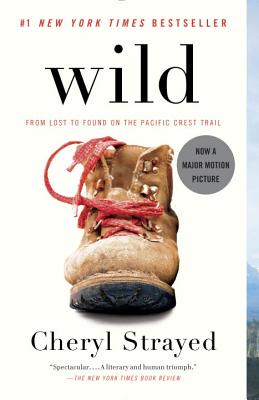
wildby Cheryl Strayed
Read by Bernadette Dunne
Support your local independent bookstore: buy it there!
Content: Drug use, sex, drinking, yeah: it’s all in here. Definitely not for the faint of heart.

I was wandering around, looking for a new audio book, and stumbled on this one. I figured so many people have raved about it that it couldn’t be terrible. So, I picked it up.

If you’ve been under a rock, it’s Cheryl’s personal story of her redemption, of sorts, after her mother died and her marriage fell apart (due to her infidelities and drug addiction). She decides that what she needs to do is hike the Pacific Crest Trail from California to Washington (actually, Oregon came later, after she discovered that the Sierras were snowed in) alone. She has no experience, she has no idea what’s in store for her. And yet, you have to admire her for going through with it, even when — especially when — the going gets hard.

But I couldn’t get past the “poor me” vibe that I felt was under the whole book. Maybe it’s because Cheryl didn’t narrate her own book and I never really got past that. Or maybe I’m just too judgmental (which I am, unfortunately). But while I really enjoyed the moments when Cheryl was battling against the trail, and mostly succeeding, I didn’t have much patience for Cheryl herself. (Now that I write this, it sounds really judgmental. Maybe it’s just wrong time wrong book?) I was talking to someone who had a similar experience with Eat, Pray, Love (which I really liked). Perhaps we’re more apt to judge women who travel because their lives are broken than those (men?) who just up and leave (I’m looking at you, Bill Bryson) to go experience the world.

I don’t know. I just know that I didn’t connect with this one as much as I hoped it would.

Salt to the Sea

salttotheseaby Ruta Sepetys
First sentence: “Guilt is a hunter.”
Support your local independent bookstore: buy it there!
Review copy provided by the publisher.
Content: There are some disturbing elements — it is the horrors of WWII, after all — including violence and rape, though none of it is graphic. It’s in the Teen (grades 9+) section of the bookstore, but I’d give it to an interested 7th- or 8th-grader.

One of the things I really admire about Sepetys is her willingness to tell the untold story. The story that’s been buried or neglected because of the way history has been told. The story that’s difficult to face or bear. She looks at them unflinchingly, and compels us to bear this hard history with her. It’s a difficult thing, but she does it so eloquently we just can’t look away.

This time around she tackles the sinking of the Willhelm Gustloff, a Nazi ship that was carrying 10,000+ refugees that was sunk by the Soviets near the end of the war. We follow four young adults (they range in age from 15 to 21) — Emelia, a pregnant Polish refugee; Florian, a Prussian who’s on the run with a stolen secret; Joana, a Lithuanian nurse who’s been able to repatriate into Germany, and who’s searching for her mother; and Alfred a young Nazi recruit who is a bit… off — as they head toward the ship in the dead of winter. The chapters are short, almost poetic, and they intertwine in compelling ways. It propels you forward, in spite of the horrors (perhaps because of them?). The minor characters — the orphan boy Joana finds, as well as the shoemaker they travel with, among others — are just as fleshed out and real as the main characters. Sepetys didn’t cut corners, and I appreciated that.

It’s exactly what I’ve come to expect from her. And that’s the best thing.


Monthly Round-Up: January 2016

January usually kicks my butt. Seriously. It’s cold, it’s dark, there’s hardly any holidays to break up the long, dull, boring days. But this year, it wasn’t too bad. Maybe it’s the meditation practice that I’ve picked up in the past few months. Maybe it’s a handful of sunny, 60-degree days where I could sit outside and bask in the sunshine. Maybe it was the idea of a yoga retreat that kept me going and that I thoroughly enjoyed. At any rate, I managed to read, I managed to stay sane, I managed to have a good January for once.

My favorite book this month was this:

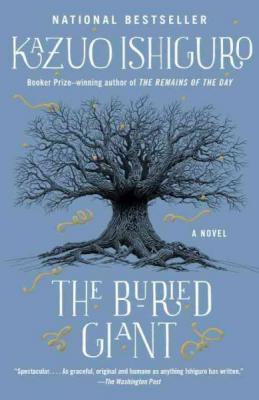
buriedgiant
The Buried Giant
(audio book)

The audiobook was brilliant, and the book was right up my alley. As for the rest:

Graphic Novel
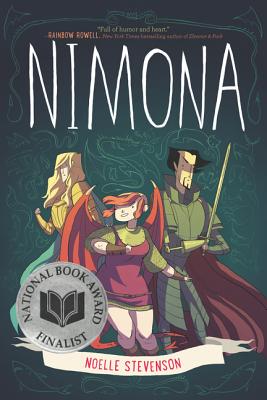
9781449470760 nimona

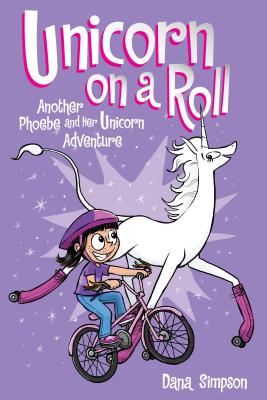
Unicorn on a Roll
Nimona

Nonfiction

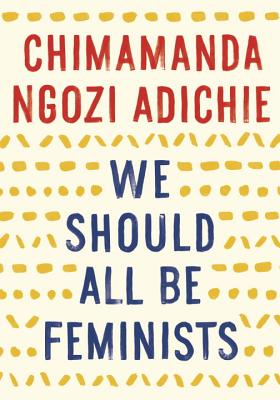
weshouldallbefeminists
We Should All Be Feminists

Adult Fiction
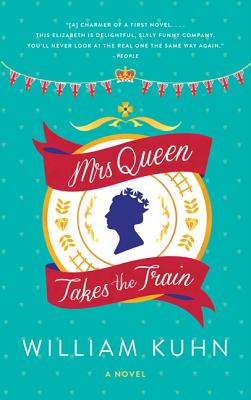
mrsqueen
Mrs. Queen Takes the Train

YA
killtheboyband peasandcarrots theseshallowgraves
Kill the Boy Band
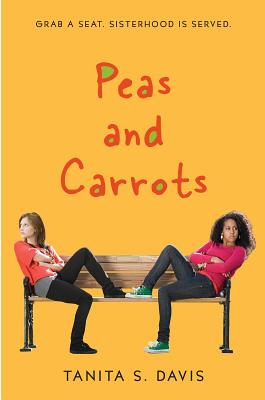
Peas and Carrots
These Shallow Graves

Middle Grade

fridaybarnslibraryolympics
Mr. Lemoncello’s Library Olympics
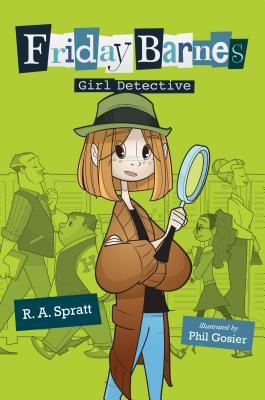
Friday Barnes, Girl Detective

What were your favorites this month?

Audio book: The Buried Giant

buriedgiantby Kazuo Ishiguro
Read by: David Horovitch
Support your local independent bookstore: buy it there!
Content: There’s some violence and mild sexual elements. But, no worse than any Tolkein book. In fact, if you’ve made it through LOTR, you will probably really like this one.

Axl and Beatrice have had a long, good life. Or, at least as much as they can remember. They live in a cave dwelling in Britain, in the time after the Romans left and Arthur’s peace with the Saxons is waning. They’re not quite content, and so they determine that they need to head to a nearby village to see their son — whom they only can barely remember having — because he’s anxiously waiting for them.

They have no idea how their journey will go, or the people they will meet (an elder Sir Gawain among them, much to my delight), and how it will all change them.

I’m not sure how much more of the actual plot I want to divulge. Much like LOTR (which this strongly reminded me of), the plot is less important than the journey. Axl and Beatrice’s journey — though we never really got inside Beatrice’s head, which disappointed me — was a grand one, like Odysseus, or Frodo. The people the met, the friendships they made, the emotional journey they took as well as the physical one all had a mythological quality to it.

I’m sure you can find a lot of deeper meaning in the story as well. But for me, listening to it on my way to and from Dallas (the narrator was excellent, once I got used to his cadence), it was more a long oral narrative, a story to be heard by the firelight over several nights, a story to capture the imagination and to be swept up in.

Which means it’s being told by a master storyteller. And I loved every minute.

These Shallow Graves

theseshallowgravesby Jennifer Donnelly
First sentence: “Josephine Montfort stared at the newly mounded grave in front of her and at the wooden cross marking it.”
Support your local independent bookstore: buy it there!
Content: There’s some mild swearing, murder, and some questionable situations. It’s in the Teen (grades 9+) section of the bookstore, but I’d give it to a 7th or 8th grader, who was interested.

Josephine is a thing that an 1890s socialite isn’t supposed to be: curious. She’s supposed to obey her parents, be elegant and ladylike, and marry a wealthy, eligible bachelor of her parent’s choosing. But, when her father unexpectedly turns up dead, supposedly having shot himself, Josephine won’t — can’t — settle for that. She heads out, teaming up with a reporter by the name of Eddie Gallagher, to find the Truth.

Thus starts a winding, sometimes scary, path that will lead Josephine down paths that would scandalize her family if they knew, but ultimately opens Josephine’s eyes and changes her forever.

I’ll be honest: the mystery was kind of predictable. I guess who it was fairly early on, as well as guessing the “big secret”. I didn’t have the how and why, but eventually, I figured out that too. The thing that kept me reading was Jo herself. I enjoyed the push and pull she had with Upper Crust New York Society, how she was willing to go against the expectations of her family. I found it all fascinating, and found Jo a character worth spending time with this.

Which made it worth reading.

Three Books for National Mentoring Month

One of the things I do as part of my job is write a newsletter for teachers and librarians. It’s the thing I feel the most inadequately prepared for, not being a librarian OR an educator, so I did some asking around to find out what would be most helpful. One of the things was lists of books on a theme. That, I can do.  So, I started a new part of the newsletter where I highlight three books (new or backlist) on a certain theme. This month was Mentors, since I needed a place to start. If you have any theme ideas, I’d love to hear them as well!

I figured it would be a good idea to feature them here as well. Lists are always fun, anyway.

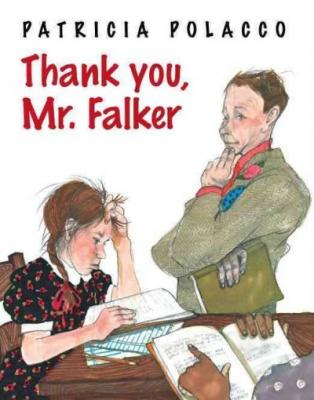
9780399257629 Thank You, Mr. Falker, Patricia Polacco. Believe it or not, I’ve never actually read this one. I do know it is loosely autobiographical and that people love it. But that’s all I know. What have I missed?


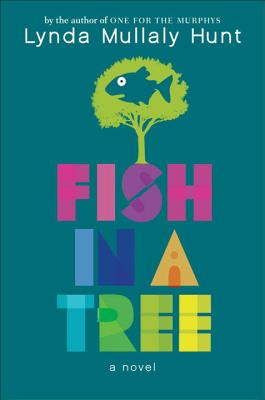
9780399162596Fish in a Tree, Lynda Mullaly Hunt. This one is like so many others: brilliant (male) teacher discovers previously unknown learning disability in a student and makes her shine. But, I enjoyed it anyway.
[clear]


9781250004673

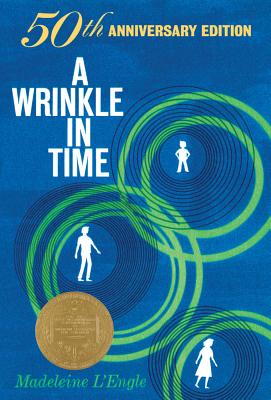
A Wrinkle in Time, by Madeline L’Engle. I’ll admit that this one didn’t readily come up when I was thinking about this list. But, doing some internet digging I came across two things: first, that there aren’t enough books with women mentors (no surprise) and second, that this was an excellent example of strong women mentors. From Meg’s mom to Mrs. Whatsit, Mrs. Who, and Mrs. Which, there are strong women guiding Meg in her journey. No, they’re not traditional teachers, but they count.


Any other books with good mentor/teacher figures that I forgot? Particularly ones with women?

Friday Barnes, Girl Detective

fridaybarnsby R. A. Spratt
First sentence: “Friday Barnes was not an unhappy child.”
Support your local independent bookstore: buy it there!
Review copy snagged off the ARC shelves at work.
Content: There’s some biggish words, and a bunch of swoony 7th-grade girls, but other than that’s it’s aimed toward the 3rd-5th grade crowd. It’s in the middle grade section of the bookstore.

Friday Barnes excels in going unnoticed. In fact, she prefers it that way. She prefers just sliding through school, being little noticed. She also is incredibly observant, so when her uncle (who’s a private investigator) needs some help solving a bank robbery, she helps, solving it. Which means she received the $50,000 reward money. She uses that to go to a posh boarding school, mostly because she wants a change.

What she gets is a brilliant but absent-minded roommate, some ditzy teachers, and a few mysteries to solve (she makes a tidy profit doing so, too.)

It’s not a bad book. I like that Friday is a girl, and that she uses deductive reasoning to solve cases (kind of like Sherlock Holmes, or Encyclopedia Brown). And while the mysteries were run-of-the mill, I didn’t catch the clues enough to solve it myself, so they were pretty smart. That said, the stereotypes drove me nuts. The absent-minded smart girl with the dumb jock brother. The silly 7th grade girls who swoon over a hairy mystery guy in the forest because “hairy guys are cute”. The super hot boy who’s got it out for Friday. Yeah, it’s all supposed to be funny, but it kind of just fell flat. I’d love it if authors stopped using silly stereotypes for humor.

So, in the end, while I like the idea of this one, I didn’t really like the book.

Mr. Lemoncello’s Library Olympics

libraryolympicsby Chris Grabenstein
First sentence: “Just about every kid in America wished they could be Kyle Keeley.”
Support your local independent bookstore: buy it there!
Others in the series: Escape from Mr. Lemoncello’s Library
Content: Much like the first in the series, this one has short chapters and not much objectionable content. There are some bigger words, but Grabenstein defines them for you. It’s in the middle grade (grades 3-5) section of the bookstore.

Ever since they won the competition to get out of Mr. Lemoncello’s library, Kyle and his friends Miguel, Sierra, and Akimi have had a certain amount of celebrity. Signing autographs, starring in commercials, the whole deal. Which, of course, has made everyone (not just Charles and Andrew, who lost the previous competition) a bit jealous. So they demand a rematch. And Mr. Lemoncello responds with the Library Olympics: kids will compete to be on regional teams which will then come to Alexandriaville to compete against the winning four.

The competitions are one part fun and one part silly and one part learning. And, of course, Charles and his mother (ugh) are up to their no-good tricks, trying to wrest control of the library from Mr. Lemoncello (in order to make it a More Respectable House of Learning) and kick him out of town. Additionally there’s a scary good (and kind of scary) competitor from Michigan, Marjory, who really knows her stuff.

It’s a bit more didactic than the last one — yes, we know: learning can be fun and censorship is bad — but I found I didn’t mind. It was fun, and filled with riddles and puzzles that will entertain kids. It’s delightful to revisit the wacky fun library again, even if we didn’t spend as much time there this time. And even though sequels aren’t often as good as the original, it was enjoyable.

Peas and Carrots

peasandcarrotsby Tanita S. Davis
First sentence: “By the door,on the other side of the sheet that divides the room, Baby cries in his car seat.”
Support your local independent bookstore: buy it there!
Release date: February 9, 2016
Disclaimer: I’ve met the author, working with her for KidlitCon in Sacramento and I find her an absolutely delightful person.
Review copy snagged off the ARC shelves at my place of employment.
Content: There are several instances of mild swearing, plus some illusions to adult drug and alcohol use. Because there are no f-bombs, it’ll be in the YA section (grades 6-8, though it might be better for the older end of that spectrum) of the bookstore.

Dess is a 15-year-old girl stuck in the foster care system. Her deadbeat dad’s finally in jail, as is her mom. Dess’s grandmother gave up trying to care for her and her baby brother years ago. Dess is determined: she doesn’t need anyone. And so when she gets placed in a new home, one of an affluent family, she figures it’s not going to last.

Hope’s parents are stable and happy and take in foster kids, including Dess’s brother Austin, to give back to the community. Hope’s used to the revolving door of kids, but there’s never been one close to her age. Until now. And since Dess is doing pretty much everything to keep people at arm’s length, Hope knows that living with Dess is going to be a challenge. She just doesn’t know if she’ll be able to adjust.

First test: which one of these girls is African American and which one is white? (Answer: Dess is white. Did you pass?) That’s actually one of the first things I liked about this: Davis takes your (my) assumptions about foster care, about the State of the Country, and turns it upside down. In this story, the white girl is the one who’s on the run from an abusive family and the black girl who has the stable life. And Davis doesn’t leave it there; there’s discussion about race and class and belonging, which I respect.

And, as an unofficial foster parent myself, I found myself nodding and agreeing and loving the entire book. Yes, the kids come with baggage and a backstory that usually isn’t pretty. Yes, their lives can be changed by living in a stable, more affluent (though we’re not nearly as well off as Hope’s parents) situation. But Davis also got the corollary to that: having a foster kid in your home is challenging, sometimes disruptive, but is also life-changing. And, if you let yourself — as Hope and Dess eventually find out — you will be better off for it.

Definitely worth reading.

Kill the Boy Band

killtheboybandby Goldy Moldavsky
First sentence: “People have called me crazy.”
Support your local independent bookstore: buy it there!
Release date: February 23, 2016
Review copy provided by the publisher.
Content: There’s a LOT of f-bombs, plus an off-screen sex scene. It’ll be in the Teen (grades 9+) section of the bookstore.

You ever finish a book and think “Huh. That was a wild, weird, insane trip”?

Yeah, this is that sort of book.

The premise? Four friends — Samantha, our narrator; Erin; Isabel; and Anna — who are all dedicated fans of The Ruperts (a One Direction-like band) have met up in New York City for The Ruperts’ Thanksgiving show. They’ve managed (thanks to Anna, whose family is loaded) to score a room in the hotel where the boys are staying. Their goal? To score tickets to the show, maybe meet the band.

Or at least that’s what it begins like.

Then, they accidentally sort-of on purpose kidnap the most useless member of the Ruperts, Rupert P., and things kind of go (hilariously) downhill from there.

I’ll admit it: I laughed. I laughed a lot. The premise is so ridiculous, so inane that I had to laugh. The fans are called Strepurs (that’s Rupert’s backwards). The four girls got into ever increasingly weird situations. But, at it’s heart, it’s a dark novel. What is the purpose of a celebrity? How much do they owe their fans? How much should a fan expect? You see this all the time with celebrities, finding a balance between being a private person and appeasing their fans, and Moldavsky just takes it to the extreme. It’s also a musing on the extremes that fans — especially teenage girls, but maybe that’s a stereotype — will go to meet and interact with the object of their affection. It’s a fascinating look — albeit satirical — at the current state of culture.

Did I like it? Yes. Did it scare me? Somewhat. (My boss says it’s because I have teenage girls who are fans of things.) Is it good? Definitely.