The Conch Bearer

by Chitra Banerjee Divakaruni
ages: 10+
First sentence: ” Anand shivered as he carried a heavy load of dirty dishes from the tea stall to the roadside tap for washing.”

Once, Anand had everything he thought his heart could desire. He went to school, his family was happy living in Kolkata, India. Then his father lost his job, and headed to Dubai to get work. Eventually, the money stopped coming, and Anand and his mother were forced to take work. His sister slowly retreated into herself, until all three were just barely scraping by.

Then one day, Anand, in a fit of desperation, silently pleaded for someone — anyone! — to help him, and an old man showed up. Being the kind-hearted person he is, Anand helped the old man, and in return the old man — who is a Master in the mysterious Brotherhood — offered Anand the chance of a lifetime: to aid him in carrying the sacred conch shell back to the Silver Valley. There would, of course, be dangers along the way — a corrupt Healer named Surabhanu is after the shell’s power — and, of course, Anand would be tried and tested in ways he could never imagine.

There’s fantasy, and then there’s epic fantasy: the journey against incredible odds that our hero has to take, succumbing to temptations and betrayals, passing tests and trials, learning and growing until he becomes something greater than himself. Sure there’s magic (not the least of which is a “talking” conch shell) — though of a more mystical sort — and danger — natural and supernatural — and battles — which is to be expected — but mostly it’s about Anand and his growth and learning process.

All this gave the novel a formulaic feel, but perhaps because it was set in India or perhaps because Divakaruni is an intriguing storyteller, it rose above the fantasy cliches that were littered throughout and became an intriguing read.

A Finder’s Magic

by Philippa Pearce/Illus. by Helen Craig
ages: 8 to 10
First sentence: “There was a boy who went to bed in despair.”

Some books are fun and exciting and adventuresome. Some books lure you in with flashy covers, or great blurbs, and keep you there with engaging characters and winning premises. Then there are other books, quiet books, simple books with a simple story to tell. Books that when you finish, you think that was nothing remarkable, except it left you with a smile on your face. And, really, that was sufficient.

The plot is so simple, it’s almost mundane: Till has lost his precious dog, Bess. He’s heartsick about this, and has trouble sleeping one night. The next morning, a strange, little man appears at his gate and announces that he’s a Finder: someone who helps find things (I could use one of these on occasion!). He takes Till through the path of the previous day, and they make it to the meadow where Bess was last seen. Then the Finder begins to work his magic… he gives Till the courage to talk to the old ladies — Miss Gammer and Miss Mousey — who live in the meadow. He gathers information from the other creatures in magical and mysterious ways. And they do find Bess (was there much doubt?) in a wholly unexpected way.

Still, in spite of the plain plot, the book had a certain charm. Much of this was garnered from the inscription: Philippa Pearce wanted to write a book for her two grandsons, and wanted to collaborate with her grandson’s other grandmother: Helen Craig. They came up with an idea, and as soon as she passed it off to Helen, Philippa died. It’s a touching little love story to her grandchildren, a legacy of imagination left in words. But it was also in Helen Craig’s beautiful watercolor (I’m assuming) illustrations, and in the simplicity of the story itself.

I’m not sure who would want to pick this up — it doesn’t really scream read me (though I picked it up on a whim). However, I do think it would make a lovely read-aloud to a younger child. Which is maybe what it’s really meant for.

The Beef Princess of Practical County

by Michelle Houts
ages: 9-12
First sentence: “The arena glowed in the summer night.”
Support your local independent bookstore: buy it there!

One of the most told stories in fiction is the one where a kid — boy or girl — has something to prove (to theirself or others), and overcomes odds (no matter how small) and trials in order to achieve what they set out to do. This story — about a girl on a northern Indiana cattle farm — is really no different. Libby Ryan wants to prove — to herself and her dad — that she can she can raise and show steers as well as her older brother did. She has to overcome her insecurities, figure out how to raise the two steers she’s chosen, learn how to show the steer properly, and — most of all — learn how to let go.

Initially, it seems like a fairly trite story, and in some ways it is: part of the conflict is some cardboard cut-out baddies in the form of three uber-shallow Darling sisters. There were times when the Darlings seemed to serve little or no purpose, except to show that prissy girls shouldn’t be in the cattle showing racket.

That said, it’s a good cow book. Michelle Houts has a genuine affection for the country and the people who work the land, as well as for the animals, and it shows. The animals are not just background or plot devices, but actual characters: living, breathing entities, with personalities that you, as a reader, come to understand and cheer for. The language she uses to describe the cows — “beautiful eyes, framed so perfectly by those long, wispy lashes” and “cheerful enthusiasm” and “playfully wrapped his long, rough tongue around my hand”– shows that Houts not only knows cows, but has a genuine affection for them.

If it sounds like a book only 4H people would love, it isn’t. Yeah, it’s about ranching and farming and small towns (and maybe I liked it because I have all of that in some form or other in my history), it’s also because it is about accomplishing something difficult and learning how to do the hard things in life.

Which is something everyone can relate to.

Rules

by Cynthia Lord
ages: 9-13
First sentence: “
Support your local independent bookstore: buy it there!

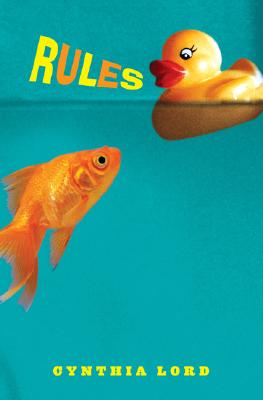
Catherine’s little brother, David, has autism. Which really isn’t that bad, in Catherine’s mind. Sure, it means she has to babysit, and keep her stuff away from him, and write up rules so he can understand how the world works. But, she really does love her little brother, even while she hopes for a more “normal” life.

Then, when a girl her own age — Kristi — moves in next door, she has the chance. As it turns out, she also meets a guy — Jason — at her brother’s Occupational Therapy appointments. Jason, however, is in a wheelchair and can’t talk except for pointing at word cards on a tray attached to his chair. Catherine strikes up a friendship with him, and enjoys his company, yet she’s afraid to tell Kristi about it.

While the conflict in this book is minimal — mostly it’s just Catherine’s frustrations with her life being defined by her younger brother — it’s a really engaging book. While I have minimal experience with any sort of disabilities, I liked that she didn’t treat them as anything exceptional. Fact: Jason was in a wheelchair and couldn’t talk. It didn’t hinder his character development or the plot. Lord even managed to get across Jason’s sense of humor. Fact: David was autistic. Again, it wasn’t something that was seen as a challenge — though for Catherine it certainly was at times — but rather as just part of who David was. Lord writes in such a way that treats everything with not only humor, but also sympathy, which makes everything feel exactly right.

And all of it together made this book simply un-put-down-able.

Faith, Hope and Ivy June

by Phyllis Reynolds Naylor
ages: 10-13
First sentence: “They’ll probably be polite — crisp as a soda cracker on the outside, hard as day-old biscuits underneath.”
Support your local independent bookstore: buy it there!

Ivy June lives in the backwoods of Kentucky and goes to a fairly small public school. Catherine lives in a big house in Lexington and attends a private, all-girls school. The two girls are part of an exchange program: Ivy June will spend two weeks with Catherine in her house and attending her school, and then Catherine will do the same, and live two weeks in Ivy June’s house.

It’s an interesting city mouse-country mouse premise, as Ivy June and Catherine both deal with their expectations about the other, and realizing not only what’s deficient about each of their lifestyles, but what’s good about them, too. Told from Ivy June’s point of view, the book chronicles the weeks through both narrative and journal entries.

I was okay with it — though I cringed at the stereotypes: country folk are simple but hardworking and have a tough time expressing emotions; city folk are shallow, picky and have a tendency to overly praise their children — until the ending. Then it got overly maudlin for my tastes — enormous tragedies, grand life lessons learned. And, after I finished, I realized that the whole book was a bit on the preachy side. Yeah, yeah, don’t judge and do your best.

Not the best book I’ve spent a day on. Which, interestingly enough, I found really depressed me.

Ariel’s Journey

by Doug Kane and Christy Wood
ages: 9-13
First sentence: “My jeans are trashed!”
Review copy sent to me by the publisher (or a publicist? I can’t check since I lost all my emails…)

This is a horse book.

This is a horse book that M kind of liked.

This is a horse book that really knows its audience.

This is a horse book that I couldn’t make it past the first three chapters after which M said it got interesting.

This is a horse book that I felt the authors got stuck in the old show-not-tell mire.

This is a horse book that I could care less about.

This is a horse book, though, that if you have a pre-teen girl who LOVES horses, it would be a good fit for her.

I won’t begrudge you for liking horse books. It’s just the rare horse book that I can tolerate.

This is not that horse book.

The Evolution of Calpurnia Tate

by Jacqueline Kelly
ages: 10+
First sentence: “By 1899, we had learned to tame the darkness but not the Texas heat.”
Support your local independent bookstore: buy it there!

Calpurnia Virginia Tate (Callie Vee for short) is the only daughter of seven children, positioned smack dab in the middle of all those boys. It’s not an enviable position, even though she’s her oldest brother, Harry’s, only pet. It’s made even less enviable because Calpurnia is not a huge fan of anything domestic: sewing, tatting, knitting, cooking… no, she’d much rather be outside.

Then, the summer of 1899, she and her grandfather (who has been living with them all the time) discover each other. Her grandfather is a naturalist of sorts — a founding member of the National Geographic Society and all — and Callie discovers that studying the world around her is what she really wants to do. She spends as much time as possible with her grandfather — in between piano recitals, forced sewing, school, and managing her brothers’ crushes for her best friend — living for and thriving off of the time spent studying and observing.

Of course, since this is 1899 and Texas, Callie couldn’t be allowed (allowed!) to proceed this way: good, proper, well-off girls just didn’t tromp through the underbrush looking at bugs. For me, this was the heart of the novel, this pull for Callie to do what she wanted and not what everyone expected of her:

I clomped through the kitchen on the way to washing up and said to Viola, “How come I have to learn how to sew and cook? Why? Can you tell me that? Can you?

I’ll admit it was a bad time to ask her — she was beating the last lumps out of the gravy — but she paused long enough to look at me with puzzlement, as if I were speaking ancient Greek. “What kind of question is that?” she said, and went back to whisking the gravy in the fragrant, smoking pan.

My Lord, what a dismal response. Was the answer such an ingrained, obvious part of the way we lived that no one stopped to ponder the question itself? If no one around me even understood the question, then it couldn’t be answered. And if it couldn’t be answered, I was doomed to the distaff life of only womanly things. I was depressed right into the ground.

The other things about the novel are true: Callie’s mom is a bit much (though I think I understood where she was coming from), and her father is little more than a cardboard cut-out. But, I adored the brothers — especially J.B., Travis and Harry — and her grandfather more than made up for her parents in character. Callie is, yes, spunky, but she’s more than that: she’s curious and observant, and — the thing that really got to me — doesn’t really want everyone to grow up and change. A girl after my own heart.

I also liked the way Kelly evoked a particular feel; the sense of anticipation, of change that must have accompanied the time period was quite palpable in the book. It’s a historical novel that actually felt like it. Callie was modern, sure, but she was struggling with her modernity against all the traditional values that were around her, and that dichotomy was intriguing.

A good story.

Little House in the Big Woods

by Laura Ingalls Wilder
ages: 8+
First sentence: “Once upon a time, sixty years ago, a little girl lived in the Big Woods of Wisconsin, in a little gray house made of logs.”
Support your local independent bookstore: buy it there!

I just finished reading this to A last night; her first time meeting Laura and Mary and Ma and Pa. My… I don’t know how many times I’ve read this book. I first cracked the cover when I was about eight, and I fell in love with the Ingalls family. I admired Laura’s spunk, and the fact that she was so not-perfect. I wanted to experience what she experienced, live the life that she lived.

And so, it’s one of those books that is a must read for my girls. (Granted, so far, M and A are the only two that expressed interest. C preferred to read Wizard of Oz, so I forgave her for not being interested in Little House.)

What I noticed this time around — aside from A’s questions about life back then (playing with a pig’s bladder? Making cheese? Really?) and her constant “Is it really real?” — is the affection that Laura had for her childhood and her family. She loved her parents — her Pa especially — and it comes through loud and clear. And — this year at least, I know things get hard once they leave the big woods — she had a wonderfully idyllic childhood. Sure, they worked hard and things weren’t cushy for anyone, but they were happy. And that happiness leaps off the page.

I’m just glad for the chance to share the book with my girls. I don’t know if they’ll be as entranced with it as I was, but at least they got to experience a different sort of life, if only through a book.

On top of that, I got to share a little piece of me with them.

Dreamdark: Silksinger

by Laini Taylor
ages: 10+
First sentence (ARC): “”The Tapestry of Creation is failing,” hissed the Djinn King.”
Release date: September 17th; review copy sent to me by the publisher.
Support your local independent bookstore: buy it there!

I read the first book in this series a year and a half ago, and (for a variety of reasons), I decided not to reread it before delving into this sequel. When I went back and looked at my review for the first one, before sitting down to write this one, I realized two things: 1) everything I said the first time around is just as true for the second book, and 2) while you can read the second book as a stand-alone, you really should read them in order, and quite possibly one right after another. (For you “I-hate-waiting-till-a-series-is-done” types, you might want to put it off because the overall story isn’t finished.)

This story picks up one month after Blackbringer. Whisper Silksinger — the last member of a dying fairy clan of weavers and guardians to the djinn Azazel — is fleeing for her life from a group of devil monsters. She is tasked with the job of getting Azazel back to his throne in Nazneen, which — of course — is much easier said than done. Assisting her is Hirik, a Mothmage, who is in disguise because his clan is the most hated in all of fairy because of their betrayal in the Dawn Days. He is out to become the champion of Azazel because he feels a need to restore his clan’s honor.

Whisper is a slight thing, barely speaking above a whisper (hence her name), and constantly trembling in fear. Don’t let that fool you, the girl is an admirable heroine, determined and plucky and strong in ways that, while not flashy or dramatic, are still quite substantial. Hirik, too, is admirable: one of Taylor’s gifts is the ability to write both strong male and female characters who compliment each other rather than competing against one another.

For those who loved Blackbringer, Magpie Windwitch and Talon Ratherstring are also a big part of this story (yay!). They’re tasked with the waking of all the djinn, in order to help repair the Tapestry. This — of course — isn’t as easy as it sounds, either, especially after their path changes in order to find and protect Whisper. It’s the last third of the book that is the most intense; Taylor builds, and maintains, suspense brilliantly, keeping the reader turning page after page dying to know what’s going to happen next.

Even though it’s the second in a yet-to-be completed series, one thing that I really appreciate is that it wraps up the story while leaving a thread alive for the next book. A big complaint I have with many series is the “to be continued” aspect of the books, the cliff-hanger feeling at the end. There is no such feeling at the end of this book; Taylor leaves us satisfied with the story as is, and yet curious about what will happen next. Which is, in my mind, how a series is supposed to work.

It’s also hard for an author to keep the same spirit and drive that they captured in the first book going in the subsequent books of the series. This is not something Taylor suffers from: I enjoyed Silksinger as much as I remember enjoying Blackbringer, and I am excited and curious as to where Taylor is going to take the story.

And that, my friends, is a mark of a great writer.

When You Reach Me

by Rebecca Stead
ages: 10+
First sentence: “So Mom got the postcard today.”
Support your local independent bookstore: buy it there!

I knew — knew — that I had to read this book back in April, when Betsy wrote about it. (Go take a moment to go read it, if you already haven’t. It’s one of the ones that leaves me in awe of Betsy’s writing ability. Then come back, and be kind to my review.)

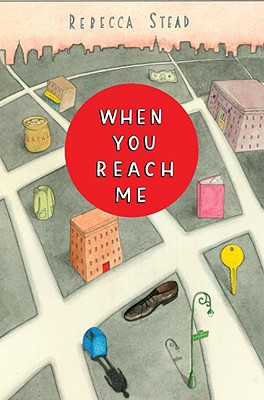
It has the feel of those books about precocious kids in the 1970s, books that I loved growing up: The Mixed-Up Files of Mrs. Basil E. Frankenweiler, The Westing Game, Harriet the Spy, and — most of all — Wrinkle in Time. The last one, in fact, plays a major role in the novel: our main character, Miranda (named for the Miranda Rights) adores Madeline L’Engle’s classic, preferring to carry around and read her beat-up copy rather than the books with the spunky girls on the cover that her teachers put in front of her.

There is so much to love about this book. From the tight writing — as Betsy pointed out: Stead is not only amazing at capturing characters with minimal descriptions, but also at foreshadowing — to the plot itself, there is not a wrong moment in the book. For me, the best part of the whole book is puzzling out the mystery along with Miranda. It’s not a completely implausible puzzle, once one gets over the initial conceit, and it’s fascinating to see how all the pieces fall into place.

Fascinating doesn’t cut it: it’s a remarkable book all around.