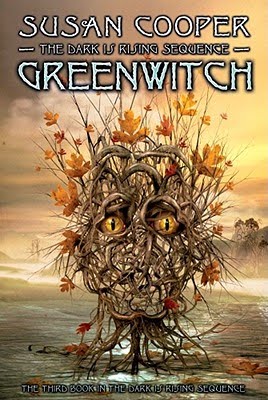
Greenwitch

by Susan Cooper
ages: 10+
First sentence: “Only one newspaper carried the story in detail, under the headline: Treasures Stolen from Museum.”
Support your local independent bookstore: buy it there!

I found as I read this one last night, that I remembered it more than any of the others (save Dark is Rising). I think, upon reflection (such as it is right now), that it’s because Jane is the most crucial to the plot. She doesn’t do the most — that’s fairly equally distributed among the boys — but she is essential to the arc of the story in a way she wasn’t in Over Sea, Under Stone. And I liked that.

The Drew kids are back in Trewissick, mostly because the Grail (which they had found only the summer before) has been stolen. They know it’s the Dark that did it, because Merriman (or Great-uncle Merry; though Cooper stops calling him that about halfway through the book) is suddenly around again to solicit their help. Except this time, Will Stanton is along for the ride. There’s your usual twists and turns and adventures, but they all seemed a bit subdued (or was it me, reading this late at night?) compared to the previous two books. Barney gets captured by the Dark (again), Simon’s a bit bristly, Will is still his Old self (which puts both Barney and Simon off, the why of which I never quite figured out), Merriman still lurks and guides, and Jane — seemingly insignificant Jane — saves the day.

It’s partially up to Jane because the title character, the Greenwitch, is a local Cornish tradition that only women can participate in. And because of a wish Jane made, a nice unselfish wish (I could get into women’s roles here, and how it’s stereotypical for the girl to be unselfish, but I won’t; mostly because I’m not quite awake), she’s the one the Greenwich turns to, once the magic sets in.

It wasn’t as dull as I found Over Sea, Under Stone to be, mostly because it’s a lot thinner, and the plot moves more quickly. And, for some reason, because Will is mostly a side character here. I actually found I liked this book. And now, on to the next one.
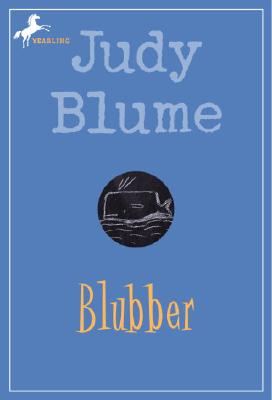
Blubber

by Judy Blume, read by Halley Feiffer
ages: 10+
First sentence: “It’s very foolish to laugh if you don’t know what’s funny in the first place.”
Support your local independent bookstore: buy it there!

Final thoughts: MEAN GIRLS. Oh, my heck. Mean, mean, mean, mean girls. Please, please, please DON’T EVER let my girls be a Wendy, Jill, or even a Linda.

This was hard, hard book for me to listen to; I picked up the audio book because I knew I’d be driving today and I wanted to be able to multi-task for the 48 Hour Book Challenge. But, between the reader — she did a fantastic job making everyone supremely annoying — and my recent re-reading of Harriet the Spy, this book was almost too much to take. (Ask M; I was shouting at the CD at some points!)

Basic plot, if you’re like me and escaped reading this as a kid: Jill is your average 5th grader, not really popular, not really disliked. Until one day, the Queen Bee, Wendy, throws a note on her desk, suggesting a nickname for the chubby girl, Linda, in class: Blubber. Jill — for reasons unspecified, but known to every pre-teen and teenage girl — goes along with this, helping Wendy and her cronies make Linda’s life downright miserable. Harsh, harsh, mean, harsh, bullying, terrible: why would anyone want to be friends with Wendy? Seriously. (Yes, I know I’m reading this as an adult. Hubby got all philosophic on me: it’s a Hobbsian world… kill or be killed. But, still.) Anyway, eventually, things get turned around on Jill: she stands up for Linda, in a manner of speaking, and then finds herself on the bad end of Wendy’s stick. Thankfully, she has the balls to stand up for herself, even though it terrifies her (and unlike Harriet — I liked the reference Blume made to Harriet in the book; nice touch — doesn’t really retaliate, but takes the higher ground), and things kind of move on. Though there’s no resolution for Linda, which is something I, personally, wanted.

I think that’s what made it hardest for me: I identified, and sympathized, with Linda. I wanted her to stand up for herself, or someone to come to her rescue. And the fact that she really didn’t get that bothered me. Immensely. It’s more realistic like that — kudos to Blume for keeping it real (I realized that Laurie Halse Anderson reminds me quite a bit of Judy Blume), but still, it made for a bitter pill going down.

That said, I’m going to encourage C to read this book. Shoot, I think I’m going to buy it for my girls. It’s something they need to read.

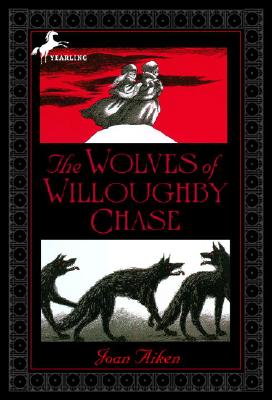
The Wolves of Willoughby Chase

by Joan Aiken
ages: 8-12
First sentence: “It was dusk — winter dusk.”
Support your local independent bookstore: buy it there!

Upon discovering that I haven’t read (it’s #58) this beloved classic, a dear friend of mine insisted upon it, even lending me her well-worn paperback copy. I couldn’t turn her down, and (sooner rather than later) got around to reading it this week.

And… I thought it was very cute. Not really hilarious, like the back said it would be, but very Noel Streatfeild kind of crossed with Roald Dahl, with a bit of Frances Hodgson Burnett thrown in.

It’s the story of two cousins: Bonnie (the rich, impulsive one) and Sylvia (the poor, sweet one). Sylvia’s parents have died and she lives with her old Aunt Jane. Aunt Jane can’t take care of her anymore, so she ships Sylvia to live with relatives at Willoughby Chase. It’s a harrowing train ride out there — the train is beset by wolves, which are common in that part of England. But, that notwithstanding, Sylvia is poised to have an enjoyable time living there, since she and Bonnie — and Bonnie’s friend Simon, a homeless boy who basically makes a living raising and selling geese — all get along swimmingly.

Enter Miss Slighcarp — Aiken has as much talent with names as Dahl does; doesn’t Slighcarp just sound evil? She’s the governess, and when Bonnie’s parents take off on a trip to the islands for Bonnie’s mother’s health, Miss Slighcarp basically takes over. (In fact, she’s in on a plot to sink the parent’s boat! The horror!) She cuts back on Bonnie and Sylvia’s freedom, she dismisses loyal servants, she’s mean, horrible, and in every way a very good Dahl villain. And things only get worse when she gets wind of Bonnie’s plan to get help: she ships Bonnie and Sylvia off to Mrs. Brisket (again: what a great name!), who runs a “orphanage” (read: workhouse) for girls. It’s only with Simon’s help that plucky Bonnie (because even though delicate, sweet Sylvia tries to be Brave, the circumstances are Too Much for her) and Sylvia are able to escape to London to get help and all the bad guys get their comeuppance.

It is a delightful romp through the English countryside, and nothing like I thought it would be. Which is a good thing, all around.

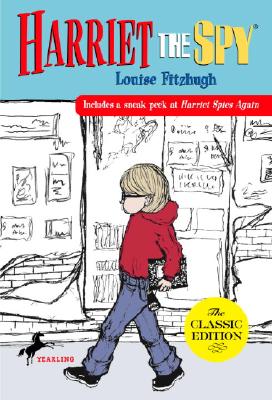
Harriet the Spy

by Louise Fitzhugh/Read by Anne Bobby
ages: 8-12
First sentence: “
Support your local independent bookstore: buy it there!

We took this audiobook on our recent vacation to Kansas City. I had remembered liking it — nay, loving it — while I was a kid, and I wondered how it would hold up. That, and I figured C needed to read it, since we own it and she’s shown no interest in cracking the actual book.

It started out as just Hubby — who had never read it — and I listening to it. He was astounded, and kept making remarks like, “These people are horrible!” and “They’re all insane!” By the end, we were all listening, the girls were begging for the next tape, and yet they couldn’t believe what a brat Harriet was. And, you know: while it was a decent story, and it held together on its own terms, they were all right.

To refresh your memory: Harriet is an only child living in a Manhattan house. It’s probably the 1960s (when the book was written), and she has both a nurse and a cook, because her parents are too busy working or doing whatever uppity Manhattan socialites do to actually, y’know, parent. The nurse is Ole Golly who encourages Harriet in her precociousness, most particularly in her desire to become a spy (she sneaks around the neighborhood spying in on a few particular families) and her copious observing and note-taking. Of everything and everybody.

If this is not weird enough — Hubby was saying that Harriet was a bit pathological and OCD about her notebooks — Ole Golly falls in love, gets married (after getting fired) and leaves. Which sends Harriet into an emotional tailspin. On top of that, her classmates find her notebook and read it. All the nasty, yet honest, observations that Harriet has made about each one of them, which were never meant for anyone’s eyes. They all declare war on Harriet, even her two best friends Sport and Janie. No one will talk to her, they ostracize her from their doings, they essentially leave her alone. Which (of course), makes matters worse. Now, to be fair: they shouldn’t have read Harriet’s notebook. But then again, Harriet doesn’t take it well: she retaliates full-force. And to be fair, again: her parents are a piece of work. They eventually take her to a shrink, who’s one of the only sane adults (nay, characters) in the book, and he gives them a plan of action. Which, thankfully, solves the day.

I’m split about this one, honestly. I did like it: it was funny, it was interesting, and Anne Bobby did a terrific job narrating the book. But. I didn’t like Harriet; no one liked Harriet. I didn’t like most of the characters in the book. In fact, it almost had that awful “oh, no what’s going to happen next” feel to it. What horrible thing is Harriet going to see? What horrible thing is Harriet going to do? What horrible thing are they going to do back? It never quite crossed over into the too much camp, but the vibe was there.

But, it was entertaining. Everyone was interested in the story, and that has to count for something.

Doesn’t it?

Running Out of Time

by Margaret Peterson Haddix
ages: 8-12
First sentence: “The light woke Jessie, though it was just a glimmer downstairs.”
Support your local independent bookstore: buy it there!

Jessie is a thirteen-year-old girl living in the village of Clifton, Indiana in the year 1840. She’s curious, loves doing dares, and is pretty much happy with her life. Until a diphtheria epidemic breaks out in her village, and her mother, concerned, breaks some news to Jessie: it’s all a hoax. The year is really 1996, the village is a tourist attraction (where the tourists are hidden); the adults were in on the “gimmick”, and were supposed to tell their children when they turned 12. However, things have made a turn for the worse, and the owner’s “men” have people terrified of leaving, or even spilling the secret. Since her mother feels that letting children die as part of a gimmick is unethical — which isn’t the only unethical decision adults make in this book — she asks Jessie to brave the real world and get some modern medicine to help. Jessie has no choice: she has to go, even though the thought of it terrifies her.

The dichotomy between the modern world and the life Jessie has known is, of course, fascinating. Jessie has to figure out most of the things we take for granted: light bulbs, toilets, refrigerators. But there’s also a tension: the palpable feeling that someone is out to get her, even if you don’t know fully the reason why. But that’s where the book fails. Haddix sets up the conflict, and makes Jessie quite awe-struck at what the modern world has to offer. But when resolving all the conflicts, addressing the unethical behavior of the adults, she completely falls apart. Part of it is age group: you can’t address the craziness of Jessie’s father — who truly believes it’s 1840 — or the unethical behavior of the man who set up the village in the first place in a middle grade book. And so, Haddix just ends the story. There is an interesting promise for the future, but no actual, real resolution.

What I found myself most interested in, though, is the mother: what were her motivations for going along with the father? What did she think of all this? Did she ever want to leave? Why did she stick with it for as long as she did?

Maybe, someday, Haddix will tell that story.

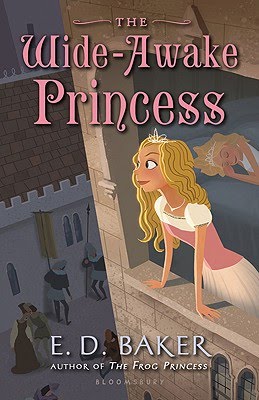
The Wide-Awake Princess

by E. D. Baker
ages: 8-11
First sentence: “‘We can’t let it happen again,’ Queen Karolina said.”
Support your local independent bookstore: buy it there!
Review copy sent to me by the publisher.

In a world where everyone royal is enhanced by magic — handsomer, prettier, better — Princess Annabelle (Annie to her friends) stands out. She doesn’t have any magic. In fact, no magic will work on her, and the longer she’s around, the less potent others magic becomes. So, she’s not exactly welcomed by her parents, or her sister Gwendolyn who, they say, is the most prettiest princess in all the kingdoms.

So, when Gwendolyn pricks her finger on a spindle and puts the entire castle to sleep, it’s up to Annie and one of the king’s guards, Liam (who was out running an errand when the spell hit), to find Gwendolyn’s true love and bring him back to the castle to wake her up.

One of the most charming things about this book was the myriad of fairy tales it breezes through: there’s Sleeping Beauty, of course, but also Hansel and Gretel, Rose Red, Princess and the Pea, Rapunzel, as well as a host of others that I’m sure I missed. The more one knows about fairy tales, the more fun this book is. That’s not to say that it isn’t fun on its own: Annie is a plucky character, and there is more than one instance where she manages to get out of scrapes (no damsel in distress in this book!) or into humorous situations because of her non-magic status. There’s no real bad characters, and sure, the romance that blossoms is to be expected, and the dialogue is a bit stilted, and… but, you know, it works. It’s charming, it’s light, it’s fun, it’s a fairy tale with some clever twists.

And, really, it’s quite delightful.

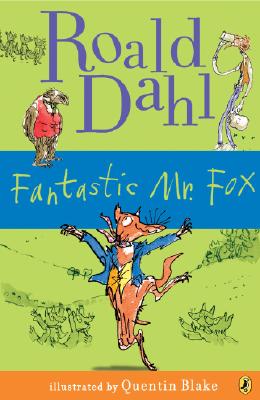
Fantastic Mr. Fox

by Roald Dahl
ages: 8 to 11
First sentence: “Down in the valley there were three farms.”
Support your local independent bookstore: buy it there!

I’m not quite sure what I expected when I started this. It’s Dahl, so something weird, obviously. And Hubby’s been raving about it for years: it was his favorite Dahl as a kid. So, something… fantastic, hopefully.

And so I was surprised at how little I liked it.

It’s not that it was bad or poorly written. It was fine; it’s Dahl after all. But… perhaps that’s the problem. It’s very Dahl. On the one side of the ring are three horrible farmers, Boggis, Bunce and Bean. They’re disgusting, they’re mean, they’re… well, horrible. And on the other is Mr. Fox and his family — wife and three kids. They have to eat, of course, and what better catch is there than the ducks, geese, chickens and turkeys from the horrible farmers. So, Mr. Fox (being a fox), steals them for his family. The farmers get wise, and eventually try to catch Mr. Fox. They shoot his tail off, and then stake out his house. Mr. Fox (being a fox), is much to wily to catch, and he and his family dig ever deeper into the hill. There ensues a huge siege by the farmers; eventually the foxes will starve and come out, right?

And this is where the weirdness starts. Mr. Fox gets his friends — Badger, Rabbit, Mole — and they start digging. Amazingly, they hit right in the middle of each of the three farmer’s storehouses, creating a grand feast for all of the now-trapped underground animals, and so they never, ever have to go outside again. And… that’s it. That’s the story. It’s short, it’s for younger kids, but I’m not satisfied.

Really. That’s it. Huh.

I like Dahl’s weirdness, the fact that the horrible people get their comeuppance. But, there just wasn’t enough to this story. It wasn’t developed enough, even for a middle grade book, and it just ended, which was highly unsatisfying.

Sigh. Some books were just meant to be read as kids, I guess.

The Dark is Rising

by Susan Cooper
ages: 10+
First sentence: “‘Too many!’ James shouted, and slammed the door behind him.”
Support your local independent bookstore: buy it there!

When Kelly at The Written World suggested doing another read buddy read and I found that she had stopped reading The Dark is Rising sequence after the first book (understandable), I suggested reading this one. I’m always up for an opportunity to spread the joy of my favorite mid-winter read. Thankfully, she was willing to go along with me on that. Head over to her blog for the first half of our conversation.

Melissa: I can see that. Perhaps, like you said, it’s a case of not having read the book before, when you were a kid. I do think her use of the mid-winter holidays as the strongest time for the Dark was interesting, if not unique. I thought the arc of the book from mid-winter through Twelfth Night was interesting, as well. As for character, I liked the Stanton family. Will was okay — he was obviously an archetype — but I really liked the whole family dynamic. The craziness, the loudness, the sheer familial presence that they had. And the way that Will interacted with the individual siblings, especially Paul and James. Speaking of the brothers, one of my favorite scenes in the book was on Christmas day when the Dark attacked the church. I thought the use of light and Will’s tender concern for his brother was nice. Merriman was interesting, even though, in retrospect, I’m not sure how much he actually *did*. I thought that it was unclear in this book that he was Merlin, however. I do wish that had been made more clear. There were aspects of the Will-Merriman relationship that reminded me of the Merlin-Arthur one in Once and Future King, which, for me, fed into the whole mythical feeling of the book. Was there anything that stood out to you at all?

Kelly: I liked the idea of the Dark being the strongest during mid-winter. I know that when that time of the year hits it feels pretty Dark out. It makes sense that the terrible things would happen during then; especially considering people get depressed during the holidays. As for the characters, I was not a huge fan of Will. I imagine he would have worked if I had read the book as a child, but I couldn’t relate to him. I did like his family, though, and the family dynamic. It was done pretty well. You got the sense of the large family and making everything work the best that you could, so I liked that. I have to agree on the Arthur connection. I was told it existed, but if I didn’t know it was there I am not sure if I would have made the connection. I guess I was hoping there was more to it, but really there was just a guy with a similar name taking on a child and teaching him skills. It could have been any story. Merriman was a mage, so I suppose there is that connection, but otherwise I didn’t really see it. I was reading your response and saw the word ‘nice’ and it got me thinking of the book as a whole. This is a ‘nice’ book. There is lots of effort to be ‘nice’ to other people and being ‘nice’ about the story. I think that is why I feel it didn’t work well for me. Maybe if I was child, but as an adult it was just too ‘nice’. Does that make sense?

Melissa: Perfect sense. Though I wonder if a lot of the niceness is a result of the time it was written in 1974. I know when I go back and reread books from the 70s, I’m struck with how, well, different they are from the books that are written now. It’s almost as if we had a completely different sensibility back then. Then again, a story is almost as much a reflection on the time it’s written as anything else. There’s much about this book that can be pointed to the conflicts in England and the world in the 1970s (not just the language… the one that struck me was calling a girl a “bird”), rather than it being just an overall fantasy story. Or maybe I’m reading too much into it? I don’t suppose you’re going to bother with the rest of the series then?

Kelly: Yeah, it is the time that it was written in. When I was a kid it didn’t bother me, but as an adult I guess I am into more ‘risque’ writing. It’s the same with say Carolyn Keene. When I was a kid I liked Nancy, but when I go back and reread that series now I find it way too ‘nice’. My reading has just evolved since I was a kid and I am interested in other things, I guess. You are seeing things that I didn’t even think about. I think I went into the book not expecting to like it at all, so I didn’t read too far into things! I might read the rest of the series; I own them all, but I am not in any particular hurry to do so. Hopefully I enjoy our next buddy read better!

Melissa: Maybe I’ll let you choose it next time. 😀

Kaleidoscope Eyes

by Jen Bryant
ages: 10+
First sentence: “I wake up every morning to Janis Joplin.”
Support your local independent bookstore: buy it there!

It’s the summer of 1968, and 13-year-old Lyza Bradley has had enough of death and abandonment. It’s been two years since her mother disappeared, and with the Vietnam War raging, boys in her small South Jersey are coming home in coffins more than she’d like. So, when her Grandpa dies, it’s almost more than she can bear.

Except… Grandpa left something just for Lyza: three maps and a mystery to solve. With her two best friends — Malcom and Carolann — Lyza unravels the mystery of the maps to discover that famed “reluctant pirate” Captain William Kidd possibly buried treasure right in their town. The question is: can they find it?

I have no idea what I expected when I pulled this off the shelf. I was intrigued by the title: what would a book that quotes a phrase from a Beatles song be about? Turns out that it’s much like a kaleidoscope: a lot of little bits and pieces of a lot of things working together to make a patchwork story. There isn’t an issue of the late-1960s that doesn’t make a passing reference: racism — Lyza’s best friend Malcom is African American, and has to deal with racism; the Vietnam War and all that entails from the fighting to the protests to the draft and all that entails; hippies — Lyza’s older sister Denise and her boyfriend Harry certainly qualify; and drugs — at one point, Lyza’s father thinks she’s doing drugs, even though what she’s really doing is digging up buried treasure.

It’s not heavy-handed, though, which, at the beginning I was afraid of. Once the maps come into play, however, the issues fade to the background. They were a part of life in 1968; it would have felt odd not to have mentions of Dr. King’s or Robert Kennedy’s death. But the primary focus of the story was the adventure and discovery of the kids. And because of that, it became also a homage to freer times, when three 13-year-olds could go all over a town (and to other towns) without adults knowing more than just the bare minimum.

The format also helped: it’s a novel in verse, and the way some of the poems reflected the mood of the characters, or the events was clever, but not distracting. And, again, they had a kaliedoscopic effect: a lot of little pieces that came together to make a nice story. Which is really rather neat.

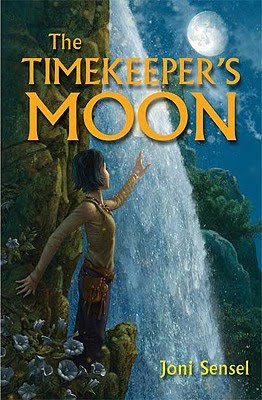
Timekeeper’s Moon

by Joni Sensel
ages: 11+
First sentence: “The moon refused to hush or come down, so Ariel Farwalker was forced to climb up.”
Support your local independent bookstore: buy it there!
Review copy provided by the publisher.

A little while ago, Charlotte reminded me how much I loved The Farwalker’s Quest, and reminded me that I really wanted to read the sequel. So, off the shelves it came, and (as I expected) I was not disappointed.

Ariel has been plagued by the moon speaking to her. She, initially thought she was going crazy, but as the voices in her head become more insistent, she’s realized that she needs to heed what the moon — and her feet — are saying. That she needs to go, somehow, and find the sender of the telling darts that were the starting point of her first journey. So, she and Scarl — her father figure, friend and protector — head south, with only Ariel’s instincts and a vague map/calendar to guide them, not knowing what they’ll find.

Like Farwalker, much of the joy in this book is in the world that Sensel has created. Going south gives her a reason to introduce us to more of this world, including a swamp village, Skunk, where Ariel finds friends, traveling companions, and even a first love. They discover more remnants of the world before the Blind War, and find that perhaps not everyone has completely forgotten the old ways. And, in a very interesting use of fantasy conventions, they do find the answers to the questions that led them on this journey.

Sensel is not only a gifted world-builder, she has a knack for involving the reader in her world, for making us care about the characters and the situations. She is also a master at keeping us — or at least me — as readers engaged. It’s a lyrical book, but it’s never slow, and full of enough twists and turns to keep me guessing as to how it will all turn out. My only quibble is with the ending — it seemed a little too… convenient. Pat. And yet, confusing. I knew what was going on, but I had to read it through twice to fully “get” it.

Still, that’s a small quibble, and it doesn’t ruin the book at all. If you haven’t experienced the world that Sensel has built, do. It’s thoroughly captivating.