The Absolute Value of Mike

by Kathryn Erskine
ages: 10+
First sentence: “My cell phone rang just as I was about to crush the Emperor of Doom’s trebuchet and save the villagers from certain annihilation.”
Support your local independent bookstore: buy it there!

Mike and his Dad get along okay. His dad, a professor of mathematics and engineering, handles the earning of money and the being of genius; Mike handles everything else (from bills to shopping). It’s an okay life, with one exception: Mike constantly feels like he’s not living up to his father’s expectations. He feels like his dad wants him to follow in his footsteps, and Mike is just. not. good. at math.

Then one summer, Mike is sent to live with is great-aunt and uncle, Moo and Poppy, while his dad heads over to Romania for a six-week teaching gig. There’s one parting instruction from his father: help Poppy build an artesian screw (yeah, your guess is as good as mine). Once he gets to Do Over, PA (it was Donover, but the sign lost it’s n.) he discovers that things aren’t what he (or his father) thought they would be. Poppy and Moo’s only son died four month ago, and Poppy hasn’t moved from his chair, or spoken, since. To say that Moo is quirky is an understatement. She’s half-blind, and drives her car (which she has charmingly named Tyrone and speaks about if it’s a real person) recklessly. She’s trying to hold things together while Poppy falls apart, but is only barely making it. Thankfully she has other things to focus on: rescuing resident punk-rocker Gladys from an abusive boyfriend and helping the town raise money so Karen, a local minister, can adopt a 5-year-old boy, Misha, from Romania.

It turns out that there is no artesian screw, either: Poppy’s supposed to be making boxes to sell to help Karen raise money, but doesn’t have a crew. (Artisan’s crew. Ha.) So it falls to Mike to rally the town, get people moving, and help Karen raise the money, and by doing so, he finds his true calling. Now if only he could tell his dad.

Two things struck me about this novel: the town is full of requisite small-town quirky people (why is it that only backward, quirky people live in small, rural towns?), and there was a lot of death and rejection in this book. It seemed that every character, starting with Mike, was dealing with loss in some form or another. (Perhaps Erskine likes dealing with death? It was a main theme in Mockingbird as well.) It could have made for a very depressing book, but instead Erskine chose to focus on the healing. Although I disagreed with the way Mike handled things (I don’t see how being mean to an octogenarian would truly motivate him to get out of the chair), I understood the purpose behind it: even if you’re suffering from loss, life does go on, and healing will eventually happen.

Additionally, the book addressed the way we misunderstand and judge other people. From his lack of communication to his father to his snap judgements of the homeless man he meets, Mike is constantly mis-perceiving people. It’s a hard lesson for him to learn, but in Erskine’s hands, one that doesn’t come off as heavy-handed.

With all the quirkiness and hopefulness, it’s a nice story. But it’s missing the spark it takes to be truly great. Even so, it’s a good little book, one that I think kids will like.

That said, it ended up being a very hopeful book. While I didn’t necessarily
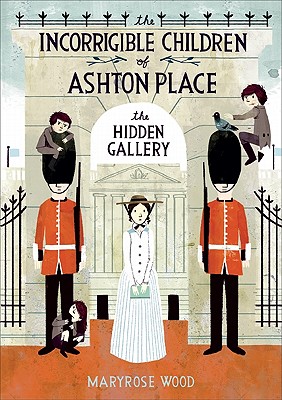
The Incorrigible Children of Ashton Place: The Hidden Gallery

by Maryrose Wood
ages: 9+
First sentence: “But the workman swore the repairs to the house would be finished by now!”
Support your local independent bookstore: buy it there!

When we last left our stalwart heroine Penelope and her wild charges, they were adjusting to life at the majestic Ashton Place. Unfortunately, that wasn’t going to well, and after a disastrous (this book, mush like the first book, makes me want to use grand adjectives) Christmas party, Ashton Place is in much need of repair.

Three months later, those repairs still aren’t finished, much to Lady Constance’s dismay. So, she (upon the suggestion of our fair Penelope) up and moves the whole household to London for a while. Whereupon, many adventures ensue, including (but not limited to) encountering a prophesying gypsy, going to the zoo, luncheon at a very posh restaurant, attempting to ride a bicycle (or a velocipede, as Penelope seems to call it), and attending the opening night at a West End play. So none of those sound terribly exciting, but with Penelope and the Incorrigibles, what is generally mundane always takes on an air of excitement.

Much like the last book, this one is full of wit and humor in the form of incredibly hilarious asides. (Additionally: inventing new words like “optoomuchism”, what happens when one is overly optimistic.) Also like the last book, there are many questions here that are still not being answered, though, almost infuriatingly, there are clues. I feel like I have the puzzle pieces (more of them anyway), and if I could only figure out how they go together, I could see the big picture. (I wonder if this would be as infuriating for kids as it was for me?) It wasn’t enough for me to completely lose interest in the book, but I am starting to wonder if it wouldn’t be best just to wait out the writing of the series, and then read them all back to back.

That way, at least, I’d have the answers to the puzzle.

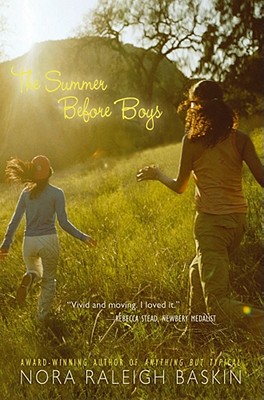
The Summer Before Boys

by Nora Raleigh Baskin

ages: 10+

First sentence: “My Aunt Louisa, who is really my sister, snored like a machine with a broken part, a broken part that kept cycling around in a shuddering, sputtering rhythm.”

Support your local independent bookstore: buy it there!

Julia and Eliza are lots of things: the same age, aunt-niece (though it’s less complicated to say cousins), best friends. They’ve grown up together, spending summer weekends up at the mountain resort where Eliza’s father works. But this summer, the one before their seventh grade year, Julia is spending the entire summer living in the mountains with Eliza because Julia’s mother has been shipped to Iraq as part of the National Guard. It also happens to be the summer when Julia discovers boys; will she let them come between her and her best friend?

It’s a pretty simple premise for a book, but Raskin takes the premise, and exalts it to new levels, perfectly capturing the moment between girlhood and young womanhood, with all it’s anxieties and insecurities and hopes and tensions. She captures the first crush so heartbreakingly well; not to mention the balance a girl must find between the Boys and her own friends. Added to that is the worry and insecurities of Julia not only missing her mom, but concern that she might not make it back. In a very telling scene, Julia starts to freak out when seeing some dress military uniforms, wondering why the Army would come give her bad news at the resort at the same time fully expecting the worst, until she realizes that it’s all for a wedding. It’s heartbreaking, and oh, so real.

It’s a tender, sweet look at a wondrous time of change in a girl’s life.

My Side of the Mountain

by Jean Craighead George

ages: 10+

First sentence: “I am on my mountain in a tree home that people have passed without ever knowing I am here.”

Support your local independent bookstore: buy it there!

I’ve seen this book around for years, and known that I should read it. I didn’t really know what it was about, just that it was on lists of books by people I respect. That, and I’ve enjoyed George’s other stuff.

I’m quite glad I read it, though.

The basic plot for those of you (like me) hiding under a rock: teenage Sam Gribly is incredibly happy living in New York City. And so one day he decides to up and run away to the Catskills mountains to live on a piece of land that has been in the family (but unused) for decades. No one believes he can do it, and yet he not only does, he flourishes. He makes a house out of a tree, learns to trap animals and hunt and skin deer (using every bit of the animal). He raises and trains a falcon. He learns to live with silence and learn the language of the forest.

It’s a simple book, in so many ways. There’s not much going on plot-wise; it’s essentially a wildlife handbook of how Sam managed to make it work in the wilderness. And it’s a simple life he leads: he gets up, he forages for food, he stores for the winter, he swims and fishes, he walks and explores. There’s no rush, there’s no stress, there’s no rat-race. It’s a wonderfully idyllic life.

The thing that I found most interesting, however, was how much Sam learned from books. He kept saying things like, “I read in a book somewhere that” and “the book I read said that”. They really are useful things, books. It also made me quite sad that no one could up and do what Sam did today. It’s not just that there are no places to run to (or that anyone would actually let a teenage boy run away to the wild without calling the authorities), but that a lot of the knowledge in the book is lost. For some reason — and I find this strange, considering that I’m basically a city girl — I find this sad.

Thankfully we have books like these to remind us of simpler times and places.

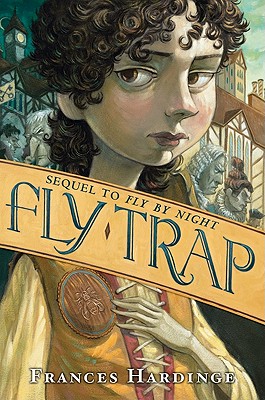
Fly Trap

by Frances Hardinge

ages: 10+

First sentence: “‘Read the paper for you, sir?'”

Support your local independent bookstore: buy it there!

Ah where to begin with the loveliness that is Frances Hardinge’s writing? I’ve compared it to a boulder. I’ve waxed eloquent on the way she handles words. And all of that is still true. This book, a sequel of sorts to her first book, Fly By Night, is huge (592 pages), slow to start and get into, but an absolute delight to read.

We meet up with our plucky heroine, Mosca Mye; her homicidal goose, Saracen; and her con man friend, Eponymous Clent a few months after they caused a revolution in the town of Medalion. They’re basically on the run, and due to some interesting and somewhat unforeseen circumstances, they end up in the unique (to say the least) town of Toll.

One of the most interesting things about Hardinge’s books are the way she invents and plays with religion. In this one, it’s the Beloved: icons, gods and goddesses that govern every hour of the day, every day of the year. Our dear Mosca was born under Palpatittle, the lord of the flies, and her name reflects that. An interesting side note: in this world where Mosca lives, you are not allowed to lie about your name, because that would offend the Beloved. She had found that while she sometimes comes under suspicion because of her name it usually doesn’t hamper her in any way. Not so in Toll.

Toll, for many reasons, has been divided into two towns: Toll-by-Day, in which the “respectable” people born under “respectable” Beloved; and Toll-by-Night, for everyone else. And, to add additional suspense, Toll-by-Night is run by the Locksmiths, an organization that operates on fear and isolation: when a town gets taken over by the Locksmiths, no one hears from them again. Sounds ominous, doesn’t it?

It’s a complex story, one in which you don’t necessarily need to read the first book (though why wouldn’t you?) to enjoy. You would think that, being so large, there would be wasted plot points. Not so: everything in the book is there for a reason, all of which will be shown by the end. It’s like a big jigsaw puzzle: you may not know how all the pieces fit together, but when they do, the big picture is amazing.

It’s not a book for reluctant readers, though. Or even one for those who are kind of half-hearted about their reading. It’s for those who want a challenge, who don’t mind wading through the words, putting together the pieces (I’m mixing my metaphors, aren’t I), and who want to work for the end result, which, like all things you work for, is very much worth it.

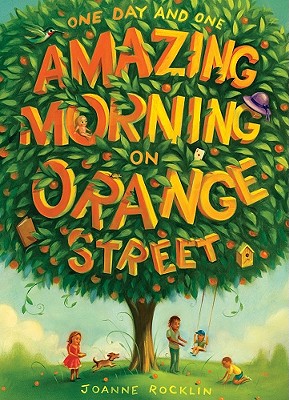
One Day and One Amazing Morning on Orange Street

by Joanne Rocklin
ages: 9+
First sentence: “It was a hot summer day on Orange Street, one of those days that seem ordinary until you look back on it.”
Support your local independent bookstore: buy it there!

In many ways, that first sentence sums this entire book up. It a simple book: what happens is very small, very simple, and yet, somehow, also very important. It’s the story of a tree, a neighborhood, of friendship.

It’s also really hard to sum up. There’s the girls: Ali, whose 2 1/2-year-old brother has cancer and has stopped talking; Leandra, who is bossy sometimes, but is dealing with her own problems; and Bunny, who deals with anxiety and feels like she doesn’t live up to the ancestor whose name she bears. Then there’s the boys: Robert, who is shy and insecure, especially since his parents divorced; and Manny, the nanny (or manny!), who takes care of Ali’s brother during the day and serves as adviser to the kids. There’s also Ms. Snoops, whose real name is Ethel Finneymaker, who knows a lot about the past but is having problems remembering the present. And then there’s the mysterious stranger.

I know it sounds disjointed, and kind of simplistic. But, honestly: it works. It works because Rocklin’s writing is so charming, so well put together, that it can’t help but work. Everything is exactly where it needs to be, every word, every flashback, every story fits together in a whole. And, while it’s not an adventuresome whole, or even a greatly climatic one, it’s a sweet whole. And kind of tart. Kind of like an orange.

My only drawback is that, in spite of it’s lovely cover, I don’t think kids will read this one. It’s slow. It’s lazy. It’s unexciting. Which is too bad. Because it’s a very, very good little book.

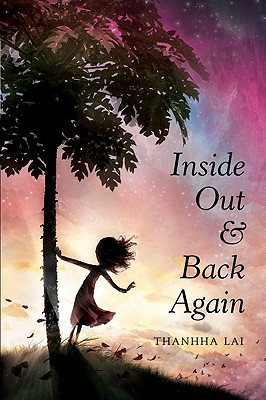
Inside Out & Back Again

by Thanhha Lai
ages: 8+
First sentence: “Today is Tet, the first day of the lunar calendar.”
Support your local independent bookstore: buy it there!

It’s 1975, in South Vietnam, and Ha is 10. She’s the youngest of four children, the only girl after three boys, a fact which kind of bothers her. Her father is missing; he left on a Navy mission and never returned. The rest of the family is surviving, but with the Americans pulling out, and the Communists advancing, the family decides to flee to America.

This novel in verse tells the story of Ha and her family over the course of a year; from their life in Vietnam, through their flight and all that entails, and finally their adjustment to life in Alabama. It’s simplicity is deceptive: sure there’s not many words on the page, which makes it read fast, but this novel packs a punch. Immigrant stories are all the rage these days, some more dramatic than others. This one is low on the drama scale, thankfully skirting the edge of the Vietnam War instead of delving into the mess that it was. That leaves room for the longing for the home, the missing of family, the desperation of adjusting to a new life, and Ha’s personal issues of being a girl in a heavily-male family. It reaches out to kids on all levels: a story that’s both foreign (no, I could not pronounce the Vietnamese) and familiar.

Excellent.

What Momma Left Me

by Renee Watson
ages: 10+
First sentence: “I don’t have many good memories of my daddy.”
Support your local independent bookstore: buy it there!
Review copy provided by the publisher

Serenity is 13 years old; her brother Danny is 12. And they just watched their their mother violently die.

Starting life over with their grandparents — their mother’s parents — isn’t easy. There’s a new school, new rules at home which include, and all the haunted memories that comes with their mother’s death. On top of that, they suddenly find themselves as PK’s — preacher’s kids, or in this case, grandkids — since their Grandpa is a preacher, and all that entails. Serenity seems to find solace in that, but Danny; let’s just say that Danny’s tendency is to turn out as well as their drug-dealing father.

Let’s just say that this one is very realistic.

Very. Realistic.

Depressingly realistic.

I know there are kids out there who live like this. And kudos to the grandparents who are trying to raise their grandkids right. But. Oh, it was so heartbreaking to read. Heartbreaking that these kids were caught up in adult problems, and going about making the same choices their parents made. Heartbreaking that there are people out there who call themselves parents, and yet never take time to take care of their kids. Heartbreaking that books like this are needed in order to give kids hope that things may turn out all right. Hopefully.

It’s well written enough, with poetry scattered through, drawing on Maya Angelou for strength. The chapter titles were from the Lord’s Prayer, as well, which I thought was a nice touch.

It’s still a depressing book, though.

Close to Famous

by Joan Bauer
ages: 11+
First sentence: “The last place I thought I’d be when this day began is where I am, which is in a car.”
Support your local independent bookstore: buy it there!

Things in this book that I’m getting mightily tired of:
Dead parent (this time, it was in Iraq; at least it wasn’t cancer)
Small town as a place of Redemption and Wholesome Values (why doesn’t anyone ever write about how confining a small town can be?)
Cooking/food as a means to Overcome Everything
Mom’s bad boyfriends (this time there was domestic abuse)

Things that worked reasonably well, even though I’ve seen them before:
Children who have a Brilliant Talent (in this case, baking) that Brings The Town Together
Faded Hollywood stars who have Lessons to Teach
Pursuing your dreams as a Means For Happiness
Big Bad Businesses that Promise Things to small towns but Never Follow Through (a prison was built outside of this town, and they promised lots of jobs. Of course, it never happened. Likewise, there was a small subplot about a big business trying to buy out a church. I never quite understood what the purpose of that one was.)

Things that I actually liked:
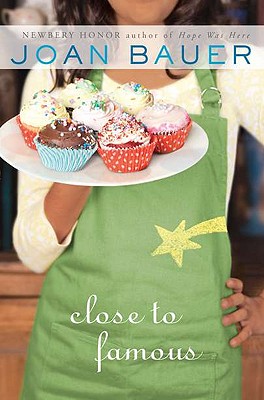
The cover
That the main character couldn’t read. There was no explanation given, no label; she just has a hard time reading. Bauer handled it well, the shame our main character, Foster, felt because she couldn’t read and her desire to want to read as well as her inability to overcome this. It was a damning portrait of schools: she slid through the grades because no one wanted to hold her back, and yet no one took the time to help actually teach her to read. If she hadn’t moved and found a group of people who were willing to help, then what would have happened to her? It made me angry at the teachers and the schools that let her slide, that never saw Foster for what she was: a person who needed help. Argh.

Things I wished the book had included:
Recipes!

I think the ultimate problem with this book is that it was too much like several others I’ve read and/or tried to read (Rocky Road, Scones and Sensibility, Dear Julia, Waiting for Normal, Okay for Now, The Dancing Pancake; not to mention It’s Raining Cupcakes, which I actually didn’t read, but C did), that I felt more annoyance than enjoyment while reading. Which is too bad, because I usually like Bauer’s books.

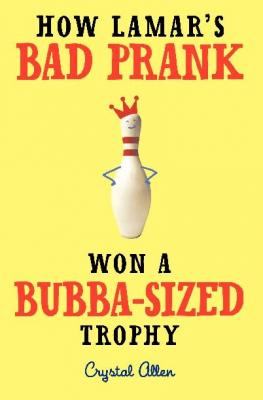
How Lamar’s Bad Prank Won a Bubba-Sized Trophy

by Crystal Allen
ages: 12+
First sentence: “Since Saturday, I’ve fried Sergio like catfish, mashed him like potatoes, and creamed his corn in ten straight games of bowling.”
Support your local independent bookstore: buy it there!

Lamar has got it going on. Sure, he lives in small-town Coffin, Indiana. Sure, he’s got asthma, which keeps him from playing champion basketball like his older brother Xavier. Sure, he’s 13 years old and doesn’t have a girlfriend (what’s the deal with 13-year-olds and girlfriends these days?). But he’s the King of Sriker’s bowling alley. He knows his game, he knows he’s good. He’s got it going on.

It’s frustrating, though, being 13-years-old and living in Xavier’s shadow. Everyone in town — their father included — respects, admires and cheers for Xavier. And Lamar? He’s just a bowler. The epitome of lame, even if he is the best in the town.

Enter Billy Jenks. Sure, he’s trouble, but he’s offering Lamar a chance to earn some money to get the dream bowling ball he’s always wanted, and maybe he’ll get some respect as well. And it seems like Billy is a kindred spirit (okay, so it wasn’t in those words exactly): he gets where Lamar’s coming from. He understands. Until it all goes south.

I was torn about this one: the characters were tough for me to like; I don’t know exactly why I was turned off by Lamar, but I was. I understand he was trying his best, doing his best, working towards things, but I just never connected. And I didn’t particularly like his friends, brother, or dad. (His eventual girlfriend, on the other hand, was a spitfire. Can we have a book about her please?) I did, however, like that when things went south, and Lamar’s actions have serious consequences and he faced them without blinking. No whining, no blaming. Just sucked it up, and took it.

However, while I liked that part, I did feel it veered into the saccharine at the end. Sure, a happy ending is nice, but this one seemed a bit, well, over the top. All love and happiness and goodness and lessons learned. It left me kind of… meh.

That said, I think it’s a good debut; I’ll be interested to see what Allen has to offer next.