Pie

by Sarah Weeks
ages: 9+
First sentence: “Thank you very much.”
Support your local independent bookstore: buy it there!

Weird. Odd. Strange. Kinda charming. But really weird.

The basic story: Alice’s favorite (and only) Aunt Polly has run a famous pie shop — well, it’s not really a shop since she gives the pies away — for a long time. She is incredibly altruistic: happy doing something she’s good at, refusing to take compensation (even though she wins the coveted main pie prize, the Blueberry Award, every year) for it.

Then she suddenly dies, leaving the recipe to her cat and the cat to Alice. This starts a chain of events that includes catnapping, the entire town baking pies, Alice discovering a new friend, and a misunderstanding getting resolved.

First off: the mother? Seriously? Needs to get her head checked. She’s incredibly self-absorbed, wrapped up in jealousy of her (now dead) sister. She does an about face at the end of the book, but it came out of nowhere, which made it really unbelievable. I didn’t like her, though perhaps I could see where she was coming from. And the father, who kept saying “Don’t sass your mother”, was a bit off-kilter as well. The whole book was kind of like that anyway: it was good enough, but really, really weird. It wasn’t quite a mystery, it wasn’t quite a historical novel (though it’s set in 1955, nothing really screamed “1955” to me; it would have been just fine if it were contemporary), it wasn’t quite a coming of age novel, it wasn’t quite a dealing with loss novel, it wasn’t quite a foody novel (even though there’s recipes). It tried to be all of them, and by doing that fell short of doing any of them well. And it just gave off a really weird vibe, which I know is vague, but that’s how it felt to me.

Thankfully, it only took me an hour to read.

Words in the Dust

by Trent Reedy
ages: 12+
First sentence: “I traced the letters in the dust with my finger, spelling out my name: Zulaikha.”
Support your local independent bookstore: buy it there!

I wanted this novel to be soaring. To be engrossing. To be a picture of an Afghani people that is noble and honorable and interesting.

What I got was a nice book.

There’s nothing wrong with nice books; nice books get kids interested in different ways of living, enabling them to see how the other isn’t always strange and unusual, but often is more familiar than we give them credit for. And I have to give Reedy kudos for bringing the story of an Afghani girl during the time right after the Taliban fell and the U.S. troops were coming in to readers outside of Afghanistan. But, there was a deeper, darker story to be told here; so much was just glossed over, and by doing that, the story suffered.

Oh, I know why: this book is geared toward middle grade readers, and the darker story would make this an adult book. And perhaps, I really didn’t want the dark story: the story of pigheaded men, and wrong choices made for girls, and limitations on women in their society. But, going in, I wanted a book to honor the complexities of Islam and the Afghani culture, and felt that this book just gave me the same old white, Christian, U.S. perspective: there are good Afghanis, there are narrow-minded Afghanis, and mostly what we need to do is help the women and children get education.

Been there, done that many, many times.

This sounds like I had a much more negative reaction to the book than I did. I didn’t hate it, and I do think it’s a worthwhile story to be told. It just wasn’t the story I was hoping for when I picked it up.

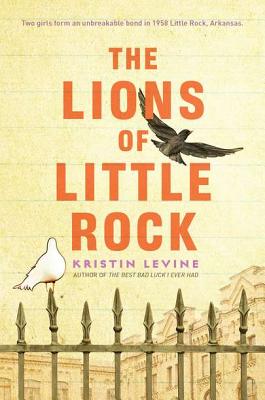
The Lions of Little Rock

by Kristin Levine
ages: 11+
First sentence: “I talk a lot.”
Release date: January 5, 2012
Support your local independent bookstore: buy it there!
Review copy provided by the publisher.

It’s 1958 in Little Rock, Arkansas. History has told us that the year before that the school district in Little Rock were forced to allow 9 black students — who came to be known as the Little Rock 9 — into the schools. But what happened after that?

Levine tells the story of the school year the year after the Little Rock 9, a story of segregation and fighting, of learning and growth. The main character is a white girl, twelve-yaer-old Marlee Nesbitt, who is incredibly shy. Painfully shy. Never talks shy. And then she meets Liz, who is the opposite of Marlee in every way.  They form a friendship, and Liz helps Marlee come out of her shell a little bit. And then it turns out that Liz is actually black, and she’s kicked out of school. There begins Marlee’s quest: to keep her friend, to bring her older sister back home (she’s been sent to live with their grandmother since the high schools are closed), to finally get the courage to speak out against segregation.

It’s a lot to pack into a middle grade novel, but Levine’s real talent is making the huge seem intimate. This book could have easily gone into either full-on-lecture or Southerners-are-stupid mode, making it trite and one-dimensional. By focusing on the relationship between Marlee and Liz, Levine has made history and race issues personal: you root for these two friends, you want them to be able to be friends. And you sympathize with nearly everyone in the book (even the negative characters have some redeeming qualities; no one is merely a stereotype). It’s full of history as well; from the early days of the integration movement, to the basic atmosphere of the late fifties. One of my favorite parts was Marlee’s first experience riding in a commercial airliner. It was quite priceless.

It’s not a perfect book; it starts slow and took me a while to get into. But, once I did, I was richly rewarded with a complex and engaging story.

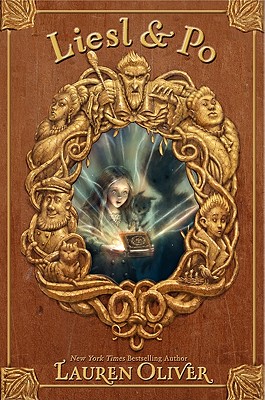
Liesl & Po

by Lauren Oliver
ages: 9+
First sentence: “On the third night after the day her father died, Liesl saw the ghost.”
Support your local independent bookstore: buy it there!

Liesl is all alone in the world. Her father has just died, and not only is her stepmother keeping Liesl locked in the attic, she wouldn’t even let her say goodbye to her beloved father. Given this, Liesl is about to give up entirely on life, when the ghost appears in her room, drawn by the light. Po — its neither boy nor girl, having been on the Other Side long enough to lose its identity — and its companion, Bundle (neither dog nor cat, but both), show up to keep Liesl company.

This little visit changes Liesl’s life entirely: she discovers a friend in Po, and then given courage by Po’s conversations with Liesl’s father, she decides to take her father’s ashes back to the house where she was born to bury them. This leads to an adventure: another friend, Will; some mix-ups; and the Greatest Magic in the World.

It’s a quiet, sweet little book, with just a dab of magic, about dealing with loss and finding happiness again. It’s a very hopeful book; as Oliver points out in the afterword, books like these are about finding the happy ending that life often denies us. There are Messages in the book, but woven in the old-fashioned storytelling, thankfully not blatantly beating us over the head. It’s a grim tale to begin with: shades of Cinderella, a gray and dark world filled with adults who actively dislike children. However, there is a happy ending: the bad guys get their comeuppance, Liesl finds a new family, and there is sunshine and gladness in the world again.

All which brings a little sigh of contentment when you finish the book.

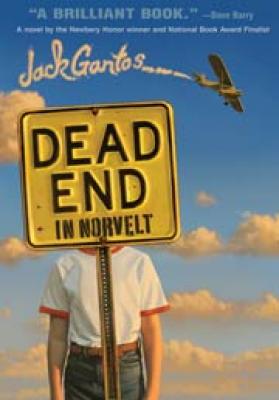
Dead End in Norvelt

by Jack Gantos
ages: 12+
First sentence: “School was finally out and I was standing on a picnic table in our backyard getting ready for a great summer vacation when my mother walked up to me and ruined it.”
Support your local independent bookstore: buy it there!

From the get-go, I found this book to be weird. It’s basically the story of Jack Gantos (no, I don’t know how much is real and how much is fiction, but it’s in the fiction section, so let’s assume it’s more fiction than fact) who lives in the (real) town of Norvelt, Pennsylvania and the summer (of 1962) he spent grounded. For mowing down his mother’s cornfield. On his father’s orders.

He’s let off as often as his next-door neighbor, Miss Volker, needs his help. She’s the town medical examiner and obituary writer, but severe arthritis in her hands is keeping her from doing very much, and so she gets Jack to help her out. This leads to not only some pretty long-winded, but sometimes interesting, stories about the original residents of Norvelt. Not to mention Norvelt history (was Eleanor Roosevelt really involved?). There’s also a bit of a mystery thrown at us at the end: all the original residents are dropping like flies, and someone is finally asking if they really are “natural causes”, and there’s a band of Hell’s Angels that are burning down houses in town.

As I mentioned, I just found this one weird. Sure, it was sometimes funny: some of the situations that Jack finds himself in are quite, well, surreal and odd, which made them amusing. But, for the most part, I just found myself wondering what was real and what was fiction. I wished for an author’s note at the end, and was quite disappointed when Gantos chose not to include one. I never really connected with any of the character; aside from the spitfire Miss Volker, everyone else seemed to be cliches: the devoted mother, the tough father, the bully-ish best friend (who was a girl), the greedy business owner, the annoying busybody. I never cared enough about the characters to read through all the history, and found myself skipping pages.

That said, maybe I just wasn’t the right audience for this one. Perhaps some 11- or 12-year-old boy would find Jack and his adventures the right mix of history and fun.

Six Sentence Saturday: Unfinshed Books

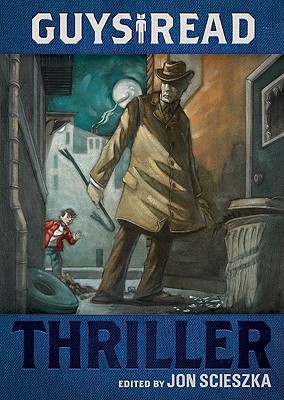
Guys Read
ed. by Jon Scieszca
ages: 10+

It was a good idea to get together a bunch of talented writers and compile a collection of thriller stories. The problem was, in my humble opinion, that none of the stories (that I read; I bailed, I have to admit) were even remotely thriller-y. Perhaps if I were a 10-year-old boy, these would have some appeal. (Maybe it’s just that my humor is more along the lines of a 10-year-olds, that I liked Funny Business better?) Or maybe I just don’t go in for thriller stories anyway. Whatever the reason, this fell flat.


The Power of One
by Bryce Courtenay
ages: adult

This was a case of me just not being interested in the book. I tried; I got about 100 pages in, but this boy’s story just wasn’t to my interest. And the writing wasn’t holding me. And I have a huge pile of other books to read. So, I abandoned it. Who knows, though: maybe someday I’ll come back to it.

City of Orphans
by Avi
ages: 10+

Heaven knows, I enjoy an Avi book. The detail, the characterizations, the plots: all top-notch. But, this one didn’t grab me. The language, while authentic, was off-putting, and the plot was just so dang slow. I gave it 75 pages, and then realized that my time is much more precious than to slog through a book I have no interest in.

Floors

by Patrick Carman
ages: 9+
First sentence: “Merganzer Whippet was an impulsive young man of fifteen when he raced into his father’s room just in time to hear these fateful words.”
Support your local independent bookstore: buy it there!

Leo Fillmore lives and works with his father in the most amazing place: the Whippet Hotel. It’s small, exclusive, and very, very wild (and weird). All the rooms are themed: from the Cake Room, to the Pinball Room, to the Caves and Ponds Room; it’s a kid’s dream (and possibly a maintenance man’s nightmare) to live in a place like this, even if it is only in the basement.

Except Merganzer Whippet, the owner, has disappeared, been gone for more than 100 days, and the hotel is falling apart. Then, a small purple box arrives for Leo, and he finds out that saving the hotel is up to him, his new friend, and a duck named Betty. They’re in for some wild (and weird) adventures, as they figure out who is sabotaging the hotel (because it’s just not falling apart on its own) and save it from being sold to developers.

Part mystery, part buddy novel, part adventure story, this quirky little book has a lot going for it. Carman’s writing is accessible without being overly simplistic, and the whole whimsical aura gives it a very carnival-like feel. There’s a couple of nice twists and turns throughout the book, and the story wraps up quite nicely. Which leads me to my only concern: this one is billed as Book 1, and I have no idea where the story could go in book 2 (or 3 or 4 or 5). It’s a self-contained story, one that is quite entertaining and very sweet, and doesn’t need a sequel. At all.

*sigh*

Sometimes children’s publishing these days frustrates me. In spite of that, the book is more than worth reading.

The Girl Who Circumnavigated Fairyland in a Ship of Her Own Making

by Catherynne M. Valente
ages: 11+, good for read aloud 6+
First sentence: “Once upon a time, a girl named September grew very tired indeed of her parents’ house, where she washed the same pink-and-yellow teacups and matching gravy boats every day, slept on the same embroidered pillow, and played with the same small and amiable dog.”
Support your local independent bookstore: buy it there!

Once upon a time, there was a blogger who got an email about a book. This book had a very long, somewhat pretentious title, and the blogger thought to herself, “It can’t be any good” and proceeded to delete that email.

Then she started seeing reviews of it pop up all over the place, reviews saying how wonderful and amazing and delightful this little book with the long, pretentious title is. And still she said to herself, “It can’t be true” and didn’t read the book.

Then, one day, while she was shelving other titles, she saw the book, and picked it up. Once she had it in her hands, she began to question her firm belief that this book wasn’t any good. And so, she checked it out.

And was absolutely delighted.

To be sure, she is not sure that September’s story and adventures in Fairyland would be appealing to children. The book is pretentious and precocious, and not at all something that she can see many 10-year-olds picking up. Sure, there’s magic and danger and adventure, but it’s not flashy or laugh-out-loud hilarious. The language is a bit advanced, and she thinks that Valente sometimes talks down to the reader (and sometimes talks over the reader as well).

And yet, there’s a whimsicality about it all, a sense of timelessness, of a telling of Every Story, that makes this story work. She could envision reading it aloud to her children, smiling at the humorous asides, being afraid at the tense moments, sharing the adventure. It would be a delight, actually, to read this book aloud. She also found herself captivated by September and her adventures, as well as the sometimes fickle narrator, though she has to admit that her favorite character is the Green Wind, even though he only briefly appears.

At any rate, she regrets not getting to this one sooner, and since it’s always better to get to things later than never, she’s happy she finally arrived at the gala, giving this story its’ much deserved happily-ever-after.

The End.

Six Sentence Saturday: Three Middle Grade Boy Books

Jeremy Bender vs. the Cupcake Cadets
by Eric Luper
ages: 10+
First sentence: “Jeremy Bender once heard that every time a person learned something, a new wrinkle worked its way into his or her brain.”
Support your local independent bookstore: buy it there!

Jeremy Bender has a problem: he’s ruined the engine of his father’s prize boat and needs to come up with $500 (because it’s just too scary to tell his dad) to fix it. So he and his friend come up with this brilliant, if a bit far-fetched, idea: infiltrate the Cupcake Cadets (think Girl Scouts with cupcakes instead of cookies), win the Windjammer Whirl with it’s $500 grand prize and get off. Easy-peasy, right? Well, not so much. At turns weird and hilarious, Jeremy and Slater learn that sometimes the easy way out is not, well, so easy. Luper gets boys and their impressions of girls down-pat, making for a very fun read.

The Buddha’s Diamonds
by Carolyn Marsden and Thay Phap Niem
ages: 8-12
First sentence: “In the gloom of the dusty temple, Tinh bowed to the Buddha.”
Support your local independent bookstore: buy it there!
Review copy provided by the publisher for the 2009 Cybils (I think)

The simple story of a boy, Tinh, who has to learn responsibility in the face of a big storm. Tinh and his father makes it back to shore just ahead of a typhoon, but because Tinh wasn’t brave enough to save the boat, it’s ruined. So, it’s up to Tinh to get the boat — the source of his family’s income — fixed. I picked this one up as part of Wichita’s Big Read (the main book was Tim O’Brien’s The Things They Carried, but I had no interest in reading that), not really knowing what to expect. It was a sweet little story, but I felt it lacked any sort of emotional punch. Mostly, I felt like I was looking at the action from the outside, never really connecting to either the characters or the story.

War & Watermelon
by Rich Wallace
ages: 11+
First sentence: “I look across the pool and see Patty Moriarity and Janet DeMaria hanging out by the refreshment stand.”
Support your local independent bookstore: buy it there!

It’s the summer of 1969, and everything’s changing in Brody’s world. His brother, recently graduated from high school, and their parents are stressed about the draft; Brody’s dealing with girls, and football, not to mention seventh grade and junior high; and it’s the summer of Woodstock and the Mets have just taken over first place. Seeing this summer of through a 12-year-old’s eyes is an interesting venture: a lot happens in the course of the book, and yet Wallace keeps it light enough for middle grade readers. Yet, as an adult, I didn’t think Brody’s story was particularly interesting. Or perhaps Wallace was trying to cover too much in too short of time. Either way, this one fell flat in the end.

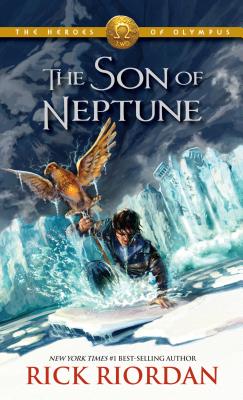
The Son of Neptune

Heroes of Olympus, book 2
by Rick Riordan
ages: 10+
First sentence: “
Support your local independent bookstore: buy it there!
Others in the series: The Lost Hero

Ah, Percy. We’re glad you’re back.

We join up with him as he’s running across the California landscape, being chased by Gorgons who can’t be killed for some reason, trying to get… somewhere. See, he’s lost his memory, and doesn’t know who he is or where he’s really going. (Even though we fans haven’t; I was interested to see how Riordan would handle that, since we knew that Percy would have amnesia by the end of The Lost Hero, and I have to say that he did it well. Having the book be in third person rather than first, as the first series was, helped a lot. As did multiple points of view; I found it fascinating to see Percy from viewpoints other than his own.)

He shows up at Camp Jupiter — the Roman equivalent of Camp Half-Blood — meets Frank Zhang, a halfblood with an interesting past and a curse to carry, and Hazel Levesque, the daughter of Pluto (aka Hades) who isn’t really supposed to be alive anymore. The three of them are sent on a quest by Mars (aka Ares, though I have to admit that I like Mars a whole lot more than I liked Ares) to face the giant sons of Gaea (the new bad “guy”), unleash death, and get back before an army of monsters destroys Camp Jupiter. In four days.

Clear as mud?

As usual, Riordan tells a compelling and entertaining story, playing on his two strengths: plotting and characterization. This one is shorter than Lost Hero, but not by much, and Riordan packs in as much as he possibly can. There’s everything we’ve come to love in a Riordan book: action-packed sequences; a wee bit of sweet, innocent romance; humor (and good, quotable lines); and many, many references to mythology. (I’m not sure he’s pulling from myths anymore; I don’t know Roman mythology as well as Greek. That said, I’m not sure it matters at this point.)

Additionally, for this one especially, it helps if you know your Olympians series well. Thankfully, I’ve just finished reading them aloud to A, so they were pretty fresh in my mind. There’s references to that series all over the place, from hints about Percy’s past (in one of the more clever pulls, Reyna, one of the praetors at Camp Jupiter, was one of the people in Circe’s employ that Percy came across in The Sea of Monsters.) to references of what Percy has accomplished in the past four years. And yet, while there’s a lot to juggle in this book, it doesn’t seem crowded. In fact, there were times — especially with characters; the set up for Octavian is intriguing, but Riordan never really goes anywhere with it — when I wanted more, not less.

As I mentioned before, Percy’s back in all his lovableness, and it’s quite refreshing to see him from other points of view. And Frank and Hazel were just as awesome to get to know. The overall plot arc is coming together slowly, but Riordan leaves a lot of threads hanging, and a lot of questions unanswered. (Though perhaps the one question I have — how is he going to fit all seven the prophecy talks about together in one book? Because whomever narrates the next one, there will be characters I will miss hearing from — is going to have to wait.)

It’s fun fluff, great for those of us who are fans of the series.