10 Questions for Elle Newmark

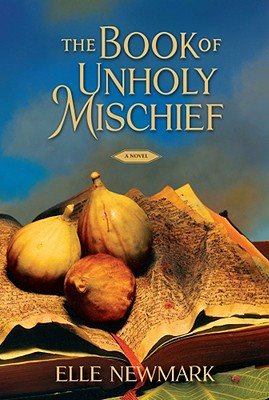
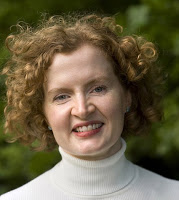
One of the perks of doing blog tours, I think, is getting to “meet” the authors, eve if it is via email. Elle Newmark, author of The Book of Unholy Mischief (my review here), was gracious enough to answer a few questions I had about the book and her approach to writing.

MF: Was there anything in particular that prompted you to write this particular book?

EN: I had been searching for a novel idea, and one night I watched The Name of the Rose. As you probably know, it’s about a mentor/student relationship between a medieval monk, his novice, and a book. I went to bed with that movie in my head and woke suddenly at 4 a.m. with a foggy notion about a chef, his apprentice, and a cookbook.

My subconscious had substituted a chef for the monk because my father was an Italian chef and I grew up in a family where food was a centerpiece of life. When a writer grows up with a chef, food as metaphor is inevitable. I didn’t yet know what adventures the chef and his apprentice might have, or what mystery the book might hold, but that evolved into The Book of Unholy Mischief over 3 years of writing and many, many drafts.

MF: What drew you to Venice and this particular time period?

EN:Venice is a gorgeous and mysterious place. My main character says: “The water still whispers tales of death as it laps against decaying palazz. Men in capes still appear out of the darkness and dissolve back into it. Venice has always been the perfect setting for secrets, seduction, and the melancholy thoughts of the poet.” Venice is unique. And the early Renaissance was the perfect time for this tale because it was the beginning of man’s emergence from centuries of intellectual darkness. The printing press had recently been invented, and knowledge of all types (including much that was deemed “heresy”) was becoming more available to the general public. Great thinkers discovered that the earth moves around the sun at the same time that you could be put to death for saying as much. Forget the Alamo; remember the Inquisition. The combination of Venice along with the political/social/religious turmoil of the early Renaissance presented a huge tapestry of colorful people, places, and events. I found it irresistible.

MF: What kind of research did you do in the process of writing this book?

EN:Both research and personal experience informed the writing of this book. I visit Italy often because I have family there—in fact I have cousins named Luciano and Francesca who allowed me to use their names—and I have always considered Venice to be Italy’s most intriguing city. I did months of historical research, using libraries and the Internet, reading loads about the people who lived in Venice in 1498, what the politics were like, and how a kitchen might be run in the palace of the doge. I did further research into the odd little details like whether or not they used a paring knife or whether the common folk wore underwear. That stuff is harder to find. But it was only by being in Venice that I discovered how the damp night air felt clammy on my skin, how the Rialto market smells of fresh vegetables, how the greedy gulls swoop and cry, and how a gondolier’s oar cuts through a sluggish green canal like a stiletto. When readers call this book evocative, I believe they’re responding to my personal impressions of Venice.
MF: Did any of your expectations about the time period change during the process of writing?

EN: Oh, yes. I didn’t realize how much political clout the church had in those days. In 1498, the pope was Rodrigo Borgia (Pope Alexander VI) a rich Spaniard who bought the papal throne—and it truly was a throne. He wielded as much military muscle as any king, and he was ruthless. Italy was not yet a unified country, and the papal states were as rich and powerful as any other kingdom. A corrupt religious leader with sweeping political power is an insidious combination; it leads to no end of outrages and intrigues.

MF: I enjoyed all the evocative descriptions in the book, especially those of food… what kind of food experiences did you draw on writing this? Where did you get the information on the dishes you described in the book?
EN: As I mentioned, my father was a chef, and I fondly remember him stirring pots like a mad alchemist, defying gravity with one-handed omelette flips, and presiding over the annual family ritual of making ravioli from scratch. There was always something festive and almost magical about the preparation of food in our home. My mother was also a good cook, and I know our way around the kitchen as well, but the dishes I describe in the book were concocted for their metaphorical value. I tried to invent dishes that would illustrate whatever concept I was trying to get across. For example, the soufflé illustrates the beauty of a moment, the fleetingness of time. Veal is innocence, a black sauce is death, soft cheese is comfort, etc, etc, etc.

MF: Do you have a favorite character or scene?

EN: I like all my characters for different reasons. I like Luciano’s earnestness and the chef’s integrity, but I also like the truthful depiction of Guiseppe as a bitter drunk. I sympathize with Francesca’s dilemma about whether to follow her heart or her head, and there’s a horrible charm about the suave sophistication that covers Landucci’s murderous nature. Also, I am fascinated by the notion of a pope who was a jovial sociopath. I don’t think characters necessarily have to be likable to be interesting.

MF: What do you hope that readers will get out of the book?

EN: First, a good read. I love to hear from readers who tell me they did not want the book to end. Second, the message that we should honor our own uniqueness by thinking for ourselves. Follow no one blindly. Question everything.

MF: How did you become a writer; was it something you’ve “always” wanted to do?

EN: Yes, it was something I always wanted to do. As a child, I was a bookworm, haunting the dusty, one-room library in our neighborhood. I practically lived there. By the time I got to college (as an English major, of course) I devoured novels and secretly wrote little stories. I thought it would be really cool to write a whole book, but I didn’t think I could. It seemed too big. John Steinbeck is the author who really got me questioning how novelists do what they do. Of Mice and Men devastated me, and I put the book down wondering how ink on paper could make me sob with despair. How could I mourn a fictional character? And how does a writer, who is not present in the room, force me to turn the pages obsessively? I wanted to learn how to do that. I took creative writing classes and attended workshops. Then I found a group of talented writers willing to read and critique my work. But most important of all, I kept writing. They say it takes ten thousand hours to really master something. That’s a lot of writing, but it sounds about right. I wrote for almost thirty years before I published The Book of Unholy Mischief.

MF: Do you have a particular place or method when you write?

EN: When I work in my studio, I like to be comfortable. I sit in a cushy chair with my feet up on an ottoman and my MacBook Air on my lap. I don’t want an achy back getting in the way of my thoughts. But I also like to write outdoors and in foreign places. A certain sense of displacement seems to kick my creativity into high gear. Perhaps that’s why I started writing my first book when I lived in Europe.

As for method, I start with a concept and a few characters (whose life histories I write simply for my own information) and then I begin writing the story. After a while, I need to stop and make some sort of outline so I don’t get lost, but the most important thing is to keep writing. I allow myself to ramble on and on; I write truly terrible first drafts so that I have something to work on, which is much less intimidating than a blank page.

MF: What are five books you love/would highly recommend?

EN: OMG only five? There are so many great ones, but I’ll give it a shot.
1. Sophie’s Choice (a masterpiece)
2. The Book Thief (because Death as the narrator is brilliant)
3. People of The Book (Gorgeous writing, wonderful characters)
4. Wicked (Clever!)
5. Bonfire of the Vanities (satire doesn’t get any better than this)

MF: What can we expect from you next, if you are willing to share?

MF: My next book is a tale set in India. I spent all of last March in India, researching, and once again, my experience enriched the writing. The title is not yet decided, but the story involves two love stories, one hundred years apart, both set against the backdrop of war. An American woman, Evie Mitchell, accompanies her husband to India with their young son. He is going there on a Fulbright Fellowship. Evie hopes the shared adventure will bring them back together. Their marriage has been strained every since he returned from WWII, and she imagines the color and pageantry of India will distract them.

However, they are quickly caught up in the trouble surrounding the imminent partition of India between Hindus and Muslims. Violence begins, and they cannot flee. They are forced to remain in the small, fictional village of Masoorla. Stranded, Evie discovers a packet of letters hidden in a brick wall of her colonial bungalow. The letters hint at a strange and compelling story of love and war involving two young Englishwomen in 1857. Intrigued, she embarks on a mission to uncover the Victorian story. Her search leads her through the bazaars and temples of India, and into the dying society of the British Raj. It also exposes her husband’s dark secret and challenges everything she every believed about the man she married. This book is due to be released in 2010.

Thank you so much for your time! You can visit Elle on her webpage.
10 Questions for Julie Berry

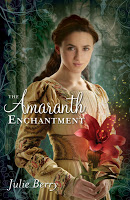
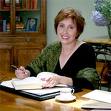
My second victim author for the 10 Questions feature is the delightful Julie Berry, whose first book, Amaranth Enchantment — an interesting Cinderella-like fantasy/fairy tale for upper-middle grade readers — I thoroughly enjoyed.

MF: This is your first novel, congrats! Can you tell us a bit about the process of writing it and getting published?
JB: It took me about a year to write it. I was a graduate student at Vermont College’s MFA in Writing for Children and Young Adults when I wrote it, under the direction of advisers Cynthia Leitich Smith, Brent Hartinger, and Tim Wynne-Jones. I learned so much from each of them. I worked on it nearly every day, generally in the evenings after my children were in bed. It took many starts and stops before I figured out Lucinda’s story, as well as the tone and voice of the final piece. It was a lot of work, but I loved writing this story, and loved its characters.

As for getting it published, it won a prize at Vermont College, for which I remain forever grateful. I met an agent at an SCBWI conference and told her about the prize. She asked to see a few chapters, so I sent them. She offered me representation, and after we’d made a few revisions to the manuscript, she sent it out to several publishers, and before long we had a deal with Bloomsbury.

MF: Sounds like it was a charmed experience… Did you set out to write a young adult/middle grade novel, or did you just write the story and let the publishers decide?
JB: It’s always been my hope to write for children and young adults. It’s my genre of choice.

MF: Is being a writer something you’ve “always” wanted to do, or is it something you’ve discovered later in life? Do you have any specific writing influences?
JB: I think I always had deep-down authorial hopes, as I suspect most book lovers do. I majored in communication in college and had done professional writing of all sorts during my career, so I knew I had some capability with words, but I never knew whether or not I had the knack for fiction. It was on my “try before I die,” list. Part of me was afraid to try and learn that I did not have the knack. That, I thought, would be devastating. But after I’d had my fourth son, I began to think more about that dream. I imagined myself rocking on my front porch one day, old and blind, and regretting that I’d never tried. That thought become more scary to me than trying and failing. So I gave it a go, and I’m so glad I did.

MF: I think that’s very admirable. Trying something new, taking a risk, especially when you’ve got a family. Speaking of which: you have four boys (I’ve got four girls, about the same ages…) and a job. How on earth did/do you find time to write? Do you find it difficult juggling everything?
JB:Yes! Yes, yes, yes. I find it incredibly difficult juggling everything. But I am learning how to live with difficulty and juggling. (Incidentally, I can juggle. 🙂 I’ve had to get very creative about when and where I write. I write late at night, and I write early in the morning. I generally never wrote when the children were awake, because they needed my attention, and anyway, they’re far too distracting! Now I sometimes have to. The older my children get, the busier they get, which has its pros and cons. It means our lives are more scheduled, jumping from pillar to post, but it also means they’ve got interests of their own, and I can find 30 minutes here, 50 minutes there in which to make some progress with a scene. My house is fairly chaotic most of the time. My job is part-time, and it gives me a great deal of flexibility. Some times I wish I didn’t wear so many hats, but I recognize that they all make me who I am and keep life interesting.

MF: A bit about the book: I really enjoyed the combination of history and religion and fantasy in The Amaranth Enchantment. Can you tell us a bit about how you came up with the idea(s) behind the book?
JB: The first thought I had was about a decaying mansion full of memories. That became Lucinda’s home. The next was about an enigmatic woman who had a connection to the supernatural. At first I thought that might be ghosts. Eventually I figured out she was a trapped and unhappy immortal, stuck in a world full of people who die. It took longer to figure out my main character, Lucinda. It became clear early on that she needed to be an orphan, and that led to developing her backstory. The process of writing forces you to answer so many questions. I come across a question that needs answering, cast about in my mind for possibilities, and go with the one that feels most right.

MF: I totally missed that it was a Cinderella-type story until someone pointed it out after I was done. Did you deliberately pattern it after the fairy tale, or was it something that just happened on its own?
JB:You’re like me — I didn’t realize I was writing a Cinderella story, either, until I was well into it. When I realized that was what I was doing, I had some fun playing with Cinderella motifs, but I never wanted my book to conform to a preexisting story. I wasn’t setting out to do a fairy tale retelling, just a fairy-tale like novel.

MF: I don’t feel so bad about missing that now. 🙂 Is there anything in your background — growing up or currently — that helped in creating this book? In what ways?
JB: Hm, that’s a tough question. In one sense, our stories spring from who we are, from our entire backgrounds and life experiences. If I’d lived a different life, I would have written a different book. But I can’t really draw a many lines between specifics in the book and specifics in my life. I love gemstones, though I’m the un-bling-est person you’ll ever meet. But I’m fascinated by the purity and clarity of stones. One of my favorite places to hang out is the gemstone exhibit at the Smithsonian Museum of Natural History. So I wrote that fascination into the magical gemstone in the store. I grew up on a farm where we had chickens, turkeys, pigs, rabbits, dogs, and cats, but no goats, so I threw in a goat.

MF: Do you have a favorite character or scene?
JB: I really do love all of the characters, but I probably feel the closest to Lucinda. We spent the most time together. My favorite scene is the one where Beryl is helping her get dressed for the ball. I cried when I wrote it. Isn’t that silly?

MF: What are your favorite five books, or five books you think everyone should read?
JB: Oh, I can’t possibly whittle it down to five! Here is a link to a document I’ve made listing favorite books.

MF: What can we expect from you next, if you don’t mind telling us?
JB: I’m working on a second book now for Bloomsbury, another fairy tale-like fantasy. I’m also working on a series of graphic novels for younger boys. My sister is the illustrator. It’s a good thing I can type fast. 🙂

MF: Thanks so much for your time!
JB: My pleasure. 🙂

You can read more of her writing at her blog.

(A Few More than) 10 Questions forJames Kennedy

I guess one of the ways I can shake my blogging slump is to start something new, right? Hence, a monthly feature “10 Questions for…” and, because he’s just a great guy, my first guinea pig is The Order of the Odd-Fish author, James Kennedy.

I could blather about how I adored the book, or how I find his blog posts incredibly entertaining (like this one, or this one, which you should really check out because it’s got great pictures of his adorable newborn daughter), but I think I’ll just let you read his long and entertaining answers to my meandering questions.

MF: So, this is your first published novel. (I’m assuming, at least, since there were no others listed on the jacket flap…) Congrats! Can you tell us a bit about the process? How long did it take, how difficult was it, etc…

JK: How I wish I could say that I wrote The Order of Odd-Fish on a idle Saturday afternoon between cocktails, whereupon the manuscript was immediately whisked away by snow-white herons and dropped into the diamond mouth of Random House.

But the humiliating truth is, it took a stupidly long time. The process was piecemeal and convoluted. And even once it was finished, nobody wanted it! I got rejected by over a hundred agents. Each agent was carefully noted in the bitterest Excel spreadsheet ever.

It started as a short story I wrote in 1995 called “The Cockroach and the Music-Box.” That short story has almost nothing in common with what finally became The Order of Odd-Fish, but it served as a kind of scaffolding for it. Over the years I’d occasionally haul it out and add new characters, subplots, and stories-within-stories. After a couple years, the original story had bloated into a mammoth, creaky, unholy mess. I didn’t even like it anymore.

But I did like all the digressions and sidetracks I’d added. So I threw away the original story and decided to write a book that would feature all my digressions.

I mostly wrote Odd-Fish in fits and starts. Months or even years would go by when I wouldn’t look at it at all, because I was busy with too many other things—teaching junior high school science, living in Japan, trying to write other books, making a short movie with my friends, working as a computer programmer, trying to play in bands, trying improv comedy.

In the end, it was an appropriate way to write this particular book. The sacred mission of the knights of the Odd-Fish, after all, is to muddle about in pointless, unprofitable disciplines, and that’s what The Order of Odd-Fish is: all my failed ideas, blind alleys, and curdled ambitions, thrown in a pot and then boiled, until a new story rose out of the muck, placed its slimy paws on the rim of the pot, and howled at me until I did right by it.

MF: A hundred rejections? Wow. (That’s why I’m not a writer. Can’t handle the rejection!) I’m impressed you stuck with it. So, my 12 year old wants to know: who was your inspiration for Jo?

JK: One of my best friends in high school was an awesome girl named Karey Hansen. She had a wry, matter-of-fact humor that I really admired. She was surrounded by strange and fascinating people, but Karey herself was refreshingly practical and clear-eyed. She had good taste in books. She introduced me to good music. She handled the absurdities and indignities of high school better than anyone else I knew. I particularly liked her sly, ironic way of verbally cutting people down to size, sometimes even without them knowing it. Jo is her own character, but there’s lots of Karey Hansen in her.


MF: How about for the other characters? (My personal favorite is Sefino, in case you were interested.)

JK: Sefino appeared in the original short story. The idea came when I was in my dorm room at college and a cockroach crawled out of my sink drain. I killed the cockroach immediately, but then I felt bad about it, so I included a cockroach in the story as a kind of penance.

In that story, Jo befriended this cockroach, which had no name. Since cockroaches scavenge things from humans, and since Jo wasn’t using the “sephine” of her name “Josephine,” she let the cockroach scavenge it. The cockroach added an “o” to “sephine” to make “Sefino.” As the main story changed, that little vignette didn’t work anymore, but the name remained.

As for Sefino’s personality: I was reading a lot of Evelyn Waugh at the time, which made me want to try to write a fey, foppish, blithely self-entitled, yet somehow charming-in-his-selfishness character.


MF: And you succeeded, I think, with that. While we’re talking about inspirations, I was struck with the eccentricities you built into Eldritch City. Can you tell us about the inspiration for it?

JK: While I was writing Odd-Fish, one catchphrase that kept going through my head was “urban Narnia.” The Narnia books have many bucolic nature scenes, a lot of rambles in the woods, and Narnia’s denizens are talking forest animals. I wanted to do something similar, but in a city.

So what are the corresponding denizens in a city? Cockroaches, centipedes, beetles. I put them in. What are the corresponding adventures in a city? Getting lost in a dangerous neighborhood; a wild night out; the spectacle of a city-wide festival; exploring the underground sewers; getting in trouble with the law; organized crime, bureaucracy, tabloid media, colorful public markets, crowds, riots, dense social networks. I put it all in.

Eldritch City also comes from my experience of living in Japan and traveling around India. I wanted Eldritch City to be aggressively foreign, a place with long-established rituals and bafflingly complex culture, but still welcoming. I wanted Jo to feel both alienated and strangely at home, which is often how I felt when I lived in Japan.


MF: And I can see all that in there. I do like the idea of an urban Narnia. How about the inspiration for the Order of the Odd-Fish? It’s not often that you have a society devoted to being utterly pointless….

JK: The Order of Odd-Fish developed from something a professor said to me when I was studying physics in college. I was researching a paper for his class on the philosophy of space and time, but I got sidetracked by a treasure trove of crackpot science in the university library, books written by contentious engineers or dogged amateurs that sought to “debunk” relativity theory or quantum mechanics on dubious philosophical or theological grounds.


I loved the querulous, desperate, paranoid, yet boundlessly confident tone of these mostly self-published books. I gorged on them until my professor gently advised me to stop, saying something like, “When you’re a millionaire, by all means take up the hobby of collecting cranks’ monographs, but for now, stick to learning the material, and not the half-baked refutations of it.” This stuck with me, and over time it developed into the idea of the Order of Odd-Fish—a society of scholars bent on studying the half-baked exclusively: things like lost causes, irregular contraptions, unusual smells, improbable botany, discredited metaphysics, absurd animals, unlikely musical instruments, ludicrous weaponry, and the art of dithering.


Once I had this idea established, it was fun to make up specific instances of what the knights study, like the Apology Gun (from the specialty of ludicrous weaponry) or the urk-ack (a combination of the specialties of absurd animals and unlikely musical instruments: the urk-ack is a living musical instrument, an animal one “plays” by climbing inside and manipulating its forty-one orifices).


MF: I knew physics was useful for something! How about the All-Devouring Mother? She’s a very dark and vicious bit of mythology. Where did she come from?

JK: Jo is a female hero, so I wanted the villain to be female too. In Star Wars, the villain is Darth Vader, who is a “dark father.” I wondered, what’s a corresponding female evil, a kind of “dark mother”?

I thought about Kali, the Hindu goddess associated with death and destruction; I thought about how some mother animals, like rats, sometimes eat their young; I thought about the mother alien in the movie Aliens. I mixed this up with the idea of apocalyptic religions, and out of this came the idea of a goddess who is the ultimate mouth, a hungry demon who threatens to gobble up the universe. That’s why the theme of digestion, of eating, of getting absorbed runs throughout the book.

I like stories in which the hero has a special intimacy with the villain. The All-Devouring Mother isn’t something outside of Jo that she fights against; she secretly is the All-Devouring Mother, and she must find a way to stop the terrible prophecies about her before they come true. When Jo learns her true nature, she loses everything—even her status as a “hero.” She isn’t the savior of Eldritch City, but the monster that Eldritch City must be protected against.

MF: I agree: some of the best books are the ones where the hero and the villain are intimately connected. I also felt that the All-Devouring Mother added to the surrealness of the book, which I loved. I felt (and it may have been because I had just reread The Hitchhiker’s Guide to the Galaxy) that it had a very Douglas Adams feel to it: funny, weird, unusual, unlike anything else (hard to categorize!). Is that what you were aiming for when you began writing, or did it just evolve that way?
JK: I definitely wanted to write like Douglas Adams! I vividly remember the first time I encountered Hitchhiker’s in sixth grade. I loved the density of his humor. Every page felt crammed with ideas. Some of his jokes, such as how the improbability drive was invented, are as clever as a mathematical proof. I snuck a couple oblique references to Hitchhiker’s into Odd-Fish, but I’m probably the only one who notices them.

Hitchhiker’s had a freewheeling, open-ended vibe that really appealed to me. I wanted Odd-Fish to have a similarly messy, jazzy, improvisational feel.


MF: Dang. Now I feel like I need to re-read Odd Fish and look for the Hitchhiker references… Any other specific writing influences?

JK: I like Evelyn Waugh and G. K. Chesterton, especially The Man Who Was Thursday. Some other books that directly influenced Odd-Fish are The Last Hurrah by Edwin O’Connor and A Confederacy of Dunces by John Kennedy Toole. Anything by Roald Dahl. And the Ken Kiang subplot of Odd-Fish is a takeoff on Au Rebours by J. K. Huysmans.

The writer who truly freed me, though, was J.K. Rowling. I’d been hacking away for a while at Odd-Fish when I first read Harry Potter, and it helped me a lot. I had been stuck the trap of trying to keep Odd-Fish simple and short, because I thought the genre demanded it. But J.K. Rowling showed that you can succeed at writing long, sophisticated, socially complicated YA stories. She opened the way for that kind of story in YA.

It was necessary, because modern YA audiences are more savvy than previous generations. Only recently has there been so much culture aimed specifically at children. This generation has been marinating in thousands of stories from a very early age, and so they’re much smarter, more impatient with cliché, and more comfortable with complexity than previous generations. Rowling was one of the first YA authors to trust the audience, not to dumb her story down. Philip Pullman is another.


MF: I totally agree about how Rowling (and Pullman, as well as others) have changed the face of YA literature; there’s so much more and much of it is so much better than the books I remember as a kid. I know it’s hard to choose, but do you have a favorite character or scene from the book?

JK: My favorite character to write was Ken Kiang. He’s an idle, enervated Chinese millionaire who is kind of the ultimate connoisseur, someone who has seen everything and done everything. Ken Kiang decides, on a whim, to become evil; the trouble is, he’s not very good at it. His story is the reverse of Jo’s. She is born with this terrible evil in her, but she’s trying to overcome it. Ken Kiang wants to be evil, but he’s so feckless and ludicrous, he can’t manage it.

I’m afraid I must admit that Ken Kiang is the character in The Order of Odd-Fish who is most like me. He’s kind of pretentious, yet naïve in many ways.


MF: Does that mean you’re secretly evil? As an aside: did you always intend to write for a YA audience, or did you just write the book and let the publishers decide?

JK: I did intend for the book to be marketed as YA. That said, it wasn’t written exclusively for a YA audience. These days people of all ages read YA fantasy like Harry Potter or The Golden Compass. I think these kinds of books have become popular because we miss cultural unanimity, something that people of all ages can understand and enjoy and talk to each other about.

I certainly don’t think YA is more lightweight than “adult” fiction. In fact, there’s certain depths a writer can plumb in YA, certain freedoms one can exploit, that are unavailable in conventional literary fiction. I’ll go even further and say that I’ve read quite a few books that pass themselves off as “adult literary fiction” that are much more juvenile, in the pejorative sense, than what I see in the YA section. A lot of what calls itself realistic fiction bears no resemblance to any reality I know. “Realism,” as a literary convention, can be much more fantastical than anything in YA fantasy.


MF: I agree: I’ve been saying for years that the best writing is in YA. The first exposure I had to your writing was a “true history” of a fan, Kevin Bucklew, who showed up at the Midwinter ALA wearing an enormous fish hat. What do you think of fans like Kevin Bucklew (or fans in general)?

JK: What do I think of fans? They’re delightful. I wish I had more of them. I cherish the ones I do have. Let there be a hundred Kevin Buckelews, a thousand Kevin Buckelews. Every home should have its own Kevin Buckelew. Let Buckelew be Buckelew!

I learned a valuable lesson from Philip Pullman about communicating with fans. Back when The Amber Spyglass came out in 2000, I went to see him at a bookstore in suburban Chicago, and afterward we traded some emails. The astonishing thing about Philip Pullman was, he always replied super-quickly—like, within the hour. And not single-line emails, but relatively long ones. I was impressed that he took the time to do that. Actually, he always replied so promptly that I soon ran out of things to say to him. Eventually I stopped emailing him, precisely because he was so courteous and prompt. I was intimidated by how generous and accessible he was. Does that make any sense? Anyway, my point is, if a reader takes the time to write to me, then I want to make them feel as special as Philip Pullman made me feel. Although I probably can’t beat his speed.


JK: It is always nice when authors can take the time to acknowledge a reader’s enjoyment in his work. So, what inspired you to write the “factual” account like you did? Or, better yet, how did you feel being at the ALA?

MF: I actually didn’t attend the ALA conference in Denver. I did read about it online, and that’s how I heard of Kevin Buckelew. I was able to get a picture of him (and his three-foot-tall red-and-white fish hat) through a friend of my sister-in-law who had attended the conference.

But as it happens, I got a crucial fact wrong. In my story I wrote that the President of the ALA (whom I represented as a “twenty-foot-tall, vulture-like, twelve-armed lizard”) was Loriene Roy. A couple weeks later I got an email from a man named Jim Rettig, who claimed that Loriene Roy’s term had actually ran out six months ago, and that he was the current sitting president of the ALA. (He said he couldn’t decide whether he was pleased or miffed that I had made this mistake.)

I took this Jim Rettig at his word. But then I started asking around to other librarians, and do you know what? Nobody’s ever heard of him! I suspect Jim Rettig is the only one in the world who “knows” he’s the President of the ALA.

The librarians who have met Jim Rettig just humor him. It’s actually rather cute: he made some ALA business cards, he even has an ALA blog, and he wanders from library to library. “Just checking in,” he booms genially. “Everything had better be up to snuff!” he chuckles, and the librarians just play along with it—they tolerate him the way you might a stray dog; he’s almost a kind of mascot —anyway, the librarians give Jim Rettig a shave and a hot meal and send him on his way. It’s touching, when you think about it, maybe even inspiring. Jim Rettig as the last American cowboy. A ragged, wandering minstrel, tramping that open road, a nickel in his pocket and a song in his heart. I guess we all wish we could be Jim Rettig, but then again, we grow up.


MF: That’s awesome. I’ll have to check out the link. Speaking of blogs, how long have you been blogging and what do you get out of blogging (if anything)?

JK: I’ve been blogging since right around The Order of Odd-Fish came out in the summer of 2008. I started the blog against my will, because my agent and editor told me it was a good idea, but over time I’ve come to enjoy it.

It does take up valuable writing time, but it’s worth it because it gives me a way to be in touch with readers. Being in touch with readers also gives me a chance to see their Odd-Fish fan art, which I love. Some have done drawings based on Odd-Fish, such as Fiona and Jo in their costume armor or Colonel Korsakov and some squires hunting the Schwenk. One girl wrote a poem about the struggle between Jo and the All-Devouring Mother. A woman in Gainesville baked a cake of a fish vomiting the Odd-Fish lodge into Eldritch City. And another fan said she was working on an Ichthala mask. I can’t wait to see it. And through the blog, I can share this stuff with everyone.


MF: Speaking of odd things that have to do with your book, I love the idea of making a playlist for your book. How did you go about choosing the songs?

JK: I approached the playlist as if I were putting together a soundtrack for a theoretical Order of Odd-Fish movie. I’ve always been interested in music—I was a radio DJ in college, I’ve dithered in various musical projects, and nowadays I play bass in a band called Brilliant Pebbles—so it was fun to scour my library for songs that were appropriate for Odd-Fish. I put on French ye-ye, a punk marching band, Bollywood soundtrack music, puzzling blippity-boop stuff, and much more. I also got invaluable help from my friend Philip, who’s much more knowledgeable about music than I.


MF: Totally off topic: are there five books you think everyone should read?

JK: I don’t think I’ll be able to answer that. Instead, how about some books that I love that, as far as I can tell, don’t get enough attention?

For instance, I don’t understand how Edwin O’Connor’s The Last Hurrah is out of print. G. K. Chesterton’s The Club of Queer Trades is not read by nearly enough people. Angela Carter’s The Infernal Desire Machines of Doctor Hoffman is satisfyingly insane. Yukio Mishima’s Sea of Fertility tetralogy is great. The Diary of a Nobody by George and Weedon Grossmith is hilarious. Seven Men by Max Beerbohm is very funny, too. Almost anything by J.F. Powers. The Glass Bees by Ernst Junger.


MF: And I haven’t read a single one. Shame on me. What can we expect from you next, if you don’t mind telling us?

JK: I’m working on a science-fiction comedy called The Magnificent Moots. It’s slow going because I’ve been working full-time and I have a baby on the way. I usually describe it as The Hitchhiker’s Guide to the Galaxy meets A Wrinkle in Time meets Ender’s Game meets The Royal Tennenbaums, along with “Battle of the Network Stars.” I don’t know what else I can say about it without giving it away!


MF: I’m definitely looking forward to that! Thanks, James, for your time.

JK: Thanks for the great questions!