10 Questions for Suey

Woot! For Armchair BEA today, I get to interview one of my favorite bloggers (and on my wish list to meet, next time I’m in Utah): Suey of It’s All About Books. I have no idea when I discovered her blog (years ago), or even what drew me to her (possibly good writing, fun reviews, and a similar taste in books), but if you’re not following her blog, you should be.

Me: What do you enjoy about reading? What keeps you picking up the next book?
Suey: First and foremost, I love the stories… and the characters. I love traveling to new places, both real and not. But I also love seeing what authors can do with words. Some of them completely blow me away with their word manipulation ability, so I love that experience, just enjoying the language itself. I keep coming back, and will never stop reading because there’s just so much out there to read! And the thought of experiencing that perfect wonderful story makes me keep on reading.

Me: What do you enjoy most about blogging?
Suey: I really enjoy the creative outlet that it is for me. Then there’s the obvious book discussion and sharing of a passion that is so fun. Discovering and being part of a huge community of other passionate readers has been a bonus, something I truly didn’t expect when I started, even though I was already participating in online bookish communities. It really is a rewarding and fun hobby.

Me: Are you a buyer or a borrower? Why?
Suey: My first response is that I am equally both. But then I looked back on the numbers and here’s what I found from the past three years. In 2007 I borrowed (from the library of course) 60 and 40 came from my own (bought or gift) pile. In 2008 it was 51 borrowed and 49 from my own pile. This past year in 2009 it switched to 35 borrowed and 52 from my own pile. So it appears I’m borrowing less and buying more! I think this is because I’m going to more author signings, and discovering more local authors whose books I feel the need to buy (thereby putting my money where my mouth is!) Also, it could be that I’m buying more because I got a little job and I can “spend my own money!”

Me: What do you do with your time when you’re not reading or blogging?
Suey: In between reading and blogging you can find me doing mom things… boring mom things. Cooking dinner, driving kids here and there, trying to keep the dishes clean and the floor bearable, washing and folding clothes, and a lot of worrying (about homework, graduation, college applications, dances, summer jobs, making kids practice for lessons, getting money paid where it’s needed, not forgetting all the stuff there is to remember!) So basically… all the normal stuff. I also work 12 hours a week at the library up in the Administration office where I help the Admin. Secretary. I also watch TV, as most of you know, but usually while I’m doing something else like folding clothes (or blogging!) Some shows I do watch live and just sit and enjoy. Before blogging, I used to scrapbook a little and quilt a little. But I haven’t done either one of those things in a long time!

Me: Sounds a lot like me! So, if you were at BEA, what would you most likely be doing?
Suey: I would be going to lots of panel discussions because I find them way too much fun. I would be getting books and having them signed by lots of authors. I would be networking with other bloggers and having fun with all the meet-ups. I would hopefully come home with a list of new-to-me authors to love, and bloggers too actually. Also, hopefully I would do a little promoting of the blog and come home feeling all pumped up to keep it going. The other thing I’d most likely be doing is having many many anxiety attacks while I try to overcome nervousness at doing all the above mentioned things! I would seriously not do well going to BEA on my own.

Me: I can totally empathize; I want to go, but it would be completely overwhelming. Ok, lighting round:
A favorite place to read?
On the couch in my living room.

A favorite author?
Markus Zusak remains my current favorite… even though he is making me crazy by not having a new book come out!

(I’m not surprised surprised; I was guessing either him or John Green!) A favorite blog?

Besides yours? 🙂 Dang, I have too many to pick just one. A fairly recent new favorite is Amused by Books.

*blush* Thanks for the compliment! A favorite genre?
I really do love fantasy, both YA and the “big people” kind.

And five books you think everyone should read?
The Book Thief by Markus Zusak
Pride and Prejudice by Jane Austen
The Lord of the Rings by J.R.R. Tolkien
To Kill a Mockingbird by Harper Lee
Anne of Green Gables by L.M. Montgomery

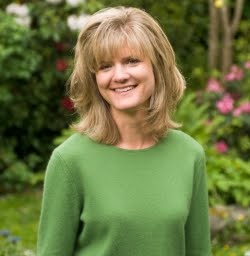
Isn’t she lovely? Thanks so much, Suey!

10 Questions for Pam Bachorz

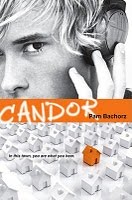
Pam Bachorz’s debut novel, Candor (my review, because it’s been a couple of months), has arrived with a bit of a splash. I haven’t read a single bad review of it (I swear), and it made the short list for this year’s Cybils Young Adult Fantasy and Science Fiction. It’s my pleasure to have her as a guest on my blog today, talking about Candor, writing, and reading. You can find out more about Pam at her website and on her blog.

MF: Candor — to me — was a very creepy place — from the basic housing development all the way through to the brainwashing. Where did you get the idea?

PB: Candor, Florida was in part inspired by my born paranoia. Brainwashing has freaked me out since I first heard kids at school talking about hidden messages that you could hear when you played a record backwards. Then we moved to a small planned community in Central Florida, and I was surrounded by perfection: white plastic picket fences, lush flower beds, pretty houses and smiling people. There was a truck that drove around every night, spraying mosquito repellent from the back, and one night it passed me as I was walking the dog. I wondered what was really in that mosquito spray–what if it was Prozac? Maybe that was what made everybody so happy… and willing to mow their lawn every three or four days! From there it wasn’t a big jump to thinking about brainwashing. Candor, Florida was born.

MF: Planned communities gone awry? Not too far-fetched…. Music plays an important role in the town, as well as in Oscar’s business… is there some reason that you chose music as a vehicle for the brainwashing, or was it just convenient? (I don’t suppose you’ve toyed with the idea of a playlist?)
PB: I played with lots of ideas, but I wanted to pick a brainwashing method that wouldn’t be illegal. You can’t BROADCAST hidden messages but there’s nothing to stop you from slipping it into publicly-played music (I think… I’m no lawyer, but that’s what I discovered with my research). I liked using music because it’s something that can pervade every moment of your life–and the town I lived in actually had these disguised outdoor speakers that played background music in the downtown area.

I actually DO have a short playlist on my website.

MF: While we’re on the subject… why brainwashing as a tool for control?
PB: Well, first and foremost, it is just plain creepy. It overwhelms and leaves little room for doubt or weakness. You don’t have to remember to take it, like you would with a pill, and you also can’t resist it… unless you plug your ears 24/7. Or unless you’re CANDOR’s main character Oscar..

MF: My oldest — who also loved the book — saw some parallels to Lois Lowry’s The Giver. Do you consider this book to be dystopian/science fiction? Why/why not?
PB: I am so flattered by comparisons to THE GIVER. I do think both books share a fear that people would give up their own free will, and their children’s free will, in exchange for perceived perfection. And that, to me, is definitely dystopian.

MF: I didn’t find many of the characters to be sympathetic, though Oscar grew on me by the end of the book. Do you have a favorite character or scene?
PB: I’m a mother and I love all my characters like I birthed them. Even when they’re very, very bad I can’t help but to love them. Oscar is my favorite, if I have to choose one, and in fact he STILL shows up in my imagination to tell me things! I like the flashback scene with Oscar and his parents christening the bricks with applejuice–I like seeing what Oscar lost when his mother was gone.

MF: You’ve created a whole faux website for Candor, which I simultaneously found amusing and not a little scary. What prompted you to do this?
PB: Glad you enjoyed it and also glad it freaked you out! I thought it would be a fun way to extend the reader’s experience with CANDOR and it might also attract a few new readers. I also thought it would be a cool way to get people thinking about how easy it is to deceive. But mostly, I did it because it was fun.

MF: Can you tell us a bit about the process of writing Candor? How long did it take, how much did it change from your initial idea…?
PB: Hoo boy this one took awhile. Start to finish, it took 5 years–but in that time I also had a kid, wrote two other (forever shelved) books, and moved to a new state. When I started writing the book, it was told from Nia’s point of view and Oscar was the janitor’s son! So it saw a ton of change before the finished product. Once Oscar announced to me that A. I had him all wrong and B. this was HIS story, it flew… probably 9 months from starting the rewrite to selling the book.

MF: Who, or what, influences your writing?
PB: Anything and everything. I am very inspired by dramatic, energetic music–my fingers fly when I listen to the Fratellis, Evanescence or Lady Gaga! I read YA constantly, everything from historical romance to sci fi to realistic fiction. But probably my biggest, most lasting influences are the authors I obsessed over as a teen and pre-teen: Lois Duncan and L.M. Montgomery. No wonder I like a combination of creepy and star-crossed romance.

MF: Are there five books that you think everyone should read?
PB: Well, I think there’s no one universal book that’s perfect for every reader. And thank goodness for that; how boring things would be if there was one universal taste. I do think most everyone would love these three: THE TRUE MEANING OF SMEKDAY, by Adam Rex, because it makes me laugh; CROSSING STONES, by Helen Frost, because it is simply beautiful and it made me cry; and DEADLINE by Chris Crutcher because the characters leap off the page and yes, again, it made me cry. And then there is ANNE OF GREEN GABLES, by LM Montgomery (sentimental and spunky perfection) and the creeeeepy DOWN A DARK HALL, by Lois Duncan. I swear to you, I think about DOWN A DARK HALL every single day. I think I read it ten times one summer.

MF: I’ve not, aside from Anne, that I’ve read any of those. They all sound excellent. Last question: If you don’t mind telling us, what can we expect next from you?
PB: I am in complete rewrite mode on my next release, DROUGHT, schedule for Winter 2011 publication with Egmont USA. It’s another dark, twisty tale but in a very different setting. This time the main character is a girl! A girl with a Very Big Problem… and a Very Big Gift.

MF: Thanks, Pam, for your time!
PB: Thanks again for featuring me!

10 Questions for Varian Johnson (Plus a Giveaway!)

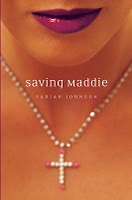
The first thing that struck me when I met Varian last October at KitLitCon was that this man has an absolutely fabulous laugh. When he laughs, it rings out across the room, and you can’t help but at least smile, if not laugh along. It was then that I knew I had to interview him. (Didn’t matter that I had never read any of his books!) Thankfully, he was generous enough to give me an ARC of Saving Maddie, which I found to be an interesting, thoughtful read.

And, thankfully, he was kind enough not only to give me an interview, but to include it in the week-long blog tour for the book. Which brings me to this: I have three copies of Saving Maddie to give away to three lucky readers. Just leave a comment (include your email, too, please) about something that struck you from the interview. Oh, and double entries for tweeting this, too (just let me know). You have until March 21st to enter.

Enjoy!

MF: You’re a civil engineer and you write books. Awesome! How do you manage to reconcile/juggle those two (vastly different) careers?
VJ: They actually work pretty well together, most of the time. At least to me, it seems like I work different parts of my brain when I’m designing bridges versus writing a book. Because of this, I don’t feel nearly as wiped out at the end of the day as I would feel if I had a day job in, say, copyediting.

That being said, it can be tough to juggle everything. I try to get up very early in the morning to get my writing done. I’m fresh and eager then, and the idea of having to leave for the day-job really pushes me to take advantage of the little writing time that I have.

MF: What led to your decision to become a writer?
VJ: I always wanted to be a writer. Ever since elementary school, I was always working on short stories, mini-novels, and very bad poetry. But I was also very good at math and science, so when comparing options, being a well-fed engineer seemed like a better life path than becoming a starving author.

However, while in college, I couldn’t shake the writing bug. I eventually begin working on novels while juggling everything else, and was able to start on a manuscript that would become my first published novel.

MF: What was the initial inspiration for Saving Maddie?
VJ: I think Saving Maddie was born from a number of different things. I’ve always been interested in religion, and because I was so adamant on avoiding religion in My Life as a Rhombus (I didn’t want to bog down the novel with the religion versus abortion debate), I was really itching to explore it in my next novel. Also, I really wanted to explore the idea of saving someone, which was also a minor thread in Rhombus. And while Saving Maddie isn’t an autobiographical story, I very much felt like Joshua when I was a teenager—I felt like everyone was trying to force me to be this two-dimensional person. I was the smart one. The good one. I felt like few people saw the real me. But looking back on it, I’d bet that a lot of my classmates felt the same way, and perhaps I was just as guilty of seeing them in very confined ways as they were of seeing me. I found that while I liked most of the characters in the book, I related to Joshua most (says something about me, doesn’t it?).

MF: Do you have a favorite character or scene?
VJ: I don’t have a favorite character, but I have two favorite scene—the motel scenes. Without going into too much detail, I felt that both of these scene were the perfect storm of everything I’d been trying to say in the novel—the combination of love and loss, friendship and sacrifice. In these two scenes, we not only see the real Joshua, but I think we get a glimpse of the man that Joshua is destined to grow into.

MF: In your books, you seem to tackle tough subjects like abortion or religion, and work at finding a balance between all opinions. Is this something you consciously try to do, or is it just the way you look at life/writing/storytelling/issues?
VJ: I try really hard to find a balance between opinions. As an author, I don’t feel it’s my place to dictate want a reader should think or believe. Rather, I want to make it hard for the reader; I want him or her to struggle with what’s going on in the novel, to try to see all sides of an argument. Nothing, not even fiction, is all black and white.

MF: What do you hope people will take away from your book? (Saving Maddie in particular, but all of your books in general…)
VJ: Hmm…that’s a tough question. On one hand, I don’t have any expectations for what people will take away from my novels. Some will read my books for entertainment purposes only, some won’t. Going back to a previous answer, I guess I want my readers to realize that life is complicated; there are no easy answers. What works for one person may not work for another. And that’s okay. We don’t have to agree with everyone’s opinion, but we need to try to respect it.

MF: When did you start blogging? What inspired you to do it? What do you get out of blogging — if anything?
VJ: I started my blog back in the summer of 2005, after hearing author Chris Barton talk about blogging. I wanted a way to interact with the kid-lit community and to talk about my take on the writing life. While I’m not able to blog as much as I’d like, I love how blogging makes me feel so connected to the kid-lit community.

MF: Did you choose to write for a YA audience, and if so, why?
VJ: I would not be a YA author if not for Hard Love by Ellen Wittlinger. That novel totally changed the way I thought about the genre. Hard Love is equal parts funny and painful, and while it’s about a straight boy falling in love with a lesbian, it’s so much more than that. I loved the voice and the immediacy of the novel, and I knew after finished it that that was the type of books I wanted to write.

MF: Are there five books — lets be particular here: how about by people of color, since I, in particular, seem to be lacking in that area — you think everyone should read?
VJ: Jumped by Rita Williams-Garcia
Every Time a Rainbow Dies, also by Rita Williams-Garcia
Bud, Not Buddy by Christopher Paul Curtis
Tyrell by Coe Booth
If You Come Softly by Jacqueline Woodson

MF: If you don’t mind telling us, what’s next for you?
VJ: I’m actually working on a companion novel to Saving Maddie. I can’t say much about it, other than it’ll be from Madeline’s POV.

Thanks so much for your time, Varian! (And don’t forget about the giveaway!)

And, if you haven’t already, be sure to check out the other stops on the tour.
Melodye Shore in The Author’s Tent.
Reading in Color with Ari.
Gwenda Bond’s Shaken and Stirred
Edi at Crazy Quilts

10 Questions for Lauren Mechling

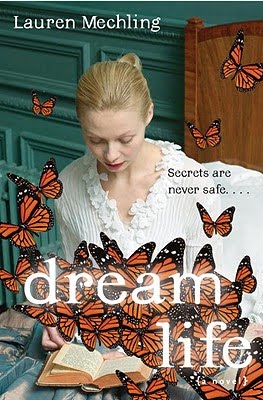
Sometimes, you meet an author — whether by email or in person — who is just so incredibly cool that you know that hanging out with them would be incredibly fun. Lauren Mechling is one of those authors. I want to go to New York City and just hang out with her for a day. I suppose it helps that I liked her two books, Dream Girl and Dream Life, too. At any rate, I was tickled that she agreed to answer my 10 questions.

MF: So, I’m curious: what was the initial inspiration for Claire and the Dream books?
LM:The inspiration came when I went with a very dear friend to visit her grandmother. She’s a former socialite who now lives in a hotel with a lot of other former socialites, and she has an opinion on every little thing. Her granddaughter is the apple of her eye and I was so amused watching the two of them relate to each other I wanted to play around with this relationship. I also wanted to write a series that was action-packed and funny. Not enough of those these days, in my humble opinion.

MF:I’ve only been to NYC once and didn’t explore much, so I couldn’t help but wondering: how much of Claire’s physical world is real and how much is made up?
LM: It’s entirely real! The only made-up part is how quickly she can get around.

MF: Seriously? You ought to give Claire Voyante tours. I’d sign up for one! Fashion plays a big part in Claire’s life, from Kiki’s vintage clothing (love that!) to current trends… is that something you came up solely for the character or the book, or is fashion something you personally are interested in? (I’m not sure that’s the best way to phrase this question, but hopefully you get what I’m trying to say….)
LM: I DO get what you’re trying to say. And yes, guilty as charged: I’m a sucker for clothes. I especially like the way Claire and the other girls use clothes–not to dress up for boys or to show the world how cool they are because they have 56 pairs of Juicy sweatpants. They use clothes as a way to stand out and be unique and, in Claire’s case, to connect to her family history. By wearing her grandmother’s old frocks, she’s closer to her grandmother. And speaking of her grandmother, one of the things Kiki teaches Claire is it’s worth it to make the effort, even when the same old T-shirt-and-yoga-pants combo seems tempting. I think it affects your mood and the mood of those around you. Walking out of the house in a vintage dress and fun pair of flats is a small way of saying, “Hello, world! I care!”

MF: I totally loved Ian in this book: I actually felt bad that he and Claire are just friends. (I suppose I just have a soft spot for the geeky guys.) Do you have a favorite character or scene?
LM: Oh, that’s so funny that you heart Ian. I have to say, I’m a little in love with Louis Ibbits, the latchkey kid who’s Claire’s old best friend and whose wit is even drier than Claire’s. Plus I love his tortoiseshell glasses.

MF: If you had a magic dream-inhancing necklace, what would you want to see?
LM: I’d want to see all the good and bad things the people I know are up to. I just wouldn’t want to hear them talking about me. That would be too much to bear.

MF: What are the differences between co-writing a book, and solo-writing? Pros/cons?
LM: Writing a book on your own is harder and the ultimate feeling of accomplishment is bigger. That said, I LOVE co-writing. Laura [my 10th Grade Social Climber series co-writer] and I are actually in the middle of a collaboration and it’s so fun. I love having a personal trainer to praise you when you hit a good note and to breathe down your neck and make you write every morning.

MF: You’ve written for newspapers, magazines and novels… do you have a favorite format to write in?
LM: Oh, it’s all really fun and it all fits together. Writing a book is a MAJOR undertaking. And writing an article, be it for a newspaper or a magazine, is so fast and short in comparison. Sometimes you need the instant gratification. and sometimes you want to be playful and expansive or you just don’t want to have to worry about being “accurate.” I can honestly say that doing each makes me appreciate all the upsides of the other format.

MF: Who or what inspires you to write?
LM: Me. I get very unhappy when I don’t write.

MF: Are there five books you think everyone should read?
LM: How about five authors I adore: Barbara Pym, Laurie Colwin, Dorothy Parker, Kate Atkinson and Sarah Waters. I realize these are not YA authors, so I’ll toss in: Norma Klein.

MF: I’m remiss: I’ve only heard of Dorothy Parker. Something to rectify in the future. If you don’t mind telling us, what’s up next for you? (More Claire?)
LM: Well, I’m working on that above mentioned project with Laura. And yes, I’d really like to write a third Claire book. Se’s really come into her own — she’s so much wiser and less insecure than she was in her first book. I’m dying to know how she’s holding up!

10 Questions for Rosanne Parry

I was completely captivated when I read Heart of a Shepherd last month, and was more than happy when the book made the Cybils shortlist for Middle Grade fiction. I totally agree with what Sherry at Semicolon wrote when she called it “a treat to be savored.” It very much is. And because I wasn’t willing to let the book go just yet, I thought I’d contact the author herself, and she graciously consented to be interviewed. There really isn’t much more to say, other than if you haven’t read the book, you should.

MF: Heart of a Shepherd is your first published novel! Congrats! It’s not your first book, though, is it? Can you tell us a bit about the process of writing a picture book versus a novel?

RP: I think picture book writing has more in common with writing poetry than writing novels. You have to make every single word rich and precise and useful. Which I think, in the long run, helps me write what I hope are richer novels.

In my picture book, Daddy’s Home, we ended up changing the order of events so that the action was spread out through the child’s house, which is visually more interesting. In a novel, my words carry the weight of bringing the setting to life. I think picture books work best when some of the character and setting decisions can be made by the illustrator. For example, in Daddy’s Home the text does not mention the gender of the main character, the ages of the siblings, the race or economic situation of the family or the presence of a Mommy. All of that I left to my illustrator. David Leonard did such a lovely job conveying the warmth and exuberance of the preschool reader. I love what his art added to the book.

MF: What was your initial inspiration for Heart of a Shepherd?

RP: Ten years ago, I wrote a sonnet for poetry month as I try to do every year. At the time, my son was six and my dad was teaching him to play chess, so I wrote a practice piece about that. A few years later, I got an idea for a short story about grandfather and grandson playing a game of chess which eventually became the first chapter of Heart of a Shepherd. I set that story on a ranch in Eastern Oregon because I had recently visited a friend in Malhuer County.

MF: Heart of a Shepherd is an interesting combination of things one wouldn’t think would “go” together: religion, East Oregon ranching and the Iraq war. How/why did that combination come about?

RP: I began writing about a boy and a grandpa on a ranch but there wasn’t enough energy in the two of them to sustain a whole novel, so I added the military family element and the two seemed to compliment each other well. I’ve found both the army officers and the ranchers I know to be surprisingly philosophical and to have a strong sense of stewardship for the people and animals in their care.

As for the inclusion of religion, that was a matter of being true to my characters and setting. Ranching and soldiering are not professions that attract atheists. These families are far more likely to be church-going than the general population. Malhuer County, where the story takes place, was settled primarily by Irish and Basques. These are people for whom Catholicism is not just their faith, but an important part of their cultural identification. Many stories don’t need to mention their character’s spiritual lives, but leaving that element out of this story was just unthinkable. Some people’s lives only make sense in the light of their faith and HEART was just that kind of story.

MF: I read that it took you seven years from idea to finished book. Can you tell us a bit about that process?

RP: Seven years is a tad misleading. I wrote a poem from which the initial scene of the book was drawn about ten years ago. I set the poem aside and did nothing with it for ages because I was working on another story at the time. A few years later I wrote the short story, which eventually became the opening scene of Heart of a Shepherd. I liked the story very much, but since I was in the middle of writing a different book, I set it aside once again.

Eventually, I wrote three more stories with Brother and his grandpa, but then I got completely stuck. Fortunately, Random House editor Wendy Lamb critiqued the stories at an Oregon SCBWI conference and was warmly encouraging of my efforts. She didn’t say what I needed to fix so much as what sparked her interest. The setting was one she seldom saw in submissions, and she enjoyed the warm and loving rivalry among the five brothers.

So I went back to the story, adding the military family element. All together, it took me two years of intensive study, research and writing to come up with a draft of Heart of a Shepherd I was satisfied with. From there I sent it to Jim Thomas at Random House and he made an offer on the manuscript in September of 2006, which was about seven and a half years from the starting point. Once the book was under contract it took another two and a half years to get it in print. It was a surprise to me that it would take so long, but I’ve since learned that it is a typical time frame. In fact, I’m very grateful to have an editor willing to give me the time I need to make my book just right.

MF: Do you have a favorite character or scene in the book?

RP: When I ask students what they want me to read out loud, they almost always choose the “boys against the girls” part. It’s a very fun scene to read aloud, especially to a group of kids. It was one of my editor’s favorites, and I can imagine that he was once a lot like Brother in this particular part of the story. For my part, I often feel like throwing things at him, so it’s a favorite for me as well.

MF: I found the book to be deeply religious, though that could be what I brought to the book. Is there anything you hope, in particular, readers will get out of your novel?

RP: I think that part of what makes reading such a rich experience and writing such a surprising profession is that people bring their whole life to every book they read so that it is a different experience for each reader. I got a lovely note from a teenager who said HEART helped her think of her family’s all-consuming ethnic restaurant business in a whole new way. Wow! I’d have never made that connection but family businesses whether it’s a farm or a store or a restaurant share some of the same stresses and benefits. It’s kind of cool to see what different readers bring to the experience.

If I have an agenda at all, it’s literacy. Young readers, and particularly those who struggle to read, need characters that speak to their life experience. Military families and ranching families are seldom depicted in children’s fiction. One of the most moving things that happened to me this year was the day I spent addressing an adult English language class at a local college. Mine was the first novel any of them had read in English, which felt like such a huge honor and responsibility. I was very proud of the team at Random House who packaged the book with a page lay out that is very inviting for a struggling reader and a cover that an adult can read on the city bus with dignity. Those details matter and I’m thrilled to have a publisher who is so attentive to them.

MF: Is being a writer something you’ve “always” wanted to do, or is it something you discovered later in life? Do you have any specific writing influences?

RP: I hated writing when I was a child, and I was not especially good at it, but I’ve always loved making up stories. When I was home full time with a house full of toddlers and preschoolers, I finally had the time to work at writing stories and I spent the next ten years learning to write like a storyteller.

MF: Who or what inspires you?

RP: The need to put four kids through college is pretty much all the inspiration I need.

MF: That certainly is inspiration! Do you have five books that you think everyone should read?

RP: Here are some books I’ve read recently which I really enjoyed.

  • When the Whistle Blows, by Fran Cannon Slayton
  • Marcello in the Real World, by Francisco X. Stork
  • The King of Attolia, by Megan Whalen Turner
  • Krik Krak , by Edwidge Danticat
  • Crash Into Me, by Albert Boris
  • poetry by ee cummings
  • Our Town, by Thornton Wilder
  • The Wee Free Men, by Terry Pratchet

MF: That’s an impressive list! if you don’t mind telling us, what’s up next for you?

RP: Yesterday, I sent my next novel SECOND FIDDLE off to the copy editor. It will be out in the spring of 2011. It’s a story about three girl musicians living in Berlin at the end of the Cold War. They find a Soviet soldier who is being murdered by his own officers. They rescue him and run away to Paris. It has been great fun to write. I was in Paris myself almost exactly twenty years ago so it has been fun to revisit my memories of that trip.

MF: That sounds interesting; I can’t wait to read it. Thank you so much for your time!!
RP: Thanks again for the interview.

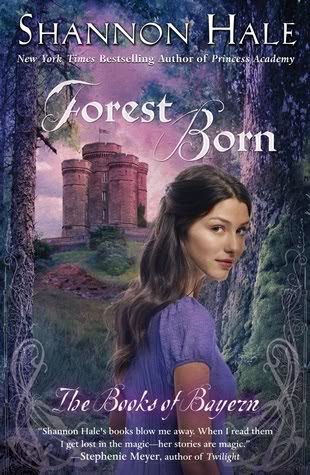
10 Questions for Shannon Hale

Shannon Hale has been one of my favorite authors for years. Almost since she first started publishing (I liked the story, but I didn’t like her author blurb). I swear she can do no wrong when it comes to her books — more right and less right, yes, but no wrong — and so when I got an email asking if I’d like to do an interview with her (again! Since I had the pleasure of interviewing her a couple years ago.) of course I jumped at the chance.

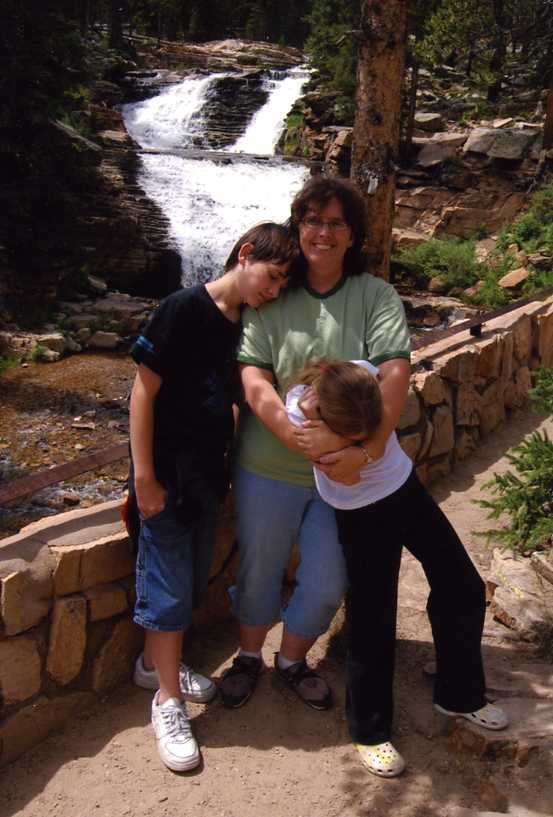
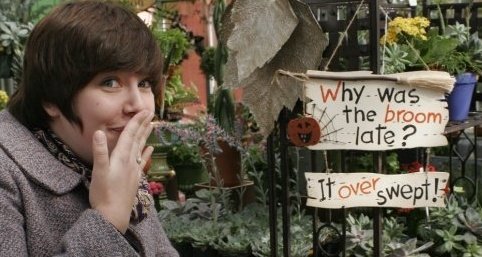
Before I give you the interview, I need to explain the picture… Since she didn’t include one with her questions, I felt I had the liberty of choosing one. Back in October, when Shannon was doing a signing tour for Forest Born, she went through Boston. And me, being the squee-y fangirl that I am, begged and pleaded my lovely sister (she’s on the left) to go and get a book signed for me. My sister (and my dear sister-in-law) loves me SO much, that, she did. And she took a picture and sent it to me… which isn’t exactly the same thing as meeting Shannon myself, but almost. Someday, I’ll actually meet Shannon Hale in person. But until then, I’m happy to just do interviews.

MF: I think I’m going to focus most on Forest Born, since that’s your most recent book…. I liked Rin’s quiet strength in the book. How did you come up with the idea for her?
SH: Thanks, Melissa. Rin was really tough, the toughest character I’ve ever written. Hard to discover, hard to figure out why she was the way she was. I knew her through Razo’s eyes before I wrote Forest Born, but it turned out she was so different inside, I had to wrestle with the story to shake her free. A big breakthrough was when I realized I needed to go back and to understand her early history. The first chapter was a late addition, but it saved the story for me.

MF: If I remember reading it right, Goose Girl was supposed to be a stand alone book. How did it become a four-book series?
SH: How indeed! I wish someone would tell me. I’m looking around, going, what a minute, I did not authorize all these books, pesky little critters. It’s all about the characters. Enna pushed her way forward and insisted on her own story, then Razo did and got River Secrets. Rin isn’t pushy and didn’t insist. Rather it was all the other characters who were loud and insistent that the story wasn’t complete yet and I was forgetting about…[SPOILERS DELETED BY AUTHOR] But I knew I wanted to tell that story from the perspective of someone very different from my other MCs. Rin was right. Tricky, but right.

MF: And do you think you’ll write more Bayern books? (Or is this really, really the last one?)
SH: Ha! Who knows? I’m not writing one right now, and I like the way Goose Girl and Forest Born bookend the series. But I’m always tensed for another character to get mouthy with me and demand a book. I know that might sound loony, like I really believe these characters are real people who can control me, which of course I don’t because if I did I’d be crazy, right? I mean, no way I’m crazy. And besides, if they controlled me, why don’t they get their stupid stories right the first time instead of making me do all those rewrites?! The truth is, I love to tell stories, but I am in some degree a slave to which story inside me shouts the loudest.

MF: Do you have a favorite character or scene in Forest Born?
SH: Ooh, I haven’t thought about this one yet. Let me think…I just asked my husband and he said “that zen walk/fight scene.” Maybe that’s cryptic enough not to be a spoiler. I like that too. I like how Rin quietly becomes the most powerful person in the room. But I also like the conversations between Rin and Razo. Those were a relief to write. In the middle of a very sticky book, Razo and his relationship with his little sister was an oasis for me, as it was for Rin too.

MF: Your books span the ages and the genres (a bit anyway) — from middle grade graphic novels to adult romances. Do you have a favorite to write in or for?
SH: If favorite means “easiest,” then contemporary romantic comedy wins. Not that Austenland or The Actor and the Housewife were sweat- and blood-free, but they’re SO much easier to write than period fantasy. In a contemporary setting, my lexicon is enormous. But worlds like Miri’s and Rin’s are so small, I have so many fewer words at my disposal, so many fewer similes I can call upon. If favorite means “most fun,” then Rapunzel’s Revenge wins because I got to collaborate with my awesome husband and awesome illustrator Nathan Hale (no relation). But if favorite means “best,” then behind all the other books’ backs, I furtively nod toward Book of a Thousand Days.

MF: I know this is kind of asking you to pick a favorite child, but which of your books is your favorite, or means the most to you?
SH: The Actor and the Housewife. No, wait, Goose Girl because she was the first. But Book of a Thousand Days I just claimed is my best…I’m coming up with really good arguments for all of them. Except Princess Academy. It’s been by far my most successful and so feels the least like mine. I can’t claim it anymore.

MF: Again, this might be an unfair question… but how do you think your writing (or, if it’s any easier, your approach to writing) has changed over the years? We could make it easier, how about since you were first published…
SH: I remember one of the biggest notes my editor gave me on Goose Girl was to get more inside the character’s head. I think I used to be a little more distant, and now I try to get so inside the character that the reader feels like she’s living the story rather than observing it.

MF: Who or what inspires your writing?
SH: Words. Words make me want to write. I’m not inspired by music, like so many authors. I wish I was. I’m rarely inspired by real life events. But words do it for me.

MF: Do you have five books you think everyone should read?
SH: No. I’m not very prescriptive. But I’m going to give it a shot and write down the first five that pop into my head: I Capture the Castle (even though the ending broke my heart), Megan Whalen Turner’s Gen books, A Long Way from Chicago, Westing Game, Mrs. Frisby and the Rats of NIMH. (wow, I haven’t read that last one in years! Don’t know where it came from)

MF: I know you’ve got Calamity Jack coming out in January, I’m excited to read that! What’s next for you after that?
SH: I’ve had two years with two books coming out, and I’m ready for a little breather. Maybe (maybe) my YA sci-fi kick butt girl series Daisy Danger Brown will be ready in 2011. Maybe.

MF: Thank you for your time!!
SH: Thank you, Melissa. You add so much to the book world with your passion and thoughtfulness.

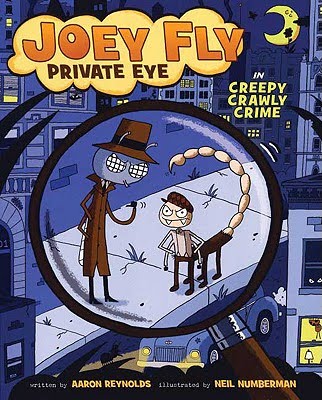
10 Questions for Aaron Reynolds and Neil Numberman

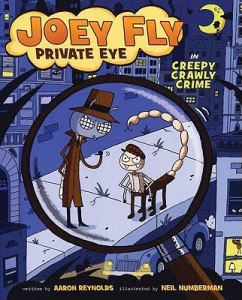
Today, I get the very distinct pleasure of chatting with two very talented men, the author and illustrator of Joey Fly, Private Eye. Aaron’s already got several picture books under his belt — including a favorite around our house, Chicks and Salsa. Neil, on the other hand, is new at the trade; Joey Fly is his first book, though his first picture book, Do NOT Build a Frankenstein, was recently published.

This was fabulously fun for me, partially because I’ve never done an interview with picture books/graphic novel authors before, and partially because these guys make me look smart! Love them.

Oh, and they’ve said they’ll be on hand for the next couple of days to answer any additional questions you may have for them; leave any in the comments. Enjoy!

Book Nut: A graphic novel about a bug detective is a pretty unusual idea… how did it all come about?
Aaron: Is it unusual? I guess when you write about roosters that cook and ice zombies, anything seems normal! It started for me with just a title…which was, at the time, Joey Off, Private Fly (get it, Off? Off bug spray?…get it?) Anyway, I loved the idea of a goofy mystery, having grown up with a steady diet of Scooby Doo and movies like Clue (and I’m a huge Agatha Christie fan). Bugs seemed the perfect cast of characters…all freaky and different, each with their own personalities and weird physical traits. From there, the story just took off.

Book Nut: One for Neil: this is your first book… congrats! Can you tell us a bit about how you got involved in the project?
Neil: Actually, there was quite a bit of luck involved! I received an email from an assistant editor at Henry Holt many years ago. As it turns out, she was in my second grade class in Medford, NJ! And she remembered me after all those years as the kid that never stopped drawing in class. She had stumbled upon my artwork by chance because one of her co-workers had a postcard of mine hung up at her desk, and she recognized the name. We met up after not seeing each other after seventeen years, and I bombarded her with my artwork (because how many opportunities will I get to eat lunch with an assistant editor at a children’s book publisher??) Once she vouched for me to her boss and editor of Joey Fly, I was given a sample of Aaron’s script. I did a couple pages for them, and a couple character sketches, and that was that! I got the job!
Book Nut: HA! It really does matter who you know. So, I know really little about how graphic novels are created… can you tell me a bit about the process? How does it compare to picture books?

Aaron: Some ways, totally different. Other ways, similar. The writing is much different, because I don’t write a manuscript, I write a script. Like, for a play. It looks like this:

Caption: And I was about to dig into a day-old corned leaf on rye, extra mayo…
Sammy: You gonna eat that?
Joey: Slow down, dustbuster.I haven’t even started yet.
Sammy: Just asking.
(A shadow blocks our view)
Caption: …when a shadow fell across the table.
Shadow: You are Mr. Fly?
Caption: The shadow was eight-legged and fuzz-covered.
Caption: It had the stench of death…or maybe it was the week-old aphids on the all-you-can-eat buffet. It’s so hard to tell the difference sometimes.

That’s a sneak peek from Joey Fly 2: Big Hairy Drama. I write the whole book like that, including stage directions and details about the action along the way. Then I break the scenes into panels, the way I think each shot makes sense for the telling of the story…like this:

Panel
Joey: Slow down, dustbuster. I haven’t even started yet.
Sammy: Just asking.
Panel
(a shadow blocks our view)
Caption: …when a shadow fell across the table.
Shadow: You are Mr. Fly?

So, the writing is much different than a picture book. But the process is similar after that. The book gets handed off to Neil, and I often have very little to do with it after that, just like is true of picture books.

Neil: For me, the biggest difference is how time-consuming a graphic novel ends up being. There’s so much more artwork involved! Not including the story for my latest picture book, Do NOT Build a Frankenstein, it only took about a month and a half for the artwork! Compare that to the two years I spent on Joey Fly! But at the same time, each piece is so much more important in a picture book, because there are far less pictures used to tell the story.
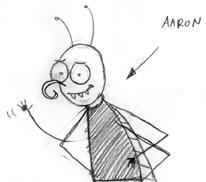
Book Nut: Speaking of which… do you two know each other? From your bios, one’s in Chicago, the other’s in New York. How did you two coordinate the story/writing/illustrating?

Aaron: Nope, we’ve never met. In fact, we had never even spoken or e-mailed until after the book was released. This is how it typically works for graphic novels and picture books when the writer isn’t also the artist (unless you’re Jon Scieszka, of course!). I write the story, the publisher picks Neil as illustrator, he illustrates the story. I’ll usually get to see it once the original sketches are done, and my editor will ask my opinion and ask for my feedback, but even then, I rarely have “approval” authority. Writing is a lot about trust. Trusting the process, trusting your editor, trusting this other artist that you’ve never met but are somehow collaborating with.

Neil: That’s right! It’s funny how many people will ask “So, what, you and your friend just made this and someone published it?” I wish it all could’ve been that casual! But in most cases, it’s not in that order. I actually like this approach, though, because it brings a third party (the editor) into the creative process, and she can oversee and make sure everything’s running smoothly.
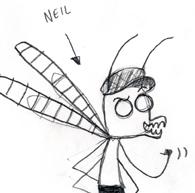
Book Nut: One of the things I liked about the graphic novel is that there’s something for everyone. The humor — there was a lot of slapstick — and the bugs (in general) obviously are aimed at boys, but there was enough in the book that two of my girls really liked it, too. Was that intentional (or do I just have odd girls who like bugs)?

Aaron: I really want to write books that have layers…layers of humor that are fun for girls, boys, adults even. I want to write books that talk up to kids, not down…that are smart in their humor and assume kids are smart enough to get it, while also being silly and slapsticky. For example, kids don’t know what “film noir” is, but the book is kind of a film noir spoof. I think they can go there and take it for what it is. So, it is intentional as far as that’s what I’m trying to create. How successful I am…that’s a case by case basis. If it leaves me cracking up and snorting into my milk, I tend to trust I’m on the right track.

Neil: I’m glad it’s appealing to both boys and girls, I certainly wouldn’t want to cut either party out! It would seem like boys would appreciate the general bugginess and hard-boiled detective story more… but as I show the book to more and more kids, I’m also meeting plenty of girls that love it!

Book Nut: There were a lot of detective/noir movie in-jokes (I got them as an adult; I think they flew past the kids, though.) Did you watch a lot of noir movies as research? Was it challenging writing a mystery aimed at kids?

Aaron: Again, I want adults to read it too, and get something at their level. The best examples of humor (I think of Shrek and Toy Story and Monsters, Inc.) play on many levels and have stuff that hits kids and other things that hit adults. I didn’t actually watch tons of Bogart movies or episodes of Dragnet, though these certainly work their way in. Moreover, I wanted to capture the vibe of these things, but then be really silly with it. It all goes back to Scooby Doo! I also wanted a mystery that had kid appeal, where the characters aren’t kids themselves. Bugs lets you get away with that. But the challenge is then to make it translate to a kids world. Besides the humor, the issues of jealousy over someone stealing your best friends (SPOILER ALERT!) that crops up as the root to the mystery is one that all kids get.

Neil: I watched plenty of noir movies, but the one I kept coming back to was The Maltese Falcon, starring Mr. Bogart. It’s definitely one of the more familiar film noir movies, but it also had everything I was looking for, from great compositions, costumes, and scenery, all of which I “borrowed.”

Book Nut: Will there be more Joey Fly books? What kind of adventures do you see him and Sammy having?

Aaron: Joey Fly #2 is already written, as you know from the example I gave above. It takes place in a theatre and involves the kidnapping of a lead actress and Sammy’s accidental debut on stage. I’m currently working on books three and four.

Neil: Yep, and I’m just about done with the artwork for the second book. This one is going to knock everyone’s socks off! The characters are so well written and so much fun to draw. Watch out for a gigantic, hairy tarantula… that has a passion for the performing arts!

Book Nut: Who or what is your artistic/writing inspiration?

Aaron: I jokingly mentioned Jon Scieszka earlier, but guys like him inspire me…Neil Gaiman, George Saunders, Roald Dahl…these guys pull off some edgy quirky stuff, but in a way that hits right at the core of what kids love. They challenge me to keep pushing the edge and stay true to the kinds of books I think kids will respond to.

Neil: I love Martin Handford’s work, or as most people would know him, the creator of the Where’s Waldo books. He fits in literally thousands of stories in one piece, and while finding Waldo is a hoot, there is so much more to his work, including European historical references, and lots of people on fire. I also love comic book writer/illustrator Peter Bagge’s work. While his stories are wildly inappropriate for kids, his artwork and characters are so cartoony and stretchy. You can definitely see some of Bagge’s influence on me in Joey’s posture, if you look carefully. Book Nut: Is there a graphic novel or book that you would have loved to have written? What is your all-time favorite? Aaron: I wish I had written James and the Giant Peach, by Roald Dahl. It’s my favorite of all time…in the first page, James’ parents are eaten by a rampaging rhinoceros! Not only is that ridiculous (rhinos are herbivores, FYI), but also a little dark. But so spot on. Brilliant and wonderful.

Neil: There are some Calvin and Hobbes strips that are so frustratingly simple, but so profound at the same time. And so dead-on to what childhood was like, fighting Dinosaurs or riding around in a spaceship, all on your mom’s best living room couch. That kind of stuff will definitely show itself in my work to come.

Book Nut: If you don’t mind telling us, what’s next for both of you?

Aaron: More Joey Fly stuff is coming. I also have a picture book coming out next spring called The Carnivore Club about a lion, a wolf, and a shark that all become friends because the plant-eaters are so spiteful and nasty to them.

Neil: Other than working on the second Joey Fly, I’m shopping a couple picture book ideas around, and in the very early stages of getting one started. All I can say for now is that it will be full of monsters!

Thanks so much to both of you for your time!

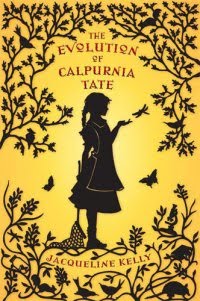
10 Questions for Jacqueline Kelly

Perhaps it is too much to say that when I finished Calpurnia Tate, I wanted to meet the author behind the book. But, it isn’t too much to say that the instant I got an email from Jaqueline Kellye thanking me for my review, that I jumped at the chance and asked her if she’d be willing to do one. (Happily, she said yes!) Born in New Zealand, raised in Western Canada, she now calls Texas home. If that isn’t interesting enough, she also holds both a medical degree and a law degree (and likes both The Princess Bride and all of the Wallace and Gromit movies!). I could blather on about how interesting Jacqueline and her book is, but I think I’ll just move on to the questions and let them do the work for me.

MF: This is your first novel, congratulations! Can you tell us a bit about how the story came to be?

JK: The first chapter of the book was originally written as a stand-alone short story. It ended by jumping forward in time ten years to one morning when Calpurnia, by then a young woman, smuggled Granddaddy out of the house and took him to the airfield in Luling. There she bought him a ride in a bi-plane and paid the pilotess extra money to throw in some loop-the-loops. She could hear Granddaddy whoo-hooing in happiness as he whizzed by. He died a few months later, still in a fog of happiness.

MF: That sounds like a fun storye! What inspired you to write Calpurnia’s story?
JK: Calpurnia and the entire novel was inspired by my old house out in Fentress. It is a huge old house originally built over a hundred years ago for a large Victorian family. The house is wonderful but it’s falling down around my ears. I did make the house a promise that if I made money from the book, I would use it to restore it to its former glory. Here comes the shameless plug: buy the book and buy the house a foot of plumbing!

MF: Is there anything in your life that influenced the book as you were writing?
JK: What influenced me most while I was writing the book was my writing group. They are the ones who urged me to turn a simple short story into a full-length novel. I couldn’t have done it without them. We have been meeting every two weeks for eight years now and we have more fun than should be allowed.

MF: I adored many of the characters, from Grandpa and Calpurnia to the little J.B. Do you have a favorite character in the book? Who is it and why?
JK: My favorite character is, of course, Granddaddy. I grew up without a grandfather, so I had to create my own. This is actually rather nice because then you get exactly the grandpa you want.

MF: Is there anything you hope readers will get from your book?
JK: I hope that readers will look at the world and nature in new ways. And I hope that girls and women will realize that their great-grandmothers fought for the right to vote. Civil rights must never be taken for granted.

MF: I know you have a background in both the medical professions as well as in law. How did you end up being a writer of children’s novels?
JK: I have wanted to be a writer my whole life. I’m very fortunate in that I presently practice medicine part-time. This allows me to write. It would be almost impossible to write seriously with a full-time private practice.

MF: Do you have a special time or place where you write?
JK: I prefer to write in the mornings upstairs in a guest bedroom that I have turned into a home office. I listen to the local classical music station and I look out into a huge old oak tree where the squirrels and cats chase each other back and forth, up and down. I try to set aside from 9-12 daily but that doesn’t always work.

MF: Are there five books you think everyone should read?
JK: For children: The Wind in the Willows; Alice in Wonderland; The Princess Bride; The Hobbit; The Lion, the Witch, and the Wardrobe.

MF: Who or what has influenced your writing, and why?
JK: I am in awe of Alice Munro. Her language is deceptively simple, yet her stories are incredibly rich and complex. Then there’s Eudora Welty, Flannery O’Connor, Katherine Anne Porter. I would hope that these wonderful writers have had some small influence on me. They are the best at what they do. The rest of us are mere sniveling amateurs.

MF: Thanks for your time!
JK: Thanks so much.

You can find more about Jacqueline and Callie Vee on their Facebook page, which Jacqueline is using as a blog. You can also check out her (very gorgeous) web site.

10 Questions for Cass

So, for BBAW, I signed up to do the partner interview, and I got Cass from Bonjour Cass as my blogging partner. She’s a new blogger, so here’s your opportunity to meet her (she’s pretty cool!). Then go by and check out her blog… (and leave a comment!)

MF: So, Cass: tell us a bit about yourself.
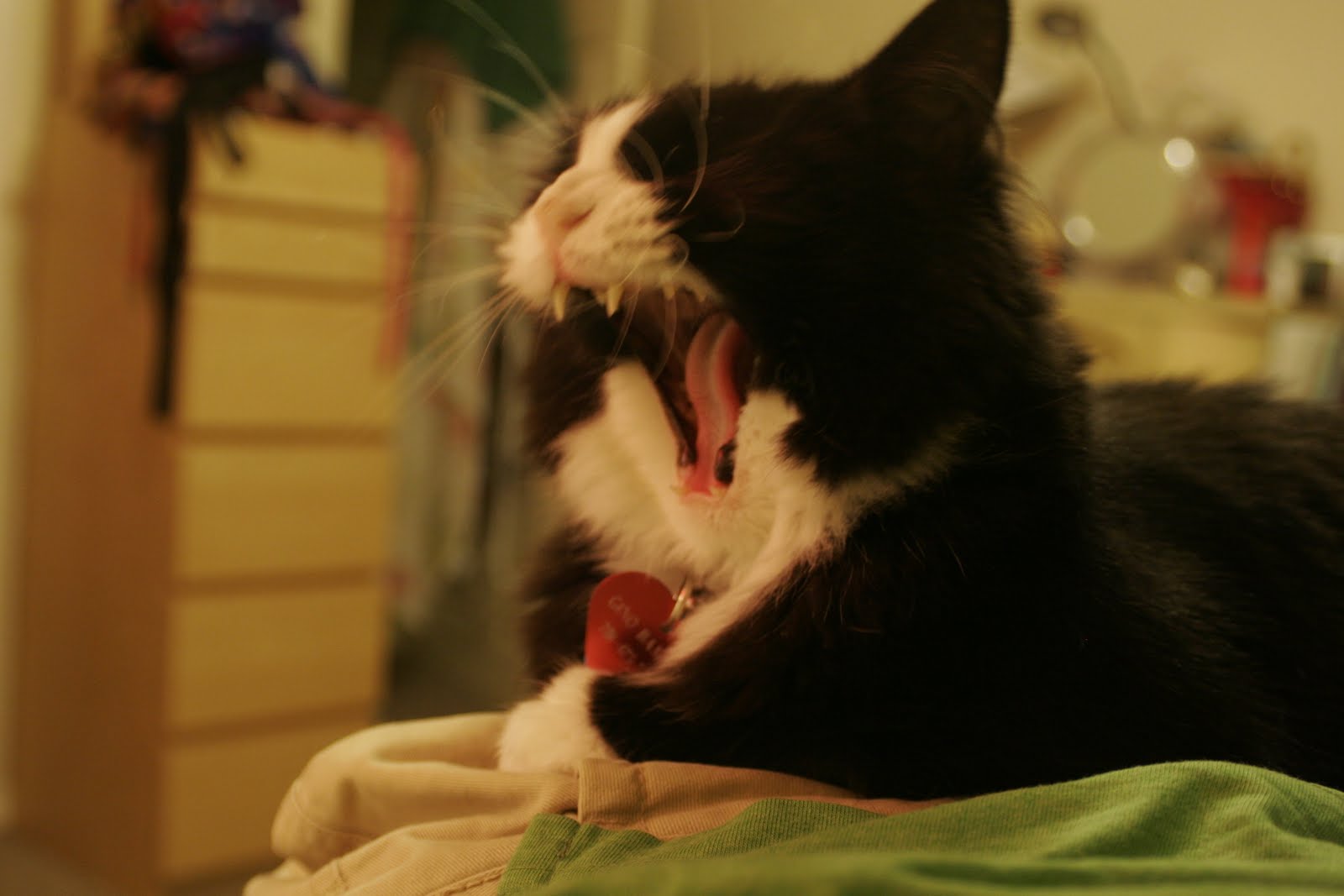
BC: I’m a twenty-something Bostonian (by choice, not birth–I grew up in northern Connecticut). I love city life, mostly not having to worry about driving, especially since I never got around to learning how to drive. I live with my wonderful partner and our two spoiled cats, Gino and Henry. I spend a lot of time reading (shocking, I know), exploring the city, and drinking far too much coffee.

MF: I love big cities, too, though I’ve never really had the opportunity to live in a really big one… How long have you been blogging? Why did you start?
BC: I made the tragic decision to start working in the financial sector last year, right before the recession hit hard, and I was laid off. I started my blog in July after months of following book blogs and feeling frustrated about not being able to discuss all the wonderful (and not so wonderful) books I’d been reading. My partner isn’t a reader and even my friends who claim to be read maybe five books a year. Of course, this is fine, but it’s hard to convince someone who doesn’t read much to tackle books you admit aren’t the best, just so you can discuss them. I use my blog as a way to put my thoughts into a concrete form.

MF: I think that’s a reason a lot of us started! What do you enjoy about reading? What keeps you picking up the next book?
BC: This is a challenging question for me because I don’t feel like I make a conscious decision to keep reading. It’s become a part of who I am, beginning when I was young and my mom would read Little Women to me before bed. I couldn’t wait to learn how to do it myself. I was an only child (now I have three significantly younger brothers from my father’s second marriage), and I was frequently the only kid in the room with a bunch of adults. I started pretending to read–I’d hold my mother’s hard cover copy of IT and mumble out words, pretending I was a witch casting spells–and I would hand write books like When You Give a Mouse a Cookie over and over, even though I only knew the story from memory. When you’re an only child, you learn to make up your own games to entertain yourself, and my games just happened to make me a book lover.

MF: Are you a buyer or a borrower? Why?
BC: Lately I’ve been reading so much I’d go broke if I bought every single book. We have a great local library, and I use the Inter Library Loan system to get everything I want. I buy used books from the independent book stores around–there are many–but I don’t buy many brand new books.

MF: Me either! (I really love my local library, too.) You mentioned in an email that you like YA books. Why? What is it about YA that pulls you into reading them?
BC: In high school I was the president of the town library’s Young Adult Council. They were trying to attract more teens to the library and recruited those of us who spent a lot of time there. Their YA selection was, well, embarrassing. Maybe a couple of Christopher Pike books, maybe some Lauraine McDaniels, but the selection was sparse. Mostly we took books out from the adult section. My favorite book at the time was Laurie Halse Anderson’s Speak, which I had bought myself, so that was one of my “wins” for the library. The group sparked my interest in YA books, and I just haven’t been able to let them go.
MF: Okay… lightning round… Do you have:

A favorite place to read?
BC: The train. Or a cafe with a good coffee. Or in the library. Or at my kitchen table. Or in my cozy armchair, snuggled with one of my kitties.

A favorite author?
BC: Officially I might say Toni Morrison or Margaret Atwood. Off the record, I might say Charlaine Harris.

A favorite genre?
BC: Lately I’ve been devouring fictionalized accounts of history, like American Wife by Curtis Sittenfeld (fascinating fictionalized autobiography of Laura Bush) and Joyce Carol Oates’ Black Water (based on the Chappaquidick tragedy).

A favorite food?

BC: My stepmom’s meatballs, one of the many benefits of being Italian.

Five books that you think everyone should read?
BC: Obviously, this is just the beginning.
  1. The Book of Lost Things by John Connolly: my favorite book of all time.
  2. The Bluest Eye by Toni Morrison
  3. Stone Butch Blues by Leslie Fienberg
  4. The Monsters of Templeton by Lauren Groff: I listened to the audiobook and the narrator made it very funny.
  5. The Disreputable History of Frankie Landau-Banks

MF: That is an impressive list. Thanks so much, Cass!
BC: Thank you!

10 Questions for Suzanne Selfors

I discovered Suzanne Selfors last year, when I received a review copy for Saving Juliet from Walker Books. I loved the premise, and thought that Selfors had a nice blend of magical realism, romance and adventure that captured my fancy.

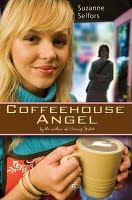
Her latest YA book, Coffeehouse Angel, takes magical realism in a different direction, giving us guardian angels and a more subtle romance than in her previous book. It still captured my fancy, though. Enough to ask her if she’d be willing to do an interview for my little blog.

I was happy that she agreed to be a part of my 10 questions series, especially since my computer crashed and I lost the answers she had sent. She was kind enough to answer the questions twice for me. Thanks, Suzanne!

MF: Can you tell us a bit about the inspiration for Coffeehouse Angel?

SS: I was inspired by the place where I do a lot of my writing — a coffeehouse in the town of Poulsbo. Poulsbo is a little Scandinavian-themed town that’s adorable. I’ve put pictures of it on my website. Katrina and her grandmother would fit right in.
I was also inspired by a conversation I had with a friend who was really worried about her daughter’s summer schedule. This girl had every minute scheduled, from swim team, to sailing lessons, to Spanish lessons. The mother was stressed that it wouldn’t be good enough to get her daughter into a good college. I felt sick just listening to her. And that is a big theme in this book, this stress teens are under to succeed.
MF: Do you have a favorite character or scene from the book?
SS: Well, I love the scene when Ratcatcher, the cat, catches something, but I don’t want to give it away.
MF: What would you wish for if you had a magical coffee bean?
SS: My true wish would be for my kids to have long, healthy, happy lives. My fantasy wish would be to grow wings.
MF: Is there anything from your life — either past or current — that ended up being a part of this book?
SS: Certainly. I was very much like Katrina, in that I had no idea what I wanted to do with my life. I was a total late bloomer! And, like Katrina, I went to dances at the Sons of Norway hall. I also had a best guy friend in high school, but he wasn’t anything like Vincent. And all the old guys that hang out at the coffeehouse are based on all the old guys in my family. They were Norwegian fishermen, too.
MF: You write both YA novels as well as Middle Grade ones… is there a difference in the way you approach writing for the different age groups?
SS: A big difference! The middle grade novels are all about an adventure. I don’t have to worry about romance. Which, in my humble opinion, is the most difficult thing to write. In the teen novels, there’s always an element of romance. It usually isn’t the central focus in my story, but it’s always there.

MF: How did the decision to write both MG and YA come about? (Or did it just happen…)
SS: It just happened. I was under contract to write my 2nd middle grade and I had this idea I couldn’t get out of my head. So I wrote Saving Juliet and my agent sold it!
MF: Your stories always seem to have a slight element of the magical, whether it be mermaids, time travel or magic coffee beans (sorry, I haven’t read Fortune’s Magic Farm, yet…) — is there any reason for this?
SS: I love stories about magic. I’ve always been drawn to fairy tales and fantasy. While I don’t write high fantasy, I always fall into the fantasy category. But I don’t sit down and say, Oh I’m going to write another story about magic. It just always seems to creep into my books.

MF: Who, or what inspires your writing?
SS: My kids. I write for them. And they read everything I write.
MF: Do you have five books you think everyone should read?
SS: I’m sorry, I don’t do well with questions like these. I can’t possibly limit my choices to five. I think everyone should simply read. Read whatever, whenever, as long as you read.
MF: If you don’t mind telling us, what are you working on next?
SS: My 3rd middle grade comes out in May 2010, Smells Like Dog. It was very fun to write and I’m quite proud of it. And I’m currently working on the first draft of my next teen book.

Visit Suzanne and learn more about her books on her web page.