10 Questions For Sarah Beth Durst

So, a couple months back I got an email out of the blue from SARAH BETH DURST offering me not only a NetGalley of her new book but an INTERVIEW as well. If you can’t tell from the caps, I was more than a little excited. She’s definitely on my list of  authors I HAVE to meet someday (but may never since they never really seem to come to Kansas) because I’ve adored everything she’s written. You can read my review of her new book here.

And without further fangirling…

MF: If you had to describe Chasing Power in one sentence, how would you?
SBD: Kayla was born with the ability to move things with her mind, but will her powers save her or destroy her?

MF: Good sentence. I may have to steal that to handsell the book. You’re writing is so diverse — vampires, mythology, fairy tales, and now telekinesis. How do you come up with the ideas for the worlds you create?
SBD: Sometimes I just open a file, label it “Things I Think Are Awesome,” and write a whole list of things I think are awesome until something captures my imagination.  Really, it’s all about writing what you love.  People always say to write what you know, but I think you should write what captures your imagination and won’t let go.

MF: Why did you choose to write about telekinesis? 
SBD: I’ve always loved the idea of telekinesis — from THE GIRL WITH THE SILVER EYES by Willo Davis Roberts to the movie Escape to Witch Mountain to various X-Men to The Raven (from Anne McCaffrey’s books) to Yoda.  It’s such fascinating power because it’s limited only by your imagination.  Look at the damage that Magneto can do with only the power to move metal.

MF: True. (It’s my oldest daughter’s superpower of choice, as well.) What kind of research did you do for writing about telekinesis and teleportation to make it sound plausible?
SBD: Not sure this counts as research, but I’ve spent a significant chunk of time over the course of my life imagining I have various magical powers.  I’d probably list that as one of the job requirements for being a fantasy writer.

Optional but not required: a childhood spent checking closets for entrances to Narnia.

In all seriousness, I did do a fair amount of research into the places that Kayla and Daniel travel.  I also spent a lot of time figuring out the rules of their powers.  Consistent rules help foster plausibility.

MF: Very true. Why did you decide to make Kayla a thief?
SBD: Mainly because it was really fun to write.  Kayla has very limited telekinesis (and a very loose grasp on the concept of personal property).  She can only move very light objects, like a fish hook or an ATM card.  It was a ton of fun to figure out how to, for example, rob a jewelry store with just a little bit of power.

MF: One of my favorite things about Chasing Power is the friendship between Kayla and Serena. Do you have a favorite scene or character in the book? 
SBD: The Kayla-Selena scenes were my favorite to write.  Selena is a sidekick who has zero interest in being a sidekick.  She loves her friend, but she’d rather drink a smoothie on the beach than come along on an adventure.  One of my favorite scenes to write was when Daniel is attempting to intimidate Kayla (in order to convince her to help him save his mother), and Kayla and Selena are completely underwhelmed by his attempts to be ominous.

MF: That was a fantastic scene! So, is this a stand-alone book, or the start of a series? 
SBD: I wrote it as a standalone, though I admit I do miss Kayla…

MF: Who, or what, inspires you to write?
SBD: Everything that I am.

I’ve wanted to be a writer for as long as I can remember.  Over the years, I’ve discovered that if I don’t write, it messes with my worldview.  I need to write.  It keeps me happy.

MF: What’s the last book you read and loved, and why did you love it?
SBD: Last book I read and loved was THE PRINCESS CURSE by Merrie Haskell.  Really great retelling of The Twelve Dancing Princesses (with a little Psyche and Cupid tossed in).  It features a strong female protagonist and lots of magic, both things that I love.

MF: Ooooooh. Sounds fun! If you don’t mind me asking, what can we expect from you next?
SBD: Next up is a middle-grade novel called THE GIRL WHO COULD NOT DREAM.  It’s about a girl whose family owns a secret store where they buy, bottle, and sell dreams, but who can’t have any of her own, and the adventure that she and her pet monster go on when someone starts kidnapping dreamers.  It’s coming from HMH/Clarion Books in fall 2015, and I’m really, really excited about it!

MF: Thanks so much for your time!
SBD: Thanks so much for interviewing me!

10 Books With Meaning

My parents came to visit last weekend (which is why I didn’t get a list up) and she, C, M, and I were going the rounds about Daughter of Smoke & Bone, and she mentioned that she only read books with Meaning in them. I said, kind of off-hand, that I must have low standards, because that’s not what I immediately look for in a book. But then, Hubby jumped in and mentioned that that’s the first thing I talk about when I talk about Hunger Games: how it’s a commentary on reality TV. So, I thought I’d make a list of good books that I’ve read where the Meaning in them has stood out.

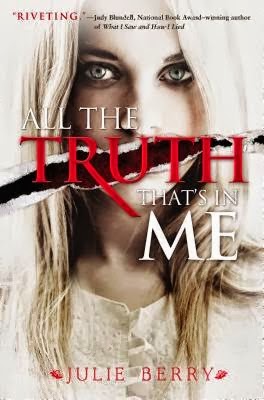
1. All the Truth That’s In Me, by Julie Berry: It’s about how we can transcend adversity, and find strength within ourselves to withstand. Especially when we know we’re on the right side.

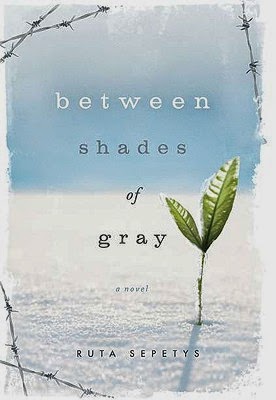
2. Between Shades of Gray, by Ruta Septys: About keeping hope in the face of dire situations, and how humans and survive — if only barely — the worst of atrocities.

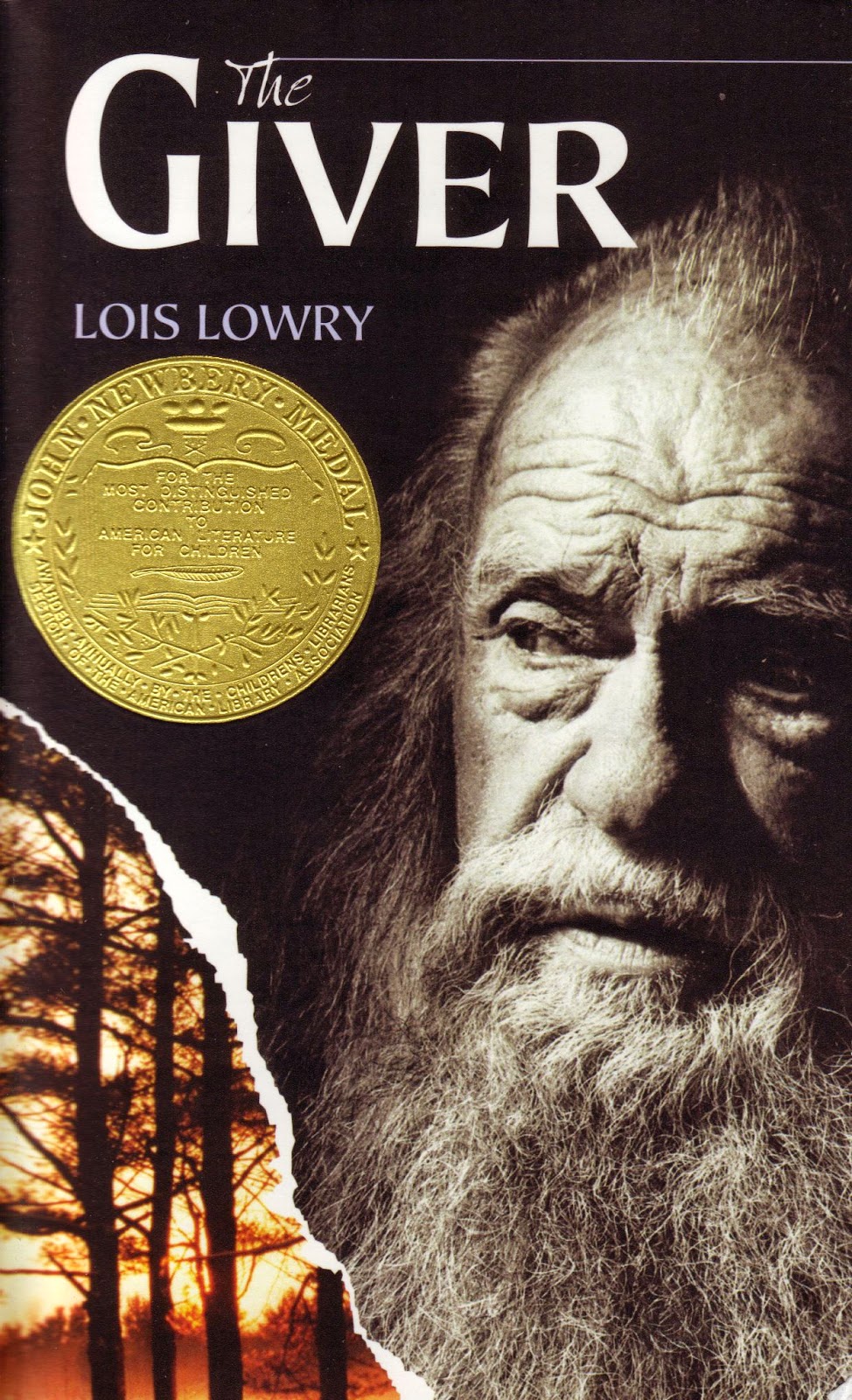
3. The Giver, by Lois Lowry: C actually suggested this one. It’s about choice and freedom and what each of those mean.

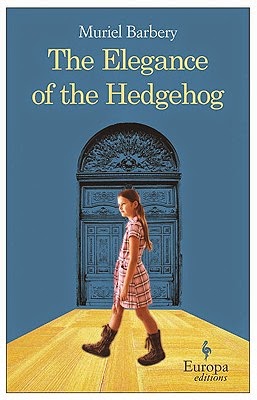
4. The Elegance of the Hedgehog, by Muriel Barbery: Honestly, I don’t remember much about this, except that I liked it a lot. I’m assuming that since I wrote in my review that it was “full of Philosophy and Art and the Meaning of Life” that it has some sort of Meaning to it.

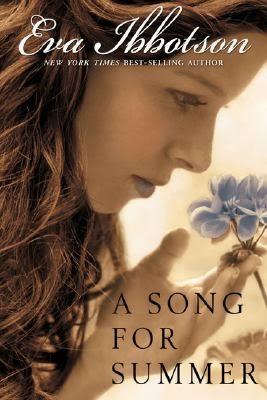
5. A Song for Summer, by Eva Ibbotson: A story about Beauty and Art and how it brings us together as people.

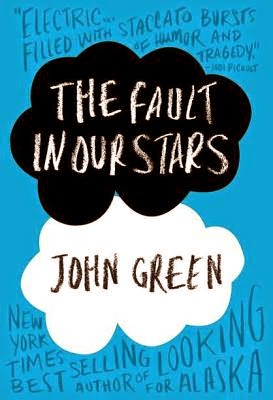
6. The Fault in Our Stars, by John Green: John is the King of Meaning; most of his novels are about Something. I call this the cancer book, but it’s really about living life, and not being afraid of what comes after.

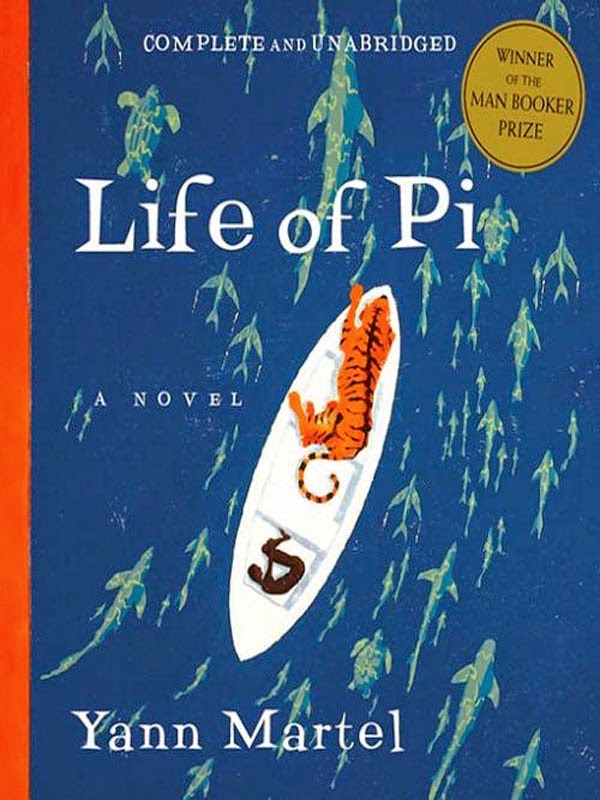
7. Life of Pi, by Yann Martel: It’s been a long time since I’ve read this, but what I remember it’s about Truth and how we can know — or at least believe — what is and isn’t True.

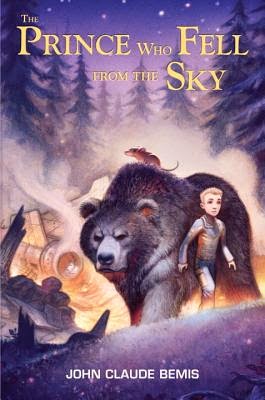
8. The Prince Who Fell From the Sky, by John Claude Bemis: Shades of classic animal stories (“Watership Down” and “Jungle Book”) and the fierce protective nature of a mother shows for her child lend a human-ness to this story.

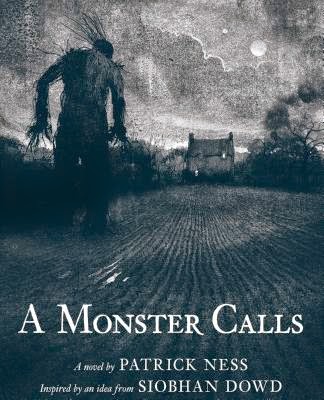
9. A Monster Calls, by Patrick Ness: It’s another cancer book, one in which we learn the power of stories. Which I think it a good Meaning in itself.

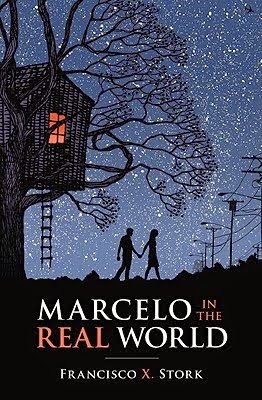
10. Marcelo in the Real World, by Francisco X. Stork: It’s Marcelo who is acting the questions, and exploring the meaning of life and religion. I said this: “It’s a deep book, one full of difficult questions and tough answers. And yet, as I finished it, I was surprised at the love and the hope that radiated from it, which brought tears to my eyes.”

What do you think? Any meaningful fiction books that I missed?

(Not Quite) 10 Questions For Elissa Brent Weissman

I first encountered Elissa a couple of years ago when I was on the Cybils Middle Grade second round panel. Nerd Camp was on our shortlist, and we ended up picking it as our winner. I’ve had a special place in my heart for it ever since, and as a result, chose it as one of my 3-5th grade book club summer picks. The kids liked it too, and we thought it’d be fun to ask Elissa some questions (they came up with all the questions).

How do you come up with book ideas?
EW: Some ideas spark from things that happen to me or I hear about in real life. I decided to write Nerd Camp, for instance, after teaching at a summer camp for smart kids.  My students were so fun and clever and funny and warm, I just had to try to capture that atmosphere.  The idea for The Short Seller came to me when I discovered the fast-moving, exciting fluctuations in stock prices from one minute to the next.  But none of these experiences translate directly into books; I usually take something real and begin stretching the situation with my imagination, asking myself, “What if…”  Following those “what ifs” leads me to characters, and, from there, to their stories.

In Nerd Camp, why did you choose to write from a boy’s point of view? Was it hard?
EW: I started Nerd Camp with a setting (a summer camp for smart kids) rather than a character, and I attempted to write the book with many different characters—mostly boys, but some girls too— before hitting upon Gabe.  I fell in love with Gabe the moment I started writing about him, and I just knew that his story was the one that was going to work.  Also, there’s just something about a boy yearning to be liked by his new stepbrother that is so endearing and honest, it just makes the central conflict more compelling than if it were a girl wanting the same. It wasn’t too difficult to write from Gabe’s point of view, though perhaps that’s because he’s such a nerd, and I am too.  In Nerd Camp 2.0 (due out May 2014!), I also write from Zack’s perspective, and he’s so cool it was harder to do!

How did you come up with the idea of SCGE? Is it a real place?
EW: SCGE is not a real place, but it’s based on one: the Johns Hopkins Center for Talented Youth (CTY).  I taught at CTY for four summers, but only at day sites, so the campers didn’t stay overnight.  (CTY does have sleepaway camps as well, on college campuses.)  Apart from the idea, the type of kids you find there, and to some degree the structure of each day,  SCGE is entirely fictional.  Wouldn’t it be fun if it were real, though?  I’d love to go!

What do you think a NERD is? Do you think everyone has a cool side, too?
EW: What a great question!  I think nerds are people who love to learn.  The stereotype is that nerds are good at school but awkward in social situations, which is why they could be perceived as uncool.  In an environment where it’s cool to not care, nerds, of course, would be ultimately uncool.  But at a place like SCGE, where everyone loves learning and cares a great deal about school, being cool is defined differently.  The key is to embrace what you love and resist the pressure to conform to someone else’s concept of what’s cool.  (Which, let’s admit, is no easy task!)  If we think about nerds as being people who are passionate about something, not only does everyone have a cool side, but even the coolest people have a nerdy side, too.

Tell us about your new book. What’s it about?
EW: The Short Seller is the story of seventh grader Lindy Sachs, who’s stuck at home with mononucleosis and bored, bored, bored—until she discovers she’s got a knack for trading stocks online.  Her parents give her $100 in her own account to  invest as she sees fit, and before long, she’s a stock-trading whiz, doubling her money and then some.  It’s when she decides to start trading with her parents’ money too that she finds herself in some risky business—and some major trouble.  I could tell you more about the plot, but it’s more fun to watch this short book
trailer.

Thanks so much to Elissa for her time, and to my book group kids for coming up with the questions!

10 Questions for Jennifer Nielsen

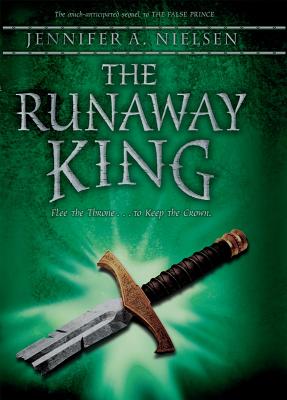
I got an inkling to see if I could snag Jennifer Nielsen for my interview series when we shortlisted her for the Cybils Middle Grade Science Fiction/Fantasy award. And then when The False Prince won? I seriously considered it. But then I read The Runaway King last month and that sealed the deal. Thankfully, in between her busy touring schedule (plus moving!) she found time to answer my questions. Obviously, there will be spoilers for both The False Prince and The Runaway King ahead.

MF: Tell us how you came up with the idea for Sage/Jaron and his story. What inspired it?
JN: The seeds for the story had been in my mind for a long time, but I could never find the right hero to bear the weight of the story. Sage (a name I’ll use interchangeably with Jaron) was found in a song by Eddie Vedder called “Guaranteed.” The lines of the song said, “I knew all the rules, but the rules did not know me, guaranteed.” And from that line, Sage was born.

MF: I’ve always wondered this about fantasy writers: how did you go about creating a whole world for your story to be set in?
JN: I started with the kingdom of Carthya and knew I wanted to build into the world some factors that would make it harder for Jaron to win. So I wanted it small, landlocked, and surrounded by unfriendly countries. Other details from the map got filled in as I planned for specific plot events that I knew would happen. Some things that may not seem significant from that map become more important later on.

MF: The Runaway King has a slightly different feel to it than The False Prince did. What were the differences and challenges with writing this one (as compared to the first)?
JN: The False Prince is really a game of wits, and challenges Sage mentally. The Runaway King is his physical test, and I push him to his limits there. The challenge I felt in writing this one was to avoid the mid-book slump that sometimes happens in trilogies. So I needed a story that could still stand on its own, but one that also linked the first and third books together.

MF: There are so many little things to love in this series. Do you have a favorite character or scene?
JN: In The Runaway King, I really love when Jaron returns to his castle at the end of the book. To me, that’s a profound scene as he realizes that he finally has the respect of his people. When I wrote it, I had the image in my mind of Frodo in the final Lord of the Rings movie, when Aragorn and all the kingdom bows to Frodo. That’s when Frodo finally feels the love for what he’d done. I think the same expression would’ve been on Jaron’s face when he comes home.

MF: If you had to choose one, which would it be: pirates or thieves?
JN:  Thieves. They’re every bit as dangerous, but have to be more subtle, which I find interesting.

MF: Since this is a series, did you have any idea what was going to happen in the later books when you started writing The False Prince?
JN:  I had a general idea for each book that I wanted to write, though most of the details have evolved along the way. That’s a fun discovery though, of knowing where I was going, but getting to figure out how to get there.

MF: Did you always intend to write for middle grade and YA audiences, or did you just fall into it?
JN: No, I actually started out trying to write adult women’s suspense, and it just wasn’t that good. About six months before the final Harry Potter book came out, I saw an online fan fiction challenge to write the last book – to wrap up all the threads in our own story concept. I had been a huge fan of the books and so I took the challenge, just to see if I could do it for myself. I had more fun in those few weeks than I’d ever had before and emerged from the process realizing I’d been writing in the wrong genre. I’d been searching for a long time for my voice as a writer – but to find it, I needed to write for young people
MF: Who, or what, inspires you to write?
JN: Story prompts are with me all the time. I could never write them all, but some stick with me more than others, and if I let them linger, eventually a character will emerge and begin pestering me (such as Sage). For me, writing is like finally scratching the itch in that hard to reach place.

MF: What’s the last book you read and loved, and why did you love it?
JN: One of my favorite recent reads was Robin LaFevers’ GRAVE MERCY. It’s a wonderful book, beautifully written, and steeped in the history of its setting. I am counting the minutes before I can get the next in that series, DARK TRIUMPH.

MF: So, if you can tell us: what’s in store for Jaron in the next installment?
JN: Trouble. Lots and lots of trouble. But knowing Jaron, you wouldn’t expect anything else, right?

MF: Right! Thank you so much for your time!

10 Questions for Mike Jung

When I decided to resurrect my 10 Question For series, I was in the middle of the 2012 Cybils round one, and, more specifically, I had just finished Geeks, Girls, and Secret Identities. I was so enamored with the book and with Mike Jung, I knew he had to be next. Thankfully (I never tire of being surprised that authors are willing to “talk” to me!), he said he’d love to do an interview.

MF: So, Geeks, Girls, and Secret Identities (or GGSI, as we ended up calling it on my Cybils panel), is your first book. Congrats! Can you tell us a bit about the process of how it came to be published?MJ: Thanks! I started writing GGSI in 2006, and after a close call with an agent I started seriously querying other agents in 2009. I ended up signing with the Erin Murphy Literary Agency’s Ammi-Joan Paquette in 2010, but before that happened I somehow managed to blunder my way into a friendship with Arthur Levine – we first connected with each other on Facebook, and in mid-2010 (right after I signed with Joan) I got to meet Arthur at the SCBWI Summer Conference. We really hit it off, and fortunately the manuscript that would become GEEKS, GIRLS, AND SECRET IDENTITIES was ready to go. Arthur read it after the conference, acquired it, and ka-blam, dream come true for yours truly.

MF: Where did you get the idea to write a middle grade book about superheroes?
MJ: I knew from the start that I wanted to write middle grade, although it did take some time to keep my writerly voice from zigzagging between MG and YA – I kept inserting a very YA-centric note of cynicism into the manuscript, and I had to exert quite a bit of discipline to get a handle on that. My middle-grade years were powerfully formative for me, and they were the time when books truly embedded themselves in the foundation of my worldview. I read to escape loneliness, lose myself in new worlds, and contemplate the startling fact that people could actually conjure these amazing stories out of thin air. Regarding superheroes, well, I think the next question answers that.
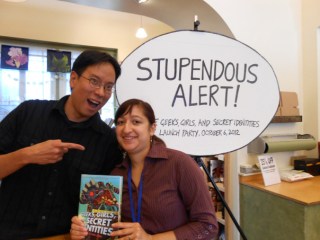
Mike with another author (and Cybils guru) Sarah Stevenson

MF: Fess up: are you a superhero geek? (It seems, from the book, that you may be. Either that, or you did your research well, because you got the fanboy/girl thing down.)MJ: I am a MASSIVE superhero geek, and though it’s been a long time since I’ve read comics with any great frequency, I’ll always be an old-school Marvel and DC devotee. Yes, BOTH Marvel and DC – I’m very bipartisan that way. I owe a great debt of thanks to my older brother, whose comic book collection was vast and lost a whole lot of collectible value because of my tendency to read everything in it, no matter how carefully bagged and boxed up it might have been.

When it comes to Spider-Man girlfriends, I’ll always be “thumbs up!” on Gwen Stacy and “meh” on Mary Jane Watson. John Byrne’s work on the X-Men was superb, but he started going slowly but surely downhill when Alpha Flight got their own series. There is only one true Silver Surfer, and it was created by Jack Kirby: hallelujah, all hail King Kirby, now and forever. The Sub-Mariner would kick Aquaman’s butt in a fight. I spent six months trying to draw a perfect rendition of Danny Rand’s hand smoldering with the power of Iron Fist. I retain my fondness for the Metal Men. I think Plastic Man’s full potential was squandered. Among DC’s female heroes I’ve always preferred Black Canary to Wonder Woman. I could do this all day…

MF: Being married to a superhero geek, I completely understand! I find humor so subjective. Was it difficult writing a funny book? How did you get the humor to work?
MJ: I totally agree that humor is really, really subjective, and in a way, that took some of the humor-related difficulty out of the equation, because I wasn’t really trying to tailor my writing to anyone’s sense of humor but my own. I’m told that humor is one of my strengths, and I did throw a whole bunch of stuff into GGSI just because I think it’s funny. That’s really all there is to it. I know what I like, I know what I think is funny, and I’ve spent enough time developing my writing skills to know how to make that happen on the page. Sometimes I wish I had a stronger grasp on the defined mechanics of humor, such as they are – the comedy rule of three, and so on – but my understanding of what’s funny about my writing is based solely on having done a whole lot of writing practice and having read a whole lot of books.

I’m also very aware and accepting of the subjective nature of humor. It’s really not possible to write something that’s universally funny – no matter what your sense of humor is like, you’ll always be able to find someone who doesn’t share it. It’s actually a very liberating thought, because it utterly releases us from the need to try and please anyone but ourselves.

MF: I know this is unfair, but do you have a favorite scene or character in GGSI?
MJ: I don’t want to be too spoilery about it, but my favorite part of the book is probably the very end of chapter 26. I never wanted to write a book that was just slaphappy and humorous, or fast-paced and action-packed – my goal from the start was to create a story with a strong, authentic emotional core. I wanted my characters to have emotional experiences with genuine impact, whether it be through the dynamics of peer interactions, the love of parents for their children, or the uncertainty of a friendship that may be lost. The end of chapter 26 is where I was most successful in making that happen, and I think I was able to do it through dialogue, action, and description. I’m quite proud of that section of the book.

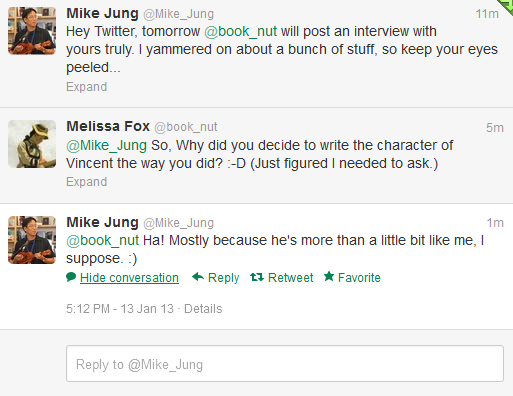
MF: I agree: it wasn’t just a superhero book, and it wasn’t just a comedy; it has a good emotional core. Truthfully: I loved Polly, and the role – atypical for a lot of girl characters – she played in the book. Why did you decide to write her that way?MJ: The snide part of me wants to say “Why wouldn’t I?” It’s not the first time I’ve been asked this question, it’s a question that I see asked of a lot of writers, and it’s worth noting that I’ve yet to be asked why I chose to write Vincent the way I did. [Touche: Shannon Hale makes a similar point here. *hangs head in shame*]

Questions like this imply that the unthinking, non-deliberate, default choice would be to create a girl character that isn’t strong, proactive, and dynamic. That certainly has been a default choice in the past, and maybe for some writers it’s still a default choice, but I like to think that we’ve matured enough as a society that it’s no longer perceived as an automatic choice for EVERY writer.

I’m not a Pollyanna about this: I know that as a global community we have far too much room for growth in that respect. But I have spent my share of time thinking about issues of gender bias and societally imposed roles, and as the father of a young girl I believe I bear both an obligation and a responsibility to continue thinking about those things. It’s not hard to do, because my adult life has been filled with strong, intelligent, articulate females, not the least of which are my wife and daughter. Polly is a strong character with an absolutely pivotal role in the book. She’s neither weak nor submissive, and has no trouble speaking her mind and taking action as she sees fit. She may be atypical in terms of girl characters in literature, but she’s not at all atypical in terms of reality. The world is packed to the rafters with strong women and girls.

And, because I couldn’t resist, I sent this tweet out:

MF: You’ve also written a chapter in Dear Teen Me. What were the differences between writing for a middle grade and a teen audience?MJ: The main difference was that I didn’t really think very hard about how to write in a voice that matched the age and experience of my characters, because my DTM letter isn’t fiction. I think writing a YA novel would be entirely different, because I’d need to inhabit the minds of my characters in order to make the novel truly come alive. My DTM letter was written entirely from my own perspective, however, and the things I wrote about (coping with suicidal thoughts, mostly) were things I experienced as a teenager, so I knew the subject matter would be relevant for teens coping with the same difficulties.

MF: How did you come up with the ukulele song? (Which is also hilarious.)
MJ: Before writing my book my main creative outlet was music – I played the local coffeehouse circuit, performing original songs on guitar and ukulele. I stopped doing that when my daughter was born, but I picked up the uke again last year at the Erin Murphy Literary Agency’s annual retreat. My dear friend Carrie Gordon Watson (who’s also a musician) and I joked around about forming a band to play at the retreat, and somehow we ended up actually doing so. It turned into an incredibly fun and meaningful experience, and got me back into making music. Later that summer I had a conversation with my editor about how hard it is for authors to just come right out and ask people to buy their books, and I had another semi-joking conversation on Facebook about writing a theme song for my book launch party. I let my brain marinate in those two conversations for a couple of months, and then the song pretty much wrote itself.
 
MF: That’s cool! (Can I say that I hope you write one for your next book?) What’s the best book you’ve read most recently? And why did you love it?

MJ: I actually read it in manuscript before it was under contract, but I bought a shiny new copy of Ellen Oh’s PROPHECY, the first book in a YA fantasy trilogy set in ancient Korea. If you like strong female protagonists, rip-roaring action, vividly imagined settings, and extremely creative mayhem, you’ll love PROPHECY – it’s one of the best things out there right now. My favorite book of 2012 just might have been Kate Milford’s THE BROKEN LANDS – when I finished the last page my first feeling was sadness that I’d never be able to read it for the first time again. I also loved Anne Nesbet’s THE CABINET OF EARTHS, Martha Brockenbrough’s DEVINE INTERVENTION, J. Anderson Coat’s THE WICKED AND THE JUST,  Raina Telgemaier’s DRAMA, Courtney Summers’s THIS IS NOT A TEST…uh, yeah. It’s hard to pick just one.

Thanks so much for your time, Mike!

You can check out Mike’s doings on his blog, and on his Twitter feed.

10 Questions for Ted Goeglein

Last year at about this time, I was ready to let my 10 Questions For feature die. It had been fun, but with a new job and all the other responsibilities in my life, I really didn’t have time to hunt down authors and think up questions.

But, then Ted came to town. (And I should have gotten a picture. *sigh*)

My boss at the store asked me to bring my daughters to the event, and Ted even tweeted me about it, so I figured why not. And I was SO glad we did. It was a fabulous night; he’s an interesting, engaging man, and completely won both me and my girls over. I knew I had to share his fabulousness with you all.

Which brings me to my eating crow moment: both M and C read Cold Fury, and they both LOVED it. So, I was wrong. I’m not too proud to admit it.

Following the interview is a contest: a giveaway for the ARC of the next in the series,Flicker & Burn. I’ll leave the contest open until the 21st.

MF: I’ve been wondering this: how on earth do you pronounce your last name?
TG: Ha! The question I get most often! It’s T-e-d, just like it sounds…kidding…Goeglein is pronounced Gahg-line. That the best I can do.

MF: How did you come up with the idea for Sarah Jane’s story?
TG: It was a combination of many factors, but the main one was just living in Chicago and being always aware that the Outfit was out there, operating in the shadows. It’s such a male-centric organization, I just thought it would be cool to see what happened when a smart, tough, determined young woman infiltrated it.

MF: But, if you’re Greek, and the Outfit is mostly Greek, why did you decide to make Sarah Jane Italian?
TG: The Outfit is an equal opportunity crime organization (except for the inclusion of women, until Sara Jane) – all ethnicities are welcome as, long as they make money. But historically, people of Italian ancestry populated the top strata of the Outfit.

MF: Did you run into any obstacles writing a story where the female main character acts in a less-than-“girly” way?TG: Absolutely. There were people (unnamed) reading the book during the writing process who kept wondering when a man was going to step in and save Sara Jane. Um, like… never.

MF: And my girls, at least, appreciated that! My main issue with the book was the huge backstory at the beginning. Why did you choose to write it that way?TG: I looked at the trilogy as one long story, of course, and felt that for readers of a certain age, the mechanisms of organized crime needed to be explained upfront so that when the plot began to fully unfold, they could put it all in context. So far, the feedback from young readers is that they enjoy the backstory since by and large, they have little conception of how organized crime began or what it is now.

MF: And you were right: both my girls who read the book appreciated knowing the backstory, and weren’t bored by it at all! I know this is an unfair question, but do you have a favorite character or scene?TG: Oh yeah…Sara Jane, and every scene where she kicks the ass of a bad guy who really, really deserves it.

MF: You were a script doctor before turning to novels. Why did you decide to make the switch? How is writing novels different from script writing? (Or is it?)TG: Script doctoring is fun and exciting, but it’s also piecemeal work, sort of like contributing to the construction of a Frankenstein monster…you get to work on the ears and a thumb, but the entire creation is never yours. Writing novels is different in the sense that the whole monster is yours!

MF: Did you set out to write for a YA audience, or did it “just” happen?
TG: Definitely a ‘happen,’ and I couldn’t be more pleased since young readers are the smartest and most discerning group of people to pick up a book. They tell you exactly what they love, hate, and why.

MF: What’s the best book you’ve read? (Most recently, or all-time. Your choice.)
TG: Have you ever heard of a little gem called Cold Fury? Seriously, for me, it always circles back to Catcher in the Rye for YA. I also loved Cloud Atlas…I gave it everyone I know. For short stories, I love Katherine Anne Porter.

MF: If you don’t mind telling us, what are you working on next?
TG: I just completed the third Cold Fury novel and am moving on to an idea I have for a new trilogy about…something I can’t tell you! Sorry…certain people would kill me!

AND now for the contest (sponsored by Putnam; open to US residents only):

A super special, two-for-one cover reveal…Cold Fury, by T.M. Goeglein, has been redesigned, as well as the second installment in the Cold Fury trilogy…Flicker & Burn!

Cold Fury in paperback will be released in June 2013…and Flicker & Burn comes roaring onto the scene in August 2013! 

The thrill ride that began in Cold Fury kicks into high gear in Flicker & Burn, as the threats to Sara Jane Rispoli come at her from all directions. She continues the desperate search for her missing family, but this time she’s on the run from creepy beings with red, pulsing eyes and ghostly white skin chasing her through the streets of Chicago in black ice cream trucks – they can only be described as Ice Cream Creatures. They’re skeletal and ferocious, hell-bent on catching or killing her, but also a weird link to her family, a clue to where they might be and who has them.

While Sara Jane battles these new pursuers, she learns painful lessons about the phenomenon that possesses her, cold fury. At the same time, she’s uncovering buried secrets about the misdeeds of her family – old murders and blood vendettas – that might be connected to the disappearance of her mom, dad, and brother. The mysteries, violence, and constant state of chasing or being chased could be the undoing of her relationship with handsome Max Kissberg. Despite the love growing between them, Sara Jane can’t tell him the truth about her life, and fears for his safety.

Not only do the Ice Cream Creatures display the grisly amputated finger of her mom to prove their viciousness, and not only does Lucky, the Outfit Boss of Bosses, whistle in Sara Jane for a sit-down with deadly consequences, but her gorgeous cousin, Heather Richards, enters the scene, as well. All that matters to Sara Jane is saving her family and keeping everyone she loves alive and safe. But the forces she encounters, both external and the ones crackling inside of her, fight her every step of the way.

Now’s your chance…win an ARC of Flicker & Burn as soon as it’s available!

10 Questions for Michael Scotto

I don’t usually read early chapter books, but I thought the premise for Michael Scotto’s book Latasha and the Little Red Tornado sounded intriguing, and ended up being a great little story about a girl and her dog. Michael was more than willing to sit down (metaphorically), and answer a few questions about writing, reading, and Latasha. You can find out more at his website.

The book is on shelves today.

MF: This is your first novel! Congrats! What are the differences, for you, between writing picture books and novels?
MS: Picture books are a much more collaborative form. In a novel, the writer has complete control. The words do all of the heavy lifting — if the author doesn’t describe it, it doesn’t exist for the reader. In a picture book, the illustrator handles a lot of that “world building.” That can be scary for an author. In picture books, you have to let go of the text and trust that the illustrator will understand your vision — or even better, bring a new dimension that enriches and deepens what you’ve written.

MF: I’ve always wanted to ask this: which is “easier” to write picture books or novels?
MS: Each presents its own particular challenges. You have to be especially economical with words in a picture book, which for me is tough. That said, the writing of a novel requires a much greater time commitment, and also demands more complex storytelling. In my experience, novels have been been a more difficult undertaking. Of course, my illustrator would disagree!

MF: Why did you decide, after writing so many picture books, to write a novel?
MS: When I started Latasha, I’d been writing picture books for several years — a series aimed at the educational market. I love the series, but I’d been writing the same characters for so long that I was just itching to challenge myself in a new way. I thought it would be best to make a complete break from the kind of writing I had been doing.

MF: What inspired you to write about Latasha and her dog?

MS: When I sat down to write Latasha, I knew two things: I wanted to write about my hometown, Pittsburgh, and I wanted to write a story that involved a girl raising a dog. My wife and I had adopted a puppy half a year before I started the novel, and so I was eager to write about that experience. While I invented most of Ella’s misadventures, I drew her look and personality from my pup, Lucy…the original “little red tornado.”

As for Latasha herself — she came from an exercise that I did when I first began to write the book. I sat down at my favorite coffeeshop with a pen and pad, and began to free write, just to see what would come out. What came out, almost fully formed, was Latasha’s voice. The voice came to me so quickly that I knew I had no choice in the matter; she was going to be my protagonist. In fact, a lot of the opening of the book was drafted that day.

MF: Was it difficult to get into the character of an 8-year-old African American girl? What kind of research did you do?

MS: When writing Latasha, the trickiest terrain to navigate wasn’t the “girl” part or the “African-American” part, but the “8-year-old” part. It was difficult because Latasha is a very bright girl, with a manner of expression that makes her seem older than her years. At the same time, emotionally she’s still very young. Part of my research was just simple observation; studying kids, their mannerisms, how they interact with the world, how they speak. I also dug through a lot of personal writing I did when I was that age. It helped to remind me of how the world appeared to me at that age.

MF: You packed a lot into an early chapter book — working single mothers, making friends, cheating, loss — and yet it didn’t seem overwhelming for an 8-year-old reader. How did you achieve that balance?

MS: Thanks for the kind words! I really just tried to deal with each of these elements as honestly and matter-of-factly as I could, and then trust that the reader would follow me. It helps that Latasha is a very plucky, optimistic character. I think her can-do attitude makes the subject matter easier to digest.

MF: Do you have a favorite character or moment in the story?
MS: I absolutely loved writing Mrs. Okocho. The scene where she drives Latasha around to hang signs near the end of the book is one of my favorites.

MF: I liked Mrs. Okocho, too: she had such spunk and heart. Who, or what, inspires you to write?
MS: Deadlines inspire me! Actually, I write because I’m fascinated by people. I love seeing how people interact, how they behave, how they speak. I have a massive file on my computer that consists solely of interesting turns of phrase that I’ve heard people use. I especially like to explore lives and perspectives that differ from my own. It makes me a better, more empathetic human being to do so — and I think one of the most important tools a writer can have is empathy.

MF: What was the last book you’ve read and why did you love it?
MS: I just finished Kira-Kira by Cynthia Kadohata, which won the Newbery Medal in 2005. A librarian friend of mine recommended it to me. It tells the story of a young Japanese girl growing up in Georgia. The book was gorgeously written, it featured a voice I’d never read before but found instantly relatable, it was emotional but never maudlin — I could go on and on. Suffice it to say, I adored it. The only trouble now is that now I’ve got to find an equally wonderful book to suggest to my friend! (I may lend her my copy of Wonderstruck.)

MF: Both are excellent books! And you can’t go wrong with Brian Selznick. If you don’t mind telling us, what can we expect from you next?

MS: I’ve got a lot on the horizon. The first big thing has to do with my picture book series. At the end of January, five titles from my “Tales of Midlandia” series will be released to the general public. These are humorous stories with a character-building or social element to them. They could be compared to the Berenstain Bears books in that way — only with much more detailed, rich illustration work. At the same time, my publisher is developing storybook apps for the iPad from these books, which I have been tapped to narrate! It’s a real thrill for me.

I also have a second novel in the pipeline, due out around Memorial Day 2012. It’s called Postcards From Pismo, and it tells the story of boy in California who strikes up a penpal friendship through letters with a soldier in Afghanistan. I’ve gotten to see some of the preliminary art and design work for it — it’s going to look awesome.

Lastly, I’m in the middle of drafting a sequel to Latasha and the Little Red Tornado. I don’t want to give away any details yet, but it follows Latasha through fourth grade and a whole bunch of new challenges. Thanks so much for your questions!

MF: All of which sound fascinating! Thank you so much for your time.
MS: Thanks again!

Ten Questions for Olugibemisola Rhuday-Perkovich

Today I have the absolute pleasure of interviewing Olugibemisola Rhuday-Perkovich about her novel Eighth Grade Superzero, which I read (and loved) for the first round of Nerds Heart YA. I meant for this interview to go up during the summer, but it turned out that both of us had insane summers, and it just didn’t work out. However, late is better than never! So, without further adieu, here is the delightful Gbemi.

MF: Is this your first novel? If so, congrats! Even if it’s not, can you tell us a bit about the whole process — from inspiration to publication?

ORP: Yes, Superzero is my first novel. I’d only written a few scraps of paper before, and I got to a point where I told myself that I had to stop “wanting to be” a writer, or being afraid to think of myself as a writer, and just…write. And keep going. I started out with an image of a 10-year-old boy hiding under the covers in his bed, afraid of bugs and terrified of being laughed at. I knew that he’d thrown up in front of everyone on the first day of school. Over a four-year period, that character, Reggie, grew and bloomed, and we got to know each other well — it was a tumultuous love/hate relationship! I spend a lot of time thinking about characters and making random notes that are not part of the story. I need to really know my characters in order to know how their stories go.

MF: You juggle a lot of issues in this book: race, religion, unemployment, bullying, homelessness, among others. How did you go about finding the right balance for all of them?

ORP: I really kept my mind on the characters and the story; it felt natural. Those issues were a part of what was going on in his world. I’m blessed to live in such a lovely and amazing and heartbreaking city (New York), and there are so many stories to see, many opportunities to listen.

MF: It showed in the book that the characters were front and center. Reggie is such a strong character with a unique voice. What did you do to tap into a 13-year-old boy’s head? Anything special, unique, different?

ORP: Thank you! I don’t think that I did anything special. The character came to me as a boy and stayed that way. I was inspired by people I knew, people I saw…my own life…I didn’t think too much about it while I was writing, though afterward I wondered what I could have been thinking, trying to write a boy!

MF: Whatever you were thinking, it worked great! I know this is an unfair question, but do you have a favorite character or scene?

ORP: Yes, it’s totally unfair! 🙂 I love Ruthie, George Henderson, Monica…really I love them all. Reggie was a struggle for me, and it took me a while to warm up to him. He started out very whiny and too passive, and it took a while to find the Reggie I now know and love. When I was writing the first few chapters, I was in a workshop with the author Kate Morgenroth, who was well aware of my struggle with Reggie, and she advised me to look again at the beauty and strength of his relationship with his friends — that really helped me turn a corner and anchor him in something good and strong.

It’s been a while since I’ve read it, I almost can’t bear to now! But I think that my favourite scenes are the ones in the cafeteria, the one where Reggie and Charlie first meet, and the one where Reggie sits with Charlie after they’ve suffered a big disappointment…

MF: I agree: those are good scenes. You’ve made God, faith, and religion a central part of your novel. Did you experience any resistance from publishers with that? How do you hope it will go down with your readers?

ORP: My editor really understood that those elements were part of Reggie’s story and not part of a particular agenda or lesson of mine. I think that the kids and teens who read the book understand that too — their responses have been wonderful, whether or not they share Reggie’s perspective and ideas about faith and spirituality.

MF: What would you like your readers to take away from their experience with 8th Grade Superzero?

ORP: I hope that a reader connects with the idea that there are many different kinds of “heroes”, many ways to be an activist. I hope that readers know that the small things they do matter, and not everything that we say, do, and think needs to be for public consumption or for some sort of recognition. And there is always room for mercy, redemption, and growth. I hope that they’re inspired to make things, without worrying about being good at it. And I hope that they challenge themselves, be willing to be uncomfortable regularly. And smile often.

MF: Is writing for a middle grade audience something you’ve always wanted to do, or did you just fall into it?

ORP: I think that it’s always been where I’m most comfortable. I’d love to write for all ages…one of these days, I’ll get a picture book done.

MF: Who, or what, inspires you to write?

ORP: I’m fascinated by people, by the small moments, and the big what ifs…I’m inspired and buoyed by my fantastic family and friends, by the children and teens that I meet…I have always needed to write, and always will — it’s my way of growing and working out what I think, figuring out my place in the world, sharing a bit of myself with others.

MF: What’s the most recent book you’ve read and loved, and why did you love it?

ORP: Another tough question….Water Balloon by Audrey Vernick is exquisite — the writing is both delicate and sure, and the main character Marley, is wonderfully vivid and real. I’m currently reading and enjoying The Reluctant Pilgrim by Enuma Okoro, Tiny Sunbirds Far Away, by Christie Watson, As Always, Julia: The Letters of Julia Child, Vanished by Sheela Chari, Inconvenient by Margie Gelbwasserand Manning Marable’s Malcolm X. I’m re-reading Doublefields by Elizabeth Enright and studying Kevin Henkes’ novels; I’m in awe of his ability to write such spare but full-bodied stories.

MF: That is a very impressive list of books! If you don’t mind telling us, what can we expect from you next?

ORP: I hope that the two books that I’m working on now, about Ruthie (a Superzero character), work out. And I’m also working on a book about Harriet, a swimmer and knitter who believes that she’s responsible for her brother’s death and believes she has a chance to make things right through a visit to an abandoned subway tunnel. I’ve been working on that one for years, since before Superzero; it’s very close to my heart.

MF: A book about Ruthie would be amazing. And the second one sounds intriguing as well. Thank you so much for your time!

ORP: Thank you so much!

10 Questions for Jennifer Roy

I was lucky enough to get Jennifer Roy’s book MindBlind for the first round of Nerds Heart YA. I’ve read Jennifer’s first book, Yellow Star, and was more than excited to read MindBlind. (You have to wait until tomorrow to see what I thought of it, though.) And when I noticed that she was still available for an interview as part of the whole Nerds Heart YA event, I jumped at the chance. You can learn more about Jennifer and her books at her website.

(Photo credit: Mark McCarty)

MF: What was the inspiration for writing a book about a teen with Asperger’s Syndrome?
JR: The inspiration for Nathaniel, the main character, was my son (an Aspie) as well as all the people on the Spectrum that I’ve met and read about. My son is only nine, so the teen part is fictional. But many of the anecdotes are real!

MF: Was it difficult to get inside Nathaniel’s head at times? Or did it flow fairly naturally, once you got the character?
JR: It would have been impossible for me to write from the point-of-view of a person with Asperger’s Syndrome before I became a Mom. But my son has been so quirky, hilarious and – most importantly – honest and open about his thoughts and the way his brain works. I adore and envy the way he processes things! Through parenting and homeschooling him, I’ve kind of “absorbed” his personality enough to create a character based on him. It’s the opposite of how I think (neurotypically), but I had a great time writing Nathaniel!

MF: Nathaniel’s father has some major issues with Nathaniel’s diagnosis and condition. Why did you decide to include a character — especially one so close to Nathaniel — like that in the book?
JR: First, as my son is quick to say, the father in MindBlind is nothing like my son’s real-life Dad! I even dedicated the book to my husband to make sure no one thought I based the jerky dad on him. But I am very aware that denial and anger are common in family members of Aspies and other people with “differences.” Although I wanted to whack Nathaniel’s father and tell him “get over it and just enjoy this kid,” I knew it was crucial for there to be a (sadly) realistic villain.

MF: I wanted to whack his father as well! Though I do agree that a villain was necessary… Which leads me to wonder, do you have a favorite character or scene?
JR: Please skip – I can’t choose!

MF: LOL! I would have a hard time choosing as well. Out of curiosity, how did you come up with all the math formulas?
JR: The math and science knowledge that I tapped into when writing this book is all due to having to keep up with my son’s homeschooling. He’s profoundly gifted, and suddenly I was learning all the things I didn’t “get” in high school. At warp speed! I sometimes joke that my book is smarter than I am.

MF: What would you like your readers to take away from their experience reading MindBlind?
JR: What I’d like people not to take away from MindBlind is a blanket statement about people – (e.g., all Aspies are gifted, all mothers are understanding while fathers stink) – because each Aspie family is unique. What I would like people to gain is a little validation or insight or compassion or enjoyment. Or all of the above!

MF: Your first novel, Yellow Star, was a novel in verse. What are the similarities/differences between writing that and MindBlind?
JR: Writing Yellow Star, I had to get into the head of a young girl trying to survive the Holocaust. Obviously, and thankfully, I didn’t experience that directly. But my Aunt Sylvia did, and it’s her true story I wrote about in Yellow Star. Like Nathaniel in MindBlind, I had to put myself in someone else’s shoes and view an incomprehensible world through his/her eyes. But, in a more general way, I too have anxiety and confusion about the world and people in it. So in that way, I can relate. The different writing styles reflect the way I felt the characters expressed themselves best.

MF: Who, or what, inspires you to write?
JR: Writing can be hard! So I have to draw inspiration from wherever I can. My favorite author, Madeline L’Engle, was my first literary inspiration. I am one of those “voracious” readers – hundreds of books a year. Being an author has allowed me to be around book people – bloggers, kids, librarians, educators, teens, parents – people who love reading. And, I still get star struck meeting other authors. So, the opportunity to be with book nuts inspires me!

MF: What’s the last book you read and loved, and why did you love it?
JR: The last book I read and loved was Between Shades of Grey by Ruta Sepetys. It tells the story of a girl who survives WWII in Siberia. The reason I loved it was because my father and his family also made the same journey from Poland to Siberia in 1939. My Dad was too young to remember the details, but when I read Between Shades of Grey, I could finally have an idea what my Grandma and her five kids went through. Frankly, it was horrifying and heartbreaking. But it was well-written with compelling characters, and while I wish, of course, my family hadn’t suffered, I’m grateful that Ruta Sepetys helped me understand my family history a bit better.

MF: If you don’t mind telling us, what can we expect from you next?
MF: Next up – Book 4 in the Trading Faces series, which is about identical twins who switch places (co-authored with my identical twin sister Julia DeVillers). My character, Emma, is academic and socially awkward, while my twin’s character is an outgoing fashionista. The books are cute and fun with a positive message. My sister and I hysterically laugh our way through the books.

On the more serious side, I’m doing another literary book for Marshall Cavendish. It’s set in the early 1950s and incorporates both sides of my family’s history. (My Mom grew up Quaker, and my Dad was a Holocaust survivor. Certainly not typical…) I’ll keep you posted!

MF: Not typical is an understatement! I’ll be interested to see the final product. Thank you so much for your time!
JR: Thank you so much for noticing and recognizing MindBlind. We heart nerds back!

10 Questions for Andy Mulligan

I know, today is supposed to be blogger interviews, but I spaced signing up for one. Thankfully, I have this lovely interview with the amazing and interesting Andy Mulligan, author of Trash (which I loved) for your reading pleasure.

MF: How did you get the inspiration for the story in Trash?
AM: I was living in Manila, and my very well-resourced school was raising money for its polar opposite: a dumpsite school in the most squalid part of the city. I heard so much about it, and finally visited. But the detail that set the story rolling was told by a friend of mine. He told me that the children who worked on this dumpsite spent a large part of their day crawling through human excrement, because so much ends up on the dump. That was the little vision of hell that took hold, and turned into Trash.

MF: Wow. That’s definitely an image that will stick with you. You describe Trash as, first and foremost, a thriller. How did you make the decision to tell the story that way, instead of as a straightforward tale of poverty?
AM: Stories need engines. I’m used to standing in front of a class of children with a story, not a concept: and stories, in some ways, are such primitive things – someone has an adventure. Here is a character you instantly recognize: a boy or girl, not so different from you. You want him to do well – you want him to surprise you. You want to be entertained.

MF: It was definitely entertaining! But, the book also gave me a lot to think about when I was done. What do you hope readers get from reading the book?
AM: I don’t know. I want them to have been entertained, and in some way stretched. The good books that I read stretch me: whether it’s Dickens, Elmore Leonard, John Grisham – they put me in the shoes of someone, and I learn stuff. I fly somewhere. The bad books I read make me more intolerant and more stupid. Specifically, Trash asks the reader to spend some time with some children who are fighting for a better world – there’s a lot of value in that.

MF: Why did you decide to tell the story from the point of view of several narrators, instead of just Raphael’s?
AM: The book was going to be first person Raphael all the way, but his voice was too limited. He saw the world in just one, very clear way. I got frustrated with him, so handing over to his friends was such a relief. It was a decision that made itself, at the desk, when I started another chapter and thought, “Oh, not you again…”

MF: Do you have a favorite character or scene?
AM: Yes. No. The moment I talk about a favourite scene I feel guilty about the others. I guess the bit that cracks me is when Rat saves Pia, and for the first time in his life he is the carer. He mashes banana for her, and is so tender. The denouement, amongst ghosts, flowers and graves, as the typhoon is crashing in – I’m still moved by that, and it’s pure Manila – a city I do love.

MF: From what I can tell, Trash is vastly different from your first novel, Ribblestrop. What were the challenges/similarities/differences between the two novels?
AM: Ribblestrop is about conquering against the odds too – it’s about healing. The children fight, just as the Trash children fight – and they win, and win they must. I was at a Q&A a while ago, and someone asked me if I set out to write “feelgood books”. My thought was, yes, rather than feelbad… I love 1984 and Catcher in the Rye and American Psycho – books that take me to dark, feelbad places. But I like happy endings – I’m with Shakespeare in his last plays, I want reconciliation, and people realizing they need each other. I don’t want to read Zola on my deathbed: I want Dickens, or Rowling, or someone who says things can be and will be better. But that makes me sound like a born again, or some hippy evangelical, which I’m not – I’m actually a very cynical soul. But I don’t want to be.

MF: Did you always intend to write for a younger audience, or did you just somehow fall into it?
AM: I think I’ve spent so long teaching children in schools that the voice comes naturally. I’m also suspicious that I’m not really mature enough to write a grown-ups’ book.

MF: Who or what inspires your writing?
AM: Stories come at you all the time, begging to be written down. And I meet people, all the time, so odd or interesting that I think, “Surely, there’s a book for him.” The main characters in my books are all fused from the children I’ve taught or met, and though it’s hard to get going in the mornings, sometimes, I actually love the process of pushing the chapters forward. Then the revising, then the uprooting, then the replanting. It’s the most satisfying thing.

MF: What’s the last book you read and loved, and why did you love it?
AM: I loved Richard Harris’ “Imperium”, about Cicero and Ancient Rome. And another historical book, “Wolf Hall” about Cromwell. I’m going through a big history fad at the moment, and I love these writers who help me imagine other worlds. “Wolf Hall” in particular makes such sense of the past, in a way that absolutely informs the present. 2011 is clearer to me now, having ready about the 16th century.

MF: What can we expect next from you, if you don’t mind telling us?< Ribblestrop 3 is underway – I finished part one last night, so I know where that’s going now. I hope to have it done by the end of the summer. But my other book, which is top secret, is on my publisher’s desk even now. He may hate it or love it – I really don’t know. It’s for children again, set in a primary school – but it’s very strange and very English. I want to do the American version, which will give me an excuse to spend some quality time in the States – and that’s something I long to do.

MF: Thank you so much for your time!
AM: It’s a pleasure. Thank you for reading.

You can see more about Andy and his books at his website.