Coraline (Graphic Novel)

As part of our little jaunt to Portland, Hubby and I made a pilgrimage (and there really is no better word for it) to Powell’s Books. After wandering for about an hour, taking in the amazing amount of books they had, my feet hurt and so I parked my rear on a bench (my only complaint about the store is that they had no place to sit!) and read this one until Hubby (who has more durable feet than I do) finished his browsing.

Having not read the novel (I know: a serious omission that I am going to correct soon), I had no idea what I was in for. It was an interesting little fable, but (as I am finding Gaiman often is) a bit, well, odd. For those of you who don’t know, Coraline is an only child and one summer her parents move to an apartment in an old house. Coraline is often bored, and she isn’t particularly happy in her new home, though she does like to explore. She finds a door that leads to nowhere, or so she thinks. One day, she opens it, and finds a passageway into an alternate world. One that she thinks she enjoys: the food’s better, the toys funner, the parents nicer. They want her to stay, the only condition is that they sew black buttons on her eyes. Coraline refuses, but when she gets back to the “real” world, she finds her real parents missing. She has to go back through the door to save her parents and stop whatever it is over there from taking her, too.

I enjoyed the graphic novel version of this; I thought the drawings were delightfully creepy (though I suppose they could have been even creepier…) and I thought the whole adventure was fascinating. However, I kept feeling like I was missing something because I hadn’t read the original novel. I don’t know what it was, but I think if I had done it the other way — read the novel first, and then the graphic novel — I would have enjoyed it more. Reading the graphic novel first, though, just whet my appetite for the real thing. I can only imagine what Gaiman did with the story, and I’m curious to know. Then again, curiosity isn’t always a good thing…

Rapunzel’s Revenge

by Shannon and Dean Hale, Illustrated by Nathan Hale
ages: 8+
Support your local independent bookstore: buy it there!

In my house, it is very rare that my 8-year-old and 12-year-old daughters will agree on anything, let alone both agreeing with each other and with both of their parents. This miracle happened recently, however, by the time we all finished Shannon and Dean Hale’s most excellent graphic novel.

Heard around the house were comments such as: “It exceeds all my expectations,” (That’s the 12-year-old). “It was AWESOME!” (The 8-year-old). “A good graphic novel. Very cute,” (The husband).

As for me, I’ve long been convinced that Shannon Hale can do no wrong. She can do more right and less right, but she has yet to make a serious misstep in her writing career. I do have to admit that I had misgivings when I heard that she was writing a graphic novel, for what “serious” novelist takes on such a “light” form? Then, I actually began reading graphic novels, and my opinion about the genre changed. What better way to tell the Rapunzel story than to set it in the Wild West, make Rapunzel a kick-butt heroine with some awesome hair roping skills? And who better to tell this story than Shannon Hale (with the help of her talented husband, Dean, and a brilliant artist, Nathan Hale — no relation — of course)?

The plot basically follows the Rapunzel fairy tale: girl is taken from her parents by a witch because father steals rapunzel (a lettuce that I’ve never quite figured out…). Ends up imprisoned in a tower (in this case, a tree in a forest) until… this is where the Hales delightfully depart from the tried and true. Rapunzel frees herself (with a nod to the fair prince), and decides to go back and rescue her mother from Gothel’s (she’s the witch) mines and teach Gothel a bit of a lesson in the meantime. She hooks up with Jack (of beanstalk fame) and they head across the land, rescuing and helping people, and generally getting angrier at Gothel with every frame. They get back, confront Gothel, rescue Rapunzel’s mom and pretty much have the standard fairy tale ending.

The beginning and ending are pretty typical fairy tale stuff. It’s the middle I liked best. The Hales are funny writers — there were many asides and humorous bits that worked extremely well. A lot of that credit, of course, goes to Nathan Hale and his art work. It’s a bit cartoony, different from the other graphic novels I’ve read — but it fits the story quite well. I like Rapunzel’s and Jack’s facial expressions, especially when they’re put into some tight situations. In this case, I didn’t mind not having the descriptions left to my imagination; it would have been too cumbersome to describe the ease and finesse with which Rapunzel works her hair-lassos; drawing it works so much better.

The book is listed for ages 10 and up, but given from the experience we had around our house, capable younger readers will enjoy it, too. Not to mention their parents. That is, if they can get it out of the hands of their children.

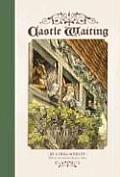
Castle Waiting

I found this book through a commenter on Fuse’s Rapunzels Revenge review who suggested it as a follow up for those who were looking for more after reading Shannon and Dean Hale’s graphic novel. It sounded interesting, our library had it, I put a hold on it, and M graciously picked it up for me on Friday (because she was hoping that there would be something for her).

I’m torn about this one. I liked it very much — the art was black and white, comic strip style, but it worked well in this situation. (Though part of me longed to see the color of things. I do think that color would have overwhelmed the page in some places.) Linda Medley is a good artist, and is incredibly inventive with the world she has created.

But. I liked the story at the beginning: using the Sleeping Beauty fairy tale as a jumping off point, Medley creates a world where Sleeping Beauty’s castle is used as a refuge. A woman, Jain, makes her way there, pregnant with her lover’s baby, seeking refuge from an abusive husband. There, she finds comfort and companionship with the castle residents, whom in turn ask no questions and love and accept her odd-looking baby.

So far, so good. I was enjoying hearing Jain’s story, enjoying the characters that were a part of the castle, enjoyed the novelty of the world Medley had created. But then, for the third part of the book, Medley chooses to abandon everything she had done before, and take off in a completely different direction, telling the story of one of the castle’s residents, Sister Peace. It’s not that Sister Peace’s story was uninteresting; the story of how the Solicitine Order came to be and how Peace became to be a part of it, and of her friend Nessie escaping her abusive husband and finding a better life for herself was all very interesting, it’s just that I kept searching for some kind of connection to the story that went before, some kind of cohesiveness, and some kind of ending of the story I was previously enjoying. I never got that, and it kind of spoiled the novel for me. If only…

Ah, well.

Watchmen

Earlier this year, when I began to discover an interest in graphic novels, Hubby got all excited. See, he was one of those guys: the ones who hang out at the comic book stores, reading about superheros and buying D&D stuff. Not that I have anything against all that — I married him after all, and he still plays D&D, as does M — but I never did it myself. (Nor did my brothers. We were Star Wars and computer geeks around my house). Anyway, I digress. He got all excited because now that I was reading graphic novels, he could finally share some of his comic books with me (aside from telling me about them when he drags me — mostly willingly, I admit — to superhero movies). He dug out this series of twelve — by Alan Moore and Dave Gibbons — and told me it was brilliant and that I had to read it.

And so, when I was looking yesterday for something non-French and non-novel, I pulled this out of my TBR pile and began reading.

First impression: it’s not nearly as well drawn as the other graphic novels I’ve read. I don’t know if the genre has evolved since the 1980s (it was written in 1986), or if there’s just a distinct comic book style. Either way, all their women look like men with breasts and the color scheme grated on me.

Second impression: It’s a very 80s story, which generated a lot of discussion between Hubby and me. The basic plot is begun with the death of a “costumed adventurer” (not superhero!), and another adventurer’s (possibly insane Rorschach) “inquiries” into the murder, and his attempts to warn his friends of a plot to kill off all the adventurers. This, of course, spirals into a more and more complicated plot (which includes a man who got completely blown up by radiation, and then proceeded to put himself back together into a true, um blue — he really is blue — super man), which includes a possibly evil genius, world domination, and an alien invasion. (Got all that? Neither did I.)

Back to the 80s comment. This series really is a product of the late-Cold War mentality: the idea that the Russians could blow us up at any minute, a mistrust of the computers that were increasingly being put in charge (think War Games… a movie I adored and watched at least two dozen times one summer), a community mentality that could easily evolve into a mob mentality, a lack of ready information (they had to watch the 6:00 news and read newspapers!) which all added to the air of uncertainty and panic. The world has moved on from that point — not only because of the falling of the Iron Curtain, but also because information is so readily available, at the same time communities are less connected — and so, much of the panic and the end-of-the-world attitudes are foreign and slightly hysterical now.

Third impression: I really don’t go in for serials. It’s the same problem I have with Dickens (sorry). I feel like that when works are serialed, the authors tend to go overlong in getting to their point. (As opposed to authors who sit down to tell a story straight in one novel. I have some of the same problem with long series, like The Sisters Grimm or, yes — sacrilege — Harry Potter, even.) This work had so many twists, so many turns, so many characters (Hubby pointed out that one of Moore and Gibbon’s geniuses was that they used every single character they drew; no one was not important. Unfortunately, that made for a lot of people to keep track of.) that by the end I felt like it was taking much to long to get to the point. Perhaps it was because they decided to do it over a year, a series of 12, instead of thinking of it as one whole and then dividing it up into chapters. It’s the nature of comic books, though.

Which makes me think that I’ll stick to bona fide graphic novels. (No offense, dear.)

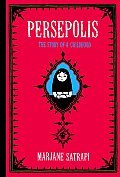
Persepolis

I picked this up yesterday with the desire to read something quick, easy and light. I got the first two with these graphic novels by Marjane Satrapi, but light… well, let’s just say I was in a dark mood, and this didn’t do much to lighten it up. It’s a starkly drawn graphic novel, different from anything I’ve read before, literally in black and white without much variation. And it’s not like the subject matter — Satrapi’s childhood in Iran, exile (of sorts) in Europe, and return to Iran — was exactly a cheerful one.

Persepolis is the story of Satrapi’s childhood in Iran, during the revolution. I’ve heard her story before — not as told by her, but as told by others; it seems that this story (of an upper-middle-class, fairly liberal woman) is one that gets told a lot. Probably because these are the sorts of people that got out of Iran, and are able to tell the stories. Not that it wasn’t interesting; it was. I thought Satrapi portrayed her childhood as, while not idyllic, charmed. At the very least, she was charming. (I loved that she wanted to be a prophet when she grew up. Very cute.) When Hubby was talking to me about the book, and asked why she left, for me it boiled down to personality: it’s not that she couldn’t have made a go — her parents did, after all — but her personality was too forceful for the regime and she was unwilling (and her parents were unwilling to make her) change. So, she went to Vienna for school.

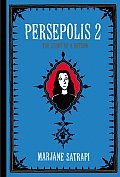
Which brings us to Persepolis 2: The Story of a Return. Of the two, I was more affected by this one, because this is a story that I haven’t read before. I was moved by her esperiences in Vienna — as a teenager alone in an unknown city, as an immigrant in a European town, as a person who’s trying to not only find her identity but come to terms with her nationality. In a lot of ways, she was at a disadvantage: her parents weren’t there to guide her, she had problems making friends, her aforementioned personality was a hindrance as much as it was an asset. I thought Satrapi portrayed isolation and loneliness and need incredibly well. After four years in Vienna, Satrapi decides to return back to Iran, and we have another set of adjustments. After four years of living in Europe, to come home to the Islamic regime of Iran was not only a shock and adjustment, it did nothing to alleviate her loneliness and identity crisis. Again, we have another period of adjustment, where mistakes are made — including a doomed marriage — and it’s not until the very end where Satrapi leaves again, that she finds her sense of balance between who she is and what everyone — parents, friends, the state, the world — expects of her.

My favorite little bit — it’s just two frames — was the same one that Sarah quoted:

“The regime had understood that one person leaving her house while asking herself: ‘Are my trousers long enough? Is my veil in place? Can my make-up be seen? Are they going to whip me?’ no longer asks herself: ‘Where is my freedom of thought? Were is my freedom of speech? My life, is it livable? What’s going on in the political prisons?’

It’s only natural! When we’re afraid, we lose all sense of analysis and reflection. Our fear paralyzes us. Besides, fear has always been the driving force behind all dictators’ repression.”

Satrapi hit the nail on the head there. And I think that’s what I liked most about it. At one point, Satrapi is praised by a member of the committee for her honesty (which is how she got into art school), and I think fundamentally that’s what is most appealing about these books: Satrapi holds nothing back. She’s honest about everything — good and bad, ups and downs — which makes these, while difficult to read at times, very intense and intriguing.

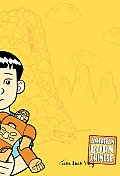
American Born Chinese

I’m not quite sure what to write about this book by Gene Luen Yang. I liked it — a lot — but it’s one of those that defy description. I’m glad I finally got around to reading it — thanks to the Herding Cats challenge and Dewey’s list. I like graphic novels; the reading experience is so completely different from that of a regular novel. And I appreciate that some stories are told better through the medium. This is one of those stories.

Jin is a first generation Chinese-American, and this is his story. Interspersed with a story about the Monkey King, and a sitcom-like story with a terrible stereotypical Chinese lead, it’s a simple, straightforward tale about a boy trying to balance his desire to fit in with his classmates and his Chinese culture and appearance. It’s a fascinating story, well told, funny, and heartbreaking at the same time.

The only quibble is that the ending felt kind of forced. I could see how it fit, and understood what Yang was working towards… but it still ended too abruptly for me. Other than that, though, I thoroughly enjoyed the journey that Yang took me on.

Graphic Novel Roundup #2

My second foray into graphic novels, all YA this time:

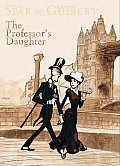
I liked this book — done in the more traditional comic book style by Joann Sfar and Emannuel Guibert — in the broadest sense of the word. That is, it entertained me. But, man, was it weird. The basic plot: an Egyptian mummy, Imhotep IV, comes to life (how? why?? I have no idea.) and falls in love with the Professor’s daughter, Lillian. They have adventures, get in trouble, escape, run into Imhotep’s dad (why is he alive?) and eventually live “happily ever after”. It was odd, it was violent, it was funny in it’s oddness and violence (Imhotep III was , but I finished with a feeling of “wha‘, huh, what on earth just happened?”

Maybe I’d have gotten it better if I knew more about ancient Egyptian kings?

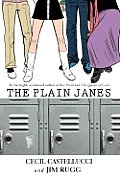
Plain Janes by Cecil Castellucci and Jim Rugg, on the other hand, I really liked. And not just because it was entertaining, though it was that. I liked Jane, I liked the story that was being told, and I liked the way that it was told. It’s a story of losing thing and finding oneself of adjusting and making friends and belonging.

Jane was a survivor of a bombing in Metro City, and because her parents don’t feel safe in the city any more, they move out to Kent Waters, a suburb. Jane’s going through shock on top of the adjustment of moving and starting new high school. And as part of her reinventing herself she gravitates toward the less-popular crowd, which just happen to be a group of Janes. They form a friendship, create art and inspire a town. I enjoyed the creativity, and realized when I finished it that this was something unique: I don’t think this story could have been told nearly as effectively in novel form. And perhaps that’s what graphic novels are for.

Graphic Novel Roundup #1

First, an announcement: The Edge of the Forest is up…. and here are my two little reviews; I had fun doing them. Go take a look at the whole issue…

Second, an explanation: I decided sometime last month –partially because C is SUCH a big fan of Babymouse (thanks, Abby!), and partially because the Cybil graphic novel winners got me curious, and partially because of this post (which I found through a link in the comments of this post) — that I would begin exploring the world of graphic novels. Unlike, Hubby, I didn’t grow up reading comic books. Sure, I read comics — Bloom County and Calvin and Hobbes were two of my favorites — and I still do. But comics in the newspaper just aren’t the same as comic books, at least not the way I see it. I don’t think the reason I avoided them was active dislike on my part, more like disinterest. I really don’t have much interested in superhero stories, even though I’ve gone to pretty much every comic book movie that Hubby’s dragged me to. (The best? The second Spiderman and the second X-Files and the new Batman. That last one’s AWESOME. I’m actually excited about the sequel coming out this summer.) But, something in me clicked this last month, and I actually decided that I can give graphic novels a try.

So. My first three graphic novels…

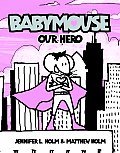
Babymouse: Our Hero (#2)
I know it’s not the first in the series, by Jennifer and Matthew Holm, but I think you don’t have to read them in order. I picked it up mostly because it was lying around waiting for C to come home, and once I started flipping through, I really had to sit down and read the whole thing. It’s a cute little book, spunky and sassy. And I love the snarky narrator comments interspersed throughout the book. As I mention, C eats these up… the only one we haven’t been able to get a hold of is #5, and she’s not-so-patiently waiting for that one. Maybe we’ll just get it for her for her birthday and save her the wait….

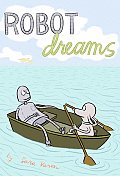
Robot Dreams
This one, by Sara Varon, had to be the family’s favorite. M and I read it together one evening, and just fell in love. I’m not an artist, so I don’t really know the difference in artistic styles (is it okay to call these drawings “cartoon like”?). We liked the simple story of the dog and the robot, and how the poor robot ends up stranded on the beach. Dog attempts to find another friend, while robot dreams of getting up off the sand. We talked about it so much, that Hubby read it, and then we passed it along to C. Poignant, yet accessible to the youngest reader (there are no words, and A sat and “read” it last night. She got the story pretty well, and enjoyed looking at all the pictures). A wonderful little book.

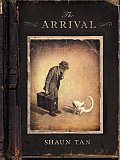
The Arrival
This one is harder to define and to describe. I was entranced by it — the artwork by Shaun Tan is absolutely beautiful — yet I didn’t know if I was “getting” it. It’s the story of a man who immigrates from his country to a new one. It’s a fantastical (I know that’s not a word, really, but I couldn’t come up with another one) world — one that’s strange and wondrous all at the same time. I got the feeling that Tan was using the fantasy element to portray some of the confusion and strangeness that immigrants experience when going to a new country, and I enjoyed and appreciated that. However… there were times — mostly when the people the man met were telling their immigration stories — when I was confused, wondering if maybe I was trying too hard to get the book, and it hindered my enjoyment of it. It got me wondering what the difference between a graphic novel and a picture book was. One of my favorite winter books is The Snowman by Raymond Briggs — how come that’s a picture book and not a graphic novel? What ‘s the difference here? Are graphic novels just grown up picture books? It was because I wasn’t able to fully grasp this one that I felt like I didn’t enjoy it as much as I did the other two. Though, I have to admit, it will be the one that I would probably look through again and again, just so I could look at the artwork. So, maybe it really is the best of the lot.

Stay tuned for the next episode…