Audiobook: To Kill a Mockingbird

by Harper Lee
Read by Sissy Spacek
ages: adult
Support your local independent bookstore: buy it there!

I’m not going to sum this one up; everyone has read it already. So here are my thoughts from listening to this one for the first time since high school.

1. They say the n-word a lot. A lot. And, while I understand that it was part of the south in the 1930s, it sure made me uncomfortable.

2. I had to keep reminding myself that not everyone in the south is like most people in this book. That we need more Atticuses and Scouts and Jems and Boo Radleys in this world and less Bob Ewells.

3. That said, Sissy Spacek’s Southern drawl was just delightful. I got out of the car many a time speaking Southern myself.

4. Not much happens in the book, which surprised me. Check that: two Really Big Things happen, but in between it’s a lot of daily life, a lot of character sketches. And I wasn’t bored. Which also really surprised me.

5. I want to be a parent like Atticus. I sometimes wish my girls could have childhoods like Jem and Scout did.

6. Anyone who says that courts are fair is lying. Still. And that made me sad. Tom Robinson was TOTALLY innocent.

7. I think I finally understand the title now. It wasn’t something I remembered from before.

8. I’m so glad I decided to reread it. I hadn’t remembered much from the book at all, and it was delightful rediscovering this classic.

Audiobook: Size 14 is Not Fat Either

by Meg Cabot
read by Kristin Kairos
ages: adult

Support your local independent bookstore: buy it there!

I read a Meg Cabot book years ago, and didn’t have much love for it. Since then, I’ve felt I ought to give her a second chance, but nothing really pulled at me and said “READ ME!” So, I never did.

Then, one day, I found myself without anything to listen to in the car, and saw this sitting on the library shelf. I figured now was the time to give Meg Cabot another shot.

Heather Wells is in her second semester as assistant director of Fisher Hall, a dorm residence hall at New York City College. Last semester (the first book in the series, which I missed; I seem to be doing that a lot this year) wasn’t all that hot, with multiple murders, but Heather has high hopes that Fisher Hall will be able to shake its “death dorm” reputation. That is, until the head of one of the residents ends up in a pot in the cafeteria. Heather is bound and determined not to get involved this time — investigating is for the police! — but you know there wouldn’t be a book if she actually listened.

On top of the investigation for the dead girl, there’s also the problem of Heather’s ex-fiance who is getting married. Except he keeps calling her. And turning up drunk on her (well, her ex-fiance’s brother’s; he’s her landlord) doorstep. Which is not helping her plan to get together with her ex-fiance’s brother, Cooper.

So, yeah: even though there’s a mystery — and it’s not a bad one, either, even though I kind of called the ending, which I never do — it’s also a comedy and a romance. In short: just plain fun.

I don’t know if half the reason I liked this one so much was because the narrator was just so fabulous. (You know, I’ve never really determined what a “fabulous” narrator is. Maybe it’s just one of those “you know it when you hear it” things.) She made driving around town a fun experience, and I was actually a  little bummed when the book ended (and Heather didn’t get together with the guy I wanted her to!).

I’ve got to go out and get the next one (unless I need to go back and get the first one?), just so I can find out what happens next.

Audiobook: Clara and Mr. Tiffany

by Susan Vreeland
Read by Kimberly Farr
ages: adult
Support your local independent bookstore: buy it there!

Clara Driscoll is the head of the women’s department in the stained glass “factory” of Louis Comfort Tiffany. It’s the late 19th-century, and she adores her job, but there’s one caveat: Tiffany doesn’t allow married women to work for him. So, every time marriage looms, she loses girls. She, herself, at the start of the book, is coming back after her older husband died. The women’s department is an important one; they handle the artistic windows — and, eventually, lamps — for Tiffany, because Tiffany believes that women are more sensitive to color and choose it better than the men do.

 But, Clara has to deal with the changing times, with the turn of the century, with the demands of her heart, and eventually, with Tiffany’s unwillingness to appreciate her for both her art and herself.

I wanted to like this one, and sometimes I did. The narrator was good — nothing spectacular, but not annoying, either.  I enjoyed the whole stained glass part; I took a class a few years back, and that gave me enough knowledge to get a grasp on the artistic process that Vreeland was describing. And she described it well: I went, after, and looked up pictures of the windows and lamps she was describing, and they were fairly close to what I had pictured in my mind.

But honestly: it went on too long. Too much time, too few conflicts, too much describing, and too little happening. It’s not that it wasn’t enjoyable, it was just so slow. And I have other things I need to do with my time.

Audiobook: Home

by Julie Andrews
read by the author
ages: adult
Support your local independent bookstore: buy it there!

I picked this one up for my commute audio book mostly because I like Julie Andrews. I’m not a huge fan or anything, but I like her well enough. She’s, well, nice and she’s aged so beautifully, and I have tons of respect for her, that I figured: why not read her memoir of her childhood.

And for the most part, it’s not a bad book. I especially enjoyed the audio form, listening to Julie (we’re on a first-name basis now that I’ve finished the book) tell stories about her parents (you can tell she adores her dad); her step-father, whose name she ended up with (he was quite creepy); her life in vaudeville (she ended up supporting her family for quite some time); her leap into Broadway (a bit of a fluke and a lucky chance); and her time with My Fair Lady and Camelot.

But, I didn’t love the book. I don’t think it was because her life lacked conflict; there was all sorts of ups and downs as she was trying to figure out who she was (other than that cute girl with the freakish voice) and how to make her way in the world. I also don’t think it was because she ended the book just as I though it was getting really interesting. No, it was because Julie Andrews can’t ever say anything truly bad about anyone or anything. Even her step-father, who really was quite creepy to her a couple of times (he gave her her first kiss, tongue and everything. Ew!), whom she was never really close to, she was unwilling to actually speak harshly about.

The other unintended side effect of that was that she tended to gush about everything. It was always “lovely” or “marvelous” or “exquisite” or “grand” or “delightful”, and sometimes all at once. I did get to the point in the book where I swore if she gushed about one. more. thing., I was going to toss it out the window. (I didn’t, even though she didn’t stop gushing.)

So, there you have it: Julie Andrew’s virtue of being nice to everyone is actually a fault when it comes down to it. At least in memoir writing.

Which is just too bad.

Audiobook: Major Pettigrew’s Last Stand

by Helen Simonson
read by  Peter Altschuler
ages: adult
Support your local independent bookstore: buy it there!

A while back a woman came into the store looking for some Georgette Heyer books. Unfortunately, we didn’t have any in the store (shame on us), so I started hunting around for some read-alikes. She’d read all the obvious ones (Jane Austin), we were lacking in Shannon Hale as well, and then I stumbled upon this one. I remembered, somewhat vaguely, that it was British and that it had gotten some good buzz, and so I recommended it to her. She bought it, and I crossed my fingers that it would work.

And then, I chided myself: if I recommended it to someone who liked Georgette Heyer (which I do), why wouldn’t I like it? So, I picked up the audio book to listen to while I putter around town sans kids.

The bottom line? It was a grand suggestion for someone who loved Georgette Heyer: at turns funny and sweet; very, very British; and with a lovely wedding at the end. I adored listening to it.

I do have to admit, also up front, that I adored it because Peter Altschuler is a brilliant narrator. All the right voices, all the right inflection (Roger was a Twit! I kept shouting at him. I’m sure the other drivers thought I was insane.), all the right emphasis in the right places, so I got the humor and I understood the conflict and I loved (absolutely adored) the Major.

For the five of us who live under a rock, the  basic story is one of Major Ernest Pettigrew, widower, whose brother has just died. He’s a bit at a loss the  day of, and so when Mrs. Jasmina Ali (widow), comes to collect for the paperboy, he just kind of falls into a friendship with her. He soon discovers that 1) she’s wonderful and 2) it doesn’t matter, to him, that she’s Pakistani, though it seems to matter a lot to the villagers of Edgecombe St. Mary. It’s a domestic drama: the things that happen are ordinary things. Antique guns are involved, as are American developers, and lots and lots of cultural tension. Through it all, the Major is impeccably honorable and quite British, but somehow, all comes right in the end (though there’s a bit of a tense scene wherein Islam does not come off well, and I thought was quite unnecessary), with the Major and Mrs. Ali following their hearts.

I didn’t realize that it was a modern setting, but for the most part, it all worked. The characters are really what drive this story: from the not-meaning-to-be-racist-and-yet-are village ladies; to the twit of a son Roger; to his American fiance, Sandy (I liked her too); to the orthodox, yet conflicted, nephew of Mrs. Ali, all are intriguing and complex. Very few (maybe the bumbling vicar, and the loud, obnoxious American developer) are straight-up caricatures, something which I appreciated.

A delightful way to spend a few hours.

Two Middle Grade Audiobooks

As you will recall (or not), I was on vacation recently. One of the things I love to do (to stave off boredom and to curtail the number of DVDs watched) is take a pile of kid-friendly audiobooks to listen to. For some reason, this year we didn’t listen to nearly as many as I thought we would: we only got around to two books. But, both were excellent.

First up:

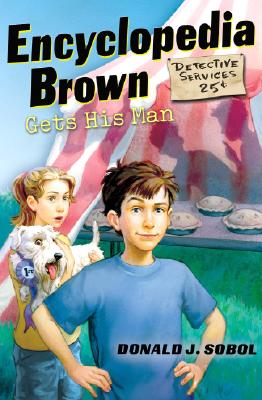
Encyclopedia Brown Gets His Man
by Donald J. Sobol
ages: 7+
Read by : Greg Steinbruner

I hate to admit it, but I’ve never read an Encyclopedia Brown book. No idea why. Hubby, on the other hand, remembers loving them from his childhood. He even convinced M to read a few when she was 8(ish). I picked this one up on a whim, figured maybe we’d get to it. However, it was the first one we plucked out of the pile.

And, we loved it. Every single one of us, from 6-year-old K to Hubby. The basic idea is this: it’s a series of short cases that genius whiz kid, Encyclopedia Brown, solves. Except you get to try and solve it before the final answer is revealed. (And yes, we did pause the disc every time, and we all guessed just to see. Sometimes we were right, sometimes were were way off base.)

The best things about it, I thought, were the names (I can’t recall them off the top of my head, and I didn’t write them down. Curses.), the fact that it was so 1950s (it was quite charming in it’s retro-ness), and the humor. I did write one line down, that had us howling: “All the murderers these days use silencers.” Steinbruner was an excellent reader, as well, keeping us engaged in the stories. (I swear, if you tune out for a second you lose a lot of information!)

Highly recommended.

And the second:

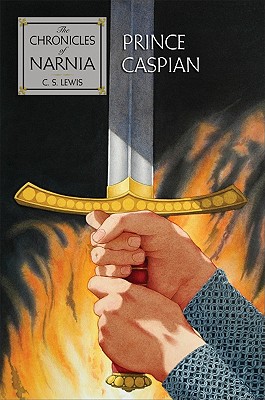
Prince Caspian
by C. S. Lewis
ages: 7+
Read by: Lyn Redgrave
Others in the series: The Lion, Witch and the Wardrobe

Last year, we tackled the first book in Narnia, so I figured why not do Prince Caspian? (I also got Voyage of the Dawn Treader, but as soon as we realized it was a “full cast production” we bailed. We don’t like those.)

Again, it was a great read; one of those where you don’t want to get out of the car because you have to figure out what’s going to happen next. 

The story, for those of you who don’t know it: Peter, Susan, Edmund and Lucy are dragged back into Narnia, only to find out that hundreds of years have passed in Narnia to their one year in England. Their castle is now in ruins, and Narnia is ruled by a wicked Telemain king. The rightful heir and prince is in exile, and forming an army against his uncle (the wicked king), and needs the help of High King Peter and the rest.

Just some brief thoughts: I enjoyed this one so much more than Lion, etc. While Lion is a good story, this one is a fun, engaging adventure without the didactic overtones that Lion has. I also liked Prince Caspian as a character better than the older Pevensie children (however, Edmund and Lucy are still delightful, as always), especially Susan in this one. More than once the girls would call out, “Susan is SUCH a wet blanket!” (or a variation on that…) And she was: she was the downer of the group, not really wanting to be there. No wonder she never came back for more adventures.

And Lyn Redgrave was a brilliant storyteller. She kept us all engaged (I think it helped that the story was a fun one, though it got bogged down in the history portion. K kept asking when they’d get back to the action.), and her voices for everyone were quite fun, and spot-on as well.

It’s been too long since I’ve visited Narnia, but I’m not sure I’m going to actually read them. I’m having way too much fun listening to the audiobooks.

Audiobook: The Lady of the Rivers

by Philippa Gregory
Read by Bianca Amato
ages: adult

So, I have loved Philippa Gregory in the past. The intrigue, the sweeping historical drama, the women behind the kings. And, this one has such a pretty cover (though I like the hardcover one better). So, I got the audiobook and started to listen to it, hoping for that same grandiose, sweeping world that I love from Gregory.

And what I got was a petulant, whining brat.The story is of Jacquetta, a French girl married to the Duke of something or other, who wants her for her “powers” (they never really manifest into anything, and peter away after a while; it would have been better had they gone somewhere and did something). They never consummate their marriage, and when he dies, she ends up with his squire, Richard Woodhouse (I think. I never really cared that much.) From there they go to England, have tons of babies, serve the king (who is a total douche), and then I gave up.

I do have to admit that perhaps a lot of my feelings about this have to do with the person reading the book. She. Drove. Me. Batty. Seriously. What may have come off in print as strong, or at least caring, came off as petulant and whiny. And the plot was moving a glacially slow pace; nothing happens for pages and pages and pages. (I checked the print book: I bailed at 190 pages.) I felt the plot spinning in a hamster wheel: going around and around but never moving forward. (I think reading MG/YA books have completely spoiled me for long, complex, SLOW plots. I can’t stand them.)

On the other hand, maybe the 15th century just isn’t as interesting or sexy as the Tudors are, and there’s nothing that Gregory could have done to make it interesting. Which is a distinct possibility.

Either way, I couldn’t hack this one.

Audiobook: Sports From Hell

by Rick Reilly
read by Mike Chamberlain
ages: adult
Support your local independent bookstore: buy it there!

Not content with being a writer for Sports Illustrated or ESPN — or perhaps it was bored with being a writer of normal sports — Rick Reilly decided to go on a quest: over the course of three years, he (and his lovely researcher/girlfriend, TLC) searched the world over for the World’s Dumbest Sport.

And because he’s a journalist, he felt the need to share it with the world, as well.

The sports range from the pretty cool (women’s football), to the retro (the Jart; remember those? If not, you didn’t grow up in the 70s and 80s), to the weird (ferret legging; that’s what he’s doing in the picture up there) to the “I wanna try” (Zorbing; seriously looks like fun), to the eye-rolling (his chapter-long rant on baseball), to the certifiably insane (bull poker). Not to be outdone, there’s a chapter on drinking games (did you know there’s a world series of beer pong?), on the world championship Rock, Paper, Scissors tournament, and the Finnish “sport” of Saunaing (or whatever they call it).

It’s a completely useless book — there’s really nothing of value in here, unless you want to impress people with your synonyms for vomit — but it’s entertaining. Or, at least, it tries very hard to be.

See, Reilly’s use of similes drove me completely batty. Literally. I laughed at them at first, but as the book wore on, I grimaced and eventually rolled my eyes. I wish I had the actual book in front of me, so I could write a few of them down; they were literally that bad. And all over the place. Which I found highly distracting.

The second distracting thing was Mike Chamberlain as a reader. He only had two
“voices”, and he would alternate between the two of them. And I have to admit that his inflection grated on me after a while; it was nice and chatty at first, but eventually, I kind of wanted to smack him.

Still, it wasn’t enough for me to give up the rubber-neck value of the book: the sports were so bad, I had to see what Reilly would find out next.

Oh, and for the record, the dumbest sport: chess boxing.

Audiobook: Castle in the Air

by Diana Wynne Jones
Read by Jenny Sterlin
ages: 12+

Support your local independent bookstore: buy it there!
Others in the series: Howl’s Moving Castle

Abdullah is a mediocre carpet merchant in Zanzib, living a terribly boring life. Sure, his daydreams are exciting, full of princesses and beautiful gardens, but his life? It’s just selling carpets and dealing with his father’s first wife’s relations. That is, until a stranger comes by and sells Abdullah a magic carpet.

The first night he has it, he goes to sleep on it and wakes up in the garden of Flower-in-the-Night, a smart, yet naive (and very sequestered) princess. Abdullah, of course, falls instantly in love. Everything was supposed to be happily ever after, but a powerful djinn kidnaps Flower-in-the-Night, and Abdullah’s life suddenly gets more complicated. There’s a cranky genie, a trip to Ingary, falling in with a bitter Strangian soldier, and finally, a castle in the air where Abdullah has to save 30 princesses from their fate of being brides of an evil djinn.

It’s the perfect kind of fairy tale (which is, of course, what DWJ is known for): romance, adventure, humor, magic; sweeping grand panoramas that captivate you fully. No, Howl and Sophie aren’t in this one (well, hardly at all), but that’s really just fine: Abdullah, the pompous flatterer and coward that he is, made up for that. I was constantly rolling my eyes at him — the way that Sterlin made him sound was quite grating at first — but that didn’t mean I didn’t like him. On the contrary, he was quite enjoyable to go on an adventure with, even if he was lovesick and heartily silly.

Sterlin (aside from the grating-at-first Abdullah) was a stellar reader, doing voices for all the different characters and keeping me entertained throughout the story. I’m glad I picked this one as an audiobook; it was definitely an enjoyable way to spend a commute.

Audiobook: Who’s Your Caddy?

by Rick Reilly
read by Grover Gardner
ages: adult
Support your local independent bookstore: buy it there!

Yes, this is a sports book. Not just a sports book, but a GOLF book. I don’t play golf. (Hubby does. Sort of. Well, he goes golfing about once a year with his dad.) I don’t follow golf. I do know you hit a little ball with a stick and the lowest score wins. But that’s about it.

So, why the heck did I decide to listen to a golf book?

Well…. because I was in the mood for something completely different (you don’t get much more different than golf in my world), and because I think sports writing, when it’s good, is a lot of fun to read/listen to.

And you know what? This is some seriously good sports writing.

I was told, however, that because this is a sports book that’s 10 years old, it’s hideously out of date, and I shouldn’t be reading it. I didn’t care. I loved every minute Grover Gardner was talking at me (lovely, lovely reading voice, that man; I think a good part of why I loved this was because his reading was so phenomenal).

The basic schtick: Reilly — who writes for Sports Illustrated — decided that the best way to get to know golf — to really know golf —  is to be a caddy. So, he managed to finagle (con?) some of the best (and worst, and well, in-between) golf players into letting him caddy (or “loop” as I learned) a tournament for each of them. It’s basically one story after another of all the people he looped for, from Deepak Chopra and Donald Trump to Jack Nicklaus and David Duval, not to mention Jill McGill on the LPGA tour. Lest you wonder: yes, he did caddy at the Masters, but no, not for one of the top players. Yes, he did ask Tiger Woods (this was back when Tiger was really hot stuff; I mean, I’ve heard of him and I don’t know squat about the sport), but he turned Reilly down. And no, Reillly wasn’t any good. Sucked at being a caddy. Though I got the impression that he’s a pretty good golfer.

So, what made this go great? I laughed. Seriously laughed. Reilly made me interested in and got me to care about a sport that I know nothing about and will probably never pick up. Sure he dropped terms and names like nobody’s business, but it didn’t matter, because he was telling a story, and he knows how to tell a story in a way that will get even the most clueless readers interested in his subject.

No, I probably won’t pick up golf clubs (though he did kind of make me think maybe I could give a go, just to see what the fuss is all about). But I am going to hunt down more of Reilly’s stuff. He is really that good.