

Author: booknutgirls

The Wednesday Wars
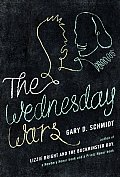 I first heard about this book by Gary Schmidt back in April, when Fuse so eloquently raved about it. I thought that it sounded good, but since it wasn’t due out for a couple months, I forgot about it. Then Becky chimed in with her praise in July, and reminded me that I really ought to pick it up. It wasn’t until a month or so ago, when I was checking my Amazon wish list against the library catalog and I discovered that they finally had it, that I picked it up. Then it languished on my bedside table for weeks until I realized that the due date was imminent. So, I finally picked it up.
And I immediately kicked myself for waiting so long.
I used description “perfect book” for Elijah of Buxton, but I have to say that it fits here, as well, though not for the same reasons. It’s a perfect book. Funny, poignant, touching, interesting…I couldn’t imagine getting to know Holling Hoodhood (great name!) any other way. It’s 1967, and in the town of Camillo, Long Island, Wednesday afternoons are for religious instruction — either Hebrew School or Catechism. And in Holling’s class everyone is off to one or the other. Except him. And so, on the first day of school, he’s convinced his teacher — Mrs. Baker — hates him. (Well, who wouldn’t, if they had to stay behind for one kid?) As a result, she puts him to work. First, doing chores. Then, when that has somewhat disastrous (and hilarious) results, she turns to Shakespeare. Over the course of the year — and the book — Holling reads several of Shakespeare’s plays, which not only affect his school life, but also his outside-of-school life.
There is no “best part” of this book. I loved it all. I found it laugh-out-loud funny (and my laughs are hard-earned; I don’t usually laugh when reading!); I loved Holling as a narrator, and as a person. The not-so-funny parts (it is 1967, after all, and the Vietnam War does play a prominent part in the book) were genuine and touching. And the end was well-earned and fitting. It’s an all around good book.
I’ll leave you with one of my favorite parts. Holling’s convinced that Mrs. Baker’s hired Doug Swieteck’s brother to kill him during a soccer game. The brother (we never do learn his name, one of the many charms of the book) was coming right at Holling, determined to plow into him, and Holling, at that minute, sidesteps (except for his right foot) and trips up Doug Swieteck’s brother.
Then there came an iron thunk against the goal post, which bent at a sudden angle around Dough Swieteck’s brother’s head.
And everything was quiet.
I opened my eyes again.
Doug Swieteck’s brother was standing and sort of wobbling. Mrs. Sidman was running over — though, properly speaking, what she did wasn’t really running. It was more a panicky shuffle. She probably saw “Negligent Playground Monitor” headlines in her future. When she got to him, Dough Swieteck’s brother was still wobbling, and he looked at her with his eyes kind of crossed. “Are you all right?” Mrs. Sidman asked, and held on to his arm.
He nodded once, then threw up on her.
He had eaten a liverwurst-and-egg sandwich for lunch. No one ever wants to see a liverwurst-and-egg sandwich twice.
Expanding Horizons: A Challenge
I have to admit that ever since the whole Caddie Woodlawn debacle back in May, I’ve been more conscious about the nationality and ethnicity of the authors of the books I read. And I’ve come to realize that I read books by white authors. Almost exclusively. Which really isn’t a surprise: I’m white, and so I gravitate to what I know. It’s also because white people dominate in the book business (both on the author side as well as the publishing side), at least in the English-speaking world, which — of course — is the world I’m part of.
Why does this bug me? I don’t know, really. Maybe it’s my quest to be open minded, maybe it’s the thought of all the stories I’m missing. Whatever the reason, I’ve tried to branch out. I’ve met with only limited success; I went for months without reading a single book by a non-white author, after I’d promised myself I’d read at least one such each month. Then in the past month I’ve read, or am reading, a half-dozen. What this really got me thinking about, though, was that the idea to branch out, to expand my reading horizons would make a really good challenge. And, instead of doing what I usually do (which is let other people do this sort of stuff), I’m actually taking the bull by the horns and proposing yet another challenge for all you challenge-lovers out there. Come and expand your horizons with me!
The Expanding Horizons Challenge will run January through April of 2008. The purpose of this challenge is to read works by authors of ethnicities other than your own. I have decided to omit works by Caucasian authors (since they’re the biggest group in the English-language book world; I want to explore books by authors in less-well-represented ethnicities). I have debated about whether or not to focus entirely on authors or to include main character’s ethnicity, too, and I’ve decided that for this challenge I want the focus to be on the nationality of the author, rather than the characters. The books can be fiction or nonfiction; adult or YA; and can cross over to as many other challenges as you want.
There are two ways to approach this challenge. Either read four books by authors in one of the six categories (you can read more than one category, but you must read four books; not two books in one category and two in another) OR read six books, one from each of the six categories. The categories are:
1. African/African-American.
2. Asian/Asian-American (This is not just East Asian — Chinese, Korean and Japanese — but also Indonesia, Singapore, Thailand, Philippines, and the Central Asian -Stans.)
3. Hispanic/Latin American
4. Indian/Indian-American (Again, books by Indian authors; not books by white authors set in India.)
5. Middle Eastern (Iran, Iraq, Israel, Palestine, Turkey…)
6. Native Peoples (Can include Native American, Inuit, Polynesian –Maori, Samoan, etc — Siberian natives and Australian Aborigines.)

If you’re interested in participating, let me know which challenge you’ll be taking and leave your lists or links to your lists in the comments section. I’m going to set up a separate blog in the coming months with a Mr. Linky list for you to link to your reviews. And, yes, I’ll even come up with prizes (any suggestions are appreciated!).
I’m going to attempt to do the second challenge. We’ll see how successful I am. (It wouldn’t be really bad if the host didn’t finish, would it?)
My list:
1. Kira Kira, by Cynthia Kadohata (Asian-American)
2. The Hummingbird’s Daughter, by Luis Alberto Urrea (Hispanic)
3. The Painted Drum, by Louise Erdrich (Native American)
4. My Life as a Furry Red Monster, Kevin Clash or Song of Solomon, Toni Morrison (African-American)
5. Mistress: A Novel, by Anita Nair (India)
6. The Saffron Kitchen, Yasmin Crowther (Iran)
I’m looking forward to reading some interesting books, ones that I wouldn’t usually pick up. But what I’m really looking forward to is all the books that you’ll be reading!



Snow Flower and the Secret Fan

Perhaps it is a joke that only girls and women can understand. We are seen as completely useless. Even if our natal families love us, we are a burden to them. We marry into new families, go to our husbands sight unseen, do bed business with them as total strangers, and submit to the demands of our mothers-in-law. If we are lucky, we have sons and secure our positions in our husbands’ homes. If not, we are faced with the scorn of our mothers-in-law, the ridicule of our husbands’ concubines, and the disappointed faces of our daughters. We use a woman’s wiles — of which at seventeen we girls know almost nothing — but beyond this there is little we can do to change our fate. We live at the whim and pleasure of others…
This quote is the crux of Snow Flower and the Secret Fan, by Lisa See. It’s a book by women, about women’s lives, women’s pains, women’s loves, and women’s heartaches. I’ve been thinking about this book ever since I finished it, and yet I’m having a difficult time figuring out what to write. It’s heart-rendering, it’s challenging, it’s painful, it’s hopeful. It’s a lot like life.
The book takes place in rural China, where the culture is not kind to women. Lily is a Second Daughter, a position in life that’s really not good at all. Yet, when it comes time for her feet to be bound (in the few chapters that were the most difficult for me to get through; I almost gave up the book on chapter 5, it was so painful to read), her life takes a different direction. She ends up with perfect, 7 centimeter “golden lilies” for feet, a laotong (an “old same”) and prospects for a better life than what her parents have. It’s the relationship with her laotong, Snow Flower, though, that makes up the plot of the novel. How they go from innocent 7 year olds, with much in common; to young marrieds, with less in common; to middle age women facing the hardships of life.
It’s a book about survival: of women in a male-dominated world; of the nu shu writing — the women’s language; of friendship against all odds. It’s also a story about regret and heartache. It’s not a happy one; I had to go check out a book of humorous essays just to get me through the book. I needed something to balance out the depressing lives Lily and Snow Flower led.
All that said, I’m not sorry I read this book. It’s enlightening — I can’t believe people survived in situations like this, yet they did. Lily and Snow Flower were not only admirable in the fact that they survived, but that they tried to make a better life for themselves. And in the end, that’s the best I could hope for from this book.
Reviewing Policies
My policy is basically this: I review everything I read: the good, the bad, the didn’t finish. I do that because I, at least, want to know whether I liked a book or not, or whether I managed even to get through it, and, if so, why I abandoned it.
I consider accepting for review ARCs for Middle Grade (ages 7-13), Young Adult (12-18), including graphic novels, and select adult novels. I am also willing to do author interviews for my “10 Questions for” series, which runs once a month, but only after I’ve read a book by the author. I do not do guest posts. I will try to review as many ARCs as I can, but I only have so much time, and there are many books I like to get to. I do get to everything I am sent. Eventually.
Unless otherwise noted, I obtained all the books on my own terms — either by purchasing or borrowing from the library.
I link to IndieBound because I strongly believe in supporting small, independent bookstores. I do, however, have an affiliation and get a small fee for books bought through my links.
I know that when I don’t like a book, I may come off as mean. This is because I like to be honest. I also know I have offended authors in the past because I have said that I haven’t liked their books. Know that this is just my opinion. I know I am able to change them (or not) with enough discussion, because I have in the past. However, that doesn’t mean I’m going to go back and change what I wrote about the book, because I want to remember what I thought when I read it initially. If I choose to reread a book, and my opinion of it has changed, I’ll put up a new review.
I try not to accept ARCs that I have no interest in, or I don’t think I’ll even remotely like. However, generally I am only going off publicist blurbs and cover pictures when I make those decisions, and so I’m going to invariably get a few that initially I may think I’m going to like but end up disliking.
When I read a book, I am influenced by: the previous book I read, the mood I’m in, my stress level, whether or not my kids are climbing on me while I read (or write!), my religion, my age, my situation in life, my political beliefs, and a whole host of other factors. I don’t apologize for that. As I said before, I’m interested in my initial response to the book. I do try to say, in the review, if there are any circumstances that could have affected my reading of the book (like I read an excellent book previously, or I read the graphic novel version/saw the movie first, or I was having a bad day, or I was annoyed at the narrator/characters/copy-editing) so that my readers will know what my opinion is shaped by. I would like to think that makes my opinion still valuable to my readers, but I don’t want anyone to think that I am consciously trying to be especially “objective” or “professional” or “balanced” in my reviews; they are my opinion, first and foremost. As I said before, my attitudes may (or may not) change with time, and from time to time I do revisit books.
If you have any questions or wish to contact me, or to send me an ARC, feel free to email me at mmfbooks AT gmail.com.
The Declaration
 I found the premise of this book, by Gemma Malley, fascinating. It’s the not-too-distant future, 2140, and a drug — Longevity — has been developed that will extend life forever. It started out innocently enough; curing cancer, AIDS, other diseases… but eventually, someone discovered that cells could be regenerated, sickness cured, and no one would ever die.
The implications of that discovery, though, were profound. If no one ever died, and yet people kept having children, then… well, the Earth’s resources would be overwhelmed. Hence the Declaration. By taking Longevity, you forfeit the opportunity to have kids. Period. No discussions. Yet, some people still end up having kids, for one reason or another, and those children are called Surpluses. They’re illegal, they’re a burden on society. So, when they’re caught, they are stashed away in Surplus Halls, where they’re taught to become “Valuable Assets” to the rest of the Legal society.
That brings us to our main character, Anna. She’s a Surplus, living in Grange Hall since she was 3. She “enjoys” it; as much as she can “enjoy” anything. She’s a Prefect, in charge of a group of other Surpluses, she’s nearly 16, and working toward being a Valuable Asset. She’s determined to pay for her parents’ Sin of having her. That is, until Peter comes into her life.
Peter isn’t like the other Surpluses; for one, he’s lived on the Outside for 15 years, having only recently been caught. He doesn’t fit in. He doesn’t want to. He really only has one purpose: to rescue Anna from a life of being a Surplus.
Initially, I liked the set up — Surpluses as slaves, brainwashed into believing the things that the Head Mistress beats into them. The book is full of the ethical questions and the interesting implications of the choice for Humanity to live forever.
She remembered a time, when she was young, when energy was still plentiful and people thought that recycling was enough. Before islands started to be submerged by the sea, before the Gulf Stream changed Europe into the cold, grey place it was now, with short summers and long, freezing winters. Before politicians were driven to action because infinite life meant that they, not some future generation, would suffer if the world’s climate wasn’t protected.
Peter’s efforts to convince Anna to escape were interesting, too. How do you convince someone who had been so indoctrinated in something that the thing was wrong? How do you get someone like that to risk everything to escape into the Unknown? For three-fourths of the book, I enjoyed it, relished the ride. It was haunting, so close to what could be in real life. The Head Mistress, Mrs. Pincent, was brilliantly and chillingly cruel, at the beginning:
“Hit her,” ordered Mrs. Pincent, who was now walking towards her. “Make her know her Sins. Help her to learn from her mistakes and to understand what being a Surplus means. Make her see that she is unwanted, a burden; that every step she takes along these corridors are steps that she has stolen. Make her see that she is worthless, that if she dies no one will care, that in fact the world will be better off with her not trespassing on it. Make her understand all that, Anna.”
But on page 274, the book made, for me, a serious mistake: Mrs. Pincent got a backstory. One that was possibly supposed to make me feel for her, make me understand the gravitas of the decisions that needed to be made. Unfortunately, it just made me annoyed. It was so predictable. I thought the book saved itself a couple of pages later, but by the end, I was rolling my eyes. All the tension, all the chilliness, all the ethical implications were gone. Kaput. In short: the ending just didn’t live up to my expectations. It could have been so much better.
Which is too bad, since the rest of the book was quite good.
That Time of Month, Again
 You can visit this month’s carnival at This is the Life… it looks like she got a fairly sizeable turnout, and a lot of good posts, too. Drop by and take a look. Next month’s theme is, just so you’re thinking ahead, short stories. The carnival will be hosted by The Book Mine Set and the deadline for submission is November 9. You can use the Blog Carnival submission form (which worked fine this time… don’t know what happened last month!) or email jmutford at hotmail dot com.
Evolution, Me & Other Freaks of Nature
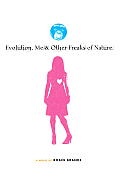 M — who has taken to raiding my TBR pile when she’s looking for something new — after devouring this book (which led to interesting conversations at school, she said), slammed it down on the desk and announced: “There is NOTHING bad that I can say about this book. You gotta read it, Mom.”
So, I finally got around to it. And I have to agree: there’s nothing bad that I can say about this book by Robin Brande.
The basic plot is best summed up with the back-of-the-book blurb:
I knew today would be ugly. When you’re single-handedly responsible for getting your church, your pastor, and everyone of your former friends and their parents sued for millions of dollars, you expect to make some enemies. Fine. It’s just that I hoped my first day of school — of high school, thank you, which I’ve only been looking forward to my entire life — might turn out to be at least slightly better than eating live bugs. But I guess I was wrong.
Mena is a wonderful narrator. As an evangelical Christian, she just wants to do what’s best. Church has been her whole life up until this point, and she’s finding the adjustment — from being part of the in crowd to being on the outs — difficult, to say the least. Enter Ms. Shepherd, biology teacher extraordinaire, and Casey, lab partner extraordinaire. Without biology class, Mena’s year would have been horrible. She would have been miserable. But Casey, and Ms. Shepherd through the battle waged with the evangelicals over teaching Evolution (versus Intelligent Design), challenge and expand Mena’s world view. And her her case, that’s a very good thing.
I’ll leave the rest of the details for your to find out on your own.
I loved this book. I was worried at the beginning of the book that the end line would be Christians = bad and close minded, scientists and liberals = good and desirable. That formula, often found in books, and expressed across the Internet is part of what keeps me from mentioning my church all the time. I don’t want to be automatically lumped in the former category, as my church sometimes is, mostly because I don’t consider myself closed-minded… But I’m not going to go there; this is not a political or religious blog. These were just some of the thoughts I was having while reading this book. (As a friend commented when I was telling her about the book after church today: a book that makes you think is a sign of a really good book.) But, I was gratified that Brande treated religion with respect. I came away with the impression that she feels, or at least Mena feels, that it’s not religion that is bad and closed minded, per se, just some people’s interpretations of it. And I can agree with that. I think my favorite part is when Mena comes to a conclusion about evolution, one that she comes to with her own God-given brain:
My brain tells me there are facts out there to prove Darwin had it right. My brain also tells me there must be a way to keep believing in the Bible while also believing in science.
Not quite as easy to fit on a sign as Darwin = Devil, I admit. Maybe if I had to boil it down to one easy sentence, it would be this: I believe in evolution, and I believe in God.
I just haven’t worked out the details yet.
It’s this balance between science and God (another digression, but yet something I thought a lot about while reading) that’s subject to so much debate. Religion on one side, science on the other. And yet, this book explores the gray in between the two. And does it wonderfully.
There are also a lot of little things I loved — Kayla, Casey’s older sister; the puppies; the Lord of the Rings references (watched parts of Two Towers last night because of the book….); and that Brande captured a 14-year-old girl’s search to find herself while remaining true to the beliefs she was brought up in.
And she does it most excellently.
The Brothers K
 I know I haven’t really posted in nearly a week, but when you’re given a 645-page book that you’re supposed to read by the 15th, blogging just kind of falls by the wayside. After a while, though, it was no longer an obligation that kept me away, but a real desire to finish this book… a desire to know, to experience, and to feel what this book had to offer.
I just finished it — it’s by David James Duncan, by the way — and I’m flabbergasted (sorry, the book’s language is rubbing off on me) as to what to say about it. Hubby asked yesterday if I was enjoying it. “Yes,” I replied. “Very much so.” What’s it about? Well… that’s the problem. See… it’s about a family, the Chances, and their lives, their experiences, their joys, their heartbreaks, their mistakes, their reconciliations… there really isn’t much of a “plot” or a “storyline”, but the story telling is so wonderful that I never noticed. The narrator is Kincade, the youngest of the Chance brothers (though there are twin sisters younger than him), and it’s the observations, wit, soul, and love that Duncan puts in this character that pulls the lives of these people from the ordinary and mundane to the spectacular and transcendent.
At times I laughed — howled, to use bookspeak again — so hard that I figured this had to be the funniest book I’d read in a long time.
Case in point: made up “scriptures” spouting out of the mouth of the brothers.
Deuteronomy three, sixteen: “And they who pinroll the dough shall be airplaned. Verily, unto illness shall they be flown about the yard. Unto airsickness, yea, and unto every other type of disaster shall they be propellered. And their poor mama shall watch though it cleaveth her heart in twain to do so!”
But not two pages later, Duncan had me musing over his observations of people and religion. Here’s one from the middle of the book.
Everett stood up and started pacing. “What I was feeling, Winnie,” he said, “was that maybe the reason prayers never get answered is that everybody prays the wrong way, and for the wrong things. People ask God for good things all the time, and never offer anything in return. But if God exists, if He really made the world and is all-powerful and all-wise and all that, then I figure He made all of the world, including the bad stuff. So if He ‘saw that it was good’, He meant just that. From His point of view, bad stuff must somehow be ‘good,’ or at least must serve some sort of divine purpose. I was trying to give God the benefit of the doubt, see? And look where it got me!”
And a half-chapter after that, I was crying.
Would I recommend this? In a heartbeat. But not to everyone. See, the one drawback, the one that will keep people like many in my in-person book group from enjoying this wonder, is the language. It’s, well, extensive and colorful. But, I suppose, when you write a book about baseball, milling towns and the Vietnam War, extensive and colorful language is going to be a part of that book. It didn’t bother me. And if you can get past that, by all means, I would whole-heartedly recommend this book.
If not, well, you’re life won’t be worse because of it. But you are missing one heckuva book.
Another Friendly Reminder
 Just wanted to let you know about this month’s carnival!
The theme of is: Thrills and Chills: Spooky Books That Keep You Up at Night and is hosted by Kristin at This is the Life.
The deadline for submission is October 12.
If you’d like to submit something, you can use the blog carnival submission form or email the link to your post to kjoywilliams at gmail dot com. As Dewey pointed out, we had problems with the form last month (though it may have been my spamblocker!) and emailing is (highly) recommended.
 The Book Nut