A Christmas Thank You

All my waiting paid off :)…


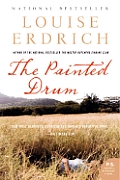
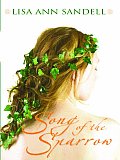
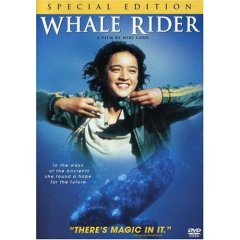
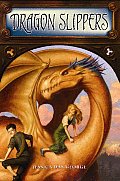
Here’s a very hearty thank you (!) to: my Nook Secret Santa, Heather, for the lovely bookmark; Violetlady for the book lover’s calendar (a quote from a different book every day. Wahoo!); and to Hubby for one of my favorite books this year. And that picture doesn’t include the lovely Iliana-designed bookmarks from Andi and Heather, which I have yet to print out.

And I can’t forget all my readers commenters (or is it commentors?). I appreciate all your input, thoughts and recommendations. THANK YOU!

Happy Holidays!

A Crooked Kind of Perfect

The book’s blurb (for once!) says it best:

Zoe Elias has big musical dreams. As soon as she gets a glossy baby grand piano, she’ll be on her way. Trouble is, what Zoe gets is a wood-grained, vinyl-seated, wheeze-bag organ. The Perfectone D-60.

How will she ever be discovered as a prodigy when her lesson book is The Hits of the Seventies? Not even a cha-cha beat can make the theme song from The Brady Bunch sound like Beethoven. If you add to that problem a mom who’s always at work, a dad who’s afraid to leave the house, and an odd boy who follows her home from school every day, Zoe’s big dreams are looking pretty lopsided.

But when she enters the annual Perform-O-Rama organ competition, Zoe discoverers that life is full of surprises — and that maybe a little lopsidedness will help her find what she’s really looking for.

This book, by Linda Urban, is not deep. It’s not earth-shattering or life-changing. It’s not even long. But it is sweet, and wonderful, and a joy to read. It’s one of those books that leave you happier when you finish it, with that silly smile on your face, thinking: Life really is okay.

I thoroughly enjoyed reading this book. Zoe is your typical 5th-grader, with the disappointment (ex-best friend and a dad who buys a organ instead of a piano), and the big dreams (she wants to play Carnegie Hall) of an 10-almost-11-year-old. I loved her dad; he was such a sweet, pathetic guy. Buying 432 rolls of toilet paper (just enough for the family to make it through until Zoe graduates from high school) and being seduced by the sounds of the Perfectone D-60. I especially liked his Library University classes. I liked how Zoe dealt with a weird, neurotic dad, too. She would alternate between loving it, and being embarrassed and frustrated by him. I liked her friend Wheeler, how he started following her home from school, because there was nothing for him at his house, and how he found a friend in Zoe and her dad. I loved the chapters; how sometimes the chapter title was longer than the chapter itself (the shortest was two words; the title was three). I thought it was very fitting that the song she played for the competition was Neil Diamond’s (if she couldn’t have diamonds, at least she could play one) Forever in Blue Jeans (I have to admit, that I caught myself humming the song after I finished… forever in blue jeans, babe). The book is full of great characters and moments.

It really was just about perfect.

The Royal Road to Romance

I decided a while ago to abandon my original list for The Armchair Challenge. After reading, and loving, The Embarrassment of Mangoes, I knew there was no returning. So, I hunted for the suggestions that my friend, Amira, gave in the comments of one of my other posts. No luck; I guess my library just isn’t as versed in Central Asia as hers is. But, they did have my Nook friend Cami’s suggestion (well, actually Cami’s mother’s): Richard Halliburton’s The Royal Road to Romance. And I’m so glad I picked it up.

I’ve gotten into BBC’s Jeeves and Wooster (based on the P.G. Wodehouse books, which I really must read). I’ve not only enjoyed the silly (very silly!) story lines, but I’ve loved the whole 1920s aura; the dress, the attitude, the language. So, what does Bertie Wooster have to do with The Royal Road? Well, imagine Bertie as an American tramping about the world, and you’ve basically got the feel of the book. It’s really a whole lotta 1920s fun.

First, a couple of laments: I lamented the lack of a map. I had an idea where many of the places were, but there were several stops I had no clue about. I wanted to know where Andorra was, and whether or not it was still a country. Same with Ladakh. I wanted to know where in India all these cities he popped in and out of were. There was a map in the original publication; Halliburton made reference to it. But, my edition lacked one and there were times when I really missed it. But the greater lament was the lack of photographs. Halliburton’s tromping all over the world with his trusty camera (even getting thrown in jail for taking pictures in Gibraltar) and the only evidence we have is the cover photo of him in front of the Taj Mahal. So sad.

My laments aside — and they really are paltry — I thoroughly enjoyed seeing the world through Halliburton’s eyes. The world was so different then; Halliburton literally bummed around the world, hitching rides on steamers, stealing trips on trains (avoiding train conductors was a common pastime of his: “All day long, it was necessary to fight off collectors, as the news of my default spread by telegram up and down the line. Not only conductors were on hand to hound me, but inspectors, police and station-masters. I was diving out of windows, changing compartments and haggling from morning till night. One particularly obnoxious collector would have pushed me bodily off the train had I not pushed him off first.”), biking, walking… things that very few people these days would even think of doing. Sure, he comes from a certain class of people — for who else, when graduating from college, would shun a career for 600 days of “horizon chasing” — and that affects his view on the world. But, there’s also the fact that so much of the British Empire was still intact, so there was a feeling of compatriotism from the ex-pats he met, people who were more-than-willing to help him on his adventures.

And what adventures he had! He climbed the Matterhorn, without any previous climbing experience (and was mildly disgusted at his friend Irvine’s response: “At last,” he continued in a far-away voice, “after talking about it and dreaming about it all these years, at last, I can actually SPIT A MILE!”). He met the president of Andorra, and bummed around Spain with a fellow American (an architect student; the funniest part was their “contest” in Seville where they tried to get as many girls as they could to smile/flirt with them). He went south to Gibraltar, snuck (sneaked?) into the fort at night, and then got jailed for taking pictures a couple of days later. (I liked this quote: “That same afternoon we approached the Bay of Algeciras, and there before me, rising abruptly across the water, I saw the majestic Rock, entirely devoid, to my great disappointment, of the Prudential Life Insurance advertisement I had always seen emblazoned upon it in picture.” Hubby said, “Wow. Even back then.”) He got out by sheer pluck, and with a fine of 10 pounds, which he did not have, but the guards (for whatever reason; because Halliburton was plucky?) and friends paid the fine for him.

From Gibraltar, he headed to Monte Carlo, where he and another American, Pauline, lost $200 gambling. I really liked this passage:

Finding diamonds very boring, we sat on a bench in the Casino Gardens overlooking the sea, and there surrounded by great banks of flowers we finished our inadequate box of candy, realizing how much better it was to drown our desolation in this form of narcotic than to do the commonplace thing of shooting bullets into our skulls.

And then on to Egypt, where he spent the night on top of one of the pyramids, Kheops, and got caught naked in the Nile (that was a funny adventure!). He decided instead of heading to Greece, that he’d go on to India, spent the night in the Taj Mahal (yes, he snuck — sneaked — in there, too), and bummed around various other places. He climbed the Kyber Pass, visited Kashmir, and was one of only 12 whites to see Ladakh that year. From there, he decided to continue east:

[I] turned my attention to maps, upon which I saw that in my aimless peregrinations I had wandered half-way round the world. It was now as near home eastward as westward so I resolved to return to America via Japan, despite the fact that this move would make me eligible for the dreadful epithet “globe-trotter”.

He saw a cremation festival in Bali, partied in Hong Kong, got robbed by pirates off of Macao, met Russian exiles in Harbin, Bolsheviks in Vladivostok and then managed to secure passage across to Japan (as an “official” mail courier) and climbed Mt. Fuji (in January, in the ice and snow, taking the first-ever picture of the crater in the snowy season) before working his way back home.

It really is a grand adventure, a royal road to romance. And one that’s really worth the time to read. I’ll end with my favorite quote of the book, from after the pirate incident:

As our little ship moved painfully toward her dock I was standing on deck in my shirt-sleeves beside the unfortunate American tourist who had lost most of his two hundred dollars.
“Lord, I’m hungry!” he growled at me.
“Oh, everybody’s hungry,” I replied unsympathetically. “But it’s worth it having such a jolly adventure. “
“Jolly adventure!” he gasped.
“Why, of course. I’ve never had such a good time.”
“Idiot!” he burst out.
“Fossil!” I retorted.

Lawn Boy

You know that part in Toy Story where Buzz says to Woody: “You’re a sad, strange, little man”? Well, change “man” to “book” and that about sums up Gary Paulsen’s Lawn Boy. (It’s not really “sad” either. But it is strange and little.)

The plot is really simple: this 12-year-old kid (I don’t even know his name) gets an old riding lawn mover from his Grandma for his birthday. He started mowing his lawn… and got a job mowing his neighbor’s. And then another job and another. He ends up (purely by chance) with a stockbroker, a mowing crew, sponsoring a prize fighter and making, by the end of the summer, $480,000. Um. Yeah, I wrote that right.

I suppose some found this funny… I just found it rather odd. Maybe it’s partially because I felt like this book could just be an expanded pamphlet for the miracle of capitalist economics. It didn’t help that the chapter titles (most likely meant to be taken ironically) included ones like: “The Growth of Capitalism” and Overutilization of Labor Compounded by Unpredicted Capital Growth” and “Business and the ARt of Creative Misrepresentation”. Even so, the things that happened to this kid were, um, a bit on the unbelievable side. As I’m writing this, I realize that they’re supposed to be; that it’s supposed to be larger-than-life, that we’re supposed to smile and laugh and wink at the whole thing.

It just didn’t work that way for me.

Spreading the News

The December Bookworms Carnival is up over at A Striped Armchair. Eva is very clever, organizing the non-fiction books by the Dewey decimal system. Go take a look-see.

And just so you know, Becky is hosting the January 2008 edition.

The theme is Best Books of 2007. She writes:

There are several options. You could create your own “best of” list of books you’ve read and loved in the past year. You might want to make this a list with notes or commentary. But that isn’t a requirement necessarily. Or you could submit a book review of the book you think is THE BEST of the year. Your list can be general or specific. Your focus can be looking at all books or just books about pirates in space fighting spiders. 🙂

Your “best-of” list can include any book that you read for the first time in the year of 2007. It doesn’t have to be just the books with the 2007 release date. Though if that’s what you want to do, that’s fine too.

The deadline is January 11, and submissions for this carnival are by email. Email me at laney_po AT yahoo DOT com. Please use the word Bookworms AND/OR the word Carnival in your subject line.

I have to admit, I’ve been working on my “best of ” list for a few weeks now, just in anticipation of this carnival. I suppose that’s a bit obsessive-compulsive of me, but I couldn’t resist. I’ll have it up before the end of the year!

Expanding Horizons Challenge Housekeeping


Just a brief reminder: the challenge starts in two weeks! (Eeek! Do I even know what I’m doing?) I’ve got a prize almost all put together — right now it’s yummy organic chocolate bars from Ghana and a bookmark with Chinese artwork and The House on Mango Street by Sandra Cisneros– for those who are “registered” with their lists posted and linked here by January 1. No pressure, though… 🙂 Thanks to all who have signed up so far. I’m excited to get this thing going!

Remembering Mrs. Rossi

The hardest reviews to write, in my opinion, are the ones of books that are neither really bad or really good. The ones that you finish and think, well, that was a book. I had that experience with this book, by Amy Hess. It’s a very cute book. The illustrations are cute, and I think she captured an 8-year-old quite well. But, I’m not sure how many people will want to read it. It skews young — possibly 6 (read aloud) to 8 — and it’s a snapshot of how one little girl, Annie, deals with the sudden death of her mother. There’s not much of a plot; it begins right after the mother’s death, and shows glimpses of Professor Rossi and Annie at specific moments in time: a snow day, her father’s birthday, and summertime; times when Mrs. Rossi would be most missed. They are sweet glimpses, but, overall, they are not very interesting.

The last third of the book was a “reprint” of the book Mrs. Rossi’s sixth grade class made for Professor Rossi and Annie. Again, it’s sweet, but there’s not much else. I liked some of the stories and poems, and thought they rounded out Mrs. Rossi, but since she really wasn’t a character — more of a presence — I thought they didn’t add much to the book.

I know I was expecting too much from this book — a plot, or some sort of story arc, for instance — and that maybe some child who has recently lost a parent could find comfort in this book. I don’t want to take away from the healing process that this book could help. For them, it’s worth reading. But for the rest of us, maybe not so much.

Gilda Joyce Psychic Investigator

This book, by Jennifer Allison, is a lot of fun. It’s not deep, it doesn’t aspire to be anything other than a little ghost story with a friendship story thrown in. But it’s a lot of fun, for one reason: Gilda Joyce.

I loved the main character in this book. Gilda was funny, sassy, quirky, easy to like. That, and she reminded me (very much so) of C. In the first few pages, 13-year-old Gilda’s sitting in the last English class of the year, and her teacher asks her what she’s going to be doing for the summer. Going to San Fransisco, she replies.

“And what will you be doing there? A vacation with your family?”
“I’ll be writing a novel.” Why did she tell Mrs. Weinstock that?
Gilda’s pale, freckled complexion turned pink with embarrassment, and Mrs. Weinstock peered at her suspiciously. Gilda had been known to make up stories in the past, and she knew Mrs. Weinstock regarded most of her comments with a degree of skepticism. “Writing a novel is a pretty ambitious plan for a girl your age.”
Mrs. Weinstock obviously didn’t want to believe that an eighth grader could write an novel, even if it was Gilda, who had a unique talent for witting in a voice well beyond her years. In fact, because Gilda had used vocabulary words like specious and trenchant in some of her assignments, Mrs. Weinstock had unfairly hinted that she thought Gilda had plagiarized on several occasions.
“I’ve already written a few novels,” Gilda replied, “so it’s no big deal.” This statement was partly true; her bedroom closet was stuffed with bizarre stories that she hoped would someday make her famous.

She had me hooked.

The plot develops from there… Gilda actually does make it to San Francisco (her letter inviting herself is quite ingenious — and funny) to visit her mother’s second cousin, Mr. Splinter. It turns out that Mr. Splinter has a daughter named Juliet, and they live in a haunted house. The “psychic investigator” part comes in because Gilda takes it upon herself (with Juliet’s begrudging help) to figure out why (and whether) Mr. Splinter’s sister, Melanie, killed herself by jumping from the tower (and in the process, figure out what those late-night ghost noises are). It’s mostly, though, a series of adventures and intrigues and embarrassing situations that Gilda puts herself in to. And they’re mostly very amusing.

My only caveat to this story is the whole psychic thing. It’s not for those who have a strong aversion to it, though I think it’s all handled very tactfully (I normally don’t go in for seances, Ouija boards and the like, but it didn’t bother me). In fact, the seance that Gilda conducts is quite amusing (though she does come up with some answers…) I also think, though this one is considered middle grade fiction, that it’s for the older end of the age group. C was interested in it from reading the back blurb, but I think I’d rather she wait until she’s a bit older. M, on the other hand, is enjoying it thoroughly.

One last side note… I was puttering around the web looking for more information on Jennifer Allison (the book’s missing the author blurb — which I always read for some reason), and I discovered her web site. On it, she says that she’s from a “small town in Michigan” and listed among the review blurbs there’s one from The Saline Reporter, my home-town newspaper. In my experience (which is admittedly a bit out of date), the Reporter doesn’t normally do book reviews, especially ones of middle grade fiction. Which leads me to wonder: is Allison from Saline? Did we attend the same high school? (Did I actually *know* her? I don’t recognize her picture, but then people change from high school.) I have to admit that it would be really cool… and that would give me just another reason to recommend the book.