

When’s the last time I put up five posts in one day?! (Never?) Anyway. The August Estella’s Revenge is up. Go visit it. For my own records… I interviewed J. Scott Savage, who is an absolutely delightful — and funny — person; and submitted four — probably more than I needed to! — reviews: Rapunzel’s Revenge (wonderful! It’s Shannon Hale, how can it be bad?!), Apples and Oranges (could have been good, but wasn’t), The Traitor Game (ditto), and Farworld: Water Keep (it surprised me how much I liked it). I’m sure there’s other good stuff, but I’m still on vacation, and I need to actually shower sometime today. Oh. That’s probably overshare. Sorry. 🙂 Enjoy.
Author: booknutgirls
Coraline (Graphic Novel)
 As part of our little jaunt to Portland, Hubby and I made a pilgrimage (and there really is no better word for it) to Powell’s Books. After wandering for about an hour, taking in the amazing amount of books they had, my feet hurt and so I parked my rear on a bench (my only complaint about the store is that they had no place to sit!) and read this one until Hubby (who has more durable feet than I do) finished his browsing.
Having not read the novel (I know: a serious omission that I am going to correct soon), I had no idea what I was in for. It was an interesting little fable, but (as I am finding Gaiman often is) a bit, well, odd. For those of you who don’t know, Coraline is an only child and one summer her parents move to an apartment in an old house. Coraline is often bored, and she isn’t particularly happy in her new home, though she does like to explore. She finds a door that leads to nowhere, or so she thinks. One day, she opens it, and finds a passageway into an alternate world. One that she thinks she enjoys: the food’s better, the toys funner, the parents nicer. They want her to stay, the only condition is that they sew black buttons on her eyes. Coraline refuses, but when she gets back to the “real” world, she finds her real parents missing. She has to go back through the door to save her parents and stop whatever it is over there from taking her, too.
I enjoyed the graphic novel version of this; I thought the drawings were delightfully creepy (though I suppose they could have been even creepier…) and I thought the whole adventure was fascinating. However, I kept feeling like I was missing something because I hadn’t read the original novel. I don’t know what it was, but I think if I had done it the other way — read the novel first, and then the graphic novel — I would have enjoyed it more. Reading the graphic novel first, though, just whet my appetite for the real thing. I can only imagine what Gaiman did with the story, and I’m curious to know. Then again, curiosity isn’t always a good thing…
84 Charing Cross Road
 I read a lot on our little jaunt to Portland… but to be fair, they were short, little books…
I picked this one up yesterday morning at the bed and breakfast we were staying in and read it while I was waiting for the proprietor to get breakfast ready. That’s how quick a read it is. It’s a series of letters between Helen Hanff, a New York writer, and a rare/used/antique bookshop in London, England. Their correspondence starts in 1949, and the letters go on for 25 years (or more; I can’t remember and I left the book at the bed and breakfast) until the death of her main corespondent, Frank Doel.
It’s a lovely little book; the letters are funny and sweet, and Helene, Frank and the rest of the “inmates” at the store are just wonderful. I loved the way Helene would talk about the books as if they were real people. There were so many little quotes about books and reading that I wanted to write down. As for the book itself, I couldn’t put it down. I finished it quickly not just because it’s a slim little thing, but also because it’s a captivating book. You come to care about the people — not just Helene and Frank, but Frank’s family, and the other people at the book store — and root for Helene to actually make it to England to meet them. It has a bittersweet ending, but I still loved it immensely.
Now to go find me a copy for my very own.
The Code of the Woosters
 I got this one as an audio book to read on our trip to Spokane. We didn’t get it on the drive here (we listened to Prisoner of Azkaban instead — Jim Dale is really an excellent narrator. We thoroughly enjoyed it, even though we’ve all read the book… some of us numerous times.) so Hubby and I took it on a little 15th anniversary jaunt we took to Portland over the last couple of days.
I’m not sure if it was the full version, a radio production of it — it was the full story, but only 3 CDs — but I wasn’t that impressed. Sure, there were funny moments (there’s always funny moments) but I think I’ve been forever warped when it comes to Jeeves and Bertie by Fry and Laurie. I enjoy watching the episodes so much more than I enjoy reading or listening to them. I kept comparing the voices to the ones on the series and it just wasn’t doing it for me. (I have to admit that I even fell asleep during part of it; that’s how engaging I found it… either that, or I was just really tired.) I think I’ll stick to the Blanding Castle stories Wodehouse wrote; I find them infinitely funnier.
The Glass Castle
 Memoirs, for me, usually fall into two categories: those I think I could have written, and those whose lives are unique, unusual and fascinating. I prefer the latter, obviously, and this one by Jeannette Walls, falls solidly into the that category. She had a whopper of a childhood: fascinating and horrible at the same time. Basically, it’s the story of her childhood, and what a childhood. Her father was an alcoholic, her mother an “excitement addict”, and her sisters and brother and her were left to fend for themselves. In practically every way. Literally. When she was little, and they were living in the desert — in Nevada, Arizona and California — it wasn’t so bad. But, eventually her father’s drinking got really bad and her mother thought that moving back to his hometown would help (why she thought that was beyond me), and so they moved to West Virginia. From there, Walls’s life became particularly hard. Her parents wouldn’t take welfare or charity, so the kids took to fending for themselves. Digging lunch out of the garbage, getting work where ever they could. The house had no indoor plumbing, and was falling apart. The grandparents — especially Erma — were a real piece of work. It’s a wonder Walls survived at all.
I was caught between admiration for her parent’s fierce sense of independence and lack of judgement of others (and statements that no one should judge them) and horror at the good values gone wrong. They were parents, for God’s sake. They should act like parents. My great-great grandfather was a drunk — he’d go off to work in the morning, earn the money, and then spend it all on booze and come home to beat his wife and kids — but at least my great-great grandmother had the wits and the resources to earn money and raise her children. Neither one of Walls’s parents had that. Her mother spent her days painting and reading and eating chocolate, rather than buying food for her kids. Her father spent his days dreaming about striking it rich and drinking the income away. I felt bad for Walls, even though I don’t think she wanted us to feel bad. This was who she is, and I don’t think she wanted our charity or pity. She survived, she managed to find her way in life. And she did it basically on her own. She’s very independent, she had some wonderful experiences as a child — ones that our kids, as scheduled and structured as they are could never have — and she loves her family, crazy as they are. I think that’s what she was trying to get across — that even though it was horrible, she survived, thrived, and managed not to get stuck in that trap.
There is much to discuss about this book — poverty, and escaping poverty (I’m finding in my reading that one of the best ways to escape is through some sort of brilliance; if you’re smart, you can find a way out.); parenting; structuring of children; judgements; the 50s and 60s… it goes on and on. And it’s a fascinating, well-written, engrossing read. Just not a comfortable one.
Rapunzel’s Revenge
 by Shannon and Dean Hale, Illustrated by Nathan Hale
ages: 8+
Support your local independent bookstore: buy it there!
In my house, it is very rare that my 8-year-old and 12-year-old daughters will agree on anything, let alone both agreeing with each other and with both of their parents. This miracle happened recently, however, by the time we all finished Shannon and Dean Hale’s most excellent graphic novel.
Heard around the house were comments such as: “It exceeds all my expectations,” (That’s the 12-year-old). “It was AWESOME!” (The 8-year-old). “A good graphic novel. Very cute,” (The husband).
As for me, I’ve long been convinced that Shannon Hale can do no wrong. She can do more right and less right, but she has yet to make a serious misstep in her writing career. I do have to admit that I had misgivings when I heard that she was writing a graphic novel, for what “serious” novelist takes on such a “light” form? Then, I actually began reading graphic novels, and my opinion about the genre changed. What better way to tell the Rapunzel story than to set it in the Wild West, make Rapunzel a kick-butt heroine with some awesome hair roping skills? And who better to tell this story than Shannon Hale (with the help of her talented husband, Dean, and a brilliant artist, Nathan Hale — no relation — of course)?
The plot basically follows the Rapunzel fairy tale: girl is taken from her parents by a witch because father steals rapunzel (a lettuce that I’ve never quite figured out…). Ends up imprisoned in a tower (in this case, a tree in a forest) until… this is where the Hales delightfully depart from the tried and true. Rapunzel frees herself (with a nod to the fair prince), and decides to go back and rescue her mother from Gothel’s (she’s the witch) mines and teach Gothel a bit of a lesson in the meantime. She hooks up with Jack (of beanstalk fame) and they head across the land, rescuing and helping people, and generally getting angrier at Gothel with every frame. They get back, confront Gothel, rescue Rapunzel’s mom and pretty much have the standard fairy tale ending.
The beginning and ending are pretty typical fairy tale stuff. It’s the middle I liked best. The Hales are funny writers — there were many asides and humorous bits that worked extremely well. A lot of that credit, of course, goes to Nathan Hale and his art work. It’s a bit cartoony, different from the other graphic novels I’ve read — but it fits the story quite well. I like Rapunzel’s and Jack’s facial expressions, especially when they’re put into some tight situations. In this case, I didn’t mind not having the descriptions left to my imagination; it would have been too cumbersome to describe the ease and finesse with which Rapunzel works her hair-lassos; drawing it works so much better.
The book is listed for ages 10 and up, but given from the experience we had around our house, capable younger readers will enjoy it, too. Not to mention their parents. That is, if they can get it out of the hands of their children.
Rebecca
 I saw the Alfred Hitchcock movie years and years ago, and remember thinking that I should probably read the book. I didn’t follow through (don’t know why, it really was that long ago!), but when Cami told me she wasn’t talking to me 🙂 until I read Rebecca, I figured it was time to actually get the book read.
And…
I’m not sure. It was a really good melodrama, full of suspense and tension. I liked the descriptions. I thought Mrs. Danvers was sufficiently horrible and horrifying in her attachment to the dead Rebecca, and her attempts to sabatoge Maxim’s current marriage. I thought the ending, while abrupt, was probably the most fitting way (and I know I should have seen it coming, but it still caught me off guard) to end the book. There were parts when I cringed, there were parts that I wondered how it would all work out, there were parts that really creeped me out, and I understood why it was Hitchcock who put this book on film.
But. The fact that the current Mrs. de Winter never had a name really bothered me. Enormously. I’m still trying to put a finger on why; perhaps it was a feminist thing, but I think it was mostly that I like my characters to have names. I can’t imagine what they look like if they don’t have a name. And I have no idea how to summarize a book if I don’t have a name to give to the main character. I understand the literary motivation behind du Maruier’s choice not to name her main character, it just really bothered me. And — I suppose this is connected to the name thing — her relationship with Maxim bothered me, too. This time I’m sure it’s the 21st-century feminist in me, because I didn’t like how totally and utterly submissive Mrs. de Winter was. If she only had a bit more backbone, she wouldn’t have ended up in the situations she ended up in. But, I guess that was the point. She gained backbone through the course of the book, when all the secrets were out; but why did it take the assurance of Maxim’s love to give her one? Couldn’t she have one on her own?
I am glad I read it, though; it was an interesting and intriguing book. And now I need to go watch the movie again. I’m curious as to how it stands up.
July Jacket Flap-a-Thon
Hello from Spokane, Washington! I’m up here (25 1/2 hours in the car getting here… not fun, but we survived!) reunioning with Hubby’s family. I thought I’d get this off before the reunion got underway (too much; Hubby’s off playing D&D with his brothers today…) too much.
I should probably call this the fluff edition of the jacket flap-a-thon, since I don’t think I cracked open a serious book all month. (I topped it off with a trip to see Mamma Mia… let’s just say that my cup of fluff runneth over…) I think I got the fluff out of my system, though I have to admit, it was just perfect for the heat of July. (um. No pun intended there.) So… for the best flaps that fluff books have to offer:
5. The Exiles (Margaret K. McElderry Books): “Nothing ever happened in their family. The four sisters — Ruth, Naomi, Rachel, and Phoebe, ranging in age from thirteen to six — knew that they were faced with another boring summer at home when school ended in a week. They were quite unprepared for the horrid truth. They were being sent instead to spend the summer with their formidable grandmother, known as Big Grandma. Big Grandma was larger then life. She was tall and she ate a lot. She gave orders like a drill sergeant. Though she did not have a dog, the girls found cans of dog food in the kitchen. “Probably it’s for when she turns into a werewolf and hasn’t any grandchildren to chew on,” Naomi suggested. Big Grandma believed that her book-loving granddaughters were lazy and in need of fresh air and hard work. The girls had other ideas, and when every available scrap of reading material had been devoured (including the two books apiece they’d been allowed to bring from home and all of Big Grandma’s cookbooks), they set out in search of alternative entertainment. If Big Grandma thought she could reform her wayward granddaughters, she was mistaken. The adventures and misadventures of Ruth, Naomi, Rachel, and Phoebe, in exile with their Big Grandma, will make readers laugh out loud. This first novel, filled with unforgettable characterization and hilarious incident, is a truly funny book that will be read over and over with delight.”
Cute, if a bit long. Actually, there wasn’t much to work with in the book. I’m impressed that they did this well.
4. An Abundance of Katherines (Libri): “When it comes to relationships, Colin Singleton’s type is girls named Katherine. And when it comes to girls named Katherine, Colin is always getting dumped. Nineteen times, to be exact. On a road trip miles from home, this anagram-happy, washed-up child prodigy has ten thousand dollars in his pocket, a bloodthirsty feral hog on his trail, and an overweight, Judge Judy-loving best friend riding shotgun — but no Katherines. Colin is on a mission to prove The Theorem of Underlying Katherine Predictability, which he hopes will predict the future of any relationship, avenge Dumpees everywhere, and finally win him the girl. Love, friendship, and a dead Austro-Hungarian archduke add up to surprising and heart-changing conclusions in this ingeniously layered comic novel about reinventing oneself by Printz medalist John Green, acclaimed author of Looking for Alaska.”
This captures the quirky cuteness of the book quite well. And it makes it sounds as interesting and funny as the book really is.
3. Right Ho, Jeeves (Barrie & Jenkins): “Gussie Fink-Nottle’s knowledge of the life and habits of the common newt was unparalleled throughout the county of Lincolnshire. Drop him in a pond of newts and his behavior would be exemplary, but introduce him to a girl and see him turn pink, yammer and suddenly stampede for the great open spaces. Even when Madeline Basset came into his life, he could not summon up sufficient courage to put the all-important question. Then there was Tuppy Glossop, too, whose distressing lack of tact on the subject of sharks threatened to end forever his romance with the fascinating Angela. With so many broken hearts lying about him, Bertie Wooster could not sit idly by; the happiness of a pal — two pals, in fact — was at stake and the situation called for action. But somehow, Bertie’s best laid schemes, like those of mice and men, went “aft a-gley“, and it was as well that Jeeves was ever at hand, not only to pour oil on the troubled watered of the young master’s machinations, but to give further evidence of his never-failing powers and resource. Right Ho, Jeeves is yet another example of Mr. Wodehouse’s inimitable humor.”
Wodehouse’s inimitable humor. This blurb is quite oojah-cum-spiff, if I do say so myself. Right, ho.
2. The Adoration of Jenna Fox (Henry Holt and Co): “Who is Jenna Fox? Seventeen-year-old Jenna has been told that is her name. She has just awoken from a coma, they tell her, and she is still recovering from a terrible accident in which she was involved a year ago. But what happened before that? Jenna doesn’t remember her life. Or does she? And are the memories really hers? This fascinating novel represents a stunning new direction for acclaimed author Mary Pearson. Set in a near future America, it takes readers on an unforgettable journey through questions of bio-medical ethics and the nature of humanity. Mary Pearson’s vividly drawn characters and masterful writing soar to a new level of sophistication.”
I found this one to be intriguing and enticing with just enough of the plot to make me want to read more.
1. The Juliet Club (Greenwillow): “Italy . . . Shakespeare . . . but no romance? Kate Sanderson inherited her good sense from her mother, a disciplined law professor, and her admiration for the Bard from her father, a passionate Shakespeare scholar. When she gets dumped, out of the blue, for the Practically Perfect Ashley Lawson, she vows never to fall in love again. From now on she will control her own destiny, and every decision she makes will be highly reasoned and rational. She thinks Shakespeare would have approved. So when she is accepted to a summer Shakespeare symposium in Verona, Italy, Kate sees it as the ideal way to get over her heartbreak once and for all. She’ll lose herself in her studies, explore ancient architecture, and eat plenty of pasta and gelato. (Plus, she’ll be getting college credit for it—another goal accomplished!) But can even completely logical Kate resist the romance of living in a beautiful villa in the city where those star-crossed lovers Romeo and Juliet met and died for each other? Especially when the other Shakespeare Scholars—in particular Giacomo, with his tousled brown hair, expressive dark eyes, and charming ways—try hard to break her protective shell? ‘In fair Verona, where we lay our scene . . . ‘”
Oh, this one is just perfect. Completely had me wanting to read the book. Which totally lived up to the flap.
And the one worst:
Actually there are two this month, and both for the same reason. I’ve harped on it before… there are two things I hate about blurbs: using something that doesn’t come until the end of the book, and placing too much emphasis on the beginning. Both of these are the latter. They’re not bad; they just put undue emphasis on the first few chapters of the book, skewing the reader’s perceptions of the plot. Not good.
13 Little Blue Envelopes (HarperTempest): “Inside little blue envelope 1 are $1,000 and instructions to buy a plane ticket. In envelope 2 are directions to a specific London flat. The note in envelope 3 tells Ginny: Find a starving artist. Because of envelope 4, Ginny and a playwright/thief/bloke-about-town called Keith go to Scotland together, with somewhat disastrous — though utterly romantic — results. But will she ever see him again? Everything about Ginny will change this summer, and it’s all because of the 13 little blue envelopes.”
The Exiles in Love (Aladdin Paperback): “Romantic love enters the lives of the four Conroy sisters when Ruth develops a crush on the school bus driver. Next she finds herself pining for Mr. Rochester in Jane Eyre, smitten with the Temporary English teacher (to whom sister Naomi is attracted as well), and infatuated with Aland Adair from the butcher’s shop. Meanwhile, the younger girls have other things on their minds as Rachel longs to become May Queen and Phoebe practices to become an international spy. But when Big Grandma arranges for Philippe, a French boy, to stay with the Conroys, will all the girls fall head over heels for his charms?”
13 Little Blue Envelopes
 I was drawn to the cover of this one in the bookstore one day back when I was contemplating joining the YA Romance Challenge, and after reading the back copy, I thought it sounded just about perfect.
It’s not a romance, though. Not really. There is a romance in it, but it’s mostly a bildungsroman for girls (if you can apply that word to girls): a story about a girl who is living a comfortable life, and manages to find the confidence to… well… be a bit uncomfortable.
Ginny’s aunt has died, and the summer she is 17 (though I was never clear: is she or is she not still in high school? If she is, then she’s going to be a very old senior, since she’ll be 18 in August; if she isn’t, then, I never really got that), she receives a letter (with $1000) from her aunt with a set of instructions to fly to London. The catch: well, there are lots of catches, but the big one is that her aunt has died recently. Ginny is off to discover what her aunt wants her to learn, but mostly she’s just on an adventure. And a pretty good one at that.
Em’s biggest criticism of the book (which I read recently and which is why it’s stuck in my mind) was that it was completely implausible for a 17 year old to go knocking around Europe by herself. And I completely agree. But, having been forewarned of that implausibility, I was more than able to set it aside and enjoy the adventure — and Maureen Johnson’s writing — for what it was. A whole lotta fun.
The Adoration of Jenna Fox
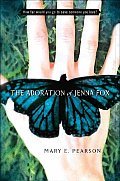 My Geek-inspired review…
Is this as good as people keep saying? (Alessandra)
Yes. It’s very, very good, and deserves all the gushing it’s getting. Different from what I was expecting, but powerful and thought-provoking and as good as I had been led to believe.
Does this book seem typically YA, or could it be classified as a novel for adults with a younger protagonist? (Bybee)
Hmm… I think it depends on the adult. It’s not as detailed or as developed as an adult book. Pearson was very careful with her word choice; it reads much like a book of poetry — every word carries multiple implications. As a result, though, there’s a lot missing that I think a “typical” adult might want out of a novel. On the other hand, it deals with issues and themes that I think are interesting (as an adult) and could spark interesting discussions among adults. It would be a good book group book.
Is this a book that you would recommend to the average 13+ teenager? Or would you say that it depends on the maturity level of the child? (Book Zombie) I would recommend to the average teenager. (M — she’s not quite 12) wants to read it and I think she’d be interested in it.) There’s nothing “inappropriate”, and it might spark some interesting discussion.
When Jenna struggles with the ethical issues she faces, did you find yourself strongly taking one side or another, or did you find yourself unable to really put yourself in that position, or how did you react if in neither of the ways I’ve suggested? (Dewey) I think I often came down on the side of the grandmother. I understand the moral and ethical dilemmas that Jenna had to face, but I also agreed with Lily: it was wrong, it should have never had happened. Granted, it was too late, and I don’t believe it would have been morally right to undo it. Did that make sense without giving too much away?
What are some of the qualities you liked or disliked in the grandmother character? The boyfriend character? The neighbor character? (Dewey) Oh, I loved the grandmother — the fact that while she was torn between what she felt was right and who she loved. I also liked that she was straightforward, telling Jenna what she needed to know (rather than what she wanted to hear). The boyfriend was so-so. I appreciated that he was accepting of Jenna, but I felt like their relationship lacked chemistry — more a friendship, rather than a relationship. I did wonder if the only reason she ended up with him is because she’s the first person who believed in her. As for the neighbor, I liked that he had re-invented himself, which is a primary reason for him being interested in, and friendly to, Jenna. I liked that he was sympathetic to her situation, especially when she needed someone to be understanding and not judging.
Can you sum up the life lesson to be learned from this book in a sentence or two? (Suey) No. I can’t. Not without giving too much away — and I think it’s better if you don’t know much going in. It makes the revelation that much more surprising (though I have to admit that I had an inkling) and the second half more powerful. But I will say that it touches on issues of humanity and ethics and love (parent to child and the other way around) and expectations we have for each other. It’s an excellent read.
I’ll add more if I get more questions.

