Ranger’s Apprentice: The Siege of Macindaw

by John Flanagan
ages: 10+
First sentence: “Gundar Hardstriker, Captain and Helmsan of the Scandian ship Wolfcloud, chewed disconsolately on a stringy piece of tough smoked beef.”
Release date: August 11, 2009

I haven’t read any of these books, but M is a die-hard fan. So, when Abby was doing an ARC giveaway, I knew I had to enter for her. And I (well, she) won! Because it was a bloggy thing, though, I felt kind of like I should put up a review, and since I wasn’t going to read the book, I thought it would be interesting for me to do a Q&A with M about it, instead.

Summarize the plot, but don’t give away the ending! In the fifth book, one of Will’s (that’s the main character) best friends, Alyss, is being held hostage by the evil Sir Keren, who is betraying the kingdom to Will’s country’s northern enemies. So, Will and his warrior friends plan a siege on the castle, Macindaw (hence the title), to save Alyss and the kingdom from their enemies.

What did you like most about the book? First of all: warriors and romance. Big, hulking, Viking-like people that are really stupid, but hilarious. Will’s mentor, Halt, makes the book really good, though you don’t see a lot of him. Will also makes the book really funny while he is seiging, with his romance problems. Hilarious.
What did you like least? That the good guys could do no wrong. Will’s ideas always worked. Horace (that’s the warrior friend) always killed his adversaries, and Alyss was a damsel in distress, which she wasn’t in the 5th book. She was resourceful in the 5th book, but, no, as soon as she’s caught and thrown in a castle, she’s a damsel in distress and Will has to go and save her.

Who is most likely to enjoy this book? Why? Well, actually, I’ve gotten three or four boys reading the Ranger’s Apprentice by saying “YOU’LL LIKE THIS BOOK.” So. Anyone with imagination who likes fighting (the romance doesn’t kick in until the sixth book).

What did you think of the main character? Will’s funny, resourceful, smart, and any other good word you can think of because he’s the main character and he has to be that way. Unfortunately. (And unlike Mr. Darcy.)

Any other particularly interesting characters? Horace — really fun guy, and a really good warrior. The Sorcerer of Mackindaw (can’t say his name). Really funny guy. I can’t say more, because it would give away a major plot point.

What did you think of the ending? I’m waiting for the next book. Hand it to me now.

Really Quick

I don’t usually do this, but before I left today, I checked my email and found this:

76 days until the release of Rick Riordan’s

Percy Jackson and the Olympians, Book 5: The Last Olympian

www.PercyJacksonBooks.com reveals cover image for the highly anticipated fifth and final book in Rick Riordan’s blockbuster series.

Rick’s blog, http://rickriordan.blogspot.com/, features exclusive short interview with Blackjack the Pegasus.

At 12:01 am EST, on Wednesday February 18, 2009, www.PercyJacksonBooks.com will unveil The Last Olympian cover image. Leading up to the one-day laydown on Tuesday, May 5, 2009, Percy fans who visit the dedicated website (www.PercyJacksonBooks.com) will be treated to exclusive content that will be posted on a regular basis including: teaser videos, downloadables- chat icons and wallpaper, new never-before-seen character art from the series, discussion board/message post, an all-new quiz, and soon-to-be-announced sweepstakes information!

In addition to the interview with Blackjack the Pegasus on Rick Riordan’s blog (http://rickriordan.blogspot.com/), Rick will be sending out a series of inside details on a weekly basis about The Last Olympian that will only be available on Twitter: http://twitter.com/camphalfblood.

More exciting news to come!

We’re all — well, me, M and C — are a bit fangirly about this. We can’t wait!

Library Loot #7

A really, really small haul this week, entirely because I stopped by the library yesterday to return DVDs (and pick up new ones for the girls) because I’m out of town today and we won’t get to do our usual library run.

However, I can’t help but pick up books for M while I’m there (she can never have too many books):

Life As We Knew It, Susan Beth Pfeffer
Melting Stones, Tamora Pierce*
The Boy Book, E. Lockhart

Did you get anything interesting?

The roundup is over at A Striped Armchair.

*Ones that M eventually read.

The Graveyard Book

by Neil Gaiman
ages: 10+
First sentence: “There was a hand in the darkness and it held a knife.”

This book has been read by practically everyone (if you haven’t read it, why not?), and I don’t have much to add. So, some not-so-random thoughts (since everyone else has written a review of it):

I agree with those (like Natasha, most recently) who don’t like the cover or the illustrations. I’m not sure they added much to the book. And they just kind of weird. In cases like this, I’d much rather leave everything up to my imagination.

That said, I did like the story. It helped knowing it was patterned after Jungle Book; the pacing is a bit weird, and I think it would have bothered me if I didn’t know it was a conscious decision on Gaiman’s part to write it that way. But knowing that, I was able to put aside my irritations when they cropped up (which wasn’t often).

That said, I loved the story. I loved the intensity of the first and second-to-last chapters. During those, at least, I couldn’t put the book down. I loved Bod and the life that Gaiman imagined for him in the graveyard, including his relationships with the ghosts and Silas. There were moments of just pure wonderfulness, as well as small touches (loved the gravestones), throughout the novel.

I’m still trying to decide if it’s the best fantasy I’ve read in a while, or even if it deserves the Newbery. I think so, if only because it’s so different from anything else. Granted, different doesn’t always mean good, but in this case, I think different is unique and interesting. Which is really the best way to describe Gaiman’s work.

And this is no exception.

Teaser Tuesday, February 17

  • Grab your current read.
  • Let the book fall open to a random page.
  • Share with us two (2) “teaser” sentences from that page, somewhere between lines 7 and 12.
  • You also need to share the title of the book that you’re getting your “teaser” from … that way people can have some great book recommendations if they like the teaser you’ve given!
  • Please avoid spoilers!
  • My teaser this week is from Stop Me If You’ve Heard This One Before, by David Yoo

    With Mia nowhere in sight, I felt a nervous tightness in my chest due to lack of experience looking my classmates in the eye (it was the equivalent of my more socially well-adjusted peers being forced to stare down mountain lions), but at the same time I felt deeply excited to be finally reintroducing myself to high school society. I took what felt like a ceremonial deep breath and began my first pass down the main wing.

    The roundup is at Should be Reading.

    A View of Jerusalem

    by Erin Sheely Tolman
    ages: adult (though it’s perfectly suitable for younger readers)
    First sentence: “On August 22, 2000, I departed Salt Lake City, Utah with 175 other college age students to travel to the Brigham Young University Jerusalem Center for Near Eastern Studies located on Mount Scopus in Jerusalem, Israel.”
    Review copy sent by the author.

    I’ve never been to Jerusalem. Actually, to be completely honest, I’ve never really had much desire to go to Jerusalem. I’m just not a Middle Eastern, desert kind of gal. Even so, I do think, on some level, that religiously at least I ought to want to go to Jerusalem. Walk where Jesus walked and all that.

    As such, I never expressed much interest in BYU’s Jerusalem Center while I was at BYU. I knew people who went — most notably Hubby’s older sister and younger brother — but I kind of thought, well, it’s there. That’s nice.

    After reading Erin’s book, I think I’d like to visit; it sounds like being in Jerusalem (and at the BYU center) is a singular experience.

    This book chronicles her time in Israel, from her classes in the center, to her wanderings around the city itself, to some of the field trips scheduled by the professors. It also happens that she was in Jerusalem in September of 2000, when the Second Infintada — the war between Israel and Palestine (though it seems like they are always at war) — began. I expected more about her feelings and experiences being there at that time, and I was a bit disappointed with what seemed to be just a travelogue (though I did enjoy seeing Jerusalem through her eyes). Erin did get more into her thoughts and feelings (and those of her family watching the news at home) near the end of the book. I also thought it was a nice touch to add her feelings as her husband left for Afghanistan three years later; it brought the story full circle. The book is best, though, when Erin writes down her observations and thoughts about the city and the sights she is seeing; it can be very evocative, almost poetic at times. My only real regret is that we didn’t get to see any of the photographs she so often talks about.

    As a spiritual book, I wasn’t terribly touched (but that may just have been me; I’m a hard soul to move…), though I appreciated that Erin was trying to share her testimony about Jesus and the places he was with others. I just wasn’t able to connect on that level.

    That said, it’s a worthy reflection on her time in Jerusalem, an interesting memoir of her time in an interseting place. And worth reading.

    Even More Matrimony Giveaways (and a winner)

    I was neglectful, and didn’t announce that I had picked a winner (though I was responsible and informed her and Mr. Henkin about it…). The winner of my Matrimony giveaway was (drumroll please):

    Sorry to all those who didn’t win; thanks for playing. 🙂

    Which brings me to the NEWS. Lisa, of Books on the Brain, tried to leave a comment (dang word verification) and couldn’t, so she emailed me this:

    Hi. I just wanted to let anyone who was interested in this book that did not win from Melissa that I am also running a Matrimony giveaway on my blog (along with a whole bunch of other giveaways this week).. so if you’re really interested, come on by! The giveaway links are in my left sidebar.

    I’ll help you out: here’s the link to her Matrimony giveaway. Go, give it another try. 🙂

    WSR Challenge Roundup #6

    A quick quote from A Map of Home, by Randa Jarrar:

    There’s no telling where home starts and where it ends.

    I like that.

    On to the review roundup:

    Kim read The Ladies Auxiliary, by Tova Mirvis, the story of an Orthodox Jewish women’s group in Memphis, Tennessee (of all places!). Kim writes, “Since the story is told by the women of this community there is a lot about the food and the preparing for Shabbos and all of the many different Jewish holidays. I found it all so interesting but the best part was the portrayal of the different characters and the relationships in this tight-knit religious community.”

    Amira read French Milk, and didn’t like it, primarily, because “Her Paris wouldn’t be my Paris. Of course, if I could spend 5 weeks in another country, I wouldn’t even consider Paris.” Enough said. 🙂 She also read Love in the Driest Season, by Neely Tucker, which she did enjoy. She writes, “It’s the story of an American couple who adopts a baby from Zimbabwe in 1999 and 2000. It does follow Neely Tucker’s trips around Africa some, as a foreign correspondent, and can be graphic in those sections, but mostly, it focuses on the adoption. Before reading this book I’d read some misleading reviews that criticized the Tuckers, but I have to heartily disagree. “

    Nicole read Kafka on the Shore, by Haruki Murakami. She says that while she didn’t learn much about Japan from reading the book, she did enjoy the magical elements in the story, as well the riddles, which she “expected to be answered at the end and wrapped up neatly with a bow. Too bad for me — there weren’t any answers and I was left to my own devices.” Still, it was a good experience overall.

    We hit China this week! Erin managed it for us, reading Wild Swans, by Jung Chang. She writes, “Though I have read about China in other stories, this particular account was just painful to read…mesmerizing and fascinating but the atrocities committed by the leaders and citizens of China are so far beyond my scope of understanding it was difficult for me to absorb it all.”

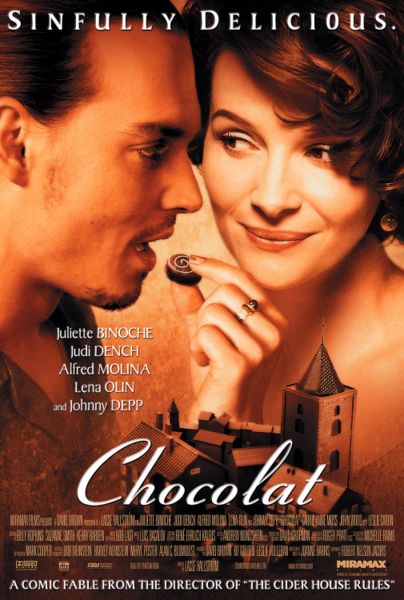
    Bridget read Five Quarters of the Orange, by Joanne Harris, who also wrote Chocolat. Bridget writes, “So though I liked a lot about the book, I didn’t really like the characters, and found the lack of regret or remorse about their actions during the war to be disturbing…. In a nutshell, it was a good read, but not as satisfying as I had hoped.”

    Mrs. B. checked in with two books: The Matchmaker of Perigord, by Julia Stuart (one sentence: “This book is charming, laugh-out-loud funny and unique.”) and Low Country by Anne Rivers Siddons, of which she writes, “Here’s something I love about ARS – her writing is real. So real it can’t help but strike a chord in the reader somewhere.”

    And Lucia also checked in with two books: Letters to My Daughter, by Maya Angelou, which Lucia says, was “An interesting and beautiful read but it left me wanting more and felt as if it ended too abruptly.”; and A Map of Home, by Randa Jarrar, which Lucia describes this way: “The novel is essentially a coming of age novel with the backdrop of war, intense cultural transitions and collisions, and the angst of adolescence. At times funny, gritty, heartbreaking and very hard to put down.”

    A great week! Happy reading, everyone.

    Geeky Naming

    For this week‘s edition of Weekly Geeks, we’re going to take a closer look at character names. What are some of your favorite character names?

    Go to Google or a baby name site like this one or this one, and look up a favorite character’s name. What does their name mean? Do you think the meaning fits the character? Why or why not?

    If you’d like, look up your own name as well and share the meaning.

    Just for fun, I asked my girls.

    M said: Philippa Gaunt, from The Children of the Lamp series, by P.B. Kerr. Philippa’s source is Philippos, a Greek name meaning “Horse lover.” The character loves animals, so M thinks it fits. Though Philippa prefers cute, cuddly animals to horses.

    C said: Gregor from Gregor the Overlander, by Suzanne Collins (which took a bit for her to get into, but she really, really liked). Gregor’s source is Gregorios, a Greek name meaning “Vigilant.” She thinks it fits because Gregor is really, really concerned about watching over his little sister, Boots, in the underland.

    I’m going to pick Arwyn from Lord of the Rings (J.R.R. Tolkien, but you knew that), mostly because it’s the only character name I’ve ever considered giving one of my girls. (It was A, if you must know, because she was born a week before Return of the King was released. And yes, I am that sort of geek. I didn’t, in the end, because I figured she would kill me when she grew up.) Arwyn’s source is a Welsh expression meaning “Muse.” And yes, I do think that fits, especially in the books, because Arwyn doesn’t actually do anything, but sit around being pretty and inspiring Aragon.

    And, for good measure, my name’s source is a Greek expression meaning “Bee or honey.” Which seems to fit, since I always need to be doing something.

    And the Winners Are:

    From the blog:

    The 2009 Cybils Winners

    Easy Readers

    I Love My New Toy
    written by Mo Willems
    Hyperion

    I Love My New Toy is a perfect example of an early reader book. Using simple, repetitive text and charming illustrations, Mo Willems gives the youngest reader a title full of emotion, humor, and action. Children can easily relate to this wonderful story of friendship at its worst and its best.

    Fantasy & Science Fiction

    Middle Grade

    The Graveyard Book
    written by Neil Gaiman
    HarperCollins

    Transcendent writing and wry bits of humor brought The Graveyard Book to the top of a strong field of contenders. Gaiman pulls off the trifecta of a ripping plot, nuanced characters and sublime prose. He submerges the reader into standard horror subject matter but freshens and modernizes it, never being predictable. The orphaned Nobody Owens, or Bod to his other-worldly friends, is being raised in a cemetery, where he masters a few tricks of the ghostly trade. His guardians have to hope it’s enough to protect him from the assassin who killed Bod’s family, and who lurks somewhere beyond the graveyard gates. This riff on the Jungle Book balances humor, heart and darkness, creating a winning read.

    Young Adult

    The Hunger Games
    written by Suzanne Collins
    Scholastic

    The Hunger Games wins for its broad crossover appeal, complicated moral issues, and sociopolitical satire. In a richly imaginative twist on a familiar dystopian landscape, Suzanne Collins creates a deadly game using child combatants to explore the dehumanizing effects of war and violence. Katniss struggles against overwhelming odds while being groomed and polished for what could be her televised fight to the death. At each agonizing choice or fearful alliance, the reader is confronted with the same questions Katniss faces. How far would you go to save yourself? Can you meet violence with violence, yet preserve your humanity?

    Fiction Picture Books

    How to Heal a Broken Wing
    written and illustrated by Bob Graham
    Candlewick Press

    This deceptively simple book achieves so much more than telling the story of a boy who notices a wounded bird in a busy city. By alternating single and double-page spreads with clusters of small panels, Graham creates almost a film strip of time passing. The artistic technique lends both intimacy and urgency to the boy and his family’s precarious mission to save the injured pigeon. The text is commendably lean, supporting the strong visual narrative and keeping a lighter touch to the theme. The cartoon-style, watercolor illustrations provide the perfect tone, and the accessible story offers connections for picture book readers of all ages. For all of these reasons, How to Heal a Broken Wing distinguishes itself as the rare picture book that speaks quietly, yet has volumes to say about courage, kindness, and hope.

    Graphic Novels

    Elementary/Middle Grade

    Rapunzel’s Revenge
    written by Shannon Hale and Dean Hale
    illustrated by Nathan Hale
    Bloomsbury USA

    “What made this book stand out to the judges was that it takes a well-known story and does something recognizable, but unique, creating an adventure which readers of both sexes can enjoy. Those readers will get swept up in the rawness of the emotions presented. The art is bright and leaps from the pages, but the images don’t overshadow the story or mask weaknesses in the plot. The story and images carried the weight equally, were well-paced, engaging, and generally solid.”

    Young Adult

    Emiko Superstar
    written by Mariko Tamaki
    illustrated by Steve Ralston
    Minx

    “This title rises above a traditional outsider/teen angst tale because of its protagonist’s interest in her local performance artists, a subject that hasn’t been done to death in YA. The story is also novel simply because it’s about a teen exploring art and find how it can change you. Ralston’s art is an important aspect of the story, working in tandem with Tamaki’s unique story.”

    Middle-Grade Fiction

    The London Eye Mystery
    written by Siobhan Dowd
    David Fickling Books

    Brother and sister, Ted and Kat, take their cousin Salim to see the London Eye, the city’s gigantic Ferris wheel. While Ted and Kat watch, Salim gets into one of the glass pods, but thirty minutes later he doesn’t get off. So the siblings set out to find their cousin. Complicating the situation, Ted’s brain “runs on a different operating system” from other people’s, which makes him a lot better at facts and figures than he is at reading people. Narrated in Ted’s voice, this is a page-turner that brings London to life and takes readers inside a powerfully rational mind. The London Eye Mystery shows off kids’ natural ingenuity and proves that difference can be a strength, as Ted and Kat work to solve the irresistible riddle of their cousin’s disappearance.

    Non-Fiction MG/YA

    Non-Fiction Picture Books

    Nic Bishop Frogs
    written and illustrated by Nic Bishop
    Scholastic Nonfiction

    Nic Bishop is known for his jaw-dropping nature photography. Open a book cover with his name on it and you’ll be greeted with stunning action shots, exquisite attention to detail, and sharp, sharp close-ups that inspire awe. Couple that with Bishop’s equally crisp, up-close and personal writing in Nic Bishop Frogs, and you’ve got an award-winning combination of text and illustration that captures a child-like wonder about a topic that is anything but new. That’s quite a feat. Bishop’s language is interesting and playful, and his analogies and references are right on, squarely aimed at where kids’ heads are at. Simple word choices never talk down, but will allow newish readers to find success easily. The book flows logically, covering life cycle, defense, diet, habitat, and other essentials you’d expect to find in an animal book, but the organization is refreshingly kid-friendly, meandering through the topics as though Bishop and the reader were having a conversation while sitting in a marsh waiting for a frog. It’s intimate and personal and accessible—frogs as you’ve never seen them before. Fascinating process notes are sure to inspire young photographers.

    Poetry

    Honeybee
    written by Naomi Shihab Nye
    HarperCollins

    Honeybee is a hybrid of delicious poetry and lyrical prose poems on wide-ranging themes blending science and observation alongside personal memoir and political challenge. There are ideas buzzing here that young people have probably felt in their gut, but may not have verbalized. Isn’t this what poetry is supposed to do?

    Young Adult Fiction

    Disreputable History of Frankie Landau-Banks, The
    written by E Lockhart
    Hyperion

    It’s a setting we know. It’s a theme we’re familiar with. But with The Disreputable History of Frankie Landau-Banks, E. Lockhart takes common features of teen fiction and turns them into a smart, fun, multi-layered, action-filled, coming-of-age story with a unique treatment and fresh voice. Frankie’s feminist-fueled and P.G. Wodehouse-inspired antics at boarding school are hilarious, but also tinged with the sometimes-harsh truths of growing up. A book complex and clever enough that wildly diverse readers will each take, and love, something different out of the narrative.