The Ship of Lost Souls

by Rachelle Delaney
ages: 9+
First sentence: “‘You there!'”
Review copy provided by the publisher.
Support your local independent bookstore, buy it there!

Think of a book that’s one part Treasure Island, one part Pirates of the Caribbean, one part Peter Pan, and you’ve pretty much got an idea of the feel of this book.

Scarlet McCray is the captain of the Margaret’s Hop (the e fell off years ago), a ship haven for lost or abandoned children. Their ship is surrounded and protected with a ghost-ship legend that Scarlet and her crew of 8 to 13 year olds use to their full advantage. They pillage, they raid, they essentially have a grand time out from under the thumb of obnoxious adults.

Jem Fitzgerald, the nephew of a moderately famous botanist, is in the area with siad uncle in search of a treasure. There’s a legend that’s been floating around for years of an island that has a treasure that will bring one who finds it peace. And Jem’s uncle knows where it is. (There’s a map and everything.)

Except Jem and his uncle are kidnapped by dread pirates, who then kill Jem’s uncle. Enter Scarlet and the Lost Souls: they rescue Jem, make him a part of their crew, and go on search for the treasure. There’s growing up, adventures, revelations, and a mutiny attempt in the process of looking for the treasure.

It’s a great world that Delaney has created — safe and predictable, yet with a sense of adventure on the side; realistic, with just the right touch of whimsy. It’s a fun little book.

(Just for the record: because this is a Cybils nominee, I’ve been asked to make sure y’all know this is my opinion only, and not that of the panel.)

2009 Challenge #8: Lost in Translation

Another challenge down. (Only one left for this year…) I have realized that the problem with year-long challenges is the wrap up post. I can’t remember what I thought of half of these books!

Anyway… for the Lost in Translation Challenge I read:

1. Captain Alatriste, Arturo Perez-Reverte
2. Inkdeath, Cornelia Funke
3. The Death of Ivan Ilyich, Tolstoy
4. The Princetta, Anne-Laure Bondoux
5. Echoes From The Dead, Johan Theorin
6. The Wine-Dark Sea, Leonardo Sciascia

I technically didn’t finish two — Inkdeath and The Princetta — and I liked Ivan Ilyich best, I think.

Anyway, it was interesting reading books in translation.

The Wine-Dark Sea

by Leonardo Sciascia
ages: adult
First sentence: ‘Your Majesty,’ said the Minister of State Santangelo, tapping Ferdinand lightly on the shoulder with one finger, ‘this is Grotte.'”
Support your local independent bookstore: buy it there!

I’m not a fan of short stories. I don’t know why that is, really. Perhaps it’s because I feel disjointed from one story to the next — I do better when the stories are interconnected. Or perhaps, it’s just that there’s not enough meat there for me.

So, keeping that in mind, I really didn’t care all that much for this collection of stories. Sure, they were a slice of Sicily — from the mafia to the ups and downs of everyday life — but most of them fell quite flat. I did like the title story, however. It was a tale of a man who bonds with a family and their nanny on the way to Sicily. It’s sweet, it’s funny, and enjoyable to read. Some of the other ones — Guifa and End-Game, are ones that I think of off the top of my head — are cleverly written, but a bit strange. The rest ranged from “meh” to “I think I’m going to skip this one.”

Perhaps it’s the translation? Nah… it’s probably just me. And my short-story issues.

Year of the Bomb

by Ronald Kidd
ages: 10+
First sentence: “There were Martians in the backyard.”
Review copy provided by the publisher.
Support your local independent bookstore, buy it there!

It’s 1955. It’s the middle of the Cold War. There are frightening things all around, from the threat of nuclear war, to McCarthy’s Communist hunting, to the monsters in the movies.

And in Sierra Madre, California, Paul and his friends — Arnie, Crank and Oz — are in the thick of it all. Especially when the filming of the greatest B movie of them all — Invasion of the Body Snatchers — comes to their hometown. Being movie buffs, they are drawn to the set, which, in turn, opens up a whole can of worms: espionage, scientists, blacklisting, movie magic. You name it, it’s probably in there.

This book is wild and fun. It feels like a B movie: a bit cheezy, a bit over-the-top, but in the end, quite lovable. Kidd’s writing style flows — even if sometimes the narrative time line gets a little bit fuzzy, flipping between movies, real time and flashbacks — and Paul is a winner of a character. He’s concerned about his friends, he wants everyone to get along, and yet he’s not willing to give in to all the conspiracy theories and fear that are all around him.

There’s nothing really deep or life-changing about the book. It’s mostly just fun times and monster movies. Which is really just fine.

(Just for the record: because this is a Cybils nominee, I’ve been asked to make sure y’all know this is my opinion only, and not that of the panel.)

10 Questions for Shannon Hale

Shannon Hale has been one of my favorite authors for years. Almost since she first started publishing (I liked the story, but I didn’t like her author blurb). I swear she can do no wrong when it comes to her books — more right and less right, yes, but no wrong — and so when I got an email asking if I’d like to do an interview with her (again! Since I had the pleasure of interviewing her a couple years ago.) of course I jumped at the chance.

Before I give you the interview, I need to explain the picture… Since she didn’t include one with her questions, I felt I had the liberty of choosing one. Back in October, when Shannon was doing a signing tour for Forest Born, she went through Boston. And me, being the squee-y fangirl that I am, begged and pleaded my lovely sister (she’s on the left) to go and get a book signed for me. My sister (and my dear sister-in-law) loves me SO much, that, she did. And she took a picture and sent it to me… which isn’t exactly the same thing as meeting Shannon myself, but almost. Someday, I’ll actually meet Shannon Hale in person. But until then, I’m happy to just do interviews.

MF: I think I’m going to focus most on Forest Born, since that’s your most recent book…. I liked Rin’s quiet strength in the book. How did you come up with the idea for her?
SH: Thanks, Melissa. Rin was really tough, the toughest character I’ve ever written. Hard to discover, hard to figure out why she was the way she was. I knew her through Razo’s eyes before I wrote Forest Born, but it turned out she was so different inside, I had to wrestle with the story to shake her free. A big breakthrough was when I realized I needed to go back and to understand her early history. The first chapter was a late addition, but it saved the story for me.

MF: If I remember reading it right, Goose Girl was supposed to be a stand alone book. How did it become a four-book series?
SH: How indeed! I wish someone would tell me. I’m looking around, going, what a minute, I did not authorize all these books, pesky little critters. It’s all about the characters. Enna pushed her way forward and insisted on her own story, then Razo did and got River Secrets. Rin isn’t pushy and didn’t insist. Rather it was all the other characters who were loud and insistent that the story wasn’t complete yet and I was forgetting about…[SPOILERS DELETED BY AUTHOR] But I knew I wanted to tell that story from the perspective of someone very different from my other MCs. Rin was right. Tricky, but right.

MF: And do you think you’ll write more Bayern books? (Or is this really, really the last one?)
SH: Ha! Who knows? I’m not writing one right now, and I like the way Goose Girl and Forest Born bookend the series. But I’m always tensed for another character to get mouthy with me and demand a book. I know that might sound loony, like I really believe these characters are real people who can control me, which of course I don’t because if I did I’d be crazy, right? I mean, no way I’m crazy. And besides, if they controlled me, why don’t they get their stupid stories right the first time instead of making me do all those rewrites?! The truth is, I love to tell stories, but I am in some degree a slave to which story inside me shouts the loudest.

MF: Do you have a favorite character or scene in Forest Born?
SH: Ooh, I haven’t thought about this one yet. Let me think…I just asked my husband and he said “that zen walk/fight scene.” Maybe that’s cryptic enough not to be a spoiler. I like that too. I like how Rin quietly becomes the most powerful person in the room. But I also like the conversations between Rin and Razo. Those were a relief to write. In the middle of a very sticky book, Razo and his relationship with his little sister was an oasis for me, as it was for Rin too.

MF: Your books span the ages and the genres (a bit anyway) — from middle grade graphic novels to adult romances. Do you have a favorite to write in or for?
SH: If favorite means “easiest,” then contemporary romantic comedy wins. Not that Austenland or The Actor and the Housewife were sweat- and blood-free, but they’re SO much easier to write than period fantasy. In a contemporary setting, my lexicon is enormous. But worlds like Miri’s and Rin’s are so small, I have so many fewer words at my disposal, so many fewer similes I can call upon. If favorite means “most fun,” then Rapunzel’s Revenge wins because I got to collaborate with my awesome husband and awesome illustrator Nathan Hale (no relation). But if favorite means “best,” then behind all the other books’ backs, I furtively nod toward Book of a Thousand Days.

MF: I know this is kind of asking you to pick a favorite child, but which of your books is your favorite, or means the most to you?
SH: The Actor and the Housewife. No, wait, Goose Girl because she was the first. But Book of a Thousand Days I just claimed is my best…I’m coming up with really good arguments for all of them. Except Princess Academy. It’s been by far my most successful and so feels the least like mine. I can’t claim it anymore.

MF: Again, this might be an unfair question… but how do you think your writing (or, if it’s any easier, your approach to writing) has changed over the years? We could make it easier, how about since you were first published…
SH: I remember one of the biggest notes my editor gave me on Goose Girl was to get more inside the character’s head. I think I used to be a little more distant, and now I try to get so inside the character that the reader feels like she’s living the story rather than observing it.

MF: Who or what inspires your writing?
SH: Words. Words make me want to write. I’m not inspired by music, like so many authors. I wish I was. I’m rarely inspired by real life events. But words do it for me.

MF: Do you have five books you think everyone should read?
SH: No. I’m not very prescriptive. But I’m going to give it a shot and write down the first five that pop into my head: I Capture the Castle (even though the ending broke my heart), Megan Whalen Turner’s Gen books, A Long Way from Chicago, Westing Game, Mrs. Frisby and the Rats of NIMH. (wow, I haven’t read that last one in years! Don’t know where it came from)

MF: I know you’ve got Calamity Jack coming out in January, I’m excited to read that! What’s next for you after that?
SH: I’ve had two years with two books coming out, and I’m ready for a little breather. Maybe (maybe) my YA sci-fi kick butt girl series Daisy Danger Brown will be ready in 2011. Maybe.

MF: Thank you for your time!!
SH: Thank you, Melissa. You add so much to the book world with your passion and thoughtfulness.

Bull Rider

by Suzanne Morgan Williams
ages: 12+
First sentence: “Folks in Salt Lick say I couldn’t shake bull riding if I tried.”
Review copy provided by the publisher.
Support your local independent bookstore: buy it there!

Cam doesn’t want any part of his family’s obsession with bull riding. As far as he’s concerned, that’s his Grandpa Roy’s, Dad’s and older brother Ben’s territory. Even if he is in northern Nevada, in a piddly little town just outside of Winnemucca, and lives on a cattle ranch, he’s a skateboarder, not a bull rider.

Then, Ben joins the Marines and gets shipped to Iraq, and a year later comes home seriously injured. And (of course), Cam’s life drastically changes. Not only does he have more chores to do around the ranch, but his grades tank because of the stress, and inevitably, he finds that there is less time to board. And that it’s less important to him. Especially once he visits the bull ring again, and gets goaded into riding. He finds that he’s actually good at it, and when Ben seems to be stuck in a permanent funk, Cam makes a deal: if he can ride the biggest, meanest bull around — Ugly’s his name — then Ben has to try harder at getting better.

The question is: how’s Cam going to do that?

It’s an interesting tale, that of Cam and his adapting to the changes in his life. It’s also almost more a story of the changes a soldier’s injury brings to both his and his family’s life. Williams is brilliant at showing how everyone is affected by it, from Cam and Ben to their parents and grandparents, to the community as a whole. There’s a lot of teenage angst — Cam’s 14, which (IMHO) puts this at the upper end of middle grade books — a lot of lying, and a lot of sneaking around. Cam’s mother bans him from bull riding — it’s a dangerous, if exciting, sport — because she can’t handle the idea of two sons being seriously injured. So, Cam resorts to sneaking around behind her back, which is easier than would be expected, since she’s so preoccupied with Ben and his recovery.

Cam’s a sympathetic character, though, and Williams makes his pain and discomfort and unease palpable. As a reader, you find yourself rooting for everyone: for Cam to make the ride, for Ben to get better, for everyone to get past the pain. It sounds like it would be a hopeless book, a depressing book, but Williams infuses it with a spirit of hope, of promise, that even though the end is not tidy, everything feels like it’s going to work out.

And that’s a good thing.

(Just for the record: because this is a Cybils nominee, I’ve been asked to make sure y’all know this is my opinion only, and not that of the panel.)

One of the Best Things About Being a Book Blogger

Is the Book Blogger Holiday Swap.

This is my third year participating, and I have to say that I’ve loved getting the presents over the years. It not only introduces me to bloggers I’ve never heard of before — on both the giving and the receiving end — but it’s fun to both choose something for someone else and to see what they chose for me.

I got my package in the mail today and unlike past years, I got to open it right away (since it wasn’t wrapped!). My Santa was Nise at Under the Boardwalk (from my home state of Michigan, too!), and she went all out for me:

I can’t wait to read the books (after Christmas and my part in the Cybils is wrapped up!), and the chocolate was quite yummy (and already gone — and I got it all to myself). And the gift card to Panera? Squee! I’ll have to find an excuse to use it.

Thanks so much, Nise. And happy holidays, everyone!

The Small Adventure of Popeye and Elvis

by Barbara O’Connor
ages: 9+
First sentence: “DRIP.”
Support your local independent bookstore, buy it there!

This book is about boredom. About finding something to do, something unusual, something small, something… well adventurous. I’d like to hand it to all the plugged-in kids and say, “Here! Read. Be inspired. Go out and have a small adventure. You might find it changes things, even if it doesn’t really change things.”

Popeye — formerly Henry until his Uncle Dooley accidentally shot his eye out when he was three — is bored. There is absolutely nothing to do in Fayette, South Carolina except sit and listen to Velma — that’s his grandma — recite the kings of England (in order) and write down her vocabulary words in chalk on the porch. Until one day an RV, a Holiday Rambler, full of a family with rambunctious kids, gets stuck in the mud by Popeye’s house. The oldest is Elvis, and Popeye is immediately entranced. Elvis is everything Popeye is not: loud, rowdy, the Royal Rule Breaker, someone who can say “So what?” and actually mean it. And so, when Elvis suggests that he and Popeye have an adventure, Popeye can’t help but go along with it.

Remember, now, that the title is “Small Adventure”. There is no grand discovery, even if there’s a bit of a mystery. There is no angst. There is no death (though there is missing parents; thankfully, it’s just accepted as a fact and not something that Popeye has to Deal With). There is no drama, though there is wrath. What there is, is a perfectly simple, small adventure that changes one boy’s life.

And was something that completely mesmerized and entranced me.

(Just for the record: because this is a Cybils nominee, I’ve been asked to make sure y’all know this is my opinion only, and not that of the panel.)

Library Loot #48

It’s COLD outside today — for us here in southern Kansas, anyway — but that can’t stop me from a quick trip to the library. Story time is over, and the library was quiet, which means we found a lot of good books. Here’s some of the new ones (that we haven’t checked out before!):

For A/K:
Come to the Fairies’ Ball, by Jane Yolen/Illus. by Gary Lippincott
Firefighter Ted, by Andrea Beaty and Pascal Lemaitre
Thanks a LOT, Emily Post!, by Jennifer LaRue Huget/Illus. by Alexandra Boiger
Looking Like Me, by Walter Dean Myers/Illus. by Christopher Myers
The Frogs and Toads All Sang, by Arnold Lobel/Color by Adrianne Lobel

For C:
Illustrated Encyclopedia of Ancient Greece, by Sean Sheehan
The Extra-Ordinary Princess, by Carolyn Q. Ebbitt

For M:
Sorcery Rising, by Jude Fisher

For me:
The Small Adventure of Popeye and Elvis, by Barbara O’Connor
Mudville, by Kurtis Scaletta
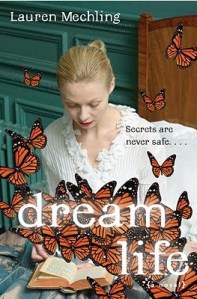
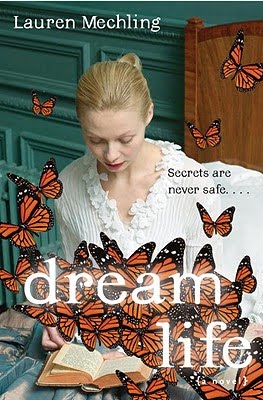
Dream Girl, by Lauren Mechling

The roundup is either at Reading Adventures or A Striped Armchair. Obligatory FTC note: the links are provided through my Amazon Associates account. If you click through and actually purchase one of these books, I’ll get a teeny, tiny payment. But, since no one ever does, and it’s SO much easier using the associates account to put up these links, I’m going to keep doing it.

*Ones that M eventually read.
**Picture books we really liked.

The Girl Who Threw Butterflies

by Mick Cochrane
ages: 9+
First sentence: “On Monday, after band rehearsal and intramurals, when Molly got home from school, her mother was sitting at the kitchen table going through the day’s mail.”
Support your local independent bookstore: buy it there!

Molly loves baseball. It’s a holdover from when her father — who died six months ago in a freak car accident — was alive, but it’s the only thread of connection she has to his memory. It’s not just watching baseball, though, or even playing catch that Molly likes. No, she wants to play, really play, the game. Her father taught her how to throw that most unpredictable of all pitches, the knuckleball, and Molly knows she can compete with the boys. So, she tries out for the baseball team.

This story is a quiet one, a meditation on loss, on baseball, on healing and moving on. It’s not flashy, it’s not over-the-top: not for a minute do you disbelieve Molly’s ability to throw a good game. Cochrane gives us both Molly’s ups — the perfect pitch, the game won — as well as her many downs — for, as he writes at one point, baseball is a game of failures. There’s a softness, a gentleness to the story, for even though there is conflicts — with her mother, with teammates who don’t like the idea of a girl on the team — the tension never reaches a boiling point. There’s a lot of musing going on, a lot of reflection, a lot of thought.

Which isn’t to say that it’s a boring book: it’s not. Cochrane is a good enough writer that he can pull off a book where the action is mostly internal and keep one turning pages. It’s a good book, an interesting story, and as far as books about girls doing boy things go, it’s worth reading.

(Just for the record: because this is a Cybils nominee, I’ve been asked to make sure y’all know this is my opinion only, and not that of the panel.)