


Just a note to say: it’s that time of year! So go sign up! The more the merrier!
Author: booknutgirls
Addie on the Inside
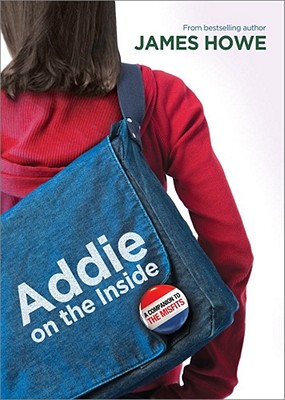 by James Howe
ages: 11+
First sentence: “The poems that follow are written in the voice of Addie on the inside.”
Support your local independent bookstore: buy it there!
Addie Carle is tall, plain, outspoken: basically everything a popular girl is not. It doesn’t really bother her; she believes deeply and is passionate about the things she’s outspoken about, and she has several good friends, though they’re all boys. What does get to her is the constant teasing, the names, the questions. Especially about why her boyfriend, DuShawn, is going with her.
For a novel in verse, where every word is carefully chosen, this book packs a punch. I haven’t read the ones it’s a companion to, but you don’t need to in order to enjoy Addie and empathize with her feelings. She is very much the smart misfit, a middle school girl who both does and doesn’t want to fit in. She’s finding her way, not only at school, but in life. True, that sounds cliche, but perhaps it’s because of the verse that it doesn’t come off that way. In addition, there are issues here: tolerance for those different, women’s rights, bullying… and yet the book is not heavy-handed. Howe does a masterful job giving us a book full of meat and character, and yet not lecturing us on what to think.
Now I want to go back and read the ones that this is a companion to.
Sunday Salon: The State of the TBR Book Pile
So a couple weeks ago when I was complaining about my physical TBR book pile, it hit me: this could be monthly feature! Since I don’t do Library Loot anymore (and to be honest, the Goodreads widget on my page isn’t always up-to-date), there’s really no way to share what I’ve got sitting on my nightstand.
Now I do! So, without further blathering, here’s my current pile:
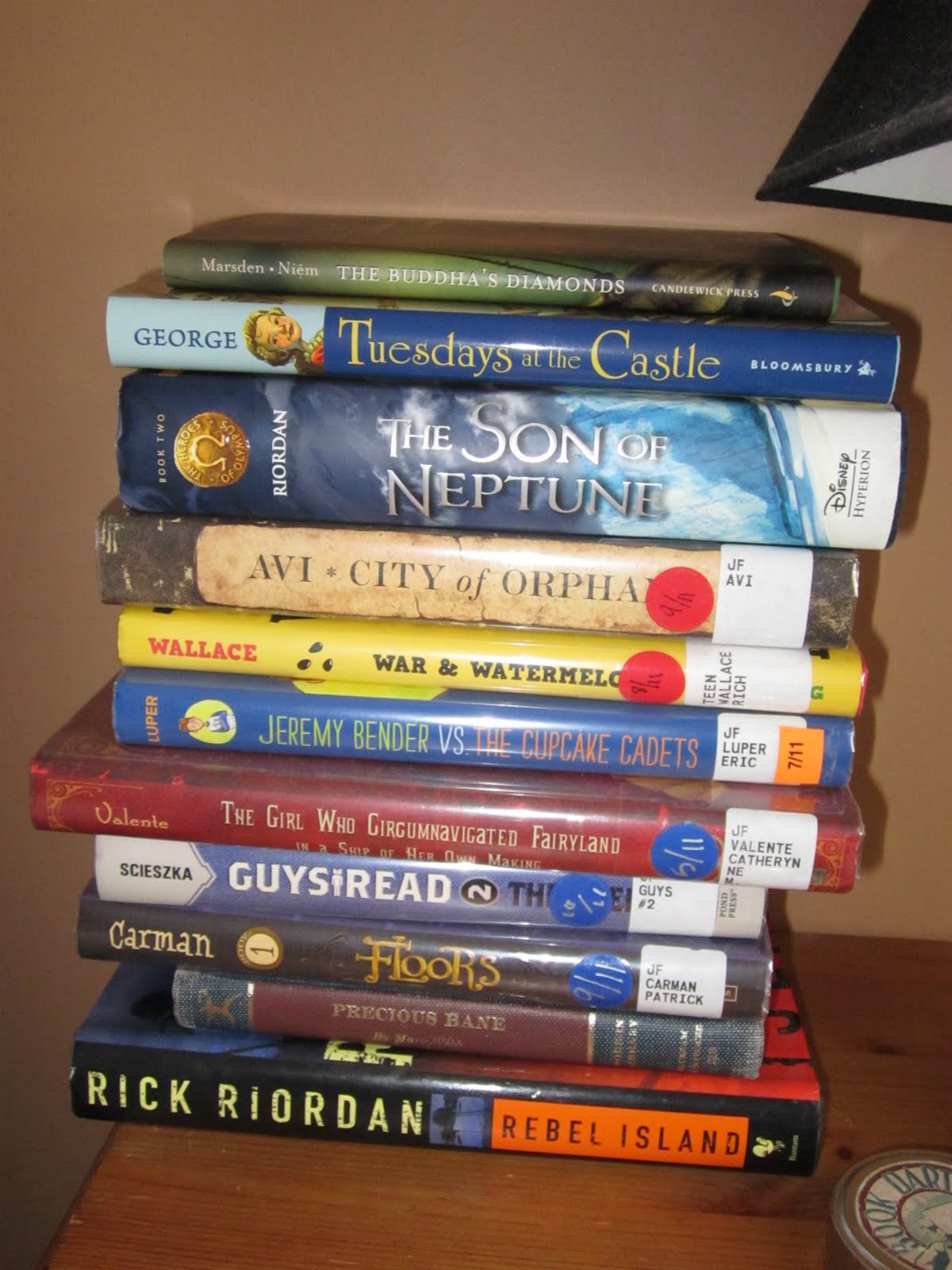
The Buddha’s Diamonds (part of Wichita’s Big Read)
Tuesdays at the Castle (recommended by Charlotte and Jen)
The Son of Neptune (I will get to this. Eventually.)
City of Orphans (MG Cybils book that stood out to me)
War and Watermelon (ditto)
Jeremy Bender and the Cupcake Cadets (ditto)
The Girl Who Circumnavigated Fairyland in a Ship of Her Own Making (because I ought to)
Guys Read: Thriller (since I liked Funny Business)
Floors (Charlotte again, I think.)
Precious Bane (on loan from Corinne. I will read it… soonish)
Rebel Island (My goal is to finish this before the end of the year.)
What’s on your pile? Anything interesting?
Drink, Slay, Love
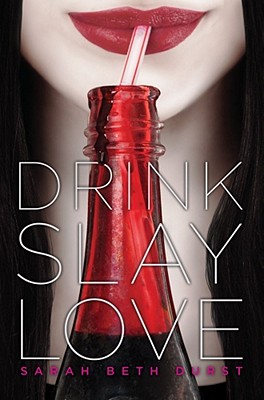 by Sarah Beth Durst
ages: 13+
First sentence: “‘One hour until dawn,’ Pearl said.”
Support your local independent bookstore: buy it there!
Pearl is a vampire. And she is completely happy. She’s strong, she’s awesome, she’s got a super-hot (immortal) boyfriend, a favorite snack (in the form of a loser boy who works at the local all-night ice cream joint), the approval of her Family, and she’s about to go through the Fealty Ceremony for vampires. Life is perfect.
And then Pearl is stabbed by a unicorn, which completely throws her for a loop: unicorns are supposed to be mythical, unicorns are NOT supposed to stab vampires, and — most importantly — vampires are not supposed to survive the stabbing. And be able to withstand daylight afterward.
Rather than let it be a deterrent to their plans, Pearl’s Family decides that what she needs to do is go to high school, and lure all those lovely, tasty humans to their doom in order to supply the feast for the King of New England at the Fealty Ceremony.
So, Pearl broaches the world of Daylight, of High School drama and dynamics, and finds herself, well, moved. Which completely throws her for a loop: vampires aren’t supposed to be moved. They aren’t supposed to have a conscience. Humans aren’t supposed to be interesting. And yet…
One of the best things about this book — aside from the swoonworthiness of Evan, a human guy whom Pearl falls in with (though I called the ending about halfway through) — is that Durst is plainly making fun of all the vampire books out there, even as she’s telling a vampire story. There are laugh-out-loud moments, moments in which you have to grin as she pokes fun at vampires, Twilight, and girls who swoon over the whole vampire thing. But, even aside from that, Durst’s telling an interesting story here, exploring ideas of change and reform and self-identity, as well as interfering in people’s lives (or whatever passes for a life if you’re undead). Sure, it’s a romance, and it’s fun, but at it’s core, it’s telling a story of a girl trying to figure out who she is in the face of a drastic change.
And that’s someone everyone can relate to.
Caleb’s Crossing
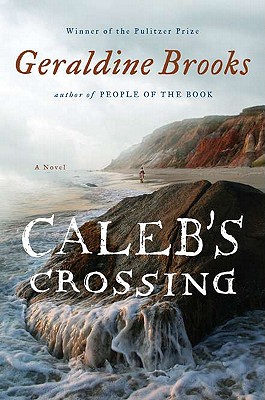 by Geraldine Brooks
ages: adult
First sentence: “He is coming on the Lord’s Day.”
Support your local independent bookstore: buy it there!
It’s the 1660s, on what is now known as Martha’s Vineyard. There’s a small group of Puritan settlers there, and Bethia’s father is the minister. He is determined not only to lead the English in the ways of the Lord, but to convert the heathen “salvages” to the Truth.
As a girl, Bethia is consigned to a life of labor, even though she longs to be more like her brother Makepeace and study languages and scripture. She is educated to a degree; her father teaches her how to read and write, though after a while he discourages anything further. She is discontent, though, and wanders the island rather than attending to her chores. In doing so, she meets a Wampanoag boy whom she comes to call Caleb.
They develop a bond — not a romantic one — and the book follows their relationship as Caleb comes to live with Bethia’s family and then goes across to the mainland to attend school — first a primer school, and then Harvard; the first Native American to do so. Bethia follows him, at first working in the school and then working in the buttery at Harvard. The book is named after Caleb, but it’s about Bethia and the whole Puritan culture; Brooks has certainly done her research about the time period. The book is in the form of Bethia’s journal, of sorts (it’s not a daily one), and so not only do the characters put forth ideas and thoughts about the time period — Bethia is the only remotely modern one of the bunch — but Brooks keeps up the pretense even down to the spelling of certain words.
Because it’s a series of Bethia’s reflections and memories, the book is incredibly slow. It’s not a book for the plot-driven or even the character-driven. The only character we get to know in any depth is Bethia herself; because most of the other main characters are men, we’re only allowed to get to know them peripherally, as per the Puritan custom. In many ways, the book was interesting for that: because Brooks did her research, she was able to fully immerse herself in that time, and it came through in the writing. However, because I wasn’t terribly interested in the plot, while I found theanthropological look at the Puritans interesting — I did finish the book after all — it wasn’t enough for me to be completely riveted by the book.
That said, Brooks is a talented writer, and this one isn’t a complete waste of time.
October Jacket Flap-a-Thon
Happy Halloween! I was hoping to have a Halloween picture for you of the awesome costume I thought up for myself, but, in actuality because I’ve started working again, I didn’t get around to putting together a Halloween costume for myself.
I know it’s a lousy consolation prize, but here are this month’s best jacket flaps instead…
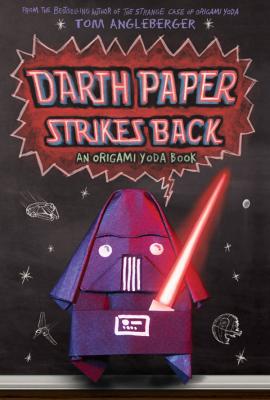 Darth Paper Strikes Back (Amulet Books): “It is a dark time at Ralph McQuarrie Middle School. After suffering several Origami Yoda–related humiliations, Harvey manages to get Dwight suspended from school for being a “troublemaker.” Origami Yoda pleads with Tommy and Kellen to save Dwight by making a new case file—one that will show how Dwight’s presence benefits McQuarrie. With the help of their friends, Tommy and Kellen record cases such as “Origami Yoda and the Pre-eaten Wiener,” “Origami Yoda and the Exploding Pizza Bagels,” and “Origami Yoda and Wonderland: The Musical.” But Harvey and his Darth Paper puppet have a secret plan that could make Dwight’s suspension permanent . . . With his proven knack for humorously exploring the intrigues, fads, and dramas of middle school, Tom Angleberger has crafted a worthy sequel to his breakout bestseller.”
Hands down, the best thing about this one is the Star Wars references. Plus, it tells you the whole plot without giving too much of the detail away.
 I’ll Be There (Little, Brown Books): “Sam Border wishes he could escape. Raised by an unstable father, he’s spent his life moving from place to place. But he could never abandon his little brother, Riddle. Riddle Border doesn’t talk much. Instead, he draws pictures of the insides of things and waits for the day when the outsides of things will make sense. He worships his older brother. But how can they leave when there’s nowhere to go? Then everything changes. Because Sam meets Emily. Emily Bell believes in destiny. She sings for her church choir, though she doesn’t have a particularly good voice. Nothing, she feels, is mere coincidence. And she’s singing at the moment she first sees Sam. Everyone whose path you cross in life has the power to change you–sometimes in small ways, and sometimes in ways greater than you could have ever known. Beautifully written and emotionally profound, Holly Goldberg Sloan’s debut novel deftly explores the idea of human connection.”
This one sounds pretentious, but in all actuality is dead on. And they did a great job of summing up a very difficult book to sum up.
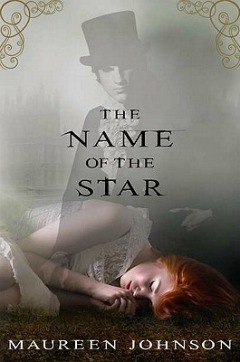 The Name of the Star (Putnam Juvenile):”The day Louisiana teenager Rory Deveaux arrives in London marks a memorable occasion. For Rory, it’s the start of a new life at a London boarding school. But for many, this will be remembered as the day a series of brutal murders broke out across the city, gruesome crimes mimicking the horrific Jack the Ripper events of more than a century ago. Soon “Rippermania” takes hold of modern-day London, and the police are left with few leads and no witnesses. Except one. Rory spotted the man police believe to be the prime suspect. But she is the only one who saw him. Even her roommate, who was walking with her at the time, didn’t notice the mysterious man. So why can only Rory see him? And more urgently, why has Rory become his next target? In this edge-of-your-seat thriller, full of suspense, humor, and romance, Rory will learn the truth about the secret ghost police of London and discover her own shocking abilities.”
This one is intriguing. What are the secret ghost police of London? What’s the deal with the Ripper killer? It makes me curious enough to want to read it. Too bad the cover is so, well, ugh.
Other books read this month:
Angel in My Pocket
Lola and the Boy Next Door
The Eternal Smile: Three Stories
Cures for Heartbreak
Kendra
13 Gifts
Zazoo
Wonderstruck
Beauty Queens
Second Fiddle
Latasha and the Little Red Tornado
The Latte Rebellion
Terrier
Bloodhound
Mastiff
Sunday Salon: My First Book Talk
So, I got a job three weeks ago. When K started kindergarten, I figured that while I love volunteering at the library, I’d also love to have something where I got paid. I’d rather not work too many hours a week, and I wanted something somewhere where I could be surrounded by things I enjoyed. That said, I beefed up a resume (I haven’t worked for money for 12 years!), and sent them out to a few places. One of which was our local independent bookstore, Watermark Books. I honestly didn’t think I’d hear back from them; it seems like no one ever leaves Watermark, and they don’t hire very often. And yet, I did. Which shocked me to no end.
The short version of all this was that the manager, Sarah Bagby, was impressed with my blogging and my bookish knowledge, and wanted me on her staff. (I almost fell over, I was so shell-shocked). And after working things out on her hand, hired me, part-time. She’s amazingly willing to work around my schedule, fitting me in for about 15 to 20 hours a week. And they’ve started throwing me things.
The latest of which was a book talk for about 7 preschool teachers. Which completely stressed me out, because I’ve. Never. Done. One. Before.
Thankfully, I have the wonderful kidlit community, and I turned to them for suggestions. I took the wonderful ideas given me by Jen (Jen Robinson’s Books), Abby(Abby the Librarian), Pam (MotherReader), Betsy (Fuse #8) and others, checked out about 50 books from the library and the store, and sat down to read with A and K. Actually, that was the best part about this whole experience. In the past two years, my delightful daughters have decided that they’d rather have chapter books read to them than sit down with several picture books. And so, I just haven’t had the opportunity to peruse what’s out there anymore. And, to be honest, while I love reading chapter books aloud to them, there is something to be said about snuggling up with your children and reading a good picture books.
I couldn’t select all the ones we read; not even all the ones we really liked. But I did narrow it down to our favorites that we were actually currently carrying in the store.
The actual talk part of it went well, I think. I talked too fast, probably — I tend to do that when I’m nervous — and I felt more comfortable talking about the middle grade and YA books I had selected (they wanted a few older books as well) than the picture books. But, I read a few, showed a lot of pictures, laughed with them, and basically had a good time. I was exhausted and shell-shocked afterward, but I did it. (And they all bought books afterward, too!)
So, what did I pitch to the teachers (they work with ages 2 1/2 to 6)?




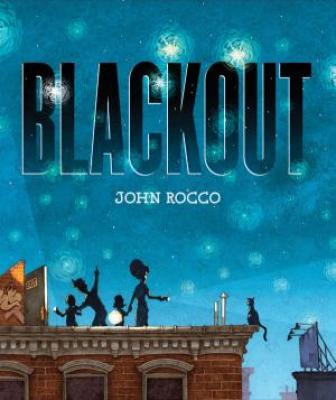
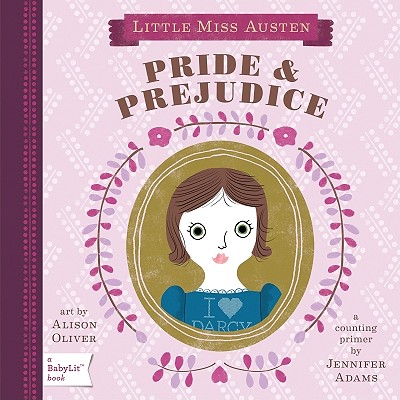
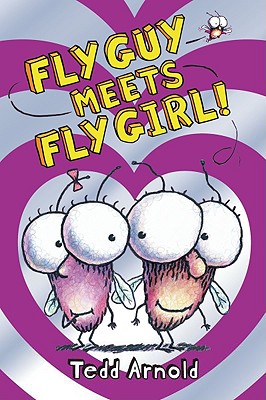
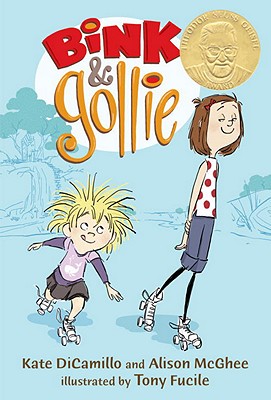

The Lion and the Mouse
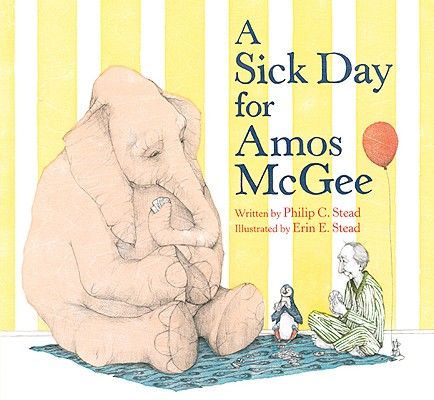
A Sick Day for Amos McGee
Dinosaur vs. the Library
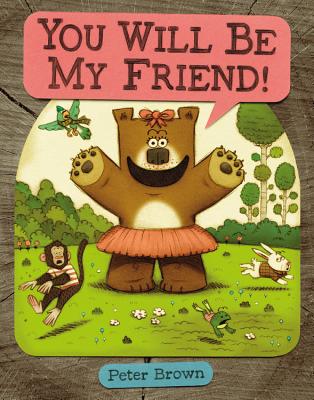
You Will Be My Friend!
Happy Pig Day!
Everything I Need to Know Before I’m Five
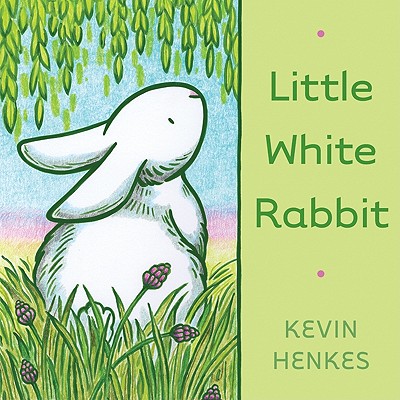
Little White Rabbit
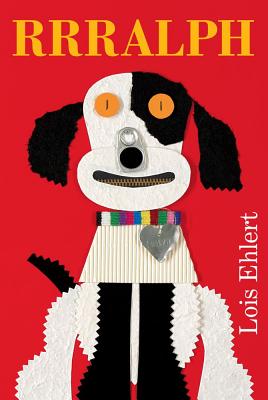
RRRalph
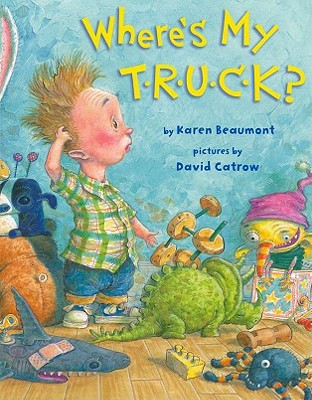
Where’s My T-R-U-C-K?
13 Words
Blackout
Me….Jane
Pride and Prejudice
Fly Guy Meets Fly Girl
Bink & Gollie
Ladder to the Moon
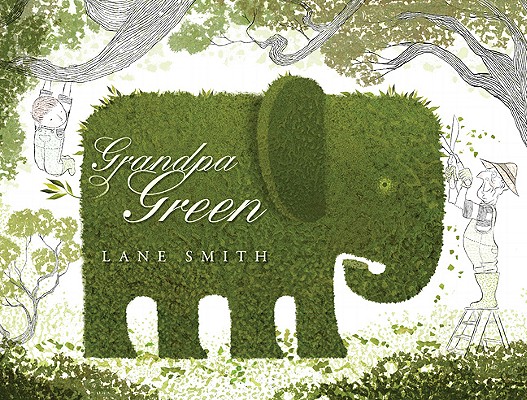
Grandpa Green
Out of these, the ones they liked the best were RRRalph, Where’s My T-R-U-C-K?, and the Pride and Prejudice board book. Hands down, though, everyone’s favorite (from my kids to Hubby to the teachers) was this one:
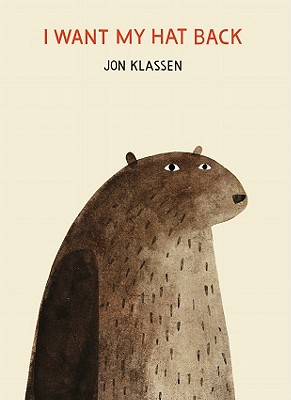
It was so hilarious that A and K insisted I read it over and over. And, thankfully, it stands up to that.
As for the older books, I talked up:
Because of Mr. Terupt
Guys Read: Funny Business
11 Birthdays
A Tale Dark and Grimm
Heist Society
Leviathan
The Name of the Star
Daughter of Smoke and Bone
Trash
Out of these, they bought A Tale Dark and Grimm, Guys Read: Thriller (I had told them about that one, but I didn’t pitch it because I haven’t read it), Leviathan and Heist Society (this one was for one of the teacher’s book group — “We’re actually a drinking group that reads” — for their December book. I think they’ll like it.)
All in all, a good experience, I think. I don’t know if I’m eager to do it again, though now that I’ve done it once, the next time shouldn’t be so bad. Right?
The Name of the Star
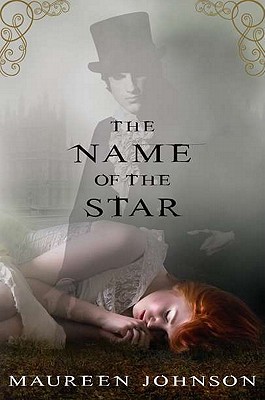 by Maureen Johnson
ages: 13+
First sentence: “The eyes of London were watching Claire Jenkins.”
Support your local independent bookstore: buy it there!
I can sum this up in one sentence: the goodness of Maureen Johnson with ghosts. Awesome creepy ghosts that kill people.
Rory Deveaux has decided, thanks to her parents being university professors and getting a year abroad in England, to spend her senior year at Wexford in London. It’s a boarding school, not exactly posh, but nothing to sneeze at either. The only damper on the whole England school experience is that there’s a copycat Jack the Ripper killer on the loose.
Everything is going fine, there’s even a bit of a love interest with the prefect Jerome, but then a murder happens on campus. And Rory is the only witness the police have got.
There are so many little ways in which I love Maureen’s writing: the fact that she can make you laugh (“action butts”) and then turn around and scare the pants off you, for one. Granted, I’m easily scared, so you might want take that with a grain of salt. However, for her first foray into paranormal fiction (another aside: “If there are ghosts, does that mean there are… vampires? And werewolves?” “Don’t be stupid.”), she grasps the fine art of tension amazingly well. It helps that while it’s a gory book, it’s not a graphic one. (Thankfully.)
But it’s also the little descriptions that make her books so enjoyable. Like:
Jerome started violently slicing apart his fried eggs. It was fascinating to watch him eat. He chowed down with the speed and force of a well-organized military campaign. He didn’t so much have breakfast as defeat it.
Seriously. How can you not love someone who can come up with a paragraph like that?
While I thoroughly enjoyed this one, I did feel the last little bit was a little abrupt, and I wish Rory had played more of a part in it. Granted, the part she did play was completely true to her character, so I’m just quibbling. That said, the last chapter was brilliant: and it sets up some intriguing things for the next book.
Which means: I can’t wait to see what happens next.
Mastiff
 by Tamora Pierce
ages: 14+
First sentence: “The burying ground has no trees in it, no shade for us Lower City Dogs.”
Support your local independent bookstore: buy it there!
Review copy provided by my place of employment.
After four years in the Lord Provost’s Royal Guard — otherwise known as the Dogs — working in the slums of the capital city, Beka Cooper thinks she has seen it all. Then Lord Gershom rouses her in the middle of the night, assigning her with her scent hound, Achoo, and her partner, Tunstall, to the most secret and dire of cases: finding the kidnapped four-year-old crown prince, and bring his kidnappers to justice. They are on a Hunt, with the assistance of Tunstall’s noble lover, the knight Lady Sabine and the Provost’s mage, Master Farmer. The burning question: will they find the prince before he’s killed to serve whatever end the kidnappers had in mind?
Unlike the previous two books in the series, Mastiff takes off with the action right from the start. It’s fast-paced, action-filled full of twists and turns, rather than being a straight-up mystery to solve. There’s political intrigue, as well: the King has recently passed a law taxing mages on their work, something which makes neither the mages nor the nobles are happy. Because of that, as well, Mastiff is magic-filled: the battles, and there are many, are intense not only for the sword-fighting, but for the magic, which often gets vicious and cruel.
Amid all the darnkess, though, there is humor and even romance: Beka truly has come into her own by the end of the trilogy: she knows what she wants in a man, and isn’t afraid to find love even among the dire circumstances of a Hunt. Add to that Pierce’s eloquent storytelling, and it makes for a book that is difficult to put down.
Bloodhound
 by Tamora Pierce
ages: 14+
First sentence: “I should have known that tonight’s watch would kiss the mule’s bum when Sergeant Ahuda stopped me after baton training.”
Support your local independent bookstore: buy it there!
Review copy provided by my place of employment.
Beka Cooper’s first five months of being an active Dog haven’t gone very well: she’s gone through four partners, each one worse than the one before. She tries to do her work and keep her mouth shut, but she’s becoming increasingly frustrated. It all comes to a head when her latest partner, a lazy-butt Dog, dumps her because she makes him “nervous” and on the way to report in at the kennel, finds out that scent-hound Achoo’s current handler has been beating the dog.
It only gets better when she and her former trainers, Goodwin and Tunstall get caught in a riot, and Tunstall gets injured. However, there are brighter days ahead: Beka’s paired with Goodwin, and because of a counterfeiting scheme that’s trickling into the city, they are sent on their first Hunt, to a city up the river. Their job is to figure out where the counterfeit coins are coming from, and stop them. Little do they know the depth of the scheme, or the danger it will put them in.
Like Terrier, this book is a combination of fantasy and mystery, with a good dash of romance. Pierce maintains a good balance between all three, keeping Beka and her journey front and center of the book. I actually liked this one better than Terrier, even though it had the same problems with a very long, very slow start. However, I did find the mystery more intriguing, and the love interest, Dale, fascinating. I did feel Pierce copped out with the ending, though: I figured out who was behind the counterfeiting, but Beka got the answers only through the use of her ability to talk to ghosts. (That said, if you’ve got the ability, you should use it. Right?) And while the final chase was exciting, the climax was a bit, well, anti-climatic.
That said, it was a fun enough novel.

