

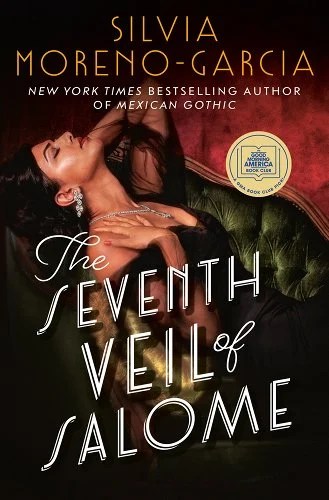
by Sylvia Moreno-Garcia
Read by Caitlin Kelly, Atlanta Amado, Victoria Villarreal, Arthur Morey, Andrew Eiden, Kristen DiMercurio, Frankie Corzo, Lauren Fortgang, Javier Prusky, Fred Sanders, Lee Osorio & Cassandra Campbell
Support your local independent bookstore: buy it there!
Or listen at Libro.fm
Content: There is violence, sexual harassment, racist slurs, and swearing, including a few f-bombs. It’s in the fiction section of the bookstore.
It’s 1955 and Hollywood is all-in on big-budget Biblical films. In this case, the story of Salome, the woman who danced for Herod and asked for John the Baptist’s head on a platter. The problem the director is having, though, is finding the right woman to play the title character. Enter Vera Larios, a newbie from Mexico City. She’s the perfect person, except…. she won’t entertain the advances of the playboy leading man. And she “took the role” from another aspiring actress. (And she also “took” the aspiring actress’s boyfriend.) And, worst of all: she’s Mexican.
One of the things we have said about Moreno-Garcia at the store is that she doesn’t write the same book twice. A big, sweeping historical drama was not really on my bingo card for her, but that’s not to say she didn’t do it well. It’s very character-driven, especially the three female characters: Vera, of course; but also Nancy (the aspiring – and failing – actress); and Salome herself. At first, I thought the Salome chapters were a bit weird, but as the book went on, I saw the parallels between that story and the one playing out around the movie. I ended up thinking about halfway through that this was a book about the ways women use their sexuality to gain power, and maybe that’s so. I’m not entirely sure, though, now that I’m done.
The full cast recording was really well done, however. There are no chapters, just narratives by various people – from other cast members to the director, a screenwriter, and other Hollywood notables – and the full cast helped distinguish that. I did wonder why most of the narratives were in first-person, kind of documentary-style, but the Nancy, Vera, and Salome sections were in third-person. Again, it was a choice, and while I did not mind it, I was a bit put off initially.
I am glad I read it, though, even if it’s not my usual fare.
 The Book Nut