Midnight in Austenland

by Shannon Hale
ages: adult
First sentence: “No one who knew Charlotte Constance Kinder since her youth would suppose her born to be a heroine.”
Support your local independent bookstore: buy it there!

 Since her husband cheated on her then left her and married his mistress, Charlotte Kinder has been completely numb. Sure, she still runs her very successful web business and takes care of her two kids, but in her personal life, she has no hope. No matter how many dates her friends set her up on, she figures she will never love again.

Then, she discovers an old bucket list of hers, which has “read Jane Austen” on it. She does, falls in love (just with the idea of falling in love, of course), and as a present to herself, goes on vacation to Pembrook Park. For a good, old-fashioned Regency Romance.

The best way I can think of to describe it is thus: if Austenland (which you don’t need to read before reading this one, but why wouldn’t you?) is Pride and Prejudice, Midnight in Austenland is Northanger Abbey. There are a couple of mysteries — both real and made-up — to solve; there’s a lot of running around at night; but most of all, there’s a Gothic feel. That, and the book just isn’t as light as Austenland is. It’s not only Charlotte’s hurt from her husband’s infidelity and betrayal, and the mysteries, there’s just a lot more brooding going on. The romantic interest, Mr. Mallery, is Heathcliff — okay, I know: not Austen, but it’s the best description — reincarnated. He attempts to do the Regency thing, but mostly he just skulks in the corner. Thank goodness there’s Charlotte’s “brother” (for the two weeks, not in real life) Eddie Grey, who lightens and mixes things up. Some of the minor players from Austeland are back: the formidable hostess, Mrs. Wattlesbrook (who is not quite as formidable), and the goofy-yet-vulnerable Miss Charming. There are new characters as well, including a starlet that’s using Pembrook Park as a place to escape not just from the press, but from real life.

The only complaint I have is that it’s not as funny as Austenland was (or that I’d hoped it would be). That’s not to say it isn’t good. Admittedly, I adore Shannon Hale, but I do think this one is worth reading (if only for this sentence: “But in life, rarely do we encounter an onslaught of beauty, enter a hive of handsomeness, find ourselves awash in an ocean of attractiveness, drowning ina miasma of hotness.”). It’s sweet and it’s tender; it’s light enough to be fluffy, but has enough weight so that it’s not a waste of time. (I need to say it: there was a moment when I needed to shout “GO CHARLOTTE!” Hooray for heroines who can save themselves!)

In other words: it’s another delight from a delightful writer.
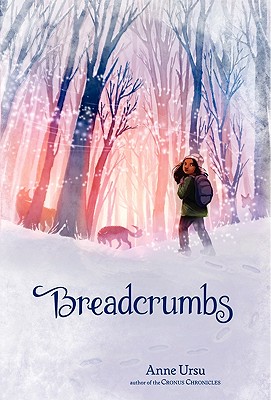
Breadcrumbs

by Anne Ursu
ages: 9+
First sentence: “It snowed right before Jack stopped talking to Hazel, fluffy white flakes big enough to show their crystal architecture, like perfect geometric poems.”
Support your local independent bookstore: buy it there!

Jack and Hazel fit together. Not like romantic-fit — they are in fifth grade, after all — but with Jack, Hazel — who is often the odd child, the imaginative child, the one who doesn’t quite fit in anywhere — belongs. Really belongs.

So, when Jack suddenly stops talking to her, she’s beyond hurt. She’s devastated. She wants to stop living. And yet, she’s the only one who can help Jack: his heart has been turned to ice by the Snow Queen (“Like in Narnia?” “No. Narnia is like her.”) and Hazel is the only one with enough imagination (and courage) who can go save him.

Hazel sets off, somewhat prepared, into the woods and the fairy tale. It’s a cross between Stephen Sondheim’s Into the Woods, and Neil Gaiman’s Instructions: Hazel finds herself not only in the tale in which she needs to confront and rescue her friend from the Snow Queen, but in various other tales as well. There’s an element of Wrinkle in Time, in that Hazel doesn’t quite fit in and yet she’s the only one who can Do what needs to be Done.

For some reason — it may just be where I was — I found this book beautiful, truly, honestly, and simply beautiful, and yet impossibly sad. I didn’t so much want to read an adventure about Hazel as hold her and help make her deeply-felt insecurity go away. There was hope in the end — there always is, in this kind of the story — but I still finished it feeling quite sad for Hazel.

Even so, it’s a wonderfully told fairy tale.

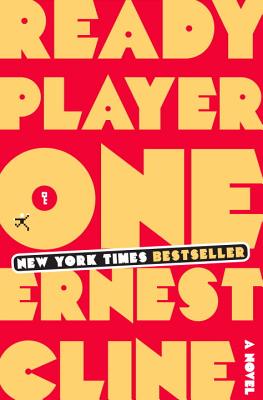
Ready Player One

by Ernest Cline
ages: adult
First sentence: “Everyone my age remembers where they were and what they were doing when they first heard about the contest.”
Support your local independent bookstore: buy it there!

It’s 2044, and as a result of the energy crisis, the world has basically gone to pot. That’s okay, though, because most people spend their lives in OASIS, a virtual utopia where you can be whomever and whatever you want. Five years ago, the creator of OASIS died, and as his dying act, set up a contest: be the first one to find the Halliday “Easter Egg” and you will inherit Halliday’s fortune of billions of dollars. Wade is one of those obsessed with the contest, and with Halliday, which means he’s into all of Halliday’s interests: everything 80s. As Wade delves deeper into the contest, he finds friends and allies and makes enemies who will go so far as to kill him in real life in order to get to the prize.

This was a last-minute impromptu buddy read with Kelly from A Written World. We traded questions for our review; click through to her blog to see her answers to my questions.

1. This book has had a lot of hype surrounding it around the blogosphere. Did it live up to the expectations you were expecting as a result?
Actually, I missed the hype surrounding this one (one of the side benefits of working, I guess) — I did pick it up as a result of a review on a friend’s blog, though — and so I went in with a fairly clean slate.  I suppose, if I had read a lot of hype, if it had been one of those books I’d been seeing everywhere, I would have had a worse attitude. I think going in with no expectations was the best way to go here.
2. What did you think of Wade, the main character? Was he he someone you could enjoy enough to read the book from his perspective, or did he bother you?
Oh, I liked Wade. He wasn’t perfect, but I’m enough of a geek (and I had two geeky brothers as well) to relate to the social awkwardness, the obsessive side of his personality, and the way his mind worked. He was a fine narrator for me. (Though I think I’d like to see the world from Aech’s point of view.)

3. What were some of your favourite (geeky) references?
Ah, I ate up the 80s stuff.  Seriously. War Games! (Loved the movie.) Ladyhawk! (Ditto) All the little ones (Back to the Future, Hitchhiker’s Guide, Knight Rider, John Hughes movies, Pac Man) that were sprinkled throughout just gave me little bursts of glee. The only things I didn’t get were the gaming references — I wasn’t, and am not now, a gamer — but Cline explained things enough that it didn’t bother me that I didn’t get the in-jokes.

4. What did you think of the secondary characters? Did any stick out for you?

I loved Ath3na. Seriously, she rocked. She’s smart, she’s determined, and she was awesome enough to get to the top on her own accord. (I kept wanting to say, “In your face, gamer boys.” But maybe that’s a bit harsh.)


5. What did you think of the whole idea of the book? Did the game and the Dystopian aspect work for you?

I’m not sure the dystopian aspect worked. As I was talking to my husband about the book, and he kept asking questions about the world: how do they survive? Where do they get food?  Money? Everyone in the world can’t all always live inside the virtual one? But, I’m not sure I really cared. Because I got sucked inside the virtual world as well, wrapped up in the game. The parts when Wade wasn’t playing — like after Art3mis dumped him — were the sluggish ones for me. But, when Wade was fully immersed in OASIS and the game, the book was hard to put down.

Sunday Salon: The State of the TBR Pile 4

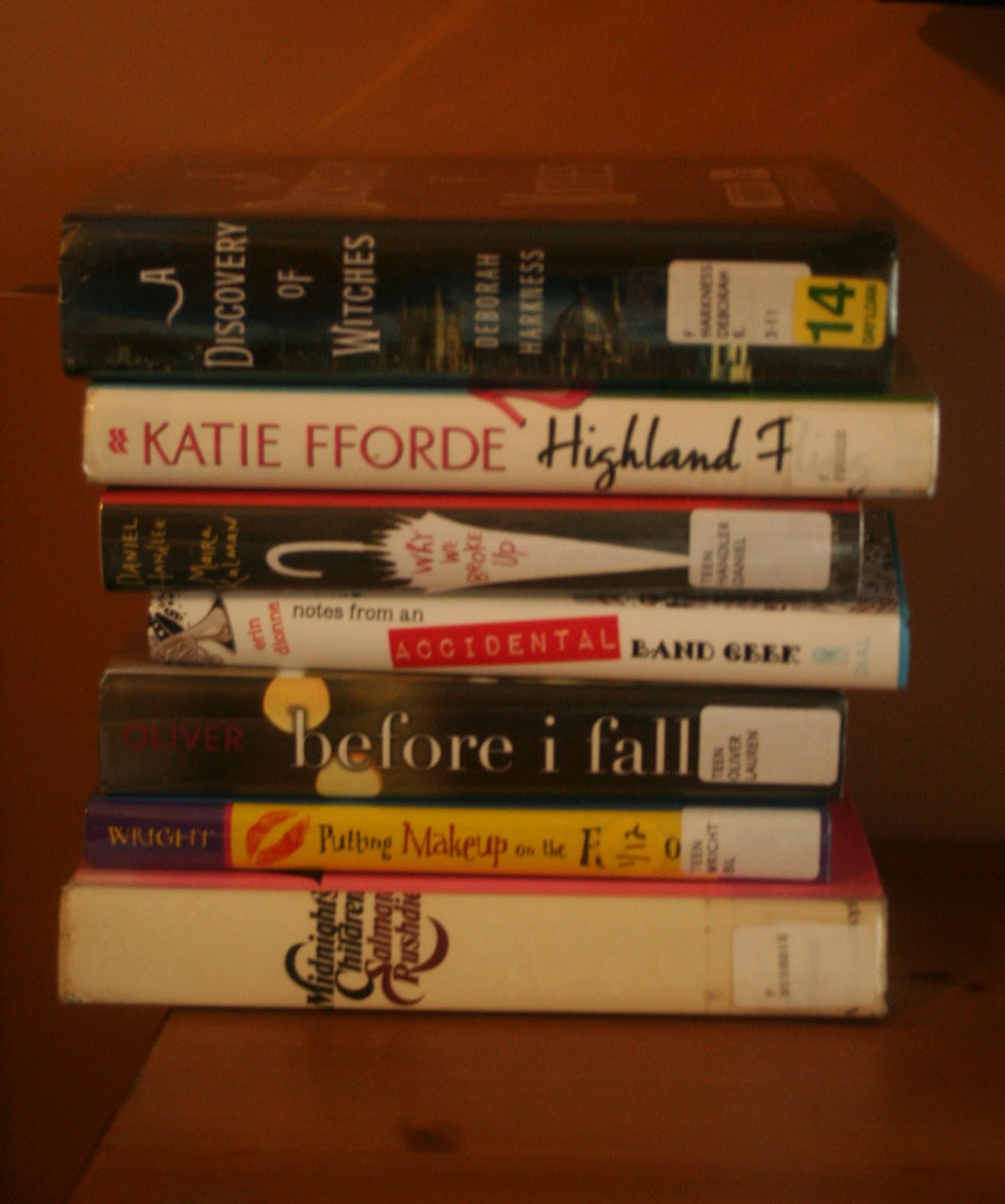
What’s sitting on my reading pile (not as much as usual…) this Superbowl Sunday:

A Discovery of Witches, by Deborah Harkness (Because everyone’s raving about it at work. M has absconded it, however, and I don’t know if I’ll get it read before it’s due. Hopefully, I can renew it.)
Highland Fling, by Katie Fforde (The author was recommended by a friend. Also, because the local library is doing their winter adult reading program, and I need a romance to finish it.)
Why We Broke Up, by Daniel Handler and Maria Kalman (Because it won a Printz honor. Though, to be fair, I had it on my pile before it won.)
Notes from an Accidental Band Geek, by Erin Dionne (Left over from last month.)
Before I Fall, by Lauren Oliver (Because I was curious about Oliver after reading Leisl and Po.)
Putting Makeup on the Fat Boy, by Bil Wright (Because it won a Stonewall award.)
Midnight’s Children, Salman Rushdie (Actually, I’m not sure about this one. I want to read some Rushdie, but I’m not sure if this is a good place to start. Suggestions??)

What’s on your TBR pile this week?

Outcasts United

by Warren St. John
ages: adult
First sentence: “On a cool spring afternoon at a soccer field in northern Georgia, two teams of teenage boys were going through their pregame warm-ups when the heavens began to shake.”
Support your local independent bookstore: buy it there!

The thing I like best about St. John’s writing is that, no matter the subject, he really makes you care about it. Seriously. Granted, this one has a subject — a woman who creates soccer teams, and an outlet, for refugees in Clarkston, Georgia — that is easy to care about. But, St. John doesn’t do the predictable thing and make the bok Inspirational and Heart-Warming. No, he does the good thing, and makes the book interesting.

The focus is on Luma Mufleh, who grew up in Jordan loving soccer. St. John touches on, but doesn’t delve into Luma’s trouble with growing up in such a restrictive environment for girls. She comes to the U.S. for college, and much to her father’s disappointment, decides to stay. She tries a few things, coaching soccer on the side, before literally falling into creating teams for the boys of Clarkston.

Clarkston, Georgia was once a sleepy little southern town. However, over the last decade or so, it has become a place for refugees — from all over the world, but mostly Africa — to begin their lives in the U. S. You can imagine (and, unfortunately, the town lives up to that stereotype) how that goes over in the all-white, good-boy South. The problem is that because there isn’t much infrastructure for them, the kids were getting lost in the cracks, turning to gangs, drugs and violence.

Enter Luma’s soccer program. She’s not an easy coach — to his credit, St. John never glorifies her: she is harsh, she is unforgiving, she is tough, she is demanding. But above all, she is dedicated and she cares. Amazingly, this combination of toughness and caring works, especially for the younger kids. Not only does Luma give them a purpose, family and a place, she teaches them to win games.

As I mentioned before, it’s not an Inspirational book, and yet there is a message: one person can make a difference. It’s just not one that St. John beats you over the head with, thankfully. Instead, he found a good story, spent a while researching it, and told it in a compelling way. Which makes this one excellent book.

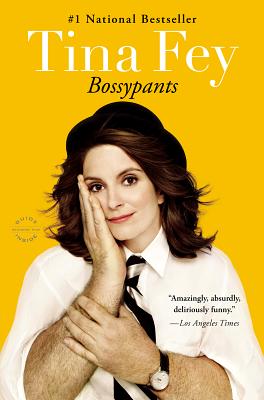
Audiobook: Bossypants

by Tina Fey
Read by the author
ages: adult
Support your local independent bookstore: buy it there!

I really don’t know why Tina Fey felt that she needed to write a memoir. Perhaps it’s because this is the last season of 30 Rock (I hope; I really can’t imagine the show without Alec Baldwin), and she wanted to try her hand at writing… something not television/movie related. That said, it’s a good book. She goes pretty much chronologically through her life: from a childhood in West Philadelphia, to college at the University of Virginia, to her time in Chicago with Second City, to her years at Saturday Night Life, to 30 Rock. In there, she fits her marriage and birth of her first child as well.

Like most comedy, it’s uneven. Some parts are horribly hilarious (like her Doomed Honeymoon), some parts she just lectures (about sexism in politics, for example) and the jokes fall flat (but perhaps they were meant to). That said, it was entertaining enough — Fey’s self-deprecating style is really pretty funny — to keep me sitting in the car listening long after I had gotten to where I was going. My favorite sections were about the development and production of 30 Rock, perhaps because I’ve been a fan of the show since it started. But, I found that’s where the biggest laughs were for me.

A note on the audiobook: on the one hand, I really enjoyed hearing Fey read her book. She did voices (her Alec Baldwin is really quite good), and we got the audio clip of her first Sarah Palin Saturday Night Live. She did mumble on occasion which bugged me until I checked the print version and realized that she was mumbling the asides. But she kept saying “check the pdf for this picture. Really. You won’t regret it.” I never did. I listen to the books in the car, and I’m not going to take the CDs out just so I can look at a picture. I did, however, check them out in the print edition. And they were, as she promised, quite hilarious.

So would I recommend the audio book for this one? Well, yes… if you’re like me and willing to check out the print edition for the extra laughs.