Crossing to Safety

by Wallace Stegner
ages: adult
First sentence: “Floating upward through a confusing of dreams and memory, curving like a trout through the rings of previous risings, I surface.”
Support your local independent bookstore: buy it there!

I spent a good portion of the novel trying to figure out how to describe it. And what I came up with was: thoughtful. It was a thoughtfully written work, one that made me thoughtful as I read it.

It’s the story of two couples in the 1930s. The men — Sid and Larry — are both English PhDs, trying to make it in academia. Their wives — Charity and Sally — are instant friends when they meet. It follows their friendship and lives through ups and downs for years, up until the time of Charity’s death. It’s told from Larry’s point of view, and while I intellectually know it’s not autobiographical, I never could shake that feeling that Stegner was telling, somehow, his story. Because, as Larry points out near the end, this isn’t your typical novel.

How do you make a book that anyone will read out of lives as quiet as these? Where are the things that novelists seize upon and readers expect? Where is the high life, the conspicuous waste, the violence, the kinky sex, the death wish? Where are the suburban infidelities, the promiscuities, the convulsive divorces, the alcohol, the drugs, the lost weekends? Where are the hatreds, the political ambitions, the lust for power? Where are speed, noise, ugliness, everything that makes us who we are and makes us recognize ourselves in fiction? 

They aren’t here. What we get is a thoughtful book, a reflection on people — though in the end, I was unsure if it was really about all of them, and not solely Charity’s story — on relationships, on marriage, on work (especially in academia; there was much I recognized there). It was beautifully written, mostly in flashbacks; descriptive enough that I could picture the Vermont woods even though I’ve never been to that part of the country, and yet not overly flowery in its language. Stegner has a poet’s sensibility for choosing the right word for the right circumstance in order to get across a particular feeling. (My vocabulary expanded while reading this. Honestly.)

It’s not flashy and loud, and not much happens. But it moved me to tears and to think and reflect on how I’m interacting with those around me; I saw much to much of myself in Charity, and I’m not sure that’s always a good thing. As I said before: it’s a thoughtful book. And I’m happy to finally have read some Stegner; he’s an excellent writer.

Seriously… I’m Kidding

by Ellen DeGeneres
ages: adult(ish)
First sentence: “Dearest Reader, Hello.”
Support your local independent bookstore: buy it there!

The point of this book, as Ellen so cheerfully tells us at the end, is for the reader to be happy. Well, considering that it’s Ellen DeGeneres, and that the book is really just a collection of amusing, if meandering and sometimes odd, thoughts and observations, I think I can safely say that, for me, the goal has been achieved.

This book made me, for a couple hours at least, happy. Or amused, at the very least.

It read very much like Ellen’s stand-up comedy: not laugh-out loud funny, but rather companionable, amusing, enough to get a smile or a even an occasional giggle. The book is really formatted as one very long dinner party conversation: there’s a bit about Ellen’s life and her experiences as a talk show host (she does get serious, but only briefly in small doses, and then backs off with a joke or two fairly quickly; the most serious she got was when writing about her experience as an American Idol judge), but mostly it’s just observations on everything from littering to manners to yoga to gardening. There’s no real coherent theme, there’s no overlying lesson, there’s no deep thoughts (even if there is a chapter on deep thinking).

But, for what it is — a congenial conversation between Ellen and her “readers”/fans — it’s a fun little book. Some of the chapters are quite funny (like the “Meditiation” chapter — about four blank pages followed by ” Ahhhhh. Doesn’t that feel better?”), others not so much (the one about writing Pro/Con lists kinda fell flat for me). In the end, though: it was an amusing way to spend an hour or so, and I’m not sad I picked up the book.

Which means, I guess, that Ellen did the job she set out to do.

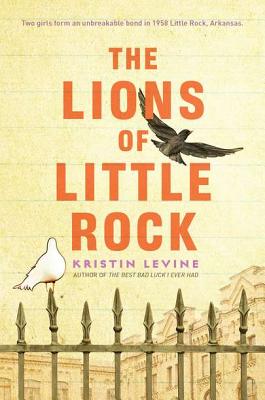
The Lions of Little Rock

by Kristin Levine
ages: 11+
First sentence: “I talk a lot.”
Release date: January 5, 2012
Support your local independent bookstore: buy it there!
Review copy provided by the publisher.

It’s 1958 in Little Rock, Arkansas. History has told us that the year before that the school district in Little Rock were forced to allow 9 black students — who came to be known as the Little Rock 9 — into the schools. But what happened after that?

Levine tells the story of the school year the year after the Little Rock 9, a story of segregation and fighting, of learning and growth. The main character is a white girl, twelve-yaer-old Marlee Nesbitt, who is incredibly shy. Painfully shy. Never talks shy. And then she meets Liz, who is the opposite of Marlee in every way.  They form a friendship, and Liz helps Marlee come out of her shell a little bit. And then it turns out that Liz is actually black, and she’s kicked out of school. There begins Marlee’s quest: to keep her friend, to bring her older sister back home (she’s been sent to live with their grandmother since the high schools are closed), to finally get the courage to speak out against segregation.

It’s a lot to pack into a middle grade novel, but Levine’s real talent is making the huge seem intimate. This book could have easily gone into either full-on-lecture or Southerners-are-stupid mode, making it trite and one-dimensional. By focusing on the relationship between Marlee and Liz, Levine has made history and race issues personal: you root for these two friends, you want them to be able to be friends. And you sympathize with nearly everyone in the book (even the negative characters have some redeeming qualities; no one is merely a stereotype). It’s full of history as well; from the early days of the integration movement, to the basic atmosphere of the late fifties. One of my favorite parts was Marlee’s first experience riding in a commercial airliner. It was quite priceless.

It’s not a perfect book; it starts slow and took me a while to get into. But, once I did, I was richly rewarded with a complex and engaging story.

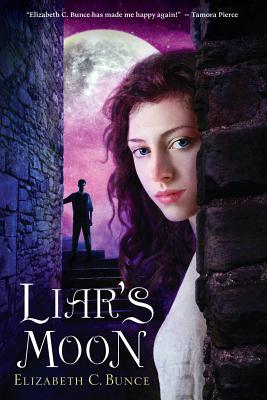
Liar’s Moon

by Elizabeth C. Bunce
ages: 14+
First sentence: “I’d have gotten away if that little guard hadn’t cracked me in the eye.”
Support your local independent bookstore: buy it there!

When we last left our fair Digger/Celyn (if you really don’t want spoilers for Starcrossed, you ought to read that one first and then come back), she had survived the winter snowed in at a remote mountain castle, and helped rescue a prince and incite a rebellion against the ever-increasing militant state of her country and town. Now she’s back in Gerse, doing what she does best: thieving. She never expected to get caught, let alone thrown in jail with Lord Durrell, who’s in there as the main suspect in his wife’s murder. Digger gets enlisted to do the other thing she does best — digging — in order to prove Durrell’s innocence. Along the way, she finds herself in possession of more than one secret she wishes she didn’t have. Ones that people may do everything in their power to keep hidden.

Much like the first book in this series, it’s easy to get lost in Digger’s world. For starters, she’s a fascinating, complex character, full of both flaws and virtues. She’s smart, clever, and strong, as well as loyal enough to go out on a limb for her friends. It’s amazing to sit back and watch her do her stuff.

In addition, this one reads like a historical fantasy mystery novel: if Durrell is innocent (and is he really?), who did kill his wife? And what about all the mysterious goings on with both Durrell’s family as well as his wife’s family? Not to mention the rebellion… The book has a different feel than Starcrossed — grittier is the first word I can think of — and yet is just as rich and engaging and thrilling (and full of swoon-worthy heroes, though I missed Prince Wierolf) as the first book. (Though you do need to read Starcrossed before you read this one. Then again, why wouldn’t you?)

And then there’s the twist at the end: some you saw coming, but the very end… completely out of left field in a most delicious way. I can’t wait to see what Bunce does next with Digger and this world.

Audiobook: At Home

by Bill Bryson
read by the author
ages: adult
Support your local independent bookstore: buy it there!

When Bill Bryson and his wife moved back to England, they purchased a rectory built in 1851. I’m not sure if he thought much of it when he first moved in, but after living there a while, he started thinking about how little he knew about his house, and the history that surrounded it. Thank heavens for his curiosity, because out of it was born this book:  a fascinating history of the world without leaving the home.

Initially, that sounds a bit dry as well as overly ambitious: how can one tell the history of the world through the house? The short answer: you can’t. What you can tell is a general history of how homes came to be what we find them today in Great Britain and the U. S. Bryson ends up focusing on those two countries, as well as mainly on the 19th-century, giving the book a much less ambitious perspective. And because Bryson is a thorough researcher and a masterful writer, this book — which is stuffed full of facts and people you can’t hope to begin to keep straight — is downright fascinating. From the history of how tea came to be England’s national drink, to the Eiffel Tower, to indoor plumbing and the telephone, to the rise of the middle class, to sexual repression in Victorian England: this book seriously has it all.

I listened to this one on audio, which possibly wasn’t the best way to interact with this book. (That, and Bill Bryson sounds nothing like I thought he would.) I kept wanting to flip back chapters, to reread earlier passages, to find earlier references to the people and circumstances that he refers back to. He does do a well enough job reminding the reader about who or what things were, but I still wanted to go back and see it for myself. That said, the information itself was fascinating. (I also wish I could have marked things, because for the life of me, I can’t remember half of what I heard.)

It’s fascinating not just because history is fascinating, but because Bryson makes it so. It’s  his snide asides (said in a dead-pan voice, so we know that he’s poking fun), and his brilliant observations, and the sheer amount of research that he did to write this book that really makes this book worth reading.

Then again, I’m not sure Bryson can write a book that isn’t worth reading.

Sunday Salon: State of the TBR Pile 2

I had thought I had more left over from last month, but it turns out that there’s only 2. I wonder, though, if it’s too much to think that I can finish most of these before the end of the year?

Archer’s Quest (for Mother-daughter book group in January)
The Snow Child (for work)
The Heroines (I got the review copy because it sounded interesting)
Tuesdays at the Castle (I will read this, I promise. Really.)
Pie (A Cybils nominated book that caught my eye)
Dragon’s Castle (Saw this at Fuse #8, and it sounds good)
Crossing to Safety (Last one for the Great Blogger Book Swap.)
Child of the Prophecy (for a buddy read with Kelly)
Rebel Island (My goal is still to finish this before the end of the year.)

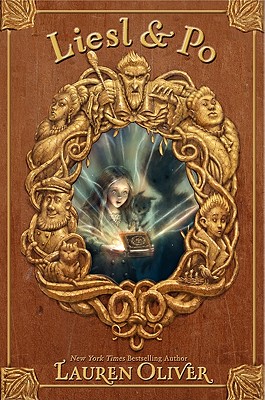
Liesl & Po

by Lauren Oliver
ages: 9+
First sentence: “On the third night after the day her father died, Liesl saw the ghost.”
Support your local independent bookstore: buy it there!

Liesl is all alone in the world. Her father has just died, and not only is her stepmother keeping Liesl locked in the attic, she wouldn’t even let her say goodbye to her beloved father. Given this, Liesl is about to give up entirely on life, when the ghost appears in her room, drawn by the light. Po — its neither boy nor girl, having been on the Other Side long enough to lose its identity — and its companion, Bundle (neither dog nor cat, but both), show up to keep Liesl company.

This little visit changes Liesl’s life entirely: she discovers a friend in Po, and then given courage by Po’s conversations with Liesl’s father, she decides to take her father’s ashes back to the house where she was born to bury them. This leads to an adventure: another friend, Will; some mix-ups; and the Greatest Magic in the World.

It’s a quiet, sweet little book, with just a dab of magic, about dealing with loss and finding happiness again. It’s a very hopeful book; as Oliver points out in the afterword, books like these are about finding the happy ending that life often denies us. There are Messages in the book, but woven in the old-fashioned storytelling, thankfully not blatantly beating us over the head. It’s a grim tale to begin with: shades of Cinderella, a gray and dark world filled with adults who actively dislike children. However, there is a happy ending: the bad guys get their comeuppance, Liesl finds a new family, and there is sunshine and gladness in the world again.

All which brings a little sigh of contentment when you finish the book.

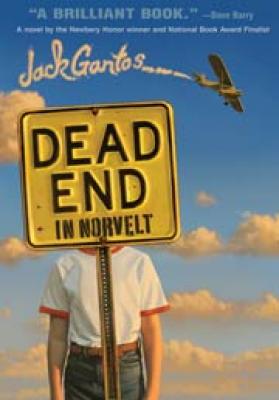
Dead End in Norvelt

by Jack Gantos
ages: 12+
First sentence: “School was finally out and I was standing on a picnic table in our backyard getting ready for a great summer vacation when my mother walked up to me and ruined it.”
Support your local independent bookstore: buy it there!

From the get-go, I found this book to be weird. It’s basically the story of Jack Gantos (no, I don’t know how much is real and how much is fiction, but it’s in the fiction section, so let’s assume it’s more fiction than fact) who lives in the (real) town of Norvelt, Pennsylvania and the summer (of 1962) he spent grounded. For mowing down his mother’s cornfield. On his father’s orders.

He’s let off as often as his next-door neighbor, Miss Volker, needs his help. She’s the town medical examiner and obituary writer, but severe arthritis in her hands is keeping her from doing very much, and so she gets Jack to help her out. This leads to not only some pretty long-winded, but sometimes interesting, stories about the original residents of Norvelt. Not to mention Norvelt history (was Eleanor Roosevelt really involved?). There’s also a bit of a mystery thrown at us at the end: all the original residents are dropping like flies, and someone is finally asking if they really are “natural causes”, and there’s a band of Hell’s Angels that are burning down houses in town.

As I mentioned, I just found this one weird. Sure, it was sometimes funny: some of the situations that Jack finds himself in are quite, well, surreal and odd, which made them amusing. But, for the most part, I just found myself wondering what was real and what was fiction. I wished for an author’s note at the end, and was quite disappointed when Gantos chose not to include one. I never really connected with any of the character; aside from the spitfire Miss Volker, everyone else seemed to be cliches: the devoted mother, the tough father, the bully-ish best friend (who was a girl), the greedy business owner, the annoying busybody. I never cared enough about the characters to read through all the history, and found myself skipping pages.

That said, maybe I just wasn’t the right audience for this one. Perhaps some 11- or 12-year-old boy would find Jack and his adventures the right mix of history and fun.

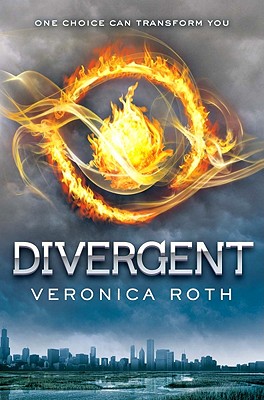
Divergent

by Veronica Roth
ages: 14+
First sentence: “There is one mirror in my house.”
Support your local independent bookstore: buy it there!

In what used to be known as Chicago in this post-apocalyptic world, humanity is divided into four factions, each devoted to developing a particular virtue: Candor, the honest; Erudite, the intelligent; Amity, the peaceful; Dauntless, the brave; and Abnegation, the selfless.

Beatrice has grown up in Abnegation, but doesn’t quite feel she fits. She’s not as selfless as her parents and brother, she’s always questioning her own inner motives. She sees kids from the other factions and wonders if she wouldn’t fit in better there. Then, at age 16, she is given a test and the opportunity to stay with her faction or choose another one. And she discovers that she’s Divergent.

We spend most of the book wondering, along with Beatrice — who christens herself Tris after she joins Dauntless — what the heck Divergent is. On one level, this is annoying; but by the end, when it all makes sense and you realize that the timing was perfectly right for it, all is forgiven. It’s an intense book and a violent one, as we follow Tris through her brutal training to join the Dauntless faction. As she goes through the training, Tris discovers two things: that the people in the factions — including her birth faction — aren’t nearly as altruistic as they proposed to be. And that romance can blossom in the oddest places.

There will be inevitable comparisons to The Hunger Games (it’s really a good book for those who love Hunger Games and are wondering what to read next): there’s a society that’s become corrupt, and a girl who doesn’t fit the norm who has the potential (yes, there is a sequel, at least) to change that society for the better. Though Tris is a more active and less selfish heroine than Katsa was, which makes her more interesting in my book. It’s less black-and-white, and more complex; Roth does an excellent job balancing the good and bad in every faction, providing us with not only the worst, but also both the best and the human in human beings.

It’s compelling and engrossing storytelling as well, with a little bit of everything — romance, politics, action, tension — for everyone. An excellent start to a good new series.

Christmas Gift Tradition: American Girl Dolls

Over the years that I’ve participated in the Virtual Advent, I’ve talked about lots of things: books, the tree, music… but never toys. I’m changing that this year. 

When I was younger, my mother gave to me a couple porcelain dolls that she’d had when she was a child. I loved those dolls, played with them, and cherished them. (Granted, this is all in retrospect; maybe I didn’t.) They, somehow, managed to survive me as a child, and I saved them to pass down to my daughter.

And then I had four girls.

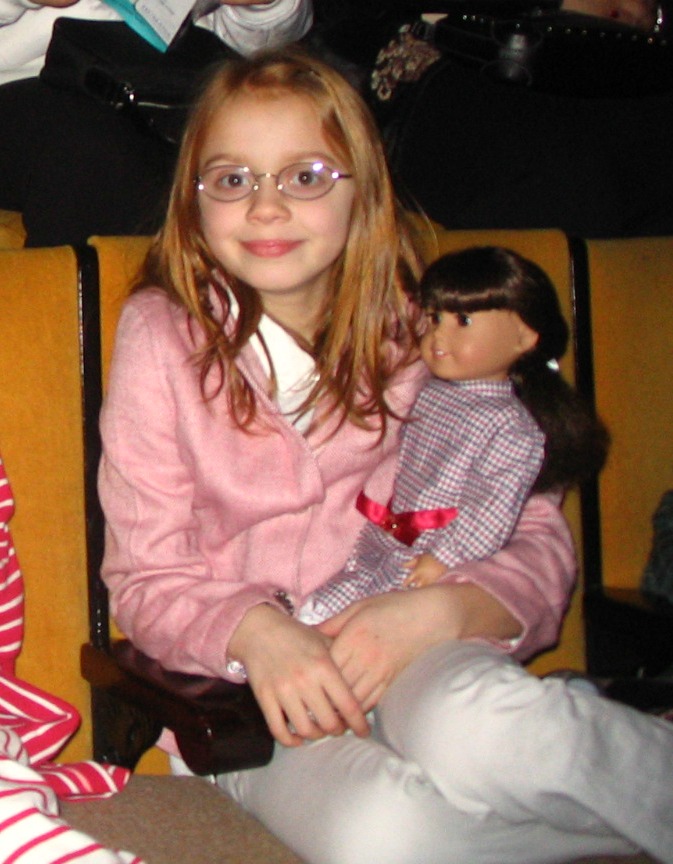
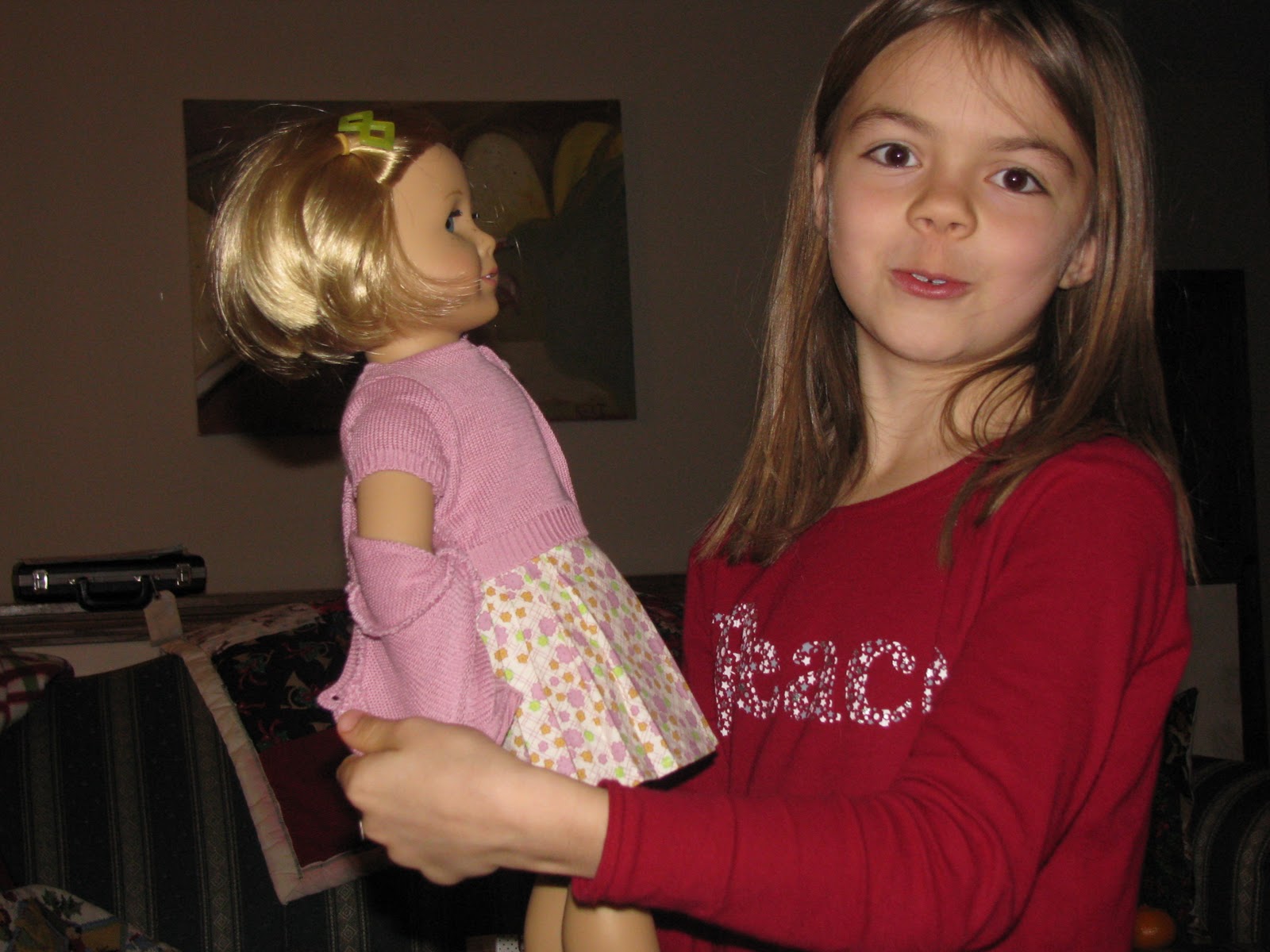
There was no way I could pass down two dolls to four girls (well, there was only three at the time I made the initial decision), and I wanted them to have the same sort of experience with dolls that I had as a child. The Christmas M was in second grade, we were searching for gift ideas for her, and I hit upon the perfect solution: American Girl Dolls.

I feel a need to justify this a bit: they are expensive, somewhat extravagant, and definitely over-commercialized. There is a part of me that dreads getting the catalog whenever it shows up, because there’s always more in there that the girls want then we can get.

But.

The dolls are well-made, the clothes are well-made, they’re not Barbies (a big plus in my book!), and they are made to be played with and yet will last to be handed down. And there’s enough stuff to last through birthdays and Christmas presents for a few years.

Additionally, the historical ones — which are the ones that I require they choose from — are fascinating in their detail (which is hopefully accurate), and they make history accessible and fun to the girls. But best of all, they come with books. Possibly not the best-written books, but ones that a second-grader can read on her own, ones that help make the doll that much more interesting.

Thankfully, M (who picked the now-retired Samantha) and C (who picked Kit), and now A (who has picked Molly) were able to find dolls that fit their personality, whose stories they were interested in, and ones they loved to pieces. M no longer plays with her doll, having put it in storage for the time when she (hopefully) has a daughter she can pass the doll and books down to.  C still keeps hers around, playing with her on occasion, but mostly keeping her because she likes to have her things around her. A is over the moon with anticipation of getting her doll this Christmas. And K has already spent hours with the catalog, looking at the dolls, trying to decide which one she will like in a couple of years.

It may be extravagant, but it’s a tradition I’m glad to have started with the girls.

I’m not the only one posting today. Check out these other posts:

Martina Kunz @ Book Drunkard