A Bloggy Thank You

I love this time of year. Partially because I love giving (and getting) presents. And one of the few places I trust to give me books I’ll like is the book blogger holiday swap, which is why I do this every year.

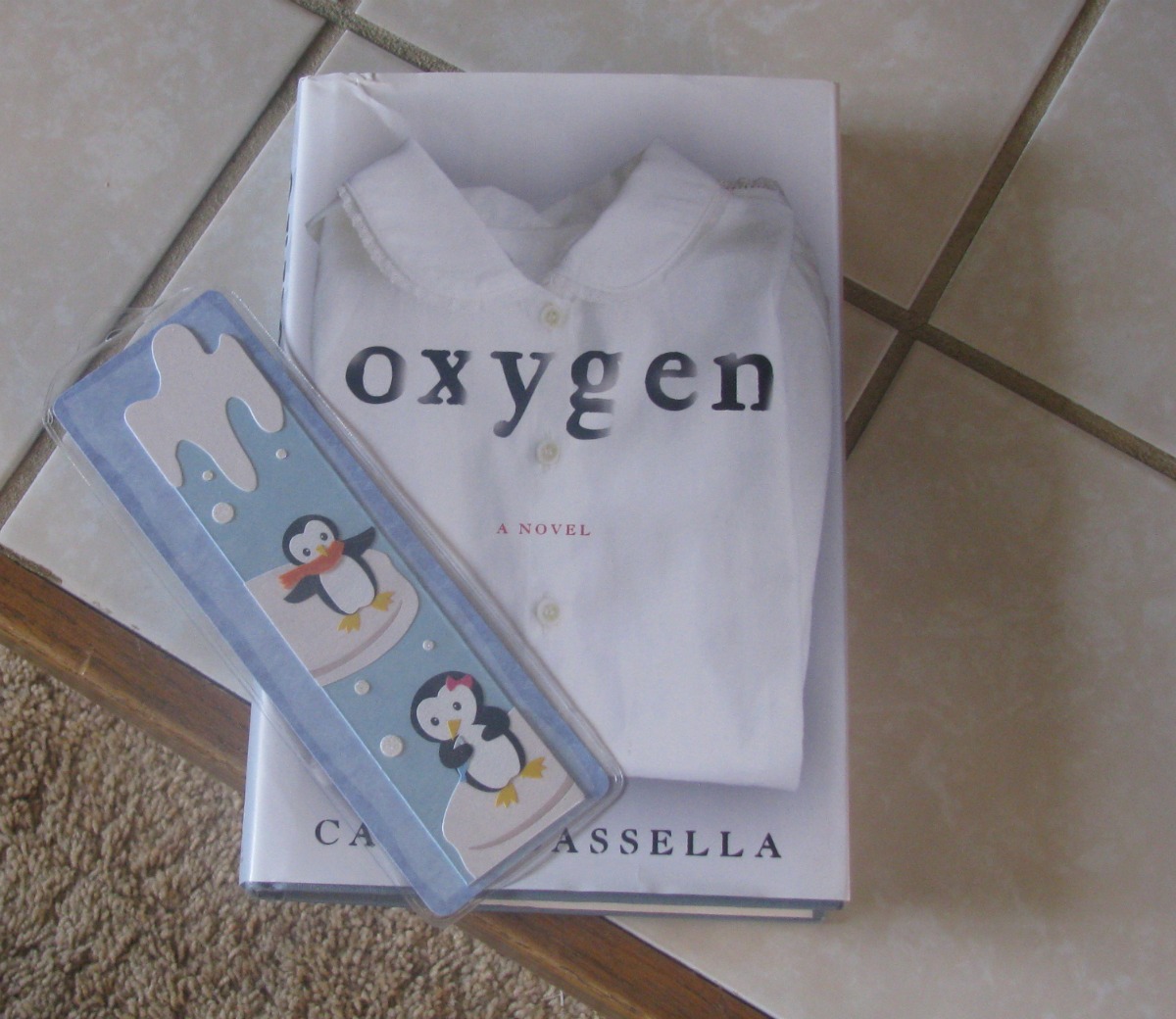
I got my package in the mail yesterday (squee!) and since it wasn’t wrapped, I thought I’d throw out a thank you before Christmas to Amy at The House of the Seven Tails for the lovely present she sent.


I can’t wait to read it! (And the penguin bookmark is very cute!)

Thank you!!!

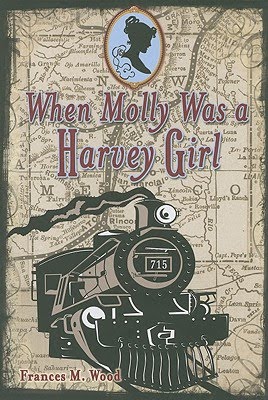
When Molly Was a Harvey Girl

by Frances M. Wood
ages: 11+
First sentence: “By late summer, Molly could always smell the corn growing.”
Support your local independent bookstore: buy it there!
Review copy sent to me by the publisher.

When I first picked up this book, I wasn’t quite sure about it. It’s an interesting premise: a couple of sisters, orphaned by their recently deceased father, decide that there is more opportunities for them out west than in Streator, Illinois. Actually, it’s the older sister, Colleen, 19, who decides that. She signs up to be a Harvey Girl — young women who worked the restaurants at the train depots on the Atchinson, Topeka and Santa Fe Railway — and drags her younger sister Molly, 13, along. The problem is Molly isn’t old enough to be a Harvey Girl, so (because she’s tall for her age), they pass her off to be 18.

I thought to myself: this can’t be a middle grade book. Really. A 13-year-old passing for an 18-year-old? But, you know, it worked. And it worked for middle grade readers (and up; I could see a teen liking this book, especially a history buff). There’s so much to enjoy about the book. Mostly set in New Mexico, Wood writes with an affection for the landscape and the time period. It’s a rich book, with many layers: there’s the initial deception that the sisters pull off and all that entails, sure. But it also touches on race relations, the hunt for marriageable spouses at that time period, envy and jealousy and contention among the girls, and most of all, the hard work it took to be a Harvey Girl.

And then there was the food. It made my mouth water, the descriptions of the dishes that the Creole chef Gaston created. Heavenly stuff.

There’s so much going on, it would seem weighted down. But, Wood remembers her audience (but doesn’t talk down to them!), and keeps Molly grounded in the story. She’s a great character to follow, and while the book does take a while to get started going, it’s really worth the time put in. An excellent read.

(Just for the record: because this is a Cybils nominee, I’ve been asked to make sure y’all know this is my opinion only, and not that of the panel.)

Two Dynamic Girls

Emily’s Fortune
by Phyllis Reynolds Naylor
ages: 8+
First sentence: “When eight-year-old Emily found herself alone in the world, she didn’t have much: a few dresses, a couple of books, and a small green turtle named Rufus.”
Support your local independent bookstore: buy it there!

Emily, who was perfectly happy living with her mother until the day she died in a freak carriage accident, is now an orphan. She has no idea what to do until a letter arrives from her distant Aunt Hilda, who is willing to take her in. However, that means two things: 1) Emily has to get there first. By herself. Which means avoiding the “child catchers”: the people who want to take her and put her in an orphanage. And 2) her mean old Uncle Victor is going to everything he can to stop that from happening. Mostly because, as it turns out, Emily inherited a very large fortune.

It’s a rollicking adventure, somewhat in the style of Lemony Snickett (except with a happy ending). Uncle Victor makes a great bad guy, channeling Snidely Wiplash as he poses and attempts to get Emily (and her fortune). Naylor captures the style of old fashioned serials perfectly, by ending each chapter with a HUGE (literally) question. That particular gimmick drove me bonkers after a bit, but I can see how it would really tickle a beginning chapter book reader.

In all, a fun little book.

Happy Birthday Sophie Hartley
by Stephanie Greene
ages: 9+
First sentence: “On the whole, Sophie felt that the conversation about her birthday present had gone very well.”
Support your local independent bookstore: buy it there!

It’s almost Sophie’s double-digit birthday. It’s a very important birthday, because you only go from single to double digits once in your life. And all she wants is a baby gorilla. Really. Shouldn’t be too hard, should it.

Well, except her family is crazy: her two older siblings are in the middle of their own dramas: sixteen-year-old Thad wants a car for his birthday, the week after Sophie; and 14-year-old Nora wants to move out of the room she and Sophie have shared for forever and into the attic. Plus she’s into boys. Ew.

That, and one of Sophie’s BFF is more into lacrosse than anything else, and maybe, just maybe that’s changing their friendship. The more Sophie thinks about it, the less she’s sure about this whole growing up thing.

It’s a sweet little story, one that deals with change and siblings and expectations and friendships, and does it with humor and creativity. Sophie’s a great character: full of life and color and excitement. And the fact that everything works out in the end is just a wonderful bonus. This is the third in the series, and if the other two are as good as this one, then it’s a great little series for early middle grade readers.

(Just for the record: because these are Cybils nominees, I’ve been asked to make sure y’all know this is my opinion only, and not that of the panel.)

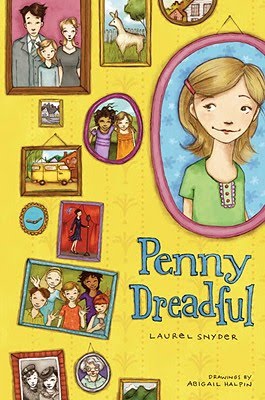
Penny Dreadful

by Laurel Snyder
ages: 10+
First sentence: “Penelope Grey knew she was lucky.”
Support your local independent bookstore: buy it there!

Charming.

I really don’t know if I was expecting anything different from this. It’s got the look of something that would be charming. And from the very first sentence, I knew I was going to like Penny.

Penelope Grey is the only daughter of The Greys: rich, well-connected, busy (you know the type: Dad always gone to work, Mom always gone to some society event or another). She’s home alone with the staff, schooled by tutors. Her friends are social climbers. The only thing Penelope really has in her life are her books. And her life is nothing like those in her books. One day, she decides, almost on a whim, that what she needs is a Big Change, like those in books. So, she wishes. And her dad quits his job. Unfortunately, that makes life worse, not better. So, Penelope wishes again, and her family inherits a house in the country. They move there, and while there are still challenges, Penelope — now Penny, because it seems to fit better — finds that happily ever after doesn’t necessarily mean perfect. And that’s just fine.

See? Charming.

It has much of the same feel as The Penderwicks: old-fashioned and modern all at the same time. It espouses many of the same ideals: that kids need a place to run, that living in a small town, knowing all of ones neighbors, and having friends and exploring with them is so much better than having money and all the stuff that comes along with it. It’s a humble little book: there isn’t much of a plot (just enough to carry the story), and while there’s conflict, it’s really a character-driven book. But it works, and it works well because Penny is so earnest, so sweet and so winning. And because Snyder’s writing is that perfect balance between elegant and accessible. It flows effortlessly off the page, engaging the reader, and making us want to get to know Penny and experience things with her. However, it is also a bookish book: Penny finds questions and answers and hope in the pages of her books, which helped endear her to me, particularly. Of course.

Wonderfully, perfectly charming.

(And as for all the “controversy” surrounding the gay characters that are married in the book… yes, I can see where you’re coming from, but on the other hand, I feel that it’s a bit silly. Use it as a discussion point, people. Don’t get all up in arms about it. And I really don’t see a need to ban the book. Please.)

(Just for the record: because this is a Cybils nominee, I’ve been asked to make sure y’all know this is my opinion only, and not that of the panel.)

Because of Mr. Terupt

by Rob Buyea
ages: 10+
First sentence: “It’s our bad luck to have teachers in this world, but since we’re stuck with them, the best we can do is hope to get a brand-new one instead of a mean old fart.”
Support your local independent bookstore, buy it there!

Ever have your life and perceptions completely changed by the influecne of one person?

Ever have a teacher that made school amazing, that you will always remember as completely wonderful, no matter what? (Hopefully, the answer is yes.)

Mr. Terupt, a fifth grade teacher, is one of those people. New at teaching, he is not only enthusiastic, but wise and inspiring. Told through the eyes of seven of his students — Jessica, Alexia, Peter, Luke, Danielle, Anna and Jeffrey –this is the story of the year they had with Mr. Terupt, and how his subtle influence changed their lives for the better.

It’s a quiet book, the life-changing accident notwithstanding. The impact is local, the challenges small. What really impresses about this book was that Buyea juggled seven different narrators, giving each one a unique voice and role in this story. I’m sure this particular story could have been told another way, but it wouldn’t have been nearly so effective. Because it’s a small story, it’s essential that the characters pull their weight, and Buyea makes sure that happens. It’s not anything major or flashy; the beauty lies in the simplicity of the tale. It’s accessible to kids, and yet packs a powerful punch for those older than fifth grade. There are things to think about, to talk about, to ponder on. But, perhaps best of all, it does all this without being preachy.

It’s an excellent book, and Buyea is definitely an author to keep an eye out for.

(Just for the record: because this is a Cybils nominee, I’ve been asked to make sure y’all know this is my opinion only, and not that of the panel.)

Wildfire Run

by Dee Garretson
ages: 10+
First sentence: “The roar came from deep in the earth, growing louder as it raced toward the surface.”
Support your independent bookstore: buy it there!
Review copy sent to me by the publisher.

Luke Brockett is the president’s son. It’s not too bad; he doesn’t get to see his dad much, but he has really cool Secret Service agents hanging around. Not to mention a pretty cool best friend, Theo, who loves to work on robots as much as Luke does. They’re up at Camp David, enjoying some quiet time, when an earthquake along the New Madrid fault wreaks havoc in much of Missouri.

They feel aftershocks in Maryland as well, and it’s those aftershocks (as well as some terrible coincidences) that start a wildfire in the forest surrounding Camp David. Soon, the situation is dire, and by another string of terrible coincidences, Luke, Theo and the daughter of one of the chefs, Callie, are stranded on their own, with the fire closing in, and their lives depend on figuring out how to get out of Camp David.

This book read like an action movie: fast paced, maybe a little bit predictable, and incredibly tense. There wasn’t much character development, though there was a bit for Luke; mostly it was the characters jumping through one hoop after another to solve the big problem of how to get to safety. Don’t get me wrong: it was both a gripping concept and fascinating to watch the three kids problem solve. I’m not sure how plausible it all is, but I’m also not sure it really mattered. Implausable? So what? It’s intense, it’s fun, it’s a page-turner.

Perfect for when you need something exciting.

(Just for the record: because this is a Cybils nominee, I’ve been asked to make sure y’all know this is my opinion only, and not that of the panel.)

Mockingbird

by Kathryn Erskine
ages: 10+
First sentence: “It looks like a one-winged bird crouching in the corner of our living room.”
Support your local independent bookstore: buy it there!

Caitlin is Working On Getting It. It’s a daily process for her, since she has Asperger’s syndrome, and certain things — like figuring out how others are feeling, or reading facial expressions — don’t come easily to her. It used to be that her older brother, Devon, would explain things for her and help her cope with the strange and the difficult. But now, because of a horrible tragedy at his middle school, Devon is no longer around. Caitlin’s father is a basket case, and the only person left to help Caitlin figure out everything — though what she’s looking for, mostly, is Closure — is the counselor at school, Mrs. Brook.

I’m not especially well read in books about the autism spectrum, but I have read a few, and Erskine captured the experience of a high functioning autistic child extremely well. Caitlin’s voice was the strongest thing about the book; in both her inner dialogue and experiences, as well as the way she related to other people, her personality and her challenges came through loud and clear. Erskine’s use of capitals and all caps particularly jumped out at me. Instead of being distracting, it added to Caitlin’s character.

If it were just that, I would have loved the book with absolutely no qualms. However — and kudos to Erskine for being up front about this — this is a book with a Message. Mind you, I don’t disagree with the message: I anti-violence, and I am all for understanding one another. That said, books that are so message heavy, whatever the message, don’t sit well with me. I was never able to get past the message hammer on my head: killing. people. ruins. lives. it’s. hard. to. cope. after. a. loved. one. dies. understanding. others. helps. Yes, we know, thank you very much. I understand the need for conflict; and even understand the need to talk about violent tragedies. But I felt like the message came first in this case, and the story was only a vehicle to getting that message across. I think the book would have sat better with me if those two things were reversed.

Aside from the message hammer, it was a good read. There’s a lot to think about, and I do hope that kids actually get around to picking this one up (and it’s not just one that adults read and love and give awards to, but kids never crack open). Even if it’s only to experience Caitlin as a character.

(Just for the record: because this is a Cybils nominee, I’ve been asked to make sure y’all know this is my opinion only, and not that of the panel.)

Sunday Salon: Pulling Back and Redefining

I have been feeling quite unsettled the last few weeks. Disconnected. Unhappy with my blog, with blogging, with what I’ve got going here. Part of it is my annual blogging blues; I do get this every year, and find a need to reassess. Part of it is all the crazy reading I’ve been doing for the Cybils. But, either way, I am thinking I need to find a new way to approach my blog.

For the past three years, I’ve read over 100 books. I think that has a lot to do with my dissatisfaction. If I’m spending so much time being obsessive about how many books I read, I can’t spend the time sitting back and enjoying them. So, I’m going to consciously slow down in 2011. My goal is to read half as many books as I did this year, to savor them more, and to spend more time thinking about them and more time writing my reviews, so they’re actually interesting instead of dashed off quickly.

I’m still going to do a few of the challenges I like: the Once Upon a Time challenge, maybe the RIP challenge, the 48 hour challenge, and the book swap I’ve set up. But, that’s it. I’m going to keep trying to push my reading boundaries, finding books by and about people of color and GLBTQ, but I’m also going sit in my comfort zone and enjoy those books. I’ve decided that there’s enough people out there reading the new and hip books that I’m not needed for that, so I’m going to stop (or at least severely cut back) taking books from publishers. I’m going to clear off my bookshelves, finally getting to all those books that have been piling up for the last several years.

I’m going to visit blogs more often, actually read posts instead of skimming them (a very bad habit I’ve gotten in to) and comment more. I’m going to try and enjoy the conversation, and work harder at building relationships.

In short, I’m going to try and find what I liked about blogging six years ago when I started. Here’s to pulling back!

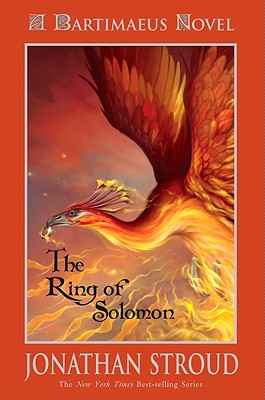
The Ring of Solomon

by Jonathan Stroud
ages: 12+
First sentence: “Sunset above the olive groves.”
Support your local independent bookstore: buy it there!

Ah, Bartimaeus. I’ve missed you.

I’ve missed your snarky footnotes, your adventures, your soft spot for humans, your insights. I could go back and read the other three books, true, but I’m so happy to have you back in a new story.

Stroud re-imagines Solomon and his reign in Jerusalem, using the same world of magicians and spirits he created for the previous Bartimaeus books. The basic idea is this: what if Solomon had a ring, something which accesses magic more terrible, more powerful than any other magician. This allows him to create peace and prosperity. However, he also employs magicians, some of which are not too nice. It’s one of these that summons Bartimaeus and keeps him in servitude. Of course, Bartimaeus being Bartimaeus, he tends to get into trouble a lot. As a punishment, he’s off in the desert cleaning up bandits. Which is where he meets Asmira.

She’s not any ordinary girl, but one of the personal guards of the Queen of Sheba. Sent to Jerusalem on a quest to assassinate Solomon and steal the ring, she’s fairly single minded in her quest. She falls in with Bartimaeus and between the two of them, they attempt the impossible.

It’s a great book for the same reason the rest of the trilogy is great. It’s as fabulously imagined world, and Baritmaeus is a grand character. There’s action and adventure, loathesome bad guys, and an undercurrent of intriguing and deep ideas to think about. It falls apart a bit at the end, but, mostly it lives up to the reputation of the Bartimaeus books.

And you can’t beat that.

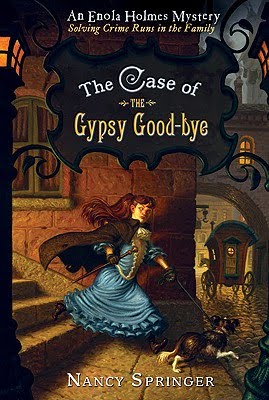
Enola Holmes: The Case of the Gypsy Goodbye

by Nancy Springer
ages: 11+
First sentence: “Mister Sherlock, I’m that glad to see you, I am, and that obliged.”
Support your local independent bookstore: buy it there!

I have heard of Enola for a while. I know Kerry at ShelfElf loves her, and has sung her praises often. I have meant to get to Enola before, even checked out previous books in the series once or twice, but I’ve never actually read any.

For the record: starting with the last book in the series is not suggested. That said, I adored Enola. The much younger sister of Mycroft and Sherlock Holmes, she’s as talented and brilliant in her deductive reasoning as they are. She’s 14 (nearly 15) years old, in hiding in London (from her brothers, especially Mycroft, who want to send her to a girls boarding school) since her mother disappeared a year ago. She finds missing persons, she’s brilliant at disguises, and she’s a winning character.

In this book, she takes on the case of the missing Lady Blanchefleur, who has suddenly disappeared. It turns out, however, that Sherlock is also working on this case, and after however long she’s been avoiding them, they actually confront each other. As a subplot, there’s a mysterious message from their mother, which Enola has to decipher. There’s adventure and suspense, humor and mystery , and a fitting ending for what I assume was a good series.

Now to go back and read the rest of them in the right order.

(Just for the record: because this is a Cybils nominee, I’ve been asked to make sure y’all know this is my opinion only, and not that of the panel.)