

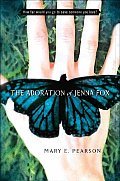
 My Geek-inspired review…
Is this as good as people keep saying? (Alessandra)
Yes. It’s very, very good, and deserves all the gushing it’s getting. Different from what I was expecting, but powerful and thought-provoking and as good as I had been led to believe.
Does this book seem typically YA, or could it be classified as a novel for adults with a younger protagonist? (Bybee)
Hmm… I think it depends on the adult. It’s not as detailed or as developed as an adult book. Pearson was very careful with her word choice; it reads much like a book of poetry — every word carries multiple implications. As a result, though, there’s a lot missing that I think a “typical” adult might want out of a novel. On the other hand, it deals with issues and themes that I think are interesting (as an adult) and could spark interesting discussions among adults. It would be a good book group book.
Is this a book that you would recommend to the average 13+ teenager? Or would you say that it depends on the maturity level of the child? (Book Zombie) I would recommend to the average teenager. (M — she’s not quite 12) wants to read it and I think she’d be interested in it.) There’s nothing “inappropriate”, and it might spark some interesting discussion.
When Jenna struggles with the ethical issues she faces, did you find yourself strongly taking one side or another, or did you find yourself unable to really put yourself in that position, or how did you react if in neither of the ways I’ve suggested? (Dewey) I think I often came down on the side of the grandmother. I understand the moral and ethical dilemmas that Jenna had to face, but I also agreed with Lily: it was wrong, it should have never had happened. Granted, it was too late, and I don’t believe it would have been morally right to undo it. Did that make sense without giving too much away?
What are some of the qualities you liked or disliked in the grandmother character? The boyfriend character? The neighbor character? (Dewey) Oh, I loved the grandmother — the fact that while she was torn between what she felt was right and who she loved. I also liked that she was straightforward, telling Jenna what she needed to know (rather than what she wanted to hear). The boyfriend was so-so. I appreciated that he was accepting of Jenna, but I felt like their relationship lacked chemistry — more a friendship, rather than a relationship. I did wonder if the only reason she ended up with him is because she’s the first person who believed in her. As for the neighbor, I liked that he had re-invented himself, which is a primary reason for him being interested in, and friendly to, Jenna. I liked that he was sympathetic to her situation, especially when she needed someone to be understanding and not judging.
Can you sum up the life lesson to be learned from this book in a sentence or two? (Suey) No. I can’t. Not without giving too much away — and I think it’s better if you don’t know much going in. It makes the revelation that much more surprising (though I have to admit that I had an inkling) and the second half more powerful. But I will say that it touches on issues of humanity and ethics and love (parent to child and the other way around) and expectations we have for each other. It’s an excellent read.
I’ll add more if I get more questions.
 The Book Nut
Great answer thanks … I’ve been finding it hard lately to find age appropriate YA fiction.
LikeLike
This was an excellent book! I checked it out from the library based on your recommendation and really loved it. Thanks!
LikeLike