July 2012 Wrap Up

Ah, the end of July. It’s blinking hot outside, I’m more than ready for the girls to go back to school (two weeks!), and we decide this is a good time to go on vacation. I’ve got a couple of posts scheduled for when I’m away, but your regularly scheduled programming will commence on August 13th (which also happens to be my dad’s birthday and my 19th anniversary. Wow!). Enjoy the last bit of summer while you can, right?

As for July, my favorite, hands down was:

Code Name Verity 

Middle Grade (I had a very middle-grade heavy month, didn’t I?):

The Book of Three

Breaking Stalin’s Nose

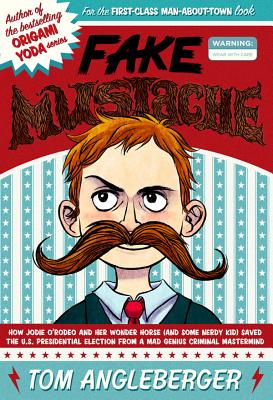
Fake Mustache

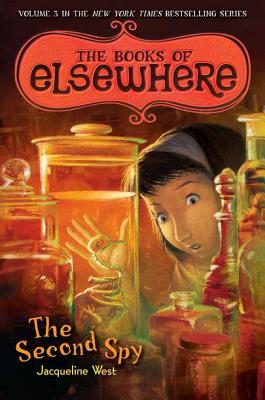
The Second Spy
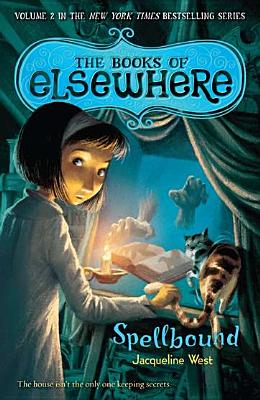
Spellbound

Time Snatchers

The Unseen Guest

Adult:

Shadow of Night

The Sherlockian

Graphic novel:

Stickman Odyssey: An Epic Doodle

YA:

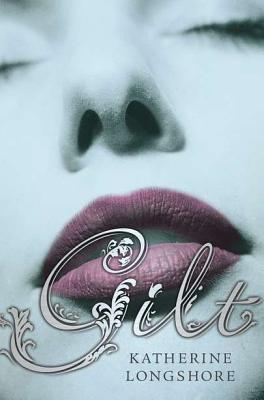
Gilt

Nonfiction:

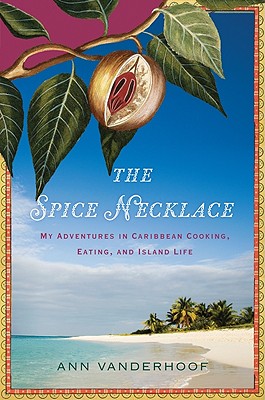
The Spice Necklace

Didn’t finish: 

Throne of Glass (DNF)

And… the YAckers attacked this month:

Throne of Glass
Daughter of Smoke and Bone

What have your favorite reads been lately?

Breaking Stalin’s Nose

by Eugene Yelchin
ages: 9+
First sentence: “My dad is a hero and a Communist and, more than anything, I want to be like him.”
Support your local independent bookstore: buy it there!

Sasha lives in Moscow, in Stalinist USSR, and wants to be exactly like his dad, a member of the State Security. The first step, of course, is joining the Young Pioneers.

Except, on the day when he was supposed to be inducted and everything was supposed to go just perfectly, Sasha’s world falls apart. First, his father gets arrested in the middle of the night; but Sasha figures it’s just a mistake. Then, his aunt won’t take him in. But at school, things get really weird. It doesn’t help that he accidentally breaks the nose off a Stalin statue — a federal offense, punishable by death — in the hall, which sets off a chain of events that leads to a basic revelation: maybe Stalin isn’t all that Sasha thought he was.

On the one hand, I can see how this is an important book. Instead of showing the horrors of Stalinism (and there are many) from the concentration camps (see Between Shades of Gray for that), it shows what it was like for an ordinary Soviet citizen. One who thought himself, and his family, to be in Stalin’s good graces. And who, like many ordinary Russians back then, got caught up in a web of conspiracies and lies that wrecked his life.

This should have been a powerful story. One of courage in the face of hopelessness and helplessness. Except, in many ways, this slim novel (which was gorgeously illustrated, by the way), it just didn’t live up to its potential. If was was being uncharitable, I would say that Yelchin didn’t quite know how to  handle a tough topic like this for younger readers. But, I’m not sure that’s what it is. See, this is really a confusing little book; as a reader, you never know quite what to believe or whom to trust, and I think that was done intentionally. It felt like Yelchin wanted to capture the sense of confusion, of suspicion, of mistrust that existed in the USSR back then. In that, he succeeded, though I’m not sure how well.

I’m not sure how much sense I’m making. The bottom line is this: I get what Yelchin was trying to do with his book, but I’m not sure 9-year-old kids will. However, this one will be the jumping point for a lot of discussion, not just on the USSR and history, but on following the crowd versus doing your own thing.

Which makes it very much worth your time.

The Spice Necklace

by Ann Vanderhoof
ages: adult
First sentence: “This time, I bring my rolling pin to the Caribbean.”
Support your local independent bookstore: buy it there!

I read, and fell in love with Vanderhoof’s book of her first trip to the Caribbean,
Embarrassment of Mangoes, nearly five years ago. I didn’t even know there was a book about a second trip until a few months back, when someone pointed it out to me. Of course, I had to read it! And, unsurprisingly, I had much the same experience with this one that I had with the first book.

Ann and Steve returned to Toronto, to their “land-based” life, but after a couple of years, they realized that they missed the easy-going, food-saturated life they had in the Caribbean. So they did what they could to put things in order, got out their boat, Receta, and headed south again.

In many ways, this one covers much of the same territory as the first one did: there is food and friends and sunshine. But, knowing that, Vanderhoof was smart: the book (as evidenced by the title), is mostly about the spices native to the islands, and the many, many uses they have in everyday life. And because I don’t know much about the spices I eat, I learned a whole lot. Like how nutmeg is grown, and the fact that mace and nutmeg comes from the same plant. And that the islanders (especially on Trinidad) love their peppah HOT. I also learned a whole lot about rum (I had to turn to a friend to explain proof, just so I could understand why the 151 proof Saba Spice was so difficult to get down), and the ways in which rum really does permeate island culture.

My favorite island this time was Trinidad; Vanderhoof made it come alive, and made me curious about the African/Indian blend of cultures and cuisine they have there.  They also spent a lot of time in the Dominican Republic and Dominica, both islands would be fascinating to visit. Mostly, though, I envied their approach to seeing the world: parking in one spot for months at a time, soaking up the culture and the cuisine, meeting people, and learning about a place rather than just seeing it. I would (still) love to travel that way.

But the next best thing to a vacation is a well-written, food-heavy, travel book about an area. And this one is just the ticket.

Fake Mustache

by Tom Angleberger
ages: 10+
First sentence: “You may remember seeing me on TV when Jodie O’Rodeo saved the world.”
Support your local independent bookstore: buy it there!

One mustache to rule the world.

(Seriously.)

One kinda nerdy seventh grader to stop the evil master plan (spurred on by his ex-best friend) from happening.

(Granted, he had help from a teen TV singing sensation.)

Will they be able to do it?

(Stop Fako Mustacho, the evil genius, that is. Though they also fall in luvvv along the way. Possibly. Keep in mind that this is a tall tale, though.)

Will I find this book to be as funny as others have?

(No.)

Will it be as epic as it sounds?

(Possibly for some.)

M and C both thought the idea sounded quite awesome, however. For what it’s worth.

(It means that my sense of humor just didn’t jive with this one.)

And while I’m sad that I didn’t like Fake Mustache as much as I’ve enjoyed Angleberger’s other books, I am in no way hindered in my enjoyment of his books.

(Mostly.)

Gilt

by Katherine Longshore
ages: 15+
First sentence: “You’re not going to steal anything.”
Support your local independent bookstore: buy it there!

When I first saw this one at the store, I dismissed it as yet another paranormal romance. I mean, really: doesn’t that cover scream paranormal romance??

Thankfully,  Liz B. read it and loved it, enough to make me want to pick it up. Because there was no way I would have guessed from the cover that this is about one of my favorite periods in English history: the Tudors.

More specifically, it’s the story of Catherine Howard, Henry VIII’s sixth wife. How she came to power, and how she fell from it as well. However, Longshore does us the favor of not making Catherine (or Cat, to her friends) the center of the story (even though she often wanted to be the center of attention!), instead making a friend of Catherine’s, Kitty Tylney, our eyes and ears. In this way, we get to see the corruption and the power grabs from the outside; Kitty is close enough to be affected by the power, but not so close that she succumbs to it.

In many ways, this is Phillipa Gregory-light. And I say that with all the affection I can muster. I love Gregory’s Tudor books (even if I can’t get through the Other Boleyn Girl) for their sweeping dramatizations of history. Longshore did much of the same thing: giving us sweeping vistas, beautiful dresses, corrupt men and women using girls as pawns in their elaborate games. (And all the sex was off-screen.) I also liked, much like Liz, that this was a side of Henry VIII that we don’t often get to see. Many stories have been written about his earlier wives, but I knew next to nothing about Catherine Howard. Granted, it’s fiction, not history, but I felt that Longshore did her research and did an admirable job weaving the history into the story.

It was captivating, engaging, and all those other words people use to gush over books. I’m looking forward to the next book that Longshore writes.

Code Name Verity

by Elizabeth Wein
ages: 14+
First sentence: “I am a coward.”
Support your local independent bookstore: buy it there!

Things this book is:
A World War II book.
A book about friendship, between two young women, specficially.  Funny.
A book about torture.
A book about the Resistance.
A book about women pilots.
A book about things a person will do to save their skin.
An amazing example of voice. Seriously, the characters leap off the page.
Unputdownable. (Yeah, I know. Still, it fits.)
Freaking awesome.

Things this book is not:
Trite.
Another Holocaust book.
Boring.

In other words: if you haven’t yet read this story about Maddie and Verity, and been captivated by their story, you are missing out.

And yes, it really is just as good as “they” all say.

Time Snatchers

by Richard Unger
ages: 11+
First sentence: “I can’t stop crying.”
Support your local independent bookstore: buy it there!
Review copy provided by my place of employment.

Caleb steals things.

Not just anything: artifacts from history.

See: he works for Uncle as a time snatcher, someone who goes through history procuring important artifacts for clients.

On the one hand: this is way cool. The idea of time travel for theft is a clever one, and Unger comes up with some pretty neat technology to make it happen. In addition, Unger finds some great minor moments in history to feature in the book.

The hitch: Caleb doesn’t do this by choice.

He and all the other snatchers in Uncle’s employ — including Caleb’s love-interest, Abby, and his arch-nemesis (we need a nemesis?), Frank — are orphans, and Uncle is, shall we say, less than a kind benefactor. Caleb and his fellow snatchers are there until death, pretty much. There is no way out. 

And this is the other hand: it all sounds quite grim and hopeless. This book is one bit of drama on top of another: Frank is stealing Caleb’s snatches out from under him, he’s being groomed to be the next Uncle, and then he kidnaps (for Uncle, of course) a kid — Zach — Caleb befriended on one of his snatches. That’s not even mentioning the fact that Caleb thinks that Abby like-likes Frank. It’s not a happy book. It’s not a light book. And while the premises is a good one, it’s not even a fun book.

So, of course, Caleb has to risk everything to get Zach back to his family. It’s the only human thing for Caleb to do. And here we come to my real problem with this one: it just petered out. I’m not sure how it could have done anything else, but a good third of the conflict that was introduced wasn’t resolved. Which I don’t mind, generally speaking, but it kind of seemed pointless.

And in the end, I didn’t like this one as much as I hoped it would.

(Just for the record: because this is a Cybils nominee, I’ve been asked to make sure y’all know this is my opinion only, and not that of the panel.)

The Books of Elsewhere: The Second Spy

by Jacqueline West
ages: 9+
First sentence: “If you believe that death is about to spring upon you at any moment, you won’t spend much time watching television.”
Others in the series: The Shadows, Spellbound
Review copy provided by the publisher.

Hm… how to do this without spoiling the other two? Well, first go read the other two! (Seriously: you won’t regret it. This is one fine middle grade series.)

Olive has managed to thwart the evil McMartins so far, a little bit by chance and luck, and a little bit through skill. However, thwarting is not the same as getting rid of. And, so Olive has been creeping around, hoping that Annabelle McMartin doesn’t kill her. That, and she’s starting sixth grade, and middle school, which is its own beast. Granted, the two — being afraid for your life and starting middle school — aren’t necessarily compatible. But, thankfully, Olive has the cats and Rutherford on her side.

Or does she??

Another fine, deliciously creepy, intriguing, fun addition to this clever series. I liked that West used trust and friendship as the backdrop for this tale, exploring this pretty traditional and mundane (though important) topic in such a unique way. But, beyond that, every book is well plotted, and wraps up nicely (my favorite thing!), while leaving room for yet another adventure with these fun characters.

And now that I’m all caught up, I have to wait for the next one to come out.

(Just for the record: because this is a Cybils nominee, I’ve been asked to make sure y’all know this is my opinion only, and not that of the panel.) 

Sunday Salon: State of the TBR Pile 9

It’s high summer. And this is what I have on my stack….

Ghost Knight, by Cornelia Funke (I had this one on my stack, then I took it back. And now I’ve checked it out again. Maybe this time I’ll even read it.)
Breaking Stalin’s Nose, by Eugene Yelchin (the only Newbery honor book I haven’t read)
Circus Galacticus, by Deva Fagan (it looked interesting)
The Black Cauldron, by Lloyd Alexander (because I need to revisit Prydain)
Wonder, by R. J. Palacio (for a paid review)
Second Thyme Around, by Katie Fford (it’s my fluff)
With a Name Like Love, by Tess Hilmo (recommended by a blog reader; I just can’t remember who! If it was you, let me know so I can give you credit)
Froi of the Exiles, by Melina Marchetta (because I NEED to read this)

The one that’s missing (because it’s downstairs on the shelf) is Tuck Everlasting, by Natalie Babbitt (because it’s been too long since I’ve read it, and it’s for a paid review as well).

What’s on your pile this July?

The Sherlockian

by Graham Moore
ages: adult
First sentence: “Arthur Conan Doyle curled his brow tightly and thought only of murder.”
Support your local independent bookstore: buy it there!

It’s 1900, three years after famed author Arthur Conan Doyle killed off his most famous character, when he receives a box with a pipe bomb in it. It doesn’t kill him, but it does set him on a trail: someone murdered an innocent woman, and Doyle’s going to figure out who it is.

It’s also 2010, and Harold White has become the newest inductee into the Baker Street Irregulars, the most prestigious of the Sherlockian groups. While at the conference, he discovers the murder of the group’s most illustrious scholar, Alex Cale, who had recently found a diary of Doyle’s that had gone missing 80 years before.

Both men will find themselves knee-deep in mysteries that will confound them, and have them asking the ultimate question: What Would Sherlock Do?

I have to admit that I’m not a Sherlock buff. Sure, I like the new BBC series (and even the old one, with Jeremy Brett), but I’m not really a fan. And nowhere near the fanatic that the characters in the book are. And yet, I found myself strangely compelled by this mystery. Partially, I think, it was having Conan Doyle (and Bram Stoker!) be a character. I found his inner life interesting (even if it was mostly fictionalized), especially his loathing of his most famous detective. Harold, as well, was a fascinating character; smart not because he was brilliant, but because he was well-read and able to connect the dots.

But the mystery left a little to be desired. I felt that for all the build-up that we were given, the solution to the mystery was, well, a bit lame. Perhaps that was the author’s intent: the fun was in the journey, but not in the resolution.

And if that was the case, then he succeeded: because getting to the end was a lot of fun. Even if the end was a bit, well, lame.